
陆海接力养殖

Search documents
10万吨级三文鱼养殖工船在烟台港开舱进货
Zhong Guo Xin Wen Wang· 2026-01-20 11:38
Core Viewpoint - The arrival of the 100,000-ton salmon farming vessel "Suhai No. 1" at Yantai Port marks a significant advancement in the logistics channel for domestic salmon farming in Shandong, facilitating the transfer of 160,000 salmon fry to the vessel for further cultivation in suitable marine areas [1] Group 1: Vessel and Technology - "Suhai No. 1" measures 249.8 meters in length and has a farming water capacity of 83,000 cubic meters, equipped with 15 closed farming compartments [1] - The vessel utilizes an intelligent control system to achieve precise regulation of water quality, oxygen supply, and feeding, allowing for 16 water exchanges per day to create a low-stress growth environment for the salmon [1] Group 2: Production Capacity and Economic Impact - Once fully operational, the vessel is expected to produce 6,000 tons of salmon annually, generating an estimated annual revenue of approximately 500 million RMB [1] Group 3: Logistics and Coordination - To ensure the safe and efficient transfer of fry, Yantai Port's production department coordinated efforts with the International Cargo Terminal Company to establish a dedicated working group, creating a comprehensive service plan for the entire process [1] - Measures such as planning dedicated berths and transfer channels, integrating declaration and scheduling processes, and opening green channels were implemented to facilitate immediate transfer of fish to the vessel upon arrival at the port [1]
“十五五”开好局 起好步丨三文鱼也要“搬家” 陆海接力养殖助力“蓝色粮仓”
Yang Shi Xin Wen Ke Hu Duan· 2026-01-11 01:49
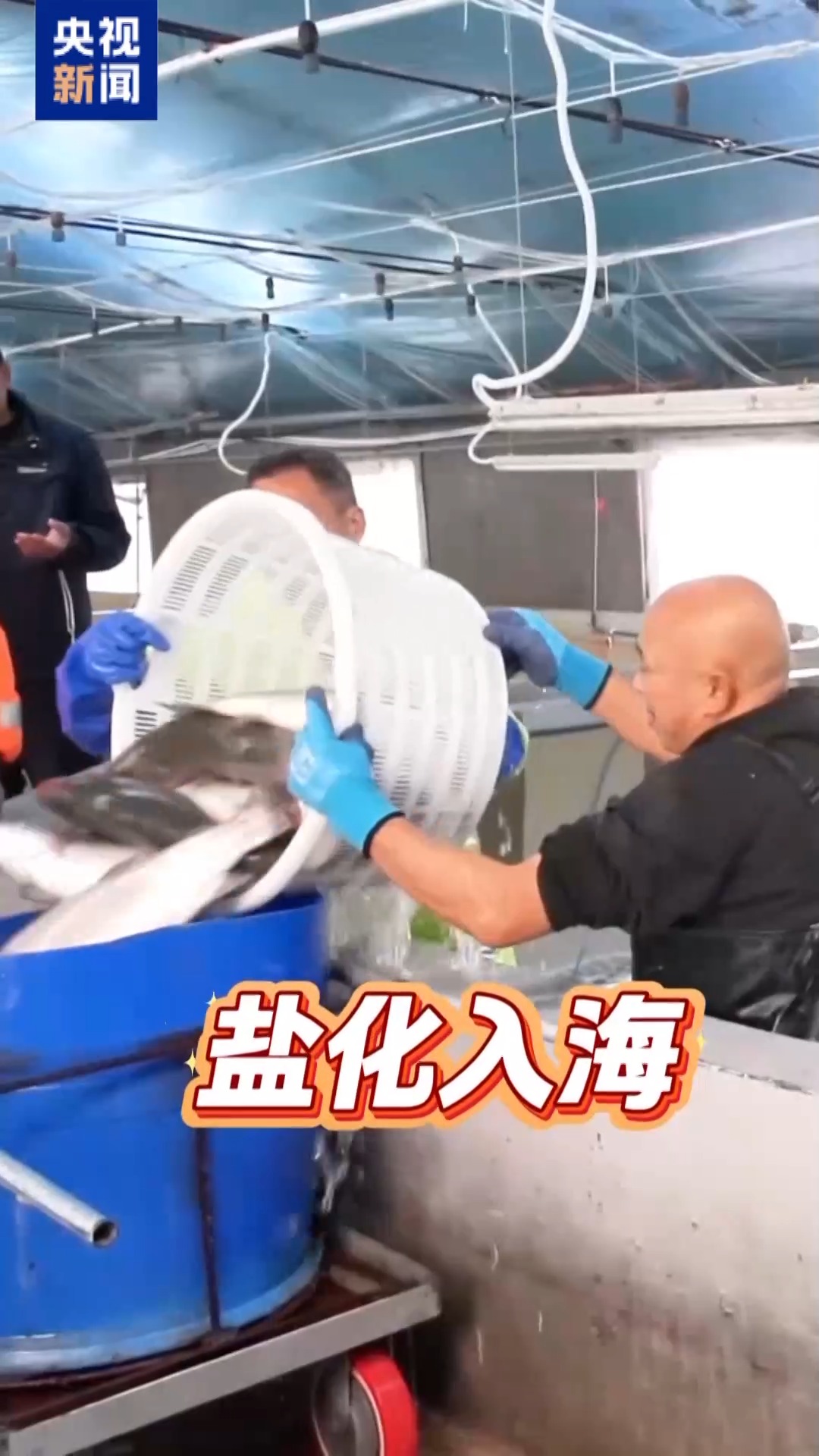
Group 1 - The core idea of the news is the transition of salmon farming from land to deep-sea net cages, enhancing growth conditions and flavor while overcoming spatial and production limitations of nearshore farming [1][10] - The first batch of salmon fry is scheduled to be moved to deep-sea net cages in 2026, with preparations underway for their acclimatization to saltwater [1][4] - The deep-sea farming model is expected to significantly improve the growth and quality of the fish, providing better products for the market [10] Group 2 - The use of specialized water mixed with seawater in saltwater acclimatization pools helps the salmon fry adapt to their new environment [7] - The transportation of the fish fry to deep-sea net cages involves an 8-hour shipping process, emphasizing the logistical efforts in this transition [7] - The initiative aims to utilize ocean resources effectively, positioning the ocean as a "blue granary" for sustainable seafood production [1]

一船启深蓝 一业兴港城
Xin Lang Cai Jing· 2026-01-07 20:19
Core Insights - The launch of the world's first self-propelled closed salmon farming vessel "Suhai No. 1" marks a significant advancement in deep-sea salmon farming, aiming to transform the marine economy of Lianyungang's Ganyu District [1][2] - The vessel can carry 400,000 high-quality salmon fry and is designed to operate in optimal conditions, enhancing the efficiency and safety of salmon farming [2][3] - The project addresses the domestic salmon supply gap, with the market size expected to reach 12.6 billion yuan in 2024, while over 80% of salmon is currently imported [3][4] Group 1: Vessel and Technology - "Suhai No. 1" measures 249.8 meters in length and has a displacement of 132,000 tons, featuring 15 farming compartments with a total underwater farming space of 83,000 cubic meters [2] - The vessel's operational speed can reach 18 km/h, allowing for quick relocation in adverse weather conditions, ensuring a stable environment for salmon growth [2][3] - Advanced technology includes a centralized control system for real-time monitoring of water quality and automated feeding systems, significantly improving farming efficiency [3][6] Group 2: Economic Impact - The annual farming capacity of "Suhai No. 1" is projected to exceed 8,000 tons, which will help stabilize prices and increase the availability of domestic salmon [3][4] - The establishment of a national-level marine ranch demonstration area and a dual-track system combining the vessel and fixed net cages aims to create a scalable model for deep-sea farming [4][5] - Investments in local fishing ports and markets are enhancing infrastructure, with a total investment of 860 million yuan for the construction of a national-level seafood market [4][10] Group 3: Innovation and Research - The Ganyu District is fostering a "smart factory" approach to aquaculture, utilizing AI and IoT technologies to enhance production and reduce risks associated with traditional farming methods [5][6] - Collaborative efforts with national research institutions are leading to breakthroughs in breeding technologies, including the successful artificial breeding of various fish species [7][8] - The establishment of a marine economic innovation center is driving research and development in deep-sea farming equipment and marine biological products [6][8] Group 4: Market Transformation - The integration of e-commerce and live-streaming sales has positioned Ganyu as a leader in seafood e-commerce, with a transaction volume of 23.5 billion yuan in 2024 [10][11] - The transformation of local seafood markets into modern trading hubs reflects a shift towards a more organized and efficient supply chain [10][11] - The development of tourism around seafood and marine activities is diversifying the local economy, moving from a focus solely on aquaculture to a more integrated approach [11]
一条鱼带动一个产业 智能化网箱为海洋经济写下创新注脚
Yang Shi Wang· 2025-12-20 07:26
Core Viewpoint - The article highlights the innovative "land-sea relay aquaculture" technique for salmon farming in Shandong, which successfully addresses the challenges of raising salmon in warm temperate marine environments [1] Group 1: Aquaculture Process - The land-sea relay aquaculture involves breeding high-quality salmon in freshwater before transferring them to seawater for further growth, marking a significant advancement in aquaculture technology [1] - A large-scale transfer of salmon is taking place at the central fishing port in Rizhao, Shandong, where salmon are being moved from land-based farms to large transport vessels for the fattening phase [3] - Prior to the transfer, salmon undergo health checks, including blood tests, to ensure they can adapt to the seawater environment after a 20-day acclimatization period on land [6] Group 2: Transportation and Survival Rates - The transport vessel is equipped with 12 fish tanks, each capable of holding 30,000 salmon, and maintains a continuous flow of seawater to enhance the survival rate during transportation [8] - The journey to the ocean is likened to a comfortable "marine high-speed train," ensuring the salmon arrive safely at their new habitat [8] Group 3: New Habitat and Production Capacity - The new marine habitat for the salmon, referred to as a "sea villa," is a large net cage measuring 89 meters long and 45 meters wide, with a water volume of approximately 60,000 cubic meters, capable of housing over 200,000 salmon [15] - The annual production capacity of this facility is projected to reach 1,000 tons of salmon, with plans to build four additional intelligent net cages, potentially increasing total annual production to 6,000 tons [17] - The factory-style, intensive, and smart aquaculture method reduces the average growth cycle of salmon by about 30%, making them more affordable and appealing to consumers compared to wild salmon [17]
