降低通胀法案

Search documents
从“减肥神药”覆盖到抗癌药!“美国版集采”来势汹汹 将削减36%支出
Zhi Tong Cai Jing· 2025-11-26 08:37
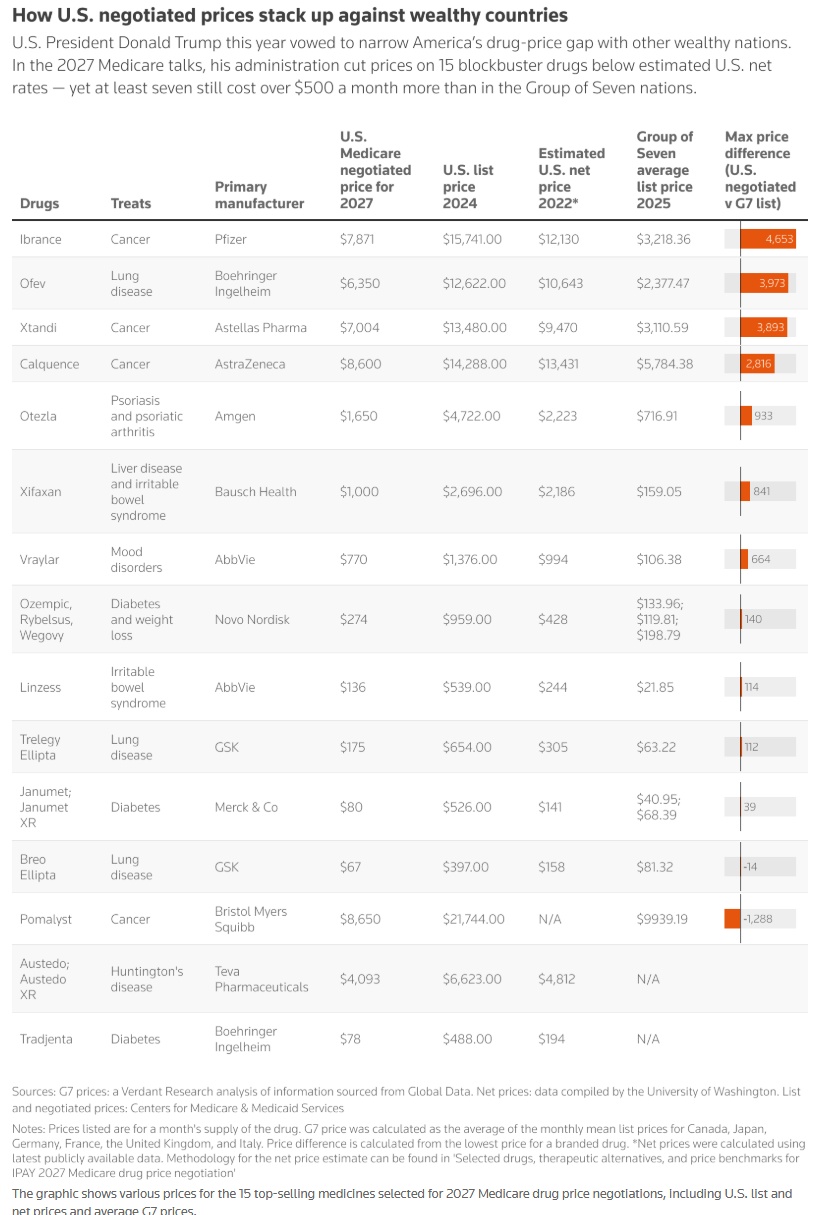
Core Insights - The recent Medicare negotiations are expected to save approximately 36% on the prices of 15 high-cost drugs, translating to around $8.5 billion in net reimbursement costs [1][3][10] - The new prices will take effect in 2027, with significant reductions for popular drugs like semaglutide, which will drop over 70% to about $274 per month [1][4] - The negotiations are part of the Inflation Reduction Act signed by President Biden in 2022, which allows Medicare to negotiate drug prices for the first time [2][11] Drug Price Reductions - The estimated net prices for drugs like Calquence, Ofev, and Ibrance have been reduced by over $4,000 each in the latest negotiations [2][4] - The new pricing for other drugs includes Trelegy Ellipta at $175 (down from $654) and Linzess at $136 (down from $539) [4][10] - The average negotiated prices for these drugs are still higher than those in the Group of Seven (G7) nations, with some drugs costing over $500 more than their G7 counterparts [7][11] Comparison with Previous Negotiations - The 36% savings in the current negotiations surpasses the 22% savings achieved in the previous year's negotiations for 10 different drugs [3][10] - The pricing strategy has become more efficient, with newer products potentially having greater flexibility in pricing [4][10] Industry Response - The pharmaceutical industry has expressed strong opposition to government price negotiations, arguing that such policies are detrimental [5][10] - Industry representatives claim that government pricing policies like the Inflation Reduction Act and the Most-Favored-Nation pricing are misguided [5][12] Future Implications - The Medicare negotiations are expected to influence other payers to seek similar pricing from drug manufacturers [10] - Future negotiations will include an additional 15 drugs, with discussions set to begin in February [12]