
陶瓷基复合材料

Search documents
商业航天新材料深度:陶瓷基复材开启黄金十年(附企业)
材料汇· 2026-02-04 15:14
Core Viewpoint - Ceramic Matrix Composites (CMC) exhibit excellent high-temperature performance and have broad applications in commercial aerospace, aviation, nuclear power, and automotive sectors, with significant market potential. China leads in brake and thermal protection for aircraft but lags in aviation engine applications [3][4]. Group 1: CMC Characteristics and Applications - CMC is defined as composites that incorporate reinforcing materials into a ceramic matrix, resulting in superior properties such as high-temperature resistance, low density, high specific strength, and oxidation resistance [4][15]. - SiCf/SiC composites are a research focus due to their enhanced oxidation resistance and longevity, making them ideal for high-temperature applications [4][21]. - In the aerospace sector, SiCf/SiC is recognized as an ideal material for the hot end of aviation engines, already in mass production for static components, with ongoing exploration for rotating parts [5][25]. - In nuclear energy, SiCf/SiC composites are considered ideal candidates for reactor cladding and control rods due to their high melting point and excellent neutron irradiation stability [5][44]. Group 2: Market Growth and Trends - The global CMC market was valued at $11.9 billion in 2022 and is projected to grow at a CAGR of 10.5%, reaching $21.6 billion by 2028, with the highest market share in defense and aerospace applications [6]. - The demand for CMC in China's aviation engine sector is expected to reach a turning point in 2024, driven by technological advancements and cost reductions [11][9]. Group 3: CMC Production and Industry Landscape - CMC production involves complex processes with high barriers to entry, including fiber preparation, preform weaving, interface layer preparation, matrix preparation, and densification [7][8]. - GE has established a vertically integrated CMC supply chain, producing 20 tons of CMC prepreg and 10 tons of SiC fibers annually, with a tenfold increase in CMC component production expected over the next decade [8][39]. - China's CMC industry is relatively complete, with advancements in the production of second-generation SiC fibers and ongoing development of third-generation fibers, although industrial-scale production remains a challenge [9][10]. Group 4: Investment Opportunities - The potential for growth in China's aviation engine sector for CMC is significant, with upstream raw material demand expected to increase as applications mature [11][9]. - As CMC manufacturing technologies improve and fiber costs decrease, midstream CMC component manufacturers are poised for rapid development [11].






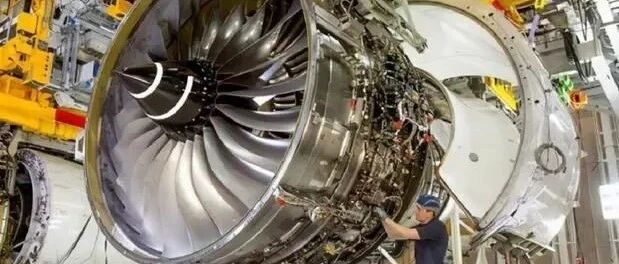
大飞机专题之航发观点
2026-01-28 03:01
Summary of Key Points from the Conference Call Industry Overview - The large aircraft industry has a market potential of trillions of yuan, despite last year's deliveries falling short of expectations. Positive changes in bottleneck areas such as engines and onboard equipment are emerging, which could lead to steep growth once these bottlenecks are overcome [1][3] - The domestic replacement of aircraft engines is becoming increasingly urgent due to U.S. export restrictions on engine technologies, accelerating the development of the domestically produced C929 aircraft [1][4] Core Insights and Arguments - The domestically developed Changjiang 1,000A engine is in the final stage of airworthiness certification, with expectations to achieve a key milestone by 2027, enhancing China's self-sufficiency and competitiveness in commercial aviation [1][5] - The Changjiang 1,000A engine shows superior performance in thrust and thrust-to-weight ratio compared to the CFM LEAP series, which is crucial for improving the competitiveness of Chinese commercial aircraft [1][7] - Over the next 20 years, China is expected to require an average of 344 single-aisle and over 80 twin-aisle aircraft annually, with the engine market space estimated at approximately 150 billion yuan [1][9] Market Demand and Growth Potential - The commercial aviation engine has a service life of about 17-18 years, with a replacement market that is comparable in size to the new engine market. Maintenance cycles are expected to generate demand equivalent to over 30% of the new engine market value [1][10] - The C929 aircraft has made significant progress in European airworthiness certification, which could greatly expand its international market potential if certification is achieved by the end of 2028 [1][11] - The domestic civil aviation engine industry chain is segmented into upstream, midstream, and downstream, with key players in each segment contributing to the overall value of the engine [1][12] Additional Insights - The Changjiang 1,000 engine is expected to create long-term and sustained market demand, benefiting various segments of the industry chain, including parts manufacturing and maintenance [2][13] - Recent developments in high-temperature alloys and titanium alloys are reshaping the market landscape, with new entrants gaining market share and presenting new opportunities [14][15] - The use of ceramic matrix composites (CMC) is seen as a future direction for high-temperature materials, with significant performance improvements over traditional alloys [17] - The civil engine industry is at a critical juncture, with increasing confidence in domestic engines and aircraft, and potential for growth in both domestic and international markets [18][19]
华秦科技202509004
2025-09-04 14:36
Summary of Huqin Technology Conference Call Company Overview - Huqin Technology is one of the few companies in China capable of covering the entire process of stealth materials across various temperature ranges, with a significant technological advantage in high-temperature stealth materials [2][3][16] - The company has established a partnership with Northwestern Polytechnical University to ensure the long-term stability of its core technical team [2][8] Core Competitiveness - Huqin's core competitiveness lies in its significant advantages in stealth materials, particularly in high-temperature applications, and its strong technical support from its chief scientist and his team [3][8] - The company has made important breakthroughs in special functional materials for aircraft engines and has established a high-temperature stealth materials engineering technology center [3][16] Market Demand and Growth Drivers - Demand for stealth materials is driven by the mass production of new aircraft engines and the aftermarket for maintenance, with the lifecycle demand for stealth materials being five times the initial coating amount [2][11] - The stealth materials market is expected to grow due to the increasing production of new fighter jets like the J-20 and J-35 in China [11][12] Industry Trends - The stealth materials sector has a broad development outlook, driven by the need for advanced stealth technologies in military aircraft [5][14] - The industry is characterized by high entry barriers due to the complexity of developing effective stealth materials, leading to a concentrated competitive landscape [14][15] New Business Developments - Huqin is actively expanding into ceramic matrix composites, which are seen as a crucial direction for future aircraft engine development [2][20][21] - The company is also exploring new business areas such as acoustic metamaterials and camouflage materials, which have significant application potential in various fields [24][25] Challenges and Solutions - The company faces challenges in the spraying process of stealth coatings due to the harsh working environment of aircraft engines [17][18] - Huqin has developed advanced spraying techniques to address these challenges, ensuring high-quality application on complex components [18] Future Directions - The future development strategy includes focusing on the aircraft engine supply chain and expanding into new stealth material applications [26][27] - The company aims to achieve mass production in these new areas, contributing to additional revenue streams and forming a second growth curve [20][27] Conclusion - Overall, Huqin Technology is well-positioned for future growth, leveraging its technological strengths and expanding into new markets while maintaining a strong focus on its core competencies in stealth materials [2][3][27]
