雨带北抬

Search documents
应对“雨带北抬”,防汛需“见招拆招”
Xin Lang Cai Jing· 2026-01-15 16:20
Core Viewpoint - The article emphasizes the necessity of enhancing flood prevention and disaster reduction capabilities in northern China due to the increasing frequency of extreme weather events and the shifting rain belt caused by climate change [2][3][4]. Group 1: Challenges and Responses - The northern regions of China are experiencing a significant increase in extreme rainfall events, with the frequency of such events nearly matching that of southern regions [3]. - The "rain belt northward shift" and "northwest warming and humidification" trends necessitate a comprehensive upgrade of flood prevention systems in northern areas [3][4]. - The Ministry of Emergency Management has outlined key tasks to address these challenges, focusing on improving flood prevention capabilities in northern regions [2][3]. Group 2: Systematic Approach - Addressing the flood prevention shortfalls in northern China is a systematic project that requires collaboration across multiple departments and regions [3][4]. - The recent national water conservancy work conference highlighted the urgency of enhancing flood control infrastructure, which includes both physical upgrades and improvements in disaster awareness and emergency response mechanisms [4][5]. - The approach must consider the differences between urban and rural areas, with specific strategies for urban flooding and rural flash flood defenses [4]. Group 3: Focus on Rural Areas - For rural and vulnerable areas, prioritizing projects such as water and drought disaster prevention, seismic reinforcement of buildings, and relocation efforts is essential [5]. - The Ministry of Emergency Management has emphasized the importance of grassroots-level policy design and resource allocation to effectively address the existing gaps in disaster prevention infrastructure [5]. Group 4: Collaborative Governance - A successful response to the challenges posed by the shifting rain belt requires a collective effort from society, with an emphasis on accurate scientific assessment and localized strategies [6]. - Northern cities are encouraged to adapt their approaches based on local conditions, enhancing investment and mechanisms while fostering cross-regional and inter-departmental collaboration [6].
雨带北抬,北方城市如何告别“看海”困境
Xin Jing Bao· 2026-01-15 14:28
Group 1 - The core viewpoint emphasizes the need for proactive measures to address the challenges posed by climate change and the northward shift of the rain belt, particularly in enhancing flood prevention and disaster reduction capabilities in northern regions [1] - The frequency of extreme weather events, particularly heavy rainfall in northern China, has significantly increased, necessitating a comprehensive improvement in flood prevention systems [1][2] - The Emergency Management Department's initiative to address the shortcomings in flood prevention in northern areas is seen as a positive response to the ongoing climate challenges [1] Group 2 - The 2026 National Water Resources Work Conference has outlined the urgency of improving flood control and drainage infrastructure in northern regions, highlighting the need for a multi-faceted approach that includes both hardware upgrades and software optimizations [3] - The tasks related to flood prevention are distributed across various departments and regions, requiring a collaborative governance approach to effectively manage the complexities involved [3] - The recent Central Urban Work Conference has called for a shift in urban management focus towards resilience and safety, aligning with the goals of enhancing flood prevention capabilities [3] Group 3 - For rural areas, prioritizing disaster prevention and infrastructure reinforcement is crucial, with an emphasis on resource allocation to address existing deficiencies [4] - The Emergency Management Department's strategy aims to enhance grassroots capabilities and ensure that disaster risk management is effectively implemented at the local level [4] - There is a call for northern cities to adopt tailored approaches to address the challenges posed by the northward shift of the rain belt, emphasizing investment and inter-departmental collaboration [4]
交通运输部:切实做好“雨带北抬”防范应对工作
Yang Shi Wang· 2025-09-05 10:00
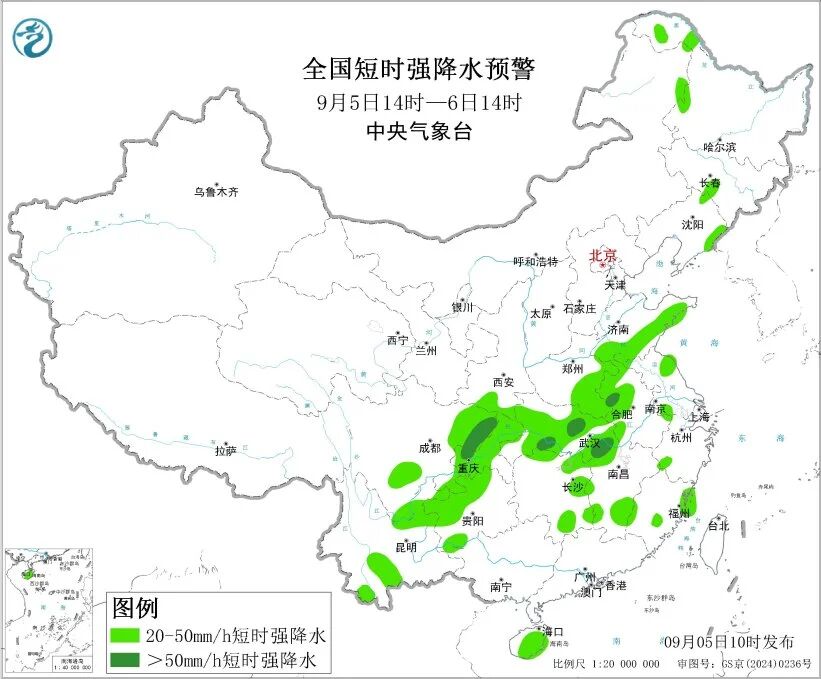
Core Viewpoint - The Ministry of Transport has activated a Level 4 response to address the challenges posed by heavy rainfall in various regions, emphasizing the need for proactive measures to ensure safety and operational stability in the transportation sector [1] Group 1: Weather Forecast and Warnings - The Central Meteorological Observatory issued a blue rainstorm warning on September 5, predicting heavy to torrential rain in several areas, including northeastern Inner Mongolia, northern Heilongjiang, central and southern Shaanxi, western and central northern Sichuan, northwestern Guizhou, central and western Hubei, southeastern Henan, and southern Shandong [1] - Some regions, particularly southern Shaanxi and northern Sichuan, are expected to experience extreme rainfall of 100-150 millimeters, with localized short-term heavy precipitation potentially exceeding 80 millimeters [1] Group 2: Response Measures - The Ministry of Transport has coordinated with transportation authorities in affected provinces to address the challenges posed by the northward movement of the rain belt, urging strict dynamic control and vigilance against complacency [1] - Emphasis is placed on enhancing road sector responses, inspections, and controls, ensuring that at-risk road sections are closed or halted as necessary, while also prioritizing the safety of maintenance personnel [1] - The ministry is focused on ensuring safety in inland waterway transportation, monitoring key water areas and vessels, and reinforcing disaster prevention measures at critical engineering sites to protect construction workers [1] - Transport service sectors are required to strengthen flood prevention efforts, particularly for key operational vehicles, and to maintain a 24-hour duty system for timely reporting of emergencies [1]