静奢

Search documents
杰尼亚和滔搏同时看中的Norda,能成为下一个昂跑吗?
Guan Cha Zhe Wang· 2025-12-18 02:28
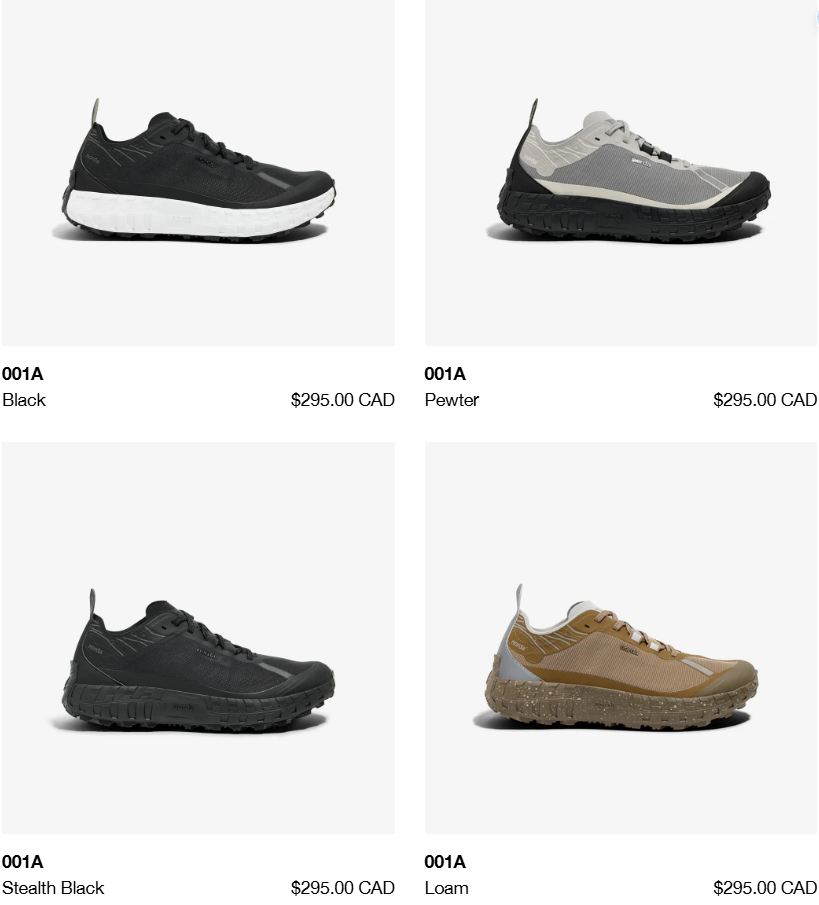
Core Viewpoint - Zegna Group has completed a second round of investment in the Canadian high-end trail running shoe brand Norda, indicating a strategic shift towards expanding its investment portfolio beyond traditional menswear brands [1][3] Group 1: Investment and Strategic Moves - Zegna's investment in Norda aligns with its goal to connect with a new generation of consumers, reflecting a structural shift in global fashion from formal wear to activewear [4] - The partnership with Norda represents a potential beginning for Zegna to become a multi-brand lifestyle giant, as it seeks to prove its growth prospects to the secondary market post-IPO [4] - Zegna's interest in Norda began shortly after the launch of Norda's first shoe in 2021, showcasing a long-term vision for collaboration [3] Group 2: Brand and Market Positioning - Norda, founded in 2020, focuses on lightweight design and material innovation, appealing to both professional trail runners and urban consumers with its minimalist aesthetic [1][3] - The brand's rapid growth, reportedly doubling in size annually, necessitates significant capital investment to sustain its development [4] - Norda's pricing positions it as one of the most expensive running shoe brands, with products typically priced around 2000 yuan, and collaborative products with Zegna reaching up to 6600 yuan [7] Group 3: Competitive Landscape - Norda's emergence mirrors that of On, a successful running shoe brand that transitioned from a niche market to a broader lifestyle symbol, indicating potential for similar growth [6][9] - The brand has secured a strategic partnership with top sports retailer Tmall, which will manage its operations in China, enhancing its market presence [6] - Despite its potential, Norda faces stiff competition from established brands like On, HOKA, and Salomon in the rapidly growing trail running market, necessitating continuous innovation and market balance [9]


三德 | 引领毛针织静奢,走在未来的时尚之路
Sou Hu Cai Jing· 2025-09-05 17:45
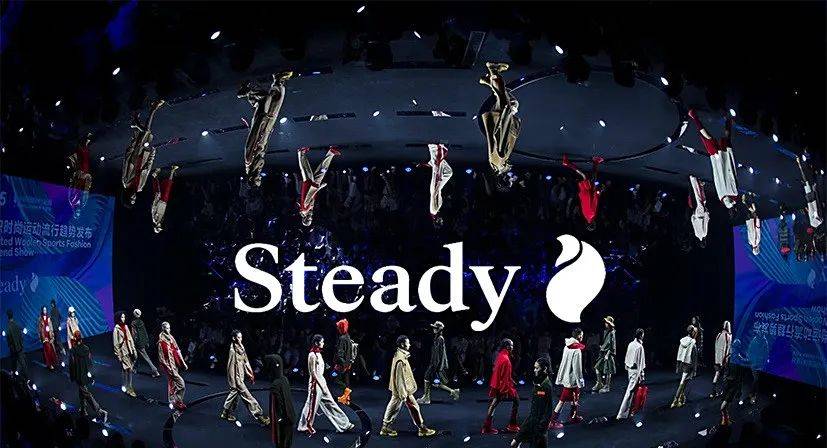
Core Viewpoint - The article emphasizes the evolving trends in fashion, particularly focusing on the "quiet luxury" concept in the knitwear sector, as presented by the company SanDe during the China International Fashion Week [3][5][11]. Group 1: Trend Leadership - SanDe Textile positions itself as a pioneer in the textile industry, leading the development direction of knitwear through deep technical accumulation and continuous innovation [3][8]. - The upcoming fashion show on September 7 will showcase the "China Knitwear Quiet Luxury Trend Release," highlighting three major themes: "Coexistence," "Intentionality," and "Symphony" [3][5]. - The integration of quiet luxury aesthetics with knitwear materials aims to meet the growing consumer demand for quality living [3][5][11]. Group 2: Design Philosophy - The core of the trend release is to embrace change, inclusivity, and cross-disciplinary integration, drawing inspiration from nature, culture, and art [5][10]. - The "quiet luxury" concept reflects a shift in consumer preferences towards understated elegance and a desire for comfort and natural aesthetics [5][7]. - SanDe's new "Knitwear Quiet Luxury" series embodies this trend, merging the flexibility of knitwear with sophisticated design elements [7][11]. Group 3: Material Innovation - SanDe views material innovation as the cornerstone of driving fashion forward, continuously expanding the expressive potential of knitwear [8][10]. - The company aims to redefine the value of knitwear by transforming innovative materials and techniques into long-term industry development momentum [10][11]. - The trend release is not just a creative showcase but a demonstration of the brand's comprehensive strength and industry responsibility [10][11]. Group 4: Future Outlook - The event signifies SanDe's commitment to expanding the boundaries of knitwear into broader lifestyle and aesthetic realms [11][15]. - The "China Knitwear Quiet Luxury Trend Release" encapsulates years of accumulated expertise while paving the way for future explorations in the industry [11][15]. - SanDe aims to articulate a new narrative for knitwear through material language and design aesthetics, inviting stakeholders to envision the future of the industry [15].
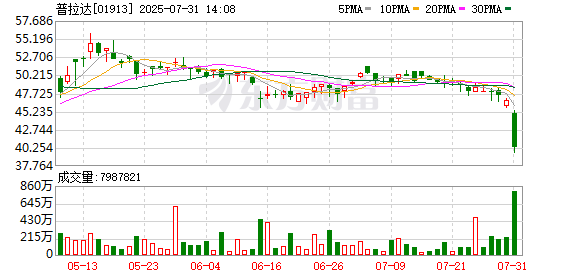
刚刚!Prada,也“崩了”
Zhong Guo Ji Jin Bao· 2025-07-31 06:20
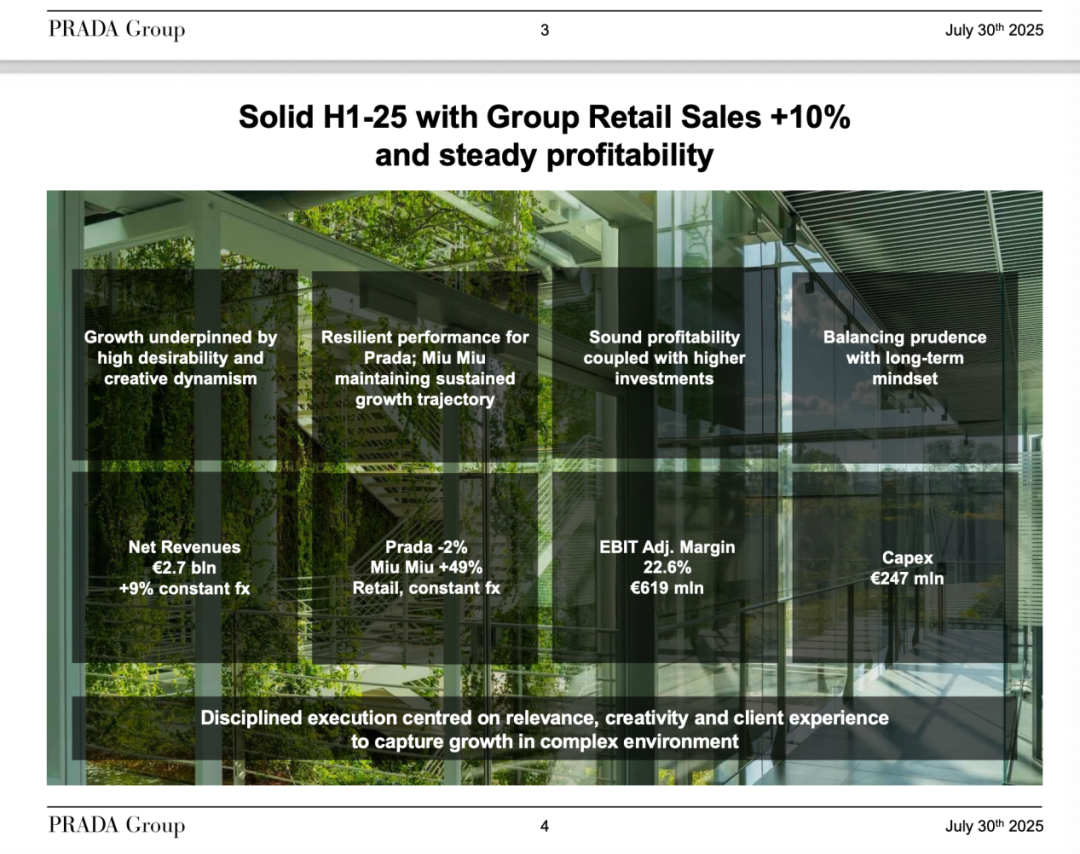
Core Viewpoint - The luxury goods growth model is being questioned as Prada Group's recent performance raises concerns, following disappointing results from other luxury giants like LVMH and Kering [1][8]. Financial Performance - Prada Group reported an adjusted EBIT of approximately €618.5 million, a year-on-year increase of 7.55% [2]. - Net income was around €386 million, reflecting a 0.62% year-on-year rise [2]. - Earnings per share stood at €0.151 [2]. - Retail sales net revenue increased by 10.1% year-on-year, accounting for 89.5% of total net revenue [2]. Brand Performance - Prada brand's retail sales net revenue slightly decreased by 2% when calculated at constant exchange rates, while Miu Miu's retail sales net revenue surged by 49% [3]. - Miu Miu's sales growth in the second quarter slowed down significantly compared to previous quarters, which saw growth rates of 93%, 105%, and 84% [7]. Regional Performance - All major markets showed growth: Asia-Pacific retail sales net revenue increased by 10.4%, Europe by 8.6%, the Americas by 12.4%, Japan by 4.3%, and the Middle East by 25.7% [7]. Market Challenges - Morgan Stanley noted that Prada's second-quarter performance was below expectations due to a slowdown in luxury consumption among cross-border travelers, with a year-on-year sales growth rate of 6.1%, down from 12.5% in the first quarter [7]. - Prada's CEO highlighted that the current market challenges are more cyclical rather than structural [1]. Strategic Outlook - For the second half of the year, Prada issued a warning about uncertainties in the recovery of the tourism sector but emphasized three certainties: maintaining a full-price sales strategy, reviewing operational efficiency quarterly, and avoiding shortcut growth strategies [7]. - Prada aims to sustain growth through precise retail strategies and new store openings, while Miu Miu plans to expand its market share in leather goods and introduce new store experiences globally [7].
刚刚!Prada,也“崩了”!
Zhong Guo Ji Jin Bao· 2025-07-31 06:08
Core Viewpoint - The luxury goods growth model is being questioned as Prada Group's recent performance raises concerns following disappointing results from other industry giants like LVMH and Kering [2][6]. Financial Performance - Prada Group reported an adjusted EBIT of approximately €618.5 million, a year-on-year increase of 7.55% [3]. - Net income was around €386 million, up 0.62% year-on-year, with earnings per share at €0.151 [3]. - Retail sales net revenue increased by 10.1% year-on-year, accounting for 89.5% of total revenue [3]. - Retail sales net revenue for the Prada brand slightly decreased by 2% when calculated at constant exchange rates, while Miu Miu's retail sales net revenue surged by 49% [3]. Regional Performance - All major markets showed growth: Asia-Pacific retail sales net revenue grew by 10.4%, Europe by 8.6%, the Americas by 12.4%, Japan by 4.3%, and the Middle East saw a remarkable increase of 25.7% [5]. - Morgan Stanley noted that Prada's second-quarter performance fell short of expectations due to a slowdown in luxury consumption among cross-border travelers, with a year-on-year sales growth rate of 6.1%, down from 12.5% in the first quarter [5]. Market Challenges - The luxury sector is facing significant challenges amid economic uncertainty and cultural shifts, potentially leading to the largest setback in 15 years [6]. - Even leading brands like LV and Dior are showing signs of fatigue, with LVMH's core fashion and leather goods revenue declining by 9% and net profit dropping by 22% [6]. Consumer Trends - Younger consumers, particularly Generation Z, are increasingly questioning the value of luxury goods, moving away from the traditional perception of luxury as a status symbol [7]. - Brands with less prominent logos, such as Loro Piana and Brunello Cucinelli, are experiencing growth, indicating a shift towards understated luxury [8].
刚刚!Prada,也“崩了”!
中国基金报· 2025-07-31 06:05
Core Viewpoint - The luxury goods growth model is being questioned as major players like Prada, LVMH, and Kering report disappointing earnings, raising concerns about the sustainability of their growth strategies [2][10]. Financial Performance - Prada Group's financial report for the first half of 2025 shows adjusted EBIT of approximately €618.5 million, a year-on-year increase of 7.55% [6]. - Net income reached about €386 million, reflecting a slight increase of 0.62% year-on-year [6]. - Retail sales net revenue grew by 10.1% year-on-year, with retail sales accounting for 89.5% of total net revenue [6]. Brand Performance - There is a stark contrast in performance between the two core brands: Prada's revenue declined in Q2, while Miu Miu experienced a significant growth of 49% [7][9]. - At fixed exchange rates, Prada's retail sales net revenue slightly decreased by 2%, while Miu Miu's retail sales net revenue surged [7]. Market Trends - All major markets reported growth: Asia-Pacific up 10.4%, Europe up 8.6%, Americas up 12.4%, Japan up 4.3%, and the Middle East showing a remarkable increase of 25.7% [7]. - Morgan Stanley noted that Prada's Q2 performance was below expectations due to a slowdown in luxury consumption among cross-border travelers, with a year-on-year sales growth rate of 6.1% compared to 12.5% in Q1 [7]. Future Outlook - Prada has issued a warning for the second half of the year regarding uncertainties in the recovery of the tourism sector, while emphasizing three certainties: maintaining a full-price sales strategy, reviewing operational efficiency quarterly, and avoiding "shortcut" growth [8]. - Miu Miu plans to expand its market share in leather goods and introduce new store experiences globally, while Prada aims to sustain growth through precise retail strategies and new store openings [9]. Industry Challenges - The luxury goods sector is facing significant challenges, potentially experiencing its largest setback in 15 years due to economic uncertainties and changing consumer sentiments, particularly among younger generations [11]. - Brands with prominent logos are struggling, while those with subtle branding, such as Loro Piana and Brunello Cucinelli, are seeing growth, indicating a shift in consumer preferences towards understated luxury [12].