非法捕捞

Search documents
美国在APEC会议上推动人工智能资金支持与渔业技术推广
Xin Lang Cai Jing· 2026-02-12 09:40
Core Insights - The Trump administration is actively promoting artificial intelligence (AI) exports and maritime surveillance technology at the APEC meeting in southern China to counter China's influence in technology and maritime domains [1][3] - A $20 million fund has been established to support partner economies in the Asia-Pacific region in adopting U.S. AI technology, part of a series of measures to reinforce U.S. leadership in emerging technologies [1][3] - The initiatives coincide with President Trump's expected visit to China in April and the upcoming APEC leaders' annual summit in Shenzhen in November [1][3] - An executive order signed by President Trump in July aims to ensure the global adoption of U.S. AI technology, standards, and governance models [1][3] - The U.S. is leveraging the APEC platform to promote private sector technologies to combat illegal, unreported, and unregulated (IUU) fishing, which threatens food security and maritime sovereignty in parts of the Pacific [1][3] - U.S. companies are developing technologies such as satellite vessel tracking, AI analysis, acoustic detection systems, and sensor-equipped ocean buoys to assist governments in monitoring fishing activities [1][3] Related Issues - Illegal fishing is often linked to other transnational crimes such as human trafficking and smuggling [2][4]
一部手机牵出20人非法捕捞团伙 涉案人员竟盯梢执法船只
Yang Shi Xin Wen· 2026-02-05 21:40
Core Viewpoint - A criminal gang was involved in illegal fishing in Taihu Lake, capturing over 200,000 pounds of various fish, with a total value of 1.105 million yuan from November 2023 to December 2024 [1][4]. Group 1: Illegal Fishing Operations - The illegal fishing operation was reported on October 8, 2024, leading to the interception of a fishing boat and the discovery of a large quantity of fish and illegal fishing gear [2][4]. - The gang utilized seven modified aluminum boats equipped with powerful engines and large fish holds to store the catch, indicating a well-organized operation [8]. - The gang employed a lookout system to monitor law enforcement activities, allowing them to evade capture during illegal fishing operations [10]. Group 2: Legal Proceedings and Penalties - The court convicted 13 members of the gang for illegal fishing, sentencing them to varying terms of detention or imprisonment, while two others were sentenced for concealing criminal proceeds [6]. - The court ordered the defendants to collectively pay 2.21 million yuan in ecological damage compensation, reflecting the severity of the environmental impact caused by their activities [6][23]. Group 3: Ecological Impact - The use of banned fishing gear, such as the triple-layered gill nets, caused irreversible harm to fish populations, threatening the ecological balance of Taihu Lake [15][19]. - The illegal capture of filter-feeding fish like white and black carp disrupts efforts to control blue-green algae blooms, which can have broader ecological consequences [21]. - The compensation funds are earmarked for ecological restoration efforts, including the release of 150,000 fish fry into Taihu Lake to aid in ecosystem recovery [24].


一夜偷捕获利数千元——洪泽湖骆马湖非法捕捞调查
Xin Hua She· 2026-01-22 02:31
Core Viewpoint - The illegal fishing activities in Hongze Lake and Luoma Lake, despite strict regulations and enforcement, continue to thrive due to high economic incentives, posing a significant threat to local aquatic resources and biodiversity [1][4][7]. Group 1: Illegal Fishing Activities - Illegal fishing has become increasingly organized and technologically advanced, with individuals using high-powered boats and sophisticated equipment like fish finders and electric fishing devices [4][6]. - Reports indicate that illegal fishing operations can yield profits of several thousand to tens of thousands of yuan in a single night, highlighting the lucrative nature of these activities [4][5]. - The local authorities have identified a shift from small-scale illegal fishing by local fishermen to more organized groups involving individuals from neighboring provinces [5][6]. Group 2: Regulatory Challenges - Despite efforts by Jiangsu's agricultural and rural departments to revoke fishing licenses and enforce bans, illegal fishing remains a significant challenge, with over 1,000 cases reported since 2021 [4][7]. - The presence of "three-no" boats (unregistered, unlicensed, and unmarked) complicates enforcement efforts, necessitating a focus on these vessels to curb illegal activities [7][8]. - There is a call for enhanced regulatory measures, including stricter monitoring of fish markets and the establishment of legal frameworks to manage fishing practices in ecological lakes [8]. Group 3: Economic Impact - The illegal catch, particularly of high-value species like wild silver carp and shrimp, is often sold in markets outside the region, indicating a broader economic network supporting these activities [4][8]. - The local economy is affected by the depletion of fish stocks due to illegal fishing, which undermines sustainable fishing practices and the long-term viability of the fishing industry [1][4].
长江禁渔后,隐蔽捕捞如何破解?
Xin Lang Cai Jing· 2025-12-24 17:46
Core Viewpoint - The implementation of a 10-year fishing ban on the Yangtze River has led to a significant reduction in illegal fishing activities, but new methods and technologies are being employed by offenders, posing challenges for enforcement [1][3][4]. Group 1: Policy Impact - Since the fishing ban began on January 1, 2021, illegal fishing cases have decreased significantly, with the number of fish species monitored in the Yangtze River increasing from 46 to 104 [3]. - The enforcement of the fishing ban has resulted in a drop in the illegal fishing crime rate in Chongqing from 53% in 2022 to 9.7% by September 2025 [3]. Group 2: New Illegal Fishing Methods - Offenders are using advanced equipment such as drones with night vision, electric fishing tools, and even diving suits to conduct illegal fishing, particularly in areas where administrative oversight is weak [3][4]. - Criminal groups are increasingly operating in cross-border river sections during late-night hours or in foggy conditions to evade detection [3][4]. Group 3: Economic Incentives - The high market price for wild Yangtze fish, with common species priced between 40 to 60 yuan per kilogram and rare species like the Yangtze sturgeon fetching much higher prices, drives illegal fishing activities [4]. - The recovery of fish populations has made illegal fishing more lucrative, allowing offenders to potentially catch hundreds of kilograms in just a few hours [4]. Group 4: Enforcement Challenges - Despite a decrease in overall illegal fishing cases, significant incidents still occur, and offenders are becoming more technologically sophisticated, complicating enforcement efforts [6]. - The rapid withdrawal of offenders after committing illegal acts presents substantial challenges for evidence collection and prosecution [4][6]. Group 5: Recommendations for Improvement - Experts suggest enhancing cross-regional law enforcement collaboration and improving monitoring capabilities in weak oversight areas using AI and advanced surveillance technologies [7][8]. - Encouraging community involvement in fish protection and establishing reward systems for reporting illegal activities can help supplement regulatory efforts [8].
央媒:长江禁渔后,有不法分子在上游跨界江段用新设备“夜捕”
Xin Lang Cai Jing· 2025-12-21 00:07
Core Viewpoint - The implementation of a 10-year fishing ban on the Yangtze River has led to a significant reduction in illegal fishing activities, but new challenges have emerged as criminals adapt their methods to exploit economic incentives and improved fish populations [1][2]. Group 1: Policy Impact - Since the fishing ban began on January 1, 2021, illegal fishing cases have decreased significantly due to enhanced policy enforcement and public awareness campaigns [1]. - From 2022 to September 2025, Chongqing reported 1,939 illegal fishing cases, with the incidence rate in the Yangtze River segment dropping from 53% in 2022 to 9.7% [2]. Group 2: New Illegal Fishing Tactics - Criminals are now using advanced technology such as drones, night vision devices, and diving suits to conduct illegal fishing, making their activities more covert [1][2]. - Reports indicate that illegal fishing operations are increasingly organized, with clear divisions of labor among members for tasks such as lookout, fishing, and sales [2][4]. Group 3: Economic Incentives - The high market price for wild Yangtze fish, with common species priced between 40-60 yuan per kilogram and rare species like the Yangtze sturgeon fetching much higher prices, continues to drive illegal fishing activities [4]. - The recovery of fish populations has made illegal fishing more lucrative, with criminals able to catch large quantities in a short time [4]. Group 4: Enforcement Challenges - Despite a decrease in overall illegal fishing cases, the emergence of high-tech methods poses new challenges for law enforcement [6]. - Regulatory efforts are hampered in areas where jurisdictional boundaries overlap, leading to weaker enforcement in those regions [4][6]. Group 5: Recommendations for Improvement - Experts suggest enhancing cross-regional law enforcement collaboration and improving the integration of administrative and legal actions to address illegal fishing effectively [7]. - The establishment of a comprehensive monitoring network utilizing AI and advanced surveillance technology is recommended to improve oversight in vulnerable areas [7][8].
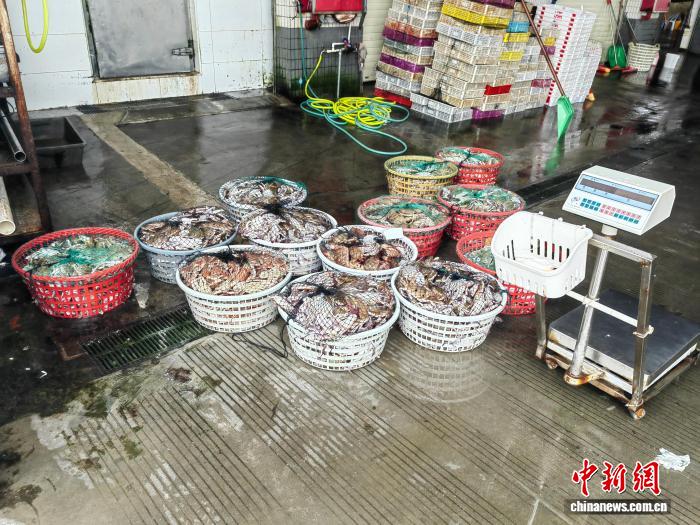
流窜闽粤两省作案 广东海警抓获非法获利数百万元犯罪团伙
Zhong Guo Xin Wen Wang· 2025-11-26 06:47
Core Viewpoint - The Guangdong Coast Guard successfully dismantled a criminal gang involved in illegal fishing activities across Fujian and Guangdong provinces, with illegal profits amounting to over 6 million yuan [1][4][7]. Group 1: Criminal Activities - The gang, led by an individual named Yan, operated using eight vessels, with seven engaged in illegal fishing while one served as a cover for transportation and supply [4][7]. - During the closed fishing season, the gang illegally caught over 70 tons of seafood, resulting in profits exceeding 6 million yuan [7]. Group 2: Law Enforcement Actions - The investigation began when the Guangdong Shantou Coast Guard inspected a fishing vessel and found suspicious cargo, leading to further scrutiny [3][4]. - Despite challenges such as lack of immediate evidence and information on upstream fishing vessels, the Coast Guard conducted a thorough investigation, ultimately identifying the gang and its members, numbering nearly 50 [4].