预制菜健康隐患

Search documents
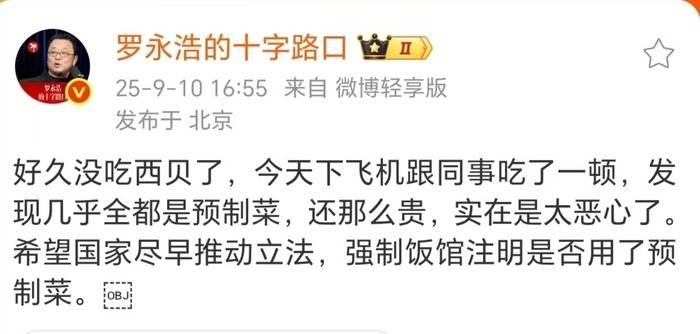
海量财经丨罗永浩将预制菜推向风口浪尖!数千亿预制菜市场谁在消费?
Sou Hu Cai Jing· 2025-09-12 09:14
Core Viewpoint - The controversy surrounding the definition of pre-prepared dishes has highlighted significant shifts in the contemporary dining industry, particularly in the context of rising consumer expectations and transparency demands [1][3]. Group 1: Company Responses - Xibei's founder, Jia Guolong, firmly denied the use of pre-prepared dishes in their restaurants, asserting that all 370+ locations do not serve any pre-prepared items [2]. - Jia Guolong introduced a "Luo Yonghao Menu" showcasing a meal for five costing over 800 yuan, emphasizing the quality of their offerings [2]. - In response to the controversy, Xibei has adopted a transparency strategy by allowing consumers to tour their kitchens starting September 12, 2025 [2]. Group 2: Market Growth and Consumer Trends - The pre-prepared dish market in China reached a scale of 485 billion yuan in 2024, with a year-on-year growth of 33.8%, and is projected to exceed 617.3 billion yuan in 2025 [6]. - The primary consumers of pre-prepared dishes are B-end clients, particularly restaurant businesses, which account for over half of the total consumption [6]. - C-end consumers, including busy office workers and young families, are increasingly turning to pre-prepared dishes for convenience, with examples of quick meal solutions becoming commonplace [6]. Group 3: Industry Dynamics - The use of pre-prepared dishes is driven by cost efficiency and operational effectiveness, with many restaurants adopting them to reduce expenses and ensure consistent food quality [7]. - Pre-prepared dishes can enhance the speed of service and reduce reliance on skilled chefs, making them attractive to chain restaurants [7]. - Despite the growth of pre-prepared dishes, the industry faces challenges related to health concerns and potential loss of culinary traditions, as well as the risk of market homogenization [9].