食品消费税归零

Search documents
【环球财经】日本核心CPI连续53个月同比上涨
Xin Hua Cai Jing· 2026-02-20 02:51
Group 1 - The core consumer price index (CPI) in Japan, excluding fresh food, rose by 2.0% year-on-year to 112.0 in January, marking the 53rd consecutive month of increase [1] - The main driver of the CPI increase is the rising food prices, with food prices excluding fresh items increasing by 6.2% year-on-year [1] - Specific food items saw significant price increases, including coffee beans up by 51.0%, regular japonica rice up by 27.9%, and chocolate up by 25.8% [1] Group 2 - Prices for housing repairs, communication fees, and hotel accommodations also experienced year-on-year increases [2] - Prime Minister Sanna Marin announced plans to convene a bipartisan "National Conference" to discuss social security and tax system reforms, in response to the two-year commitment to eliminate the food consumption tax [2] - The International Monetary Fund (IMF) expressed skepticism regarding the tax reduction measures, advising Japan to avoid cutting consumption taxes due to potential fiscal risks [2]
高市2.0开启!日元跳水,日本股债齐涨
Xin Lang Cai Jing· 2026-02-18 10:02
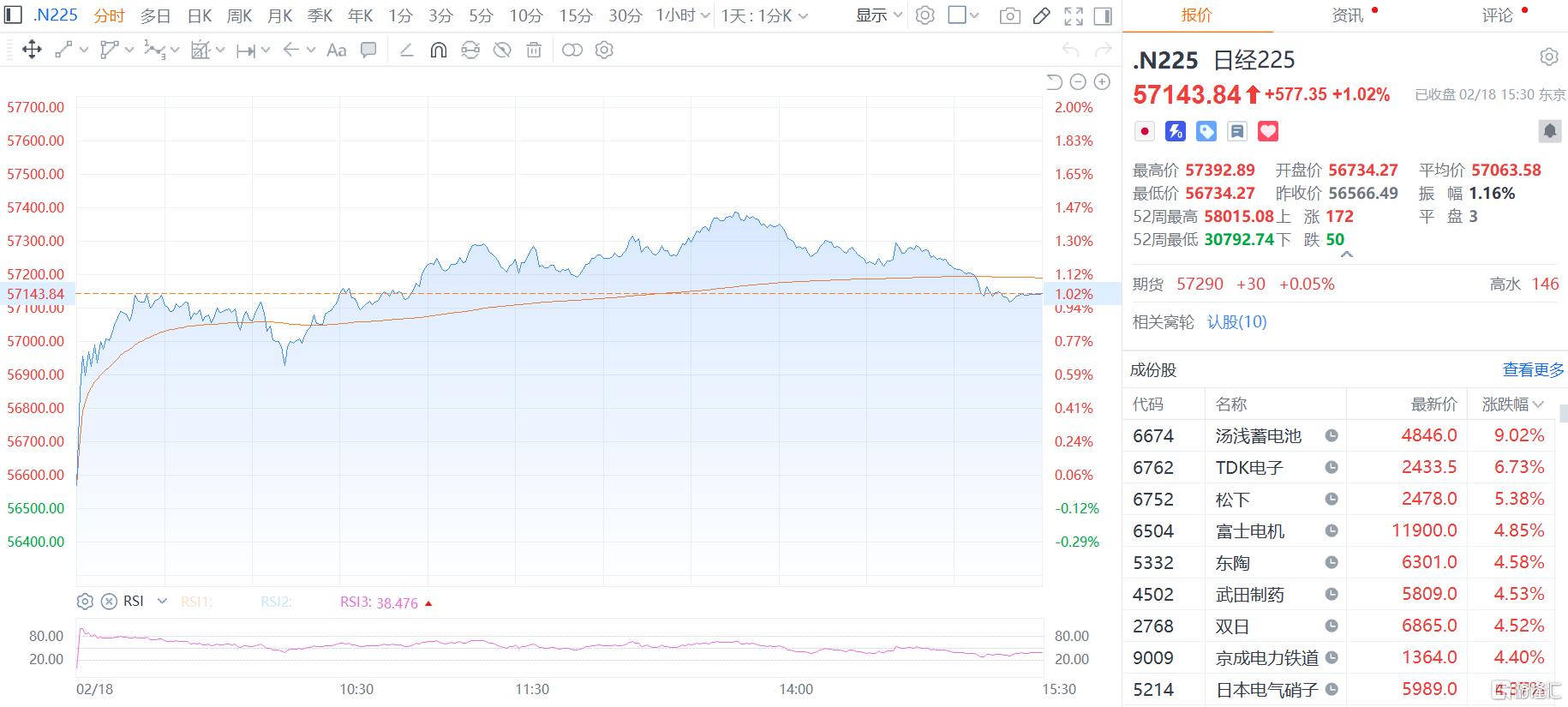
Group 1 - The election of Sanna Marin as Japan's 105th Prime Minister is expected to boost market sentiment, leading to a rise in Japanese stock indices, with the Nikkei 225 closing up 1.02% at 57,143.84 points and the Topix index up 1.21% to 3,807.25 points [1] - The Japanese 10-year government bond yield has decreased to approximately 2.134%, indicating a shift in investor sentiment towards safer assets [4] - The new Prime Minister is anticipated to address discussions on potentially suspending the food consumption tax, which has raised concerns from the International Monetary Fund (IMF) regarding fiscal risks [10][11] Group 2 - The IMF has warned Japan against cutting consumption taxes, suggesting that such measures could exacerbate fiscal risks and undermine the country's financial stability [11][15] - The IMF emphasizes the importance of maintaining the independence and credibility of the Bank of Japan to stabilize inflation expectations and recommends a gradual exit from monetary easing [12] - Japan's Ministry of Finance reported a 5% year-on-year decline in exports to the U.S. in January, amounting to 1.46 trillion yen, influenced by U.S. tariff policies and a decrease in exports of pharmaceuticals, automobiles, and metalworking machinery [15][16]