巧克力

Search documents
EU, Australia talk up trade openings as deal meets mixed response
Yahoo Finance· 2026-03-24 14:14
Core Insights - The EU and Australia have finalized a free-trade agreement aimed at removing tariffs on various food and drink products, while maintaining protections for sensitive sectors like meat [1][2]. Trade Agreement Details - Tariffs on EU exports of cheese, meat preparations, wine, sparkling wine, certain fruits and vegetables, chocolate, and sugar confectionery will be eliminated upon signing the agreement [2]. - Approximately 95% of Australia's agricultural exports to the EU will enter duty-free [2]. Industry Reactions - EU farming lobby group Copa-Cogeca expressed strong concerns regarding the impact of the agreement on European agriculture [3]. - The Australian Meat Industry Council voiced disappointment, claiming the deal restricts access for red meat and disadvantages Australian producers in the European market [3]. Sensitive Products and Quotas - Australian exporters of sensitive products like beef, sheep, goat meat, sugar, some dairy products, and rice will face limited tariff-free access [4]. - Quotas will apply to most dairy products, including cheese, butter, and skimmed milk powder, as well as beef, sheep meat, wheat gluten, and ethanol [5]. Economic Impact - The European Dairy Association welcomed the agreement, stating it will enhance the competitiveness and resilience of European industries, particularly in the dairy sector [5]. - In the previous year, EU exporters sent nearly €400 million worth of dairy products to Australia, with cheese being the most exported item [6]. Long-term Considerations - Copa-Cogeca criticized the concessions made in the agreement, especially in the context of previous trade agreements like Mercosur, suggesting that the cumulative impact is detrimental [7]. - Geographical Indications protections will be established for 165 food and agricultural products as part of the agreement [7].
原料涨价、渠道分流、小品牌围攻,巧克力厂商的突围指南
凯度消费者指数· 2026-03-24 03:52
Core Viewpoint - The chocolate market is facing both challenges and opportunities, with rising raw material costs and the emergence of small brands impacting traditional manufacturers, while consumer preferences are shifting towards quality and price-performance ratio [1][18]. Group 1: Market Dynamics - Chocolate sales account for over half of the candy category, and this proportion continues to rise [1]. - The trend of "consumption alternatives" is affecting the chocolate market, with non-leading brands capturing significant market share, accounting for nearly half of chocolate sales in e-commerce channels [2]. - The price of cocoa futures surged to a historical high in April 2025 due to supply issues caused by pests and extreme weather, leading to increased production costs for chocolate manufacturers [2]. Group 2: Private Label Brands - Retailers are accelerating the development of private label brands, with the proportion of urban households purchasing private label products rising from 45% to 53% between 2024 and the first three quarters of 2025 [3]. - Private label brands are increasingly priced closer to manufacturer brands, with 41% of private label fast-moving consumer goods priced higher than other brands, indicating a shift in strategy beyond just low pricing [3]. Group 3: Consumer Preferences - Flavor preference is the primary consideration for consumers when purchasing chocolate, accounting for nearly 30% of the decision-making process [4]. - Over 80% of chocolate consumers in snack stores prefer products priced below 10 yuan or weighing less than 80 grams, with more than half favoring items under 5 yuan [8]. Group 4: Channel Growth - Snack stores have rapidly expanded, significantly increasing chocolate penetration rates, which grew by 36% in the past year, outpacing overall channel growth [6]. - The average price of chocolate in snack stores is only 38% of the overall channel average, making it an attractive option for consumers [7]. Group 5: Targeting Families - Families with children are the core consumer group for chocolate in snack stores, with "purchasing for children" and "attractive packaging" being the main drivers of consumption [8][12]. - Chocolate brands should focus on appealing packaging and product design to capture the attention of children and encourage impulse purchases [12]. Group 6: Long-term Trends - The aging population is becoming a new consumer force in the chocolate market, with middle-aged families showing the highest growth in sales and penetration rates [11]. - Brands should target this demographic by offering products suitable for sharing and gifting, aligning with their social needs and usage scenarios [12][13]. Group 7: Seasonal Trends - During the Spring Festival, the proportion of sales from gifts increased from 15% to over 20%, indicating a growing trend towards gifting quality chocolate products [15][16]. Group 8: Strategic Recommendations - Chocolate manufacturers should track flavor and ingredient trends, innovate products based on consumer preferences, and ensure precise channel alignment to achieve sustainable growth [18].


鸣鸣很忙20260309
2026-03-10 10:17
Company and Industry Summary Industry Overview - The snack retail industry is transitioning into a "dual strong" competitive landscape, with an estimated nationwide store count reaching 80,000 to 100,000 by 2025, as subsidies decrease and competition eases [2][3] - The industry is expected to have over 55,000 stores and a retail market exceeding 250 billion by the end of 2025, with a 15% to 20% share in offline channels for snacks and beverages [3] Company Insights: Mingming Hen Mang - Mingming Hen Mang (including its brand Zhao Yiming Snacks) anticipates reaching 22,000 stores and a GMV exceeding 90 billion by the end of 2025, with 66% of stores located in third-tier cities and below, indicating a strong presence in lower-tier markets [2][7] - The company is exploring new store formats such as "discount supermarkets" and convenience stores, with the former having a return period of approximately 3 to 3.5 years [2][4] - Supply chain efficiency is highlighted, with 48 warehouses enabling 24-hour daily distribution and inventory turnover of only 11 to 13 days [2][12] Financial Projections - Revenue is projected to approach 100 billion by 2027, with a target PE of 26 times for 2026 based on scale effects and enhanced bargaining power [2][14][16] - Expected gross margin to rise to 10% by 2025, with net profit margin projected between 4.5% and 5% [2][15] Competitive Landscape - The competitive landscape has evolved through three phases: regional competition before 2021, capital involvement and consolidation from 2022, and a dual strong competition model post-2023 [3] - By the end of 2025, Mingming Hen Mang and Wancheng Group are expected to have over 22,000 and 19,000 stores respectively, while other regional brands lag significantly [4] Store Management and Operations - The company emphasizes standardized management with a unified design and layout across stores, while also allowing for customized displays based on local market needs [9] - As of mid-2025, the company has 3,300 employees in store operations, with over 780 dedicated store supervisors [9] Franchise Performance - Franchisees have an average of 2 stores, with a closure rate maintained between 1% and 2% [10] - Average single-store GMV is approximately 5.3 million, influenced by larger store formats [10] Product and Supply Chain - The company offers around 3,600 SKUs, with at least 1,800 SKUs available per store, and collaborates with over 2,500 suppliers [11] - The warehouse network supports rapid distribution, with a 24-hour delivery capability [12] Future Growth and Strategy - The company plans to open over 7,000 new stores in 2025, with a slowdown in growth expected in 2026 and 2027, focusing on quality and maintaining a closure rate of 1% to 2% [13] - Revenue growth rates are projected at 66%, 32%, and 16% for 2025, 2026, and 2027 respectively, with gross margins expected to improve steadily [14][15] Valuation and Market Position - The target valuation for Mingming Hen Mang is set at 26 times PE for 2026, reflecting its competitive advantages and growth potential in the snack retail sector [16]
数读「糖果、巧克力」:低糖健康、功能功效、IP食玩,是出路吗?
东京烘焙职业人· 2026-03-06 08:33
Core Insights - The article discusses the challenges faced by the candy and chocolate categories in the retail market, highlighting the impact of health trends and rising raw material costs on consumer preferences and pricing strategies [2][4]. Group 1: Market Overview - The candy and chocolate categories account for approximately 9% and 4% of the overall snack market, respectively, with chocolate experiencing a slight decline in market share from 2024 to 2025 [7]. - Both categories have seen negative year-on-year sales growth, with chocolate sales declining by about 7% and candy experiencing a more significant drop of over 10% [7][11]. - The overall market for snacks in traditional retail channels is shrinking, affecting all subcategories, with candy facing more severe pressure than chocolate [7][11]. Group 2: Seasonal Trends - Chocolate sales peak in the autumn and winter months due to higher caloric needs and seasonal holidays like Christmas and Valentine's Day [9]. - Candy maintains a higher quarterly market share than chocolate but has shown a noticeable decline in 2025, reflecting changing consumer preferences and a shift away from traditional candy [9][11]. Group 3: Pricing Trends - The average price per 100 grams for chocolate has been rising, influenced by increased raw material costs, while candy prices have generally declined [13][15]. - The price index for both categories has shown a trend of initial decline followed by recovery, with chocolate performing better than the overall snack category in certain periods [15][17]. Group 4: Regional Insights - In 2025, the Southwest region had the highest market share for candy, exceeding 10%, while the Northeast had the lowest at around 5.5% [17]. - Chocolate market share is higher in East China, North China, and Southwest regions, with some areas showing growth in market share from 2024 to 2025 [19]. Group 5: Market Concentration - The chocolate category has a high market concentration, with the top three brands holding over 70% of the market share, while the candy category remains fragmented with only about 20% held by the top three brands [21]. - The market share of the top ten brands in chocolate remains stable at around 80%, indicating a trend towards increased concentration in this category [21]. Group 6: Brand Dynamics - In the chocolate category, Meiji Group has shown significant sales growth of over 15%, while other brands like Mars and Ferrero have also seen positive market share growth [25][29]. - The candy category's top ten brands have all reported negative year-on-year sales growth, with Mars being the only brand exceeding 8% market share [41][45]. Group 7: Product Innovations - The article highlights the emergence of new product types such as probiotic and sugar-free candies, which are gaining traction among health-conscious consumers [46][57]. - The trend towards IP-themed products in both candy and chocolate categories is noted, with brands leveraging popular culture to enhance product appeal and pricing power [43][45].

科特迪瓦可可产业持续承压
Shang Wu Bu Wang Zhan· 2026-02-27 16:11
Core Insights - The cocoa crisis in Côte d'Ivoire is escalating, leading to political tension and economic pressure in the country, which is the world's largest cocoa supplier, accounting for 40% of global cocoa production and contributing 15% to the national GDP [1] Group 1: Economic Impact - Cocoa production directly supports 1.1 million farmers and indirectly provides income for 6 million people, making it a crucial sector for fiscal revenue and employment in Côte d'Ivoire [1] - The government announced a buyback of cocoa from farmers, increasing the initial plan from 130,000 tons to 200,000 tons, with a total value exceeding 300 billion West African francs (approximately $540 million), temporarily alleviating pressure on farmers [1] Group 2: Market Dynamics - Global cocoa demand has weakened due to a shift in chocolate manufacturers adjusting recipes to reduce cocoa content and passing costs onto consumers, resulting in a significant increase in chocolate prices [1] - The cocoa purchase price set by the Coffee and Cocoa Council (CCC) reached a historic high of 2,800 West African francs per kilogram, while global cocoa prices have dropped over 70%, from $12,000 per ton in December 2024 to about $3,000 per ton [1] Group 3: Regulatory and Structural Challenges - The cocoa crisis has sparked calls for modernization of the regulatory framework in the cocoa industry, alongside the need to update aging plantations, enhance traceability to meet EU standards, and strengthen the processing sector [1]
消费缘何“新新”向荣
Xin Hua Wang· 2026-02-26 00:28
Core Insights - The article emphasizes the importance of adapting supply to meet evolving consumer demands, highlighting a positive cycle between improving livelihoods and economic development [3] Group 1: Consumer Trends - There is a noticeable shift in consumer preferences, with an increase in demand for imported goods and personalized services, reflecting a broader trend towards quality and experience in consumption [2][3] - The average disposable income of residents in China is projected to grow at an annual rate of 5.4% during the 14th Five-Year Plan period, aligning with economic growth and enhancing consumer spending power [2] Group 2: Supply Chain Adaptation - The ability of supply to keep pace with new consumer demands is critical for the flourishing of consumption, as seen in examples from Zhejiang Yiwu and Shenzhen, where production is rapidly adjusted based on market feedback [3] - Digital technology plays a significant role in enabling quick adjustments in production plans, allowing for faster product iterations and better alignment with consumer needs [3] Group 3: Market Dynamics - The construction of a unified national market is essential for promoting new consumption patterns, with initiatives aimed at improving logistics and ensuring fair market access [4] - Internationally, there is a growing trend of Chinese cultural products gaining popularity abroad, which not only serves as a means for overseas Chinese to connect with their heritage but also introduces global consumers to Chinese culture [4] Group 4: Future Directions - The article advocates for a dual circulation strategy that strengthens domestic consumption while enhancing international trade, suggesting that openness will lead to more vibrant consumer markets [4] - Continuous innovation and responsiveness to consumer desires are seen as key to sustaining economic growth and improving quality of life [4]
消费缘何“新新”向荣(评论员观察)
Ren Min Ri Bao· 2026-02-25 22:12
Group 1 - The core viewpoint emphasizes the importance of adapting supply to meet evolving consumer demands, creating a virtuous cycle of improving livelihoods and economic development [1][3] - The article highlights the transformation in consumer behavior, showcasing a shift towards diverse and personalized products, such as imported fruits and pet services, reflecting a broader trend in consumption [1][2] - The continuous increase in disposable income, projected to grow at an average annual rate of 5.4% during the 14th Five-Year Plan period, aligns with economic growth, indicating a strong foundation for consumer spending [2] Group 2 - The ability of supply to keep pace with emerging consumer demands is crucial for sustaining consumption growth, as demonstrated by the rapid production capabilities in regions like Yiwu and Shenzhen [3] - The article discusses the role of digital technology in enhancing production responsiveness, allowing for real-time adjustments based on consumer feedback and market trends [3] - The expansion of the national unified market and the promotion of both domestic and international consumption are essential for unlocking new consumer potential and driving economic growth [4] Group 3 - The article notes that the integration of traditional cultural products into the global market, such as Chinese dumplings and Hanfu, serves as a means for overseas Chinese to connect with their heritage while introducing Chinese culture to global consumers [4] - The emphasis on maintaining a strong domestic circulation while facilitating international exchanges is presented as a strategy for promoting consumption and expanding domestic demand [4] - The narrative concludes with a call for continuous innovation and adaptation to meet the aspirations of consumers for high-quality living, reinforcing the commitment to high-quality development [4]
(经济观察)海南自贸港免税政策发力 “乐购中国”成新风尚
Zhong Guo Xin Wen Wang· 2026-02-25 07:35
Core Insights - The Hainan Free Trade Port has seen a significant increase in duty-free shopping during the recent Spring Festival, with a notable rise in both domestic and international consumer participation [1][2][5]. Group 1: Duty-Free Shopping Performance - The total amount of duty-free shopping monitored by Haikou Customs during the Spring Festival reached 27.2 billion RMB, marking a 30.8% increase compared to the previous year [2]. - The number of items sold was 1.997 million, reflecting a year-on-year growth of 21.9% [2]. - The number of shoppers reached 325,000, which is a 35.4% increase from the previous year [2]. - CDF Haikou International Duty-Free City reported a record single-day visitor count exceeding 70,000 during the holiday [1]. Group 2: Consumer Trends and Preferences - There is a growing trend of international tourists, particularly from Russia, Malaysia, Singapore, and Thailand, visiting Hainan's duty-free stores, indicating an internationalization of the duty-free shopping market [5]. - Local residents are increasingly benefiting from duty-free policies, with the introduction of "zero tariff" policies for imported goods, allowing them to shop at duty-free stores [5]. - The first five daily consumer goods duty-free stores opened in Hainan, featuring products from countries like Germany and Switzerland, which have been well-received by local consumers [5]. Group 3: Product Offerings and Promotions - Various promotional activities, such as discounts and loyalty points, have attracted a large number of customers to duty-free stores [1]. - The product range in duty-free stores has expanded significantly, with a focus on items like chocolates, baby products, and daily necessities, which have seen high sales during the Spring Festival [7]. - The integration of domestic products, such as ceramics and clothing with Chinese elements, has attracted foreign tourists, enhancing the shopping experience [4].
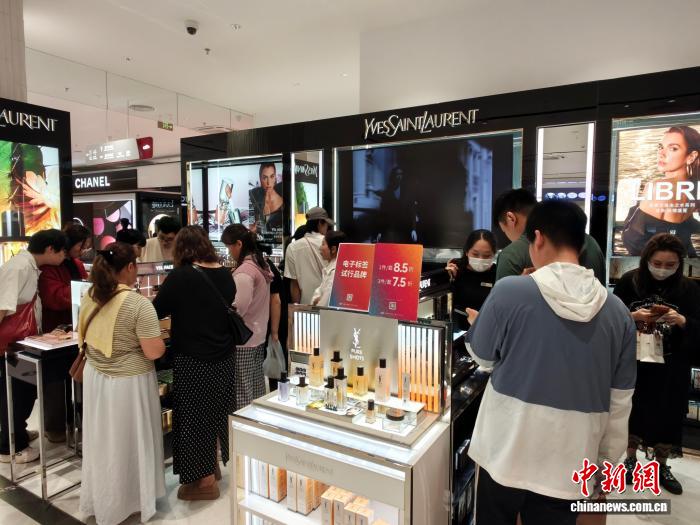
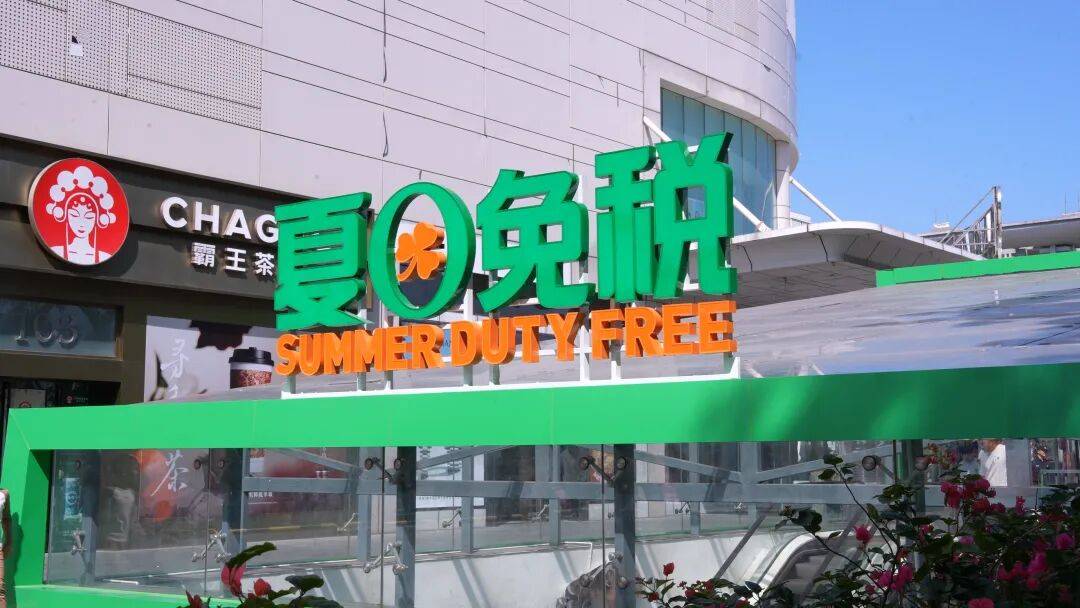
12万人次打卡!儋州夏日广场日用消费品免税店2026春节销售火爆,日用“年货”成新宠
Sou Hu Cai Jing· 2026-02-25 05:39
Group 1 - The consumer market in Danzhou experienced significant growth during the 2026 Spring Festival holiday, with a duty-free store at Xiari Square becoming a popular destination for purchasing New Year goods, receiving 124,300 visitors and achieving sales exceeding 940,000 yuan [2] - The duty-free store focused on daily consumer goods rather than luxury items, aligning with the demand for family purchases during the Spring Festival, offering 1,618 types of products, with duty-free sales reaching 160,000 yuan and general trade sales amounting to 780,000 yuan [3] - Popular products included adult milk powder and personal care items in the duty-free category, while beer, snacks, dairy products, and personal care items were the best sellers in general trade, indicating a strong consumer demand for high-quality imported food and daily necessities [5] Group 2 - The store's product range included a variety of items from food and beverages to children's milk powder and daily necessities, with significant sales increases in festive items such as candies, chocolates, and red wine, effectively enhancing the holiday shopping experience for Danzhou residents [8]
视频丨美国企业主:关税朝令夕改 企业不知何去何从
Yang Shi Xin Wen Ke Hu Duan· 2026-02-24 14:46
Group 1 - The U.S. Supreme Court ruled that the government's large-scale tariff policy is illegal, prompting President Trump to announce a 10% tariff on goods imported to the U.S., which was later increased to 15% [1] - This rapid change in tariff policy has left some U.S. business owners feeling unprepared and facing greater uncertainty due to the unpredictable nature of the tariffs [1][3] - The chocolate industry, heavily reliant on imported raw materials from West Africa and Central America, is particularly affected by these tariff changes, leading to increased pressure on businesses [3][5] Group 2 - Business owners, such as chocolate shop owners, express concerns about the inability to predict the impact of these tariffs on their operations, indicating a challenging and unstable business environment [5][6] - The swift adjustments in tariff rates have created a sense of instability, making it difficult for companies to maintain consistent pricing and operational strategies [5][6]