货币宽松

Search documents
美联储放鹰,铜破位下行:沪铜周报-20260323
Zhong Hui Qi Huo· 2026-03-23 04:05
1. Report Industry Investment Rating - No information provided in the document 2. Core Viewpoints of the Report - Macro and micro factors resonate, causing a surge in market panic. Funds flee in a stampede, leading to a breakdown in Shanghai copper prices and testing key support levels [6]. - In the short - term, copper has broken through important psychological support, with the price center shifting downwards and more downside potential. It is recommended to wait for market sentiment to stabilize, avoid blind bottom - fishing or panic selling. Industrial buyers should purchase as needed, increase inventory replenishment during price corrections, and sellers should wait for price rebounds to hedge against upper pressure levels. In the long - term, due to tight copper ore supply, the explosion of green copper demand, national strategic resource security premiums, and intensified Sino - US competition, the long - term trend of copper should not be overly pessimistic [6]. - The focus range for Shanghai copper is [88000, 98000] yuan/ton, and for LME copper is [11500, 12500] US dollars/ton [6]. 3. Summary by Directory 3.1 Viewpoint Summary - Core view: Macro and micro factors resonate, market panic soars, funds flee, and Shanghai copper breaks down to test support [6]. - Strategy outlook: Deterioration of the Middle East situation, inflation concerns reversing global monetary easing expectations, central banks like the Fed turning hawkish, a stronger US dollar suppressing copper prices, high inventory and lackluster peak season lead to a breakdown in copper prices. Wait for a stabilization opportunity. In the short - term, copper breaks through support, price center shifts down. In the long - term, don't be overly pessimistic about copper's trend [6]. 3.2 Macroeconomic Analysis - Middle East situation: The situation has escalated, inflation concerns have reversed monetary easing expectations, and the Fed has turned hawkish. On March 19, the federal funds rate remained at 3.50% - 3.75%. The 2026 full - year interest rate cut expectation has dropped from 2 - 3 times at the beginning of the year to only 1 time. The Fed has also raised the 2026 core PCE inflation forecast from 2.5% to 2.7%. The US 2 - month PPI exceeded expectations, with a month - on - month increase of 0.6% and a year - on - year increase of 3.8%. The Middle East conflict has led to an out - of - control surge in energy prices, and global central banks have turned hawkish [8][17]. - China's situation: Trump's visit to China has been postponed, LPR has remained unchanged, and February's macro data showed a weak recovery. Industrial added value increased by 5.2% year - on - year, slightly lower than expected. Social consumer goods retail sales increased by 4.8% year - on - year, also lower than expected. Fixed - asset investment increased by 3.9% year - on - year, with real estate investment decreasing by 8.5%. In February, new RMB loans were 1.45 trillion yuan, less than expected. The central bank's LPR remained unchanged, and the market's expectation of an interest rate cut was dashed [18][20]. 3.3 Supply - Demand Analysis - Bullish factors: Increased disturbances in copper ore, low copper concentrate processing fees, calls to include copper concentrates in the storage system, anti - involution in the copper smelting industry at home and abroad, resilient demand in power and new energy vehicles, and rising national security and scarcity premiums for copper [27]. - Bearish factors: The Fed turning hawkish, the ECB and the Bank of England following suit, China's LPR remaining unchanged, market liquidity under pressure, the Middle East situation changing sharply, high market risk - aversion, rising crude oil prices, a stronger US dollar, concerns about the global economic outlook, high copper prices suppressing demand, excessive inventory accumulation at home and abroad, and a short - term decline in speculative enthusiasm [27]. - Copper price performance: As of March 20, LME copper was at 11835 US dollars/ton with a weekly increase of 0.7%, COMEX copper was at 530.2 cents/pound (equivalent to 11685 US dollars/ton), and Shanghai copper was at 94740 yuan/ton with a weekly increase of 5.55% [28]. - Supply: Copper concentrate supply is tight. In February 2026, China imported 2310000 physical tons of copper ore concentrates, a month - on - month decrease of 11.97% and a year - on - year increase of 5.84%. Copper concentrate processing fees are at a low level, and electrolytic copper production in February was 1.1424 million tons, a month - on - month decrease of 3.69 tons. It is expected to increase to 1.1952 million tons in March [50][52]. - Demand: The "Golden March and Silver April" peak season has started slowly. Traditional sectors such as real estate and home appliances are dragging down demand, while emerging sectors such as power grid investment, new energy, and AI data centers are providing support [55]. - Inventory: As of March 19, domestic copper social inventory was 523100 tons, a month - on - month decrease of 26600 tons. SHFE copper inventory was 411100 tons, a month - on - month decrease of 22300 tons, LME copper inventory was 342300 tons, a weekly increase of 30500 tons, and COMEX copper inventory was 588700 tons, a weekly decrease of 2841 tons [56]. 3.4 Summary and Outlook - Macro: The Middle East situation has further deteriorated, inflation concerns have reversed global monetary easing expectations, central banks have turned hawkish, the US dollar has strengthened to suppress copper prices, Trump's visit to China has been postponed, and China's LPR has remained unchanged, resulting in market liquidity pressure [88]. - Fundamentals: Copper concentrate supply remains tight, processing fees are at a new low, electrolytic copper production decreased in February and is expected to increase in March, imports have decreased, and global copper inventory is high. After the sharp decline in copper prices this week, downstream procurement has been active, but terminal demand is lackluster [88]. - Strategy: In the short - term, wait for market sentiment to stabilize, avoid blind actions. In the long - term, be less pessimistic about copper's trend. The focus range for Shanghai copper is [88000, 98000] yuan/ton, and for LME copper is [11500, 12500] US dollars/ton [88].
宝城期货股指期货早报-20260317
Bao Cheng Qi Huo· 2026-03-17 01:38
Group 1: Report Industry Investment Rating - No relevant content Group 2: Core Viewpoints of the Report - The short - term view of the stock index is mainly range - bound consolidation. The geopolitical risks and continuous policy benefits are intertwined, with geopolitical risks suppressing the stock index and policy benefits supporting it in the medium - to - long term. The follow - up should focus on the evolution of the US - Iran situation, policy implementation effects, and the disclosure of listed company financial reports [5] Group 3: Summary by Related Catalogs Variety Viewpoint Reference - Financial Futures Stock Index Sector - For the IH2606 variety, the short - term view is oscillatory, the medium - term view is oscillatory, the intraday view is bullish, and the reference view is range - bound. The core logic is that continuous policy benefits stabilize the economic fundamentals [1] Main Variety Price Market Driving Logic - Financial Futures Stock Index Sector - For varieties IF, IH, IC, and IM, the intraday view is bullish, the medium - term view is oscillatory, and the reference view is range - bound. The core logic is that yesterday, each stock index was oscillating and consolidating in a narrow range. Geopolitical risks and continuous policy benefits are intertwined, causing the stock index to fall into an oscillatory consolidation market. Geopolitical risks suppress the stock index, while policy benefits support it in the medium - to - long term [5]
宝城期货股指期货早报(2026年3月16日)-20260316
Bao Cheng Qi Huo· 2026-03-16 05:42
Report Summary 1. Report Industry Investment Rating - Not provided in the given content 2. Core Viewpoints - For IH2606, in the short - term and medium - term, it is expected to be in a state of oscillation, and intraday it is expected to be on the stronger side, with an overall view of range - bound oscillation due to continuous policy support stabilizing the economic fundamentals [1]. - For IF, IH, IC, and IM, the intraday view is on the stronger side, the medium - term view is oscillation, and the overall reference view is range - bound oscillation. Although the risk of long - term Middle East geopolitical crisis may limit stock prices, the market has basically digested this risk. Policy support is the main logic for the long - term upward movement of the stock index. In the short - term, the index will be mainly in range - bound consolidation [5]. 3. Summary by Related Aspects 3.1 Variety Viewpoint Reference - Financial Futures Stock Index Sector | Variety | Short - term | Medium - term | Intraday | Viewpoint Reference | Core Logic | | --- | --- | --- | --- | --- | --- | | IH2606 | Oscillation | Oscillation | Stronger | Range - bound oscillation | Policy support stabilizes economic fundamentals [1] | 3.2 Main Variety Price Market Driving Logic - Financial Futures Stock Index Sector - **Core Logic**: Last Friday, stock indexes oscillated and slightly pulled back. The long - term risk of the Middle East geopolitical crisis has increased, which may lead to global stagflation and limit central bank's monetary easing, thus suppressing stock prices. However, the market has basically digested this risk, and the marginal impact is weakening. Policy support is the main driver for the long - term upward movement of the stock index. In the short - term, the index will be in range - bound consolidation, with attention on the development of the US - Iran situation, policy implementation effect, and listed company's financial report disclosure [5].
电解铝新成长标的
2026-03-13 04:46
Summary of the Conference Call on the Electrolytic Aluminum Industry Company Overview - The company focuses on the upstream aluminum industry chain, primarily engaged in alumina refining and electrolytic aluminum smelting. It ranks as the fourth largest electrolytic aluminum producer in North China and the twelfth in China by 2024 production capacity [3][4]. Industry Insights - The electrolytic aluminum industry is constrained by a capacity ceiling, with an annual supply growth rate of only 1.5%-2%. In contrast, total demand growth driven by electricity and industrial needs exceeds 2%, leading to a tightening supply-demand balance and an upward trend in aluminum prices [2][4]. - Global electricity competition is accelerating the exit of electrolytic aluminum capacity, with overseas production cuts exceeding expectations. The company benefits from low-cost self-supplied electricity and overseas increments, projecting a net profit of 5-6 billion yuan in 2026 [2][8]. Key Financial Metrics - The company currently has a production capacity of 788,100 tons of electrolytic aluminum and 1.2 million tons of alumina. After the completion of a 2 million-ton alumina project, total capacity will reach 3.2 million tons [2][3]. - The cost of imported bauxite has significantly decreased, with the CIF average price expected to drop by 43% year-on-year to $66 per ton by January 2026, enhancing profit margins [2][6]. - The company’s cash cost is positioned in the top 50% of the global cost curve, allowing for an excess profit of approximately 3,800 yuan compared to lower-cost competitors [6]. Cost Control Strategies - The company is optimizing its power structure through a 1,750 MW wind and solar installation in Inner Mongolia, which will increase the proportion of green electricity to 52%. This is expected to reduce electricity costs from 0.33-0.37 yuan per kWh to 0.1-0.18 yuan per kWh, saving around 1 billion yuan annually [2][7]. International Expansion - A 500,000-ton electrolytic aluminum project in Saudi Arabia is expected to commence production in 2027, leveraging low electricity costs of 0.2 yuan per kWh and logistical advantages. The project is projected to have a profit margin of nearly 10,000 yuan per ton and an internal rate of return exceeding 22% [2][7][10]. Market Concerns - There are concerns regarding the sustainability of aluminum price growth, with the market potentially overestimating future capacity growth and underestimating production cuts in Western countries. The global supply of new electrolytic aluminum capacity is constrained by insufficient electricity supply [8][9]. Future Projections - Under conservative assumptions, the company’s net profit is expected to reach 5 billion yuan in 2026, with a market valuation approaching 60 billion yuan. If aluminum prices exceed 25,000 yuan per ton, profits could exceed 6 billion yuan [9][10]. - The valuation could exceed 80 billion yuan post-Saudi project integration, indicating potential for a doubling of market value within three years [10].
宝城期货国债期货早报-20260310
Bao Cheng Qi Huo· 2026-03-10 01:28
Report Summary 1. Report Industry Investment Rating - Not provided in the given content 2. Core Viewpoint of the Report - The short - term view of TL2606 is shock, the medium - term view is shock, and the intraday view is weak, with an overall view of shock consolidation. The short - term possibility of a comprehensive interest rate cut is low [1]. - The intraday view of TL, T, TF, TS is weak, and the medium - term view is shock, with a reference view of shock consolidation. In the short term, Treasury bond futures will mainly be in a range of shock consolidation [5]. 3. Summary by Relevant Catalogs 3.1 Variety Viewpoint Reference - Financial Futures Stock Index Sector - For TL2606, the short - term is shock, the medium - term is shock, the intraday is weak, and the view is shock consolidation. The core logic is that the short - term possibility of a comprehensive interest rate cut is low [1]. 3.2 Main Variety Price Market Driving Logic - Financial Futures Stock Index Sector - The intraday view of TL, T, TF, TS is weak, and the medium - term view is shock, with a reference view of shock consolidation. The core logic is that Treasury bond futures oscillated and pulled back yesterday. The continuous escalation of the Middle East geopolitical crisis, with blocked oil transportation and production cuts in the Middle East, has led to a sharp rise in global oil prices, increasing the risk of global stagflation and hindering the central bank's monetary easing rhythm. China's monetary policy is mainly based on its own economic fundamentals. With mild inflation indicators and insufficient effective domestic demand, the future monetary and credit environment will remain loose, and there is still an expectation of interest rate cuts. However, due to the expected increase in imported inflation caused by the sharp rise in oil prices, the short - term possibility of a comprehensive interest rate cut is low [5].
【笔记20260306— 本周振幅高达1.65BP】
债券笔记· 2026-03-06 10:52
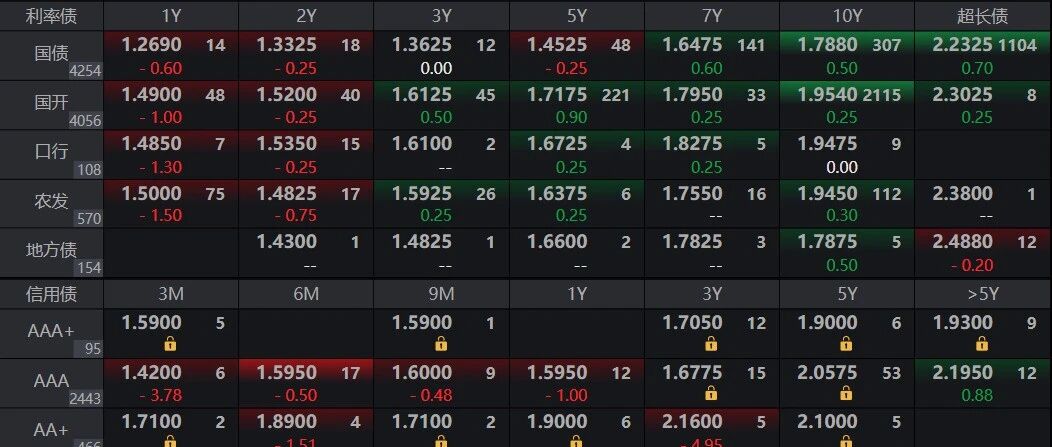
Group 1 - The market is characterized by uncertainty, and predictions are seen as a behavioral weakness. Greed and fear are identified as human weaknesses that can affect trading decisions [1] - The bond market is experiencing a balanced and slightly loose funding environment, with a slight increase in long-term bond yields [3][5] - The central bank conducted a 448 billion yuan reverse repurchase operation, with a net withdrawal of 224.2 billion yuan due to the maturity of 2.69 trillion yuan in reverse repos [3] Group 2 - The stock market saw a slight increase, influenced by the economic theme conference where expectations for monetary easing were unmet, leading to a minor rise in interest rates [5][6] - The 10-year government bond yield opened at 1.782% and fluctuated slightly, reflecting stable market sentiment [5][6] - The trading volume and weighted rates for various interbank funding rates indicate a mixed trend, with the R001 rate at 1.39% and R007 at 1.49% [4]

【笔记20260305— 潘行要来了】
债券笔记· 2026-03-05 10:23
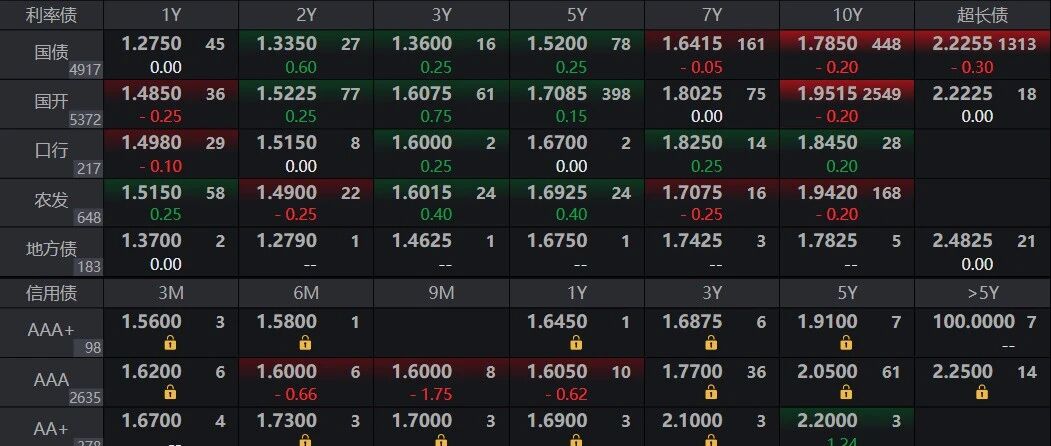
Core Viewpoint - Market fluctuations are driven by various "expectations," with major expectations leading to trend-driven markets and minor expectations influencing trading markets [1]. Group 1: Market Conditions - The central bank conducted a 230 billion yuan reverse repurchase operation, with 320.5 billion yuan of reverse repos maturing today, resulting in a net withdrawal of 297.5 billion yuan [3]. - The interbank funding market showed a balanced and slightly loose liquidity, with DR001 around 1.27% and DR007 around 1.42% [3]. - The government work report met expectations, leading to a slight increase in the stock market, while the central bank's reduced 200 billion yuan buyout operation indicated a stable interest rate environment [5]. Group 2: Interest Rates and Bond Market - The 10-year government bond yield opened lower at 1.787% and fluctuated, with a slight increase to 1.79% before closing at 1.785% [5]. - The weighted average rates for various interbank funding instruments were as follows: R001 at 1.35% (up 2 basis points), R007 at 1.50%, and R014 at 1.52% [4]. Group 3: External Factors - Reports indicated that Iran is willing to negotiate, leading to a rebound in overseas risk assets [5]. - The geopolitical situation involving Iran has created a complex narrative, with military and diplomatic tensions affecting market sentiment [5].
美伊冲突激化!金价怎么走?|国际
清华金融评论· 2026-03-04 10:22
Core Viewpoint - The article discusses the recent fluctuations in gold prices due to escalating geopolitical tensions in the Middle East, particularly following military actions involving the U.S. and Iran. Initially, gold was seen as a safe-haven asset, leading to a price surge, but concerns about prolonged disruptions in the Strait of Hormuz and potential inflationary pressures have caused a subsequent decline in prices. The long-term outlook for gold remains bullish despite short-term volatility [1][4][6]. Group 1: Recent Geopolitical Events - On February 28, the U.S. and Israel launched a preemptive military strike against Iran, which led to retaliatory actions from Iran, further escalating tensions in the region [2]. - The Strait of Hormuz, a critical route for oil exports, was declared off-limits to shipping by Iran, affecting approximately 20% of global oil transportation [2]. Group 2: Factors Influencing Gold Price Fluctuations - Following the military conflict, gold prices initially surged to a peak of $5,419 per ounce on March 2, driven by heightened risk aversion. However, by March 3, prices fell to around $5,260 due to market concerns about prolonged disruptions and inflationary impacts, which could delay U.S. interest rate cuts [4]. - The volatility in gold prices was also attributed to liquidity squeezes and technical corrections, as stock market declines prompted institutional selling of gold to cover margin calls [4]. - The nomination of hawkish candidates to the Federal Reserve has raised concerns about potential interest rate hikes, further pressuring gold prices as the dollar strengthened [5]. Group 3: Future Outlook for Gold Prices - In the short term (3-6 months), gold prices are expected to remain volatile, with support levels identified at $4,800 and $5,260-$5,300. A potential escalation of U.S.-Iran conflict could push prices above $5,600 [7]. - In the medium to long term (over 1 year), gold is anticipated to maintain a strong position due to ongoing monetary easing, a trend towards de-dollarization, and persistent geopolitical risks, with forecasts suggesting prices could reach $6,000 per ounce by 2026 [7]. - Key variables to monitor include developments in the Strait of Hormuz, central bank gold purchasing data, and changes in Federal Reserve interest rate expectations [8].

高市早苗迎关键抉择!日本央行人事变动在即 “鸽派风暴”或撼动日元、日债
智通财经网· 2026-02-19 08:38
Core Viewpoint - Japanese Prime Minister Fumio Kishida is facing a crucial decision regarding the nomination of candidates to fill upcoming vacancies on the Bank of Japan's policy board, which will indicate the extent of her influence on monetary policy [1][2]. Group 1: Nomination Context - The nominations are expected to be proposed as early as February 25 during a parliamentary meeting, with the terms of current members Asahi Noguchi and Junko Nakagawa expiring soon [1]. - Kishida has the opportunity to appoint more pro-reflation members to the committee, similar to her mentor, former Prime Minister Shinzo Abe, following a decisive electoral victory [1][2]. Group 2: Market Reactions and Concerns - Investors are concerned that selecting two pro-reflation candidates could delay interest rate hikes by the Bank of Japan, especially with inflation remaining above the 2% target for four consecutive years [2]. - If both nominees strongly advocate for monetary easing, it could lead to a significant depreciation of the yen and a surge in Japanese bond yields [2]. Group 3: Kishida's Policy Stance - Kishida is known for her support of stimulus policies and cautious approach to interest rate hikes, having previously described potential rate increases as "foolish" [2][3]. - Since taking office, Kishida has become more cautious in discussing specific monetary policy details, particularly after recent market volatility linked to her fiscal policy statements [3]. Group 4: Legislative Approval and Future Implications - The upcoming nominations require approval from both houses of parliament, complicating the process as Kishida's party does not hold a majority in the Senate [4]. - Kishida's choices will provide insights into her policy direction, and her electoral victory positions her to influence future appointments, including the next Bank of Japan governor and deputy governor in 2028 [4].
高市2.0开启!日元跳水,日本股债齐涨
Xin Lang Cai Jing· 2026-02-18 10:02
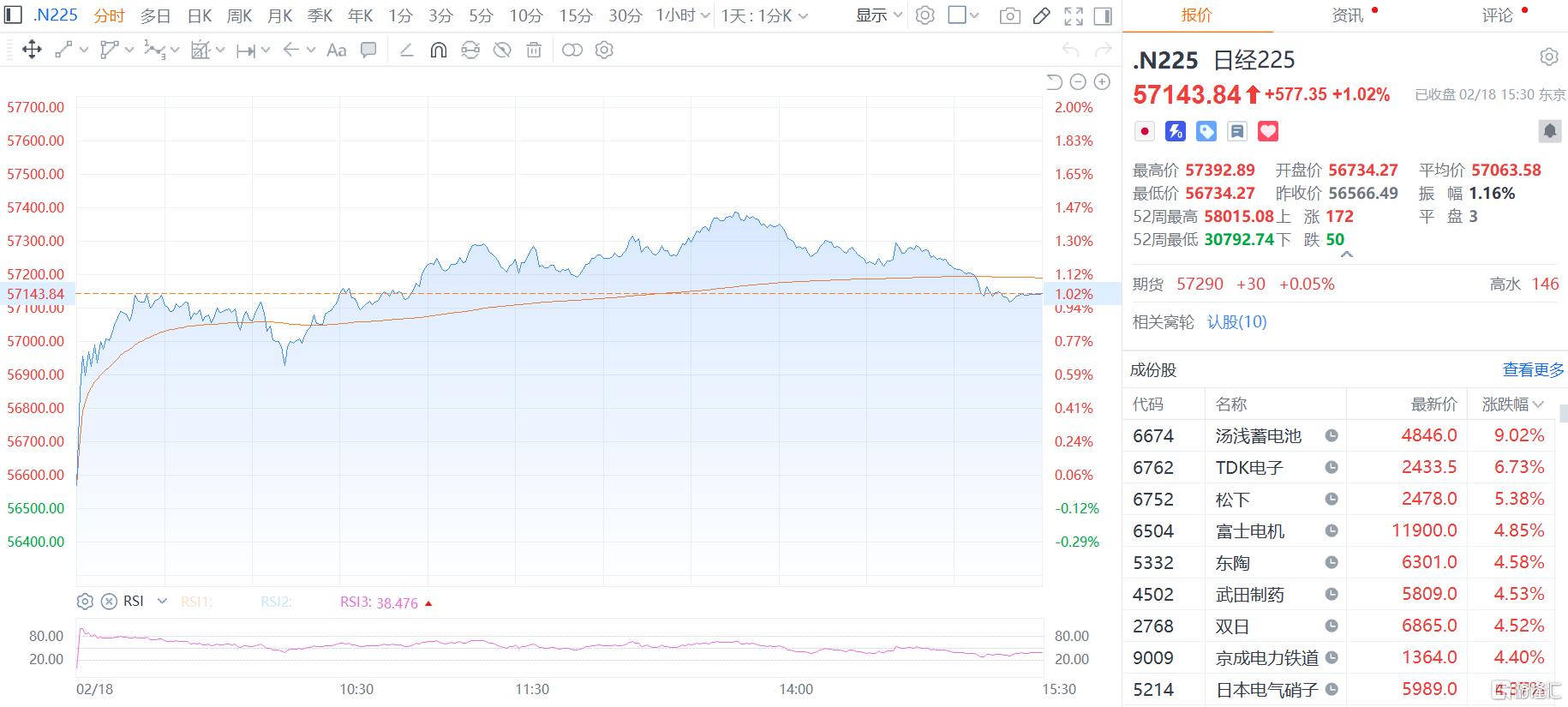
Group 1 - The election of Sanna Marin as Japan's 105th Prime Minister is expected to boost market sentiment, leading to a rise in Japanese stock indices, with the Nikkei 225 closing up 1.02% at 57,143.84 points and the Topix index up 1.21% to 3,807.25 points [1] - The Japanese 10-year government bond yield has decreased to approximately 2.134%, indicating a shift in investor sentiment towards safer assets [4] - The new Prime Minister is anticipated to address discussions on potentially suspending the food consumption tax, which has raised concerns from the International Monetary Fund (IMF) regarding fiscal risks [10][11] Group 2 - The IMF has warned Japan against cutting consumption taxes, suggesting that such measures could exacerbate fiscal risks and undermine the country's financial stability [11][15] - The IMF emphasizes the importance of maintaining the independence and credibility of the Bank of Japan to stabilize inflation expectations and recommends a gradual exit from monetary easing [12] - Japan's Ministry of Finance reported a 5% year-on-year decline in exports to the U.S. in January, amounting to 1.46 trillion yen, influenced by U.S. tariff policies and a decrease in exports of pharmaceuticals, automobiles, and metalworking machinery [15][16]