财政风险

Search documents
哥伦比亚政府债务占GDP比重创历史新高
Shang Wu Bu Wang Zhan· 2026-02-24 16:15
Group 1 - The core point of the article is that Colombia's government debt as a percentage of GDP has reached a historic high of 64.7% as of December 2025, marking an increase of 0.9 percentage points since November [1] - The report indicates that external debt grew by 1.3% month-on-month, while domestic debt increased by 1.4%, with the balance of long-term government bonds reaching its highest level in nearly three years, contributing to the overall debt increase [1] - Short-term financing now accounts for 19.6% of domestic financing, significantly above the average level seen in recent years, indicating a shift in financing structure [1] Group 2 - The pressure to service debt is rising, with approximately 89.6 trillion pesos (around 24.26 billion USD) in global bonds and long-term government bonds maturing this year, representing the highest scale in recent years [1] - Analysts suggest that the combination of sustained high public spending and rising financing costs has increased fiscal risks for Colombia [1]
高市2.0开启!日元跳水,日本股债齐涨
Xin Lang Cai Jing· 2026-02-18 10:02
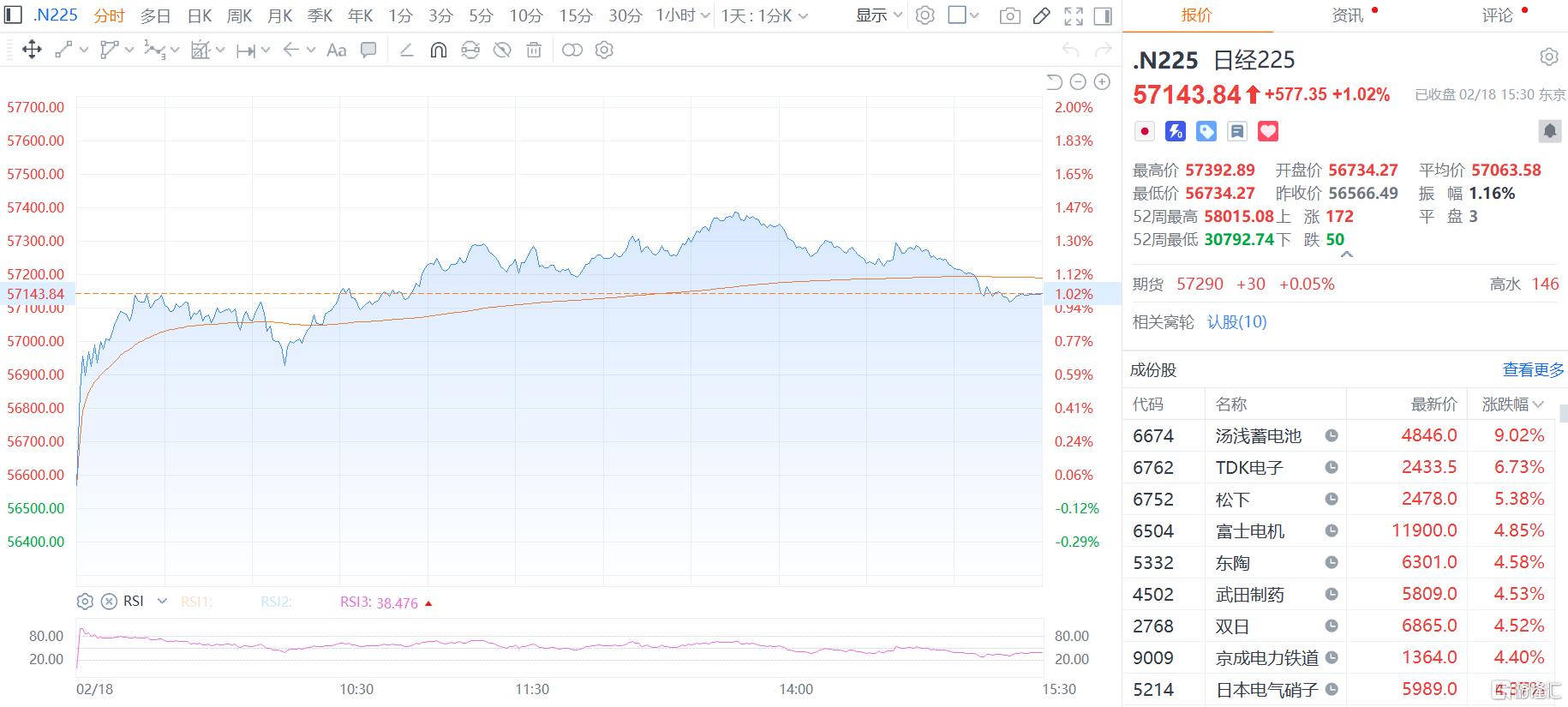
Group 1 - The election of Sanna Marin as Japan's 105th Prime Minister is expected to boost market sentiment, leading to a rise in Japanese stock indices, with the Nikkei 225 closing up 1.02% at 57,143.84 points and the Topix index up 1.21% to 3,807.25 points [1] - The Japanese 10-year government bond yield has decreased to approximately 2.134%, indicating a shift in investor sentiment towards safer assets [4] - The new Prime Minister is anticipated to address discussions on potentially suspending the food consumption tax, which has raised concerns from the International Monetary Fund (IMF) regarding fiscal risks [10][11] Group 2 - The IMF has warned Japan against cutting consumption taxes, suggesting that such measures could exacerbate fiscal risks and undermine the country's financial stability [11][15] - The IMF emphasizes the importance of maintaining the independence and credibility of the Bank of Japan to stabilize inflation expectations and recommends a gradual exit from monetary easing [12] - Japan's Ministry of Finance reported a 5% year-on-year decline in exports to the U.S. in January, amounting to 1.46 trillion yen, influenced by U.S. tariff policies and a decrease in exports of pharmaceuticals, automobiles, and metalworking machinery [15][16]

IMF敦促日本:应避免削减消费税 以免加剧财政风险
智通财经网· 2026-02-18 02:19
Group 1 - The IMF advises Japan to avoid cutting consumption tax to prevent exacerbating fiscal risks, highlighting that such a measure is not targeted and could erode fiscal space [1] - The IMF predicts that Japan's public debt interest payments will double by 2031 due to refinancing at higher yields, with current estimates indicating interest payments will rise from 21.6 trillion yen to approximately 41.3 trillion yen by FY2029 [1][2] - The IMF acknowledges that limiting tax suspension to food and maintaining its temporary nature could help mitigate fiscal impacts, while recommending budget-neutral and time-limited measures targeting vulnerable households and businesses [2] Group 2 - The IMF urges Japan to adopt a credible medium-term framework with clear fiscal targets, as Prime Minister Kishi Sanae focuses on reducing the national debt-to-GDP ratio [2] - The IMF calls for the government to control additional budgets to reduce the risk of sudden fluctuations in the Japanese government bond market, which faced pressure following Kishi's expansionary policies [2] - The IMF expects Japan's main price index to reach the Bank of Japan's 2% target by 2027, despite temporary relief from food and energy effects in 2026 [3] Group 3 - The IMF welcomes the Bank of Japan's actions over the past year, noting its return to tightening policy in December after pausing rate hikes during global uncertainty [2][3] - The IMF emphasizes the importance of the Bank of Japan's independence and credibility in maintaining stable inflation expectations [3] - The IMF supports Japan's commitment to a flexible exchange rate system, which is crucial for absorbing external shocks and allowing monetary policy to focus on price stability [3]
国际货币基金组织敦促日本避免下调消费税 否则恐加剧财政风险
Xin Lang Cai Jing· 2026-02-18 01:00
Core Viewpoint - The International Monetary Fund (IMF) advises the Japanese government to avoid lowering the consumption tax to prevent exacerbating fiscal risks [1][3]. Group 1: IMF Recommendations - The IMF suggests that a reduction in the consumption tax would erode fiscal space and increase financial risks [1][3]. - The IMF projects that Japan's national debt interest payments will double by 2031 compared to 2025 due to refinancing at higher interest rates [1][3]. Group 2: Economic Forecasts - The IMF warns that Japan's economy faces multiple shock risks amid high debt levels and deteriorating fiscal conditions [2][4]. - According to the Japanese Ministry of Finance, under a nominal economic growth rate assumption of 3%, national debt interest payments are expected to double to 21.6 trillion yen by fiscal year 2029 [2][4]. - The Ministry also anticipates that debt servicing costs will rise from 28.2 trillion yen to approximately 41.3 trillion yen during the same period [2][4]. Group 3: Tax Policy Discussion - Prime Minister Sanna Takashi's government is preparing to discuss a tax reduction plan that includes a two-year suspension of the food consumption tax [2][4]. - The proposed suspension is expected to result in an annual tax revenue loss of about 5 trillion yen, but the government claims it will not need to issue additional debt to cover this shortfall [2][4]. - The IMF acknowledges that if the tax suspension is limited to food and set as a temporary measure, it could help mitigate fiscal impacts, but emphasizes that more effective inflation relief measures should be budget-neutral, time-bound, and targeted at vulnerable households and businesses [2][4].
日本国债延续涨势 高市胜选后首笔5年期常规国债标售投标倍数升至3.10 需求时隔5个月回升
Sou Hu Cai Jing· 2026-02-17 09:28
Core Viewpoint - The Japanese government bond market is experiencing a positive trend, driven by a successful 5-year bond auction, which has alleviated concerns over interest rate hikes, fiscal risks, and inflation [1] Group 1: Bond Auction Results - The 5-year bond auction marked the first regular bond sale since Prime Minister Fumio Kishida's historic victory, with a bid-to-cover ratio increasing from 3.08 to 3.10, the first rise in demand since September 2025 [1] - The issuance size of the 5-year bond was 2.5 trillion yen, with a coupon rate of 1.6% [1] Group 2: Market Reactions - Long-term bonds led the market rally, with yields on 20 to 40-year bonds decreasing by at least 10 basis points, while short-term bond yields also fell [1] - Ryutaro Kimura, a senior fixed income strategist at AXA Investment Managers, noted that the positive results of the 5-year bond auction encouraged investors to increase their holdings of Japanese government bonds [1] Group 3: Economic Context - Following a rise in bond yields due to fiscal concerns in January, investors are now betting that Kishida's absolute majority will lead to clearer policy directions, reducing the worst-case fiscal scenario risks [1] - The market is currently focused on whether Kishida will adjust the Bank of Japan's interest rate hike pace to balance economic growth and support for the yen [1] - Bank of Japan Governor Kazuo Ueda stated that Kishida did not propose specific policy requests during a routine meeting on February 16, only exchanging general opinions on economic issues [1]
日本大选后首次日债拍卖平稳落地:日本国债延续升势,超长期债领涨
智通财经网· 2026-02-17 08:29
Group 1 - Japanese government bonds have seen a continuous rise for a week, supported by a stable five-year bond auction, which alleviated concerns over interest rate hikes, fiscal risks, and inflation [1] - The long-term bonds led the gains, with yields on 20-40 year bonds dropping by at least 10 basis points, while shorter-term bond yields also decreased [1] - The bid-to-cover ratio for the five-year bond auction increased from 3.08 to 3.10, marking the first demand rebound since September of the previous year [1] Group 2 - Following the historic election victory of Prime Minister Sanna Takashi, bond yields have retreated from multi-year highs due to investor confidence in clearer policy direction and reduced extreme fiscal risks [4] - Investors are assessing whether the strengthened power of Takashi will lead to a slowdown in the Bank of Japan's interest rate hikes to protect economic growth or encourage actions to support the yen [4] - The probability of an interest rate hike before April dropped from approximately 73% to about 65% after data showed Japan's economic output for Q4 2025 was significantly weaker than expected [4] Group 3 - The results of the five-year bond auction were considered slightly weak but still within a safe range, with market participants remaining cautious due to interest rate hike expectations [4] - Approximately 57% of the bonds were purchased by "anonymous buyers," raising concerns about potential disruptions in the secondary market [4] - Investors will focus on the upcoming 20-year bond auction to evaluate demand for long-term bonds amid ongoing fiscal concerns [5]
贵金属评论:伦敦流动性紧张下,黄金突破 5000 美元 盎司、白银站上 100 美元 盎司-Precious Comment_ Gold Breaks $5,000_toz; Silver Trades Above $100_toz Amid Ongoing London Liquidity Squeeze
2026-01-28 03:02
Summary of Key Points from the Conference Call Industry Overview - The report focuses on the precious metals market, specifically gold and silver, amid ongoing geopolitical tensions and liquidity issues in London [3][4]. Gold Market Insights - Gold prices have surged above $5,000 per ounce due to increased safe haven demand driven by geopolitical tensions and rising Japanese bond yields [3]. - The current price levels are viewed as uncertain for tactical investors, with potential for a temporary retracement or further price increases depending on geopolitical and fiscal developments [3]. - The long-term outlook for gold remains positive, with a forecast of $5,400 per ounce by December 2026, supported by central bank buying and increased investor demand as the Federal Reserve eases monetary policy [3]. - There is a significant upside risk to the gold forecast, particularly if private investors increase their gold ETF purchases [3]. Silver Market Insights - Silver prices have increased by 51% year-to-date and have surpassed $100 per ounce, continuing a strong rally from 2025 when prices rose by 138% [3]. - The price volatility is expected to persist due to ongoing liquidity squeezes in London, which affect benchmark prices [3][4]. - Speculation regarding U.S. trade policy, particularly potential tariffs on silver, has led to pre-positioning of metal in the U.S., reducing available inventory in London and contributing to price swings [3]. - Although U.S. tariffs on silver are considered unlikely, policy uncertainty remains high, which could prolong the liquidity squeeze and lead to further price fluctuations [4]. Additional Considerations - The report emphasizes the importance of monitoring geopolitical and fiscal developments as they can significantly impact precious metal prices [3]. - Investors are advised to remain cautious, especially those averse to volatility, given the potential for extreme price swings in both gold and silver [3]. This summary encapsulates the critical insights and forecasts regarding the precious metals market, highlighting the factors influencing price movements and the outlook for investors.
荷兰国际:债券市场反映财政风险和对美联储独立性的担忧
Sou Hu Cai Jing· 2026-01-27 07:03
Core Viewpoint - The report from Dutch International Group's interest rate strategists highlights the increasing government spending accompanied by fiscal risks, particularly for U.S. Treasury investors, emphasizing the need to be cautious about these risks [1] Group 1: Fiscal Risks - The latest deficit data from the U.S. shows some improvement, but average projections indicate that budget deficits will remain significantly above 6% in 2026 and 2027 [1] - The reliance on foreign investors to fund the U.S. current account deficit is a growing concern [1] Group 2: Geopolitical Tensions - There are no immediate signs of de-dollarization; however, geopolitical tensions and challenges to the independence of the Federal Reserve could diminish the attractiveness of U.S. Treasuries as a safe asset [1] - This situation contributes to maintaining high yields on 10-year U.S. Treasuries and results in a steeper yield curve [1]

Top Charts | 海外债务风险将如何收场?
申万宏源证券上海北京西路营业部· 2026-01-23 02:51
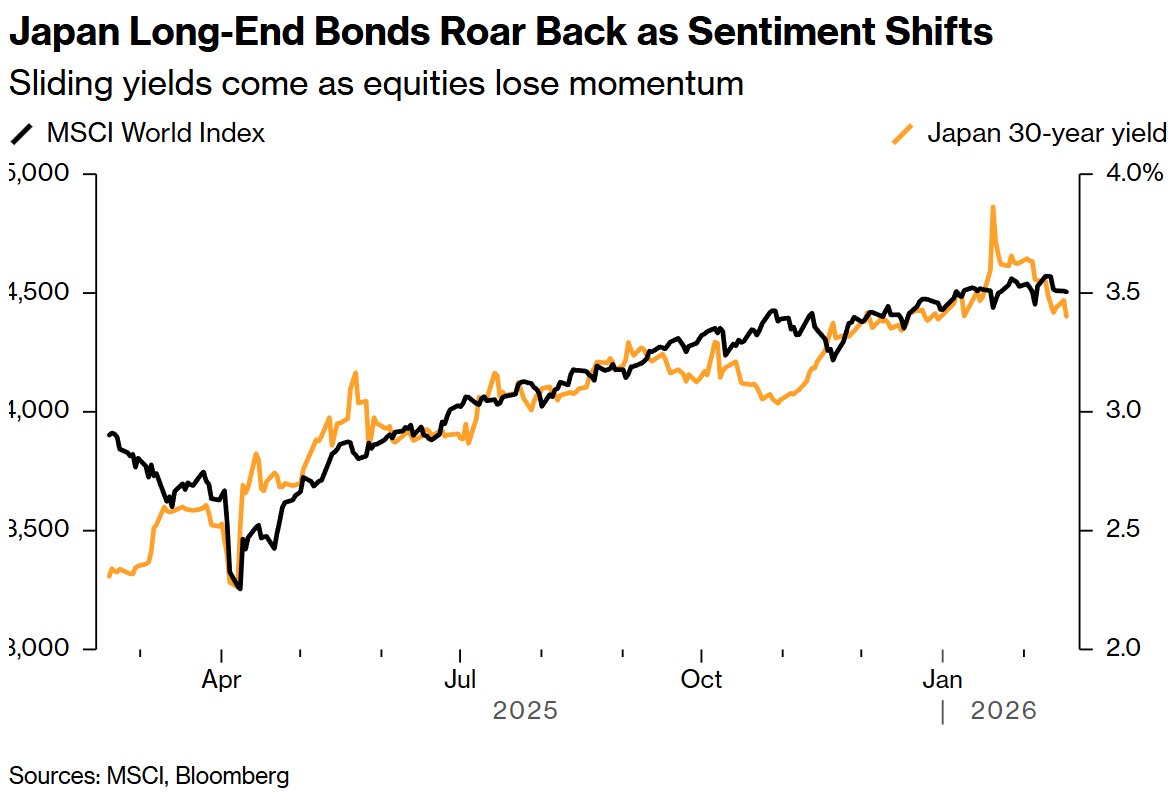
Core Viewpoint - The article discusses the recent global market turmoil characterized by simultaneous declines in stocks, bonds, and currencies, driven by geopolitical tensions and fiscal concerns in the US and Japan [1][6][10]. Group 1: Market Reactions - On January 20, a significant sell-off occurred in global markets, with the Nasdaq futures dropping by 1.9% and the Nikkei 225 falling by 1.11% [6]. - The US 10-year Treasury yield rose to 4.28%, while Japan's 30-year bond yield increased to 5.2% [1][6]. - Gold prices surged to a record high of $4,700 per ounce, indicating a flight to safety among investors [6]. Group 2: Triggering Factors - The first trigger was the US tariff risk stemming from the Greenland dispute, where President Trump threatened to impose tariffs on eight European countries, leading to market fears of a repeat of previous "sell America" trades [1][10]. - The second trigger involved Japan's fiscal risk, as Prime Minister Kishi announced early elections and aggressive tax cuts, raising concerns about Japan's financial stability [1][18]. - A third factor was the announcement by Danish pension fund Akademiker Pension to exit US Treasury investments, signaling potential shifts in investor sentiment [14]. Group 3: Future Outlook - Following Trump's speech at the Davos Forum on January 21, which downplayed military action regarding Greenland and suggested a delay in tariff implementation, market fears regarding geopolitical risks and tariffs were somewhat alleviated [1][21]. - The article suggests that the ongoing fiscal expansion in developed economies may lead to "implicit defaults" through financial repression, such as lowering nominal interest rates and increasing inflation tolerance [2].

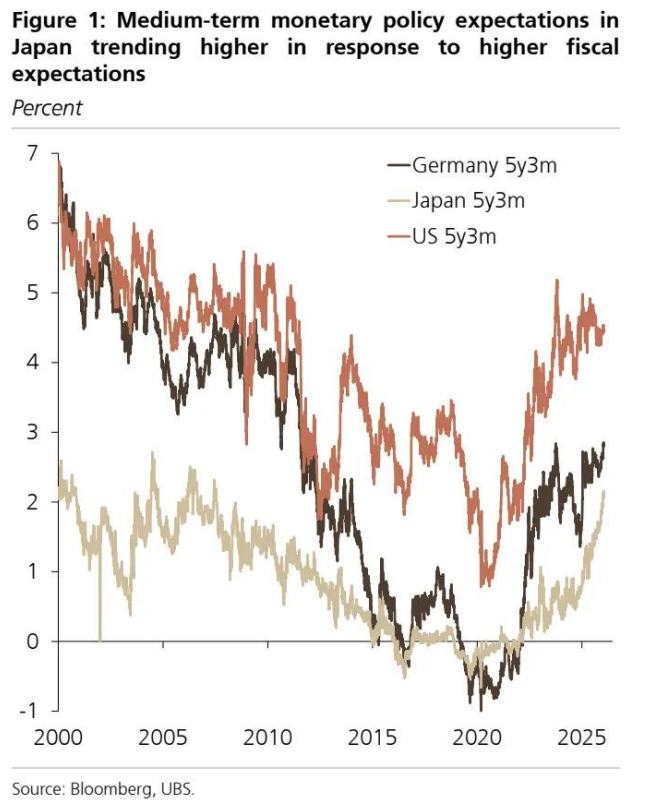
瑞银:财政扩张与货币政策不确定性共振,日债收益率上行空间仍存
智通财经网· 2026-01-22 08:05
Group 1 - UBS believes that the recent rise in Japanese government bond yields reflects market expectations for future policy rate increases and an increase in term premium, rather than just the anticipated rise in policy rates [1] - The report indicates that the rise in Japanese government bond yields is closely related to uncertainties in fiscal policy, with market expectations for long-term policy rates being difficult to gauge [4] - UBS's analysis shows that the volatility in the Japanese government bond market has not yet created a sustained spillover effect on global markets, despite a significant rise in yields [7] Group 2 - Foreign investors have significantly reduced their holdings in the Japanese government bond market, nearly halving their investments as global yields rise [8] - UBS suggests that investors may find better entry points for Japanese government bonds after the elections and the resolution of monetary policy uncertainties [12] - Overall, the report emphasizes the complexity of the Japanese government bond market under the dual influence of fiscal and monetary policies, with fiscal expansion being the main driver of rising yields [12]