
马克思主义理论研究和建设工程

Search documents
《二十大以来重要文献选编》中册等一批重大项目将推进实施
Xin Hua She· 2026-01-14 08:31
Core Viewpoint - The meeting of national party history and literature departments emphasizes the promotion of significant projects related to party history and literature, particularly focusing on youth engagement and the dissemination of party history knowledge [1] Group 1: Major Projects and Initiatives - In 2026, the Central Party History and Literature Research Institute will advance the editing of important documents from the 20th National Congress and other significant projects [1] - The institute aims to produce more accessible party history literature for young readers to foster a love for history and patriotism [1] - The focus will be on deepening the implementation of the party's innovative theories and enhancing the study and dissemination of Xi Jinping's important works [1] Group 2: Long-term Project Implementation - The Central Party History and Literature Research Institute will continue to promote the writing of basic historical works of the Communist Party of China [1] - Local party history and literature departments are encouraged to align their efforts with the central institute, ensuring timely progress and clear work schedules [1] - There will be an emphasis on innovative implementation of Marxist theory research and construction projects, including the acceleration of the third phase of the Marxist literature collection project [1]
《陕西省哲学社会科学发展促进条例》施行
Shan Xi Ri Bao· 2025-09-29 23:05
Core Points - The "Regulations on Promoting the Development of Philosophy and Social Sciences in Shaanxi Province" has been passed and will take effect from the date of publication, aiming to address key issues in the development of philosophy and social sciences in the province [1][2] - The regulations emphasize the establishment of a leadership structure for philosophy and social sciences, with the provincial propaganda and cultural work leadership group as the main body responsible for these efforts [1] - The regulations call for the enhancement of discipline construction in higher education, promoting the integration of philosophy and social sciences with natural and engineering sciences, and supporting underrepresented disciplines [1][2] Summary by Sections Leadership and Structure - The provincial propaganda and cultural work leadership group is designated as the leading body for philosophy and social sciences [1] - The education administration is tasked with optimizing the discipline layout in higher education institutions [1] Research Focus - The regulations highlight the need for research on significant local spirits and cultures, such as the Yan'an Spirit and the Yellow River Culture, to produce distinctive and original research outcomes [2] - There is an emphasis on conducting studies related to the historical and cultural significance of the Shaanxi region, including the "Belt and Road" initiative [2] Innovation and Development - The regulations align with the latest requirements from the 20th Central Committee of the Communist Party, focusing on innovative research in Marxist theory and the establishment of key research bases [2] - The goal is to enhance academic innovation capabilities and levels through the establishment of philosophical and social science innovation projects and platforms [2]
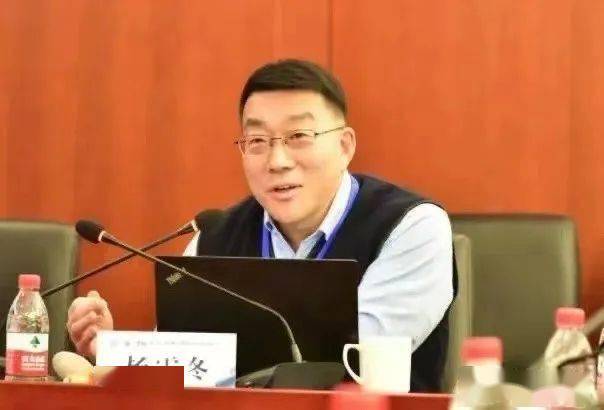
「教育强国」杨雪冬:源流与动力——中国政治学的塑造
Sou Hu Cai Jing· 2025-08-20 13:32
Core Viewpoint - The development of political science in China has been shaped by its historical context and the need to adapt Western theories to local realities, emphasizing the importance of understanding China's unique political landscape and its evolution over time [3][4][10]. Group 1: Historical Development - Political science in the United States began with the establishment of the Political Science Institute at Columbia University in 1880, marking its separation from law [5]. - In China, the establishment of political science as a discipline began in 1899 with the founding of the political science department at Peking University, which was a significant milestone in the discipline's development [5][9]. - The early 20th century saw the formation of various political science associations in China, indicating a growing interest and establishment of the field [5][8]. Group 2: Influence of Western Political Science - American political science developed as a distinct discipline influenced by its own political practices and needs, contrasting with the more tumultuous development of political science in China [6][7]. - The American model emphasized empirical research and practical applications, which has been a point of reference for Chinese political scholars [4][6]. Group 3: Political Science in Modern China - After the founding of the People's Republic of China, political science faced significant challenges, including the dissolution of political science departments in 1952, which led to its integration into law [9][10]. - The reform and opening-up period initiated in the late 1970s marked a resurgence of political science in China, with a renewed focus on addressing national needs and integrating theoretical advancements with practical applications [10][11]. Group 4: Current Trends and Future Directions - The 21st century has seen a significant increase in the importance of political science in China, driven by the country's rising global influence and the need for a robust theoretical framework to address contemporary issues [12][13]. - Recent developments emphasize the integration of Marxist theory with local political realities, aiming to create a distinctive Chinese political science that responds to both domestic and global challenges [14][15]. - The ongoing dialogue between political science and other disciplines is crucial for addressing societal questions and enhancing the discipline's relevance in contemporary China [18].

推动党的创新理论 更加深入人心
Liao Ning Ri Bao· 2025-05-08 01:09
Core Viewpoint - The article emphasizes the importance of advancing Marxist theory research and construction as a fundamental task for promoting the prosperity of philosophy and social sciences in the province [1][2][3][4] Group 1: Implementation of Marxist Theory - The province has established Marxist colleges in 89 universities, achieving nationwide coverage in offering courses on "Xi Jinping's Thought on Socialism with Chinese Characteristics for a New Era" [1] - A significant number of theoretical articles have been published in major national publications, showcasing the province's commitment to Marxist theory research [1][2] Group 2: Theoretical Research and Public Engagement - The province focuses on deepening systematic theoretical research and enhancing the effectiveness of learning and publicity efforts [1][2] - Various theoretical seminars have been held to promote understanding of major themes such as Xi Jinping's cultural thought and the spirit of the 20th National Congress [2] Group 3: Innovation in Theory Promotion - The province is committed to innovation in promoting Marxist theory, exemplified by the documentary "Hot Blooded Rivers and Mountains," which is part of a broader effort to disseminate the Party's innovative theories [3] - There is a focus on integrating ideological education with the promotion of innovative theories, utilizing various media platforms for effective outreach [3] Group 4: Talent Development in Theoretical Research - The province is actively cultivating high-quality theoretical talent through structured training programs and incentive mechanisms [4] - Emphasis is placed on creating a conducive environment for theoretical researchers, thereby ensuring a robust foundation for the development of philosophy and social sciences [4]