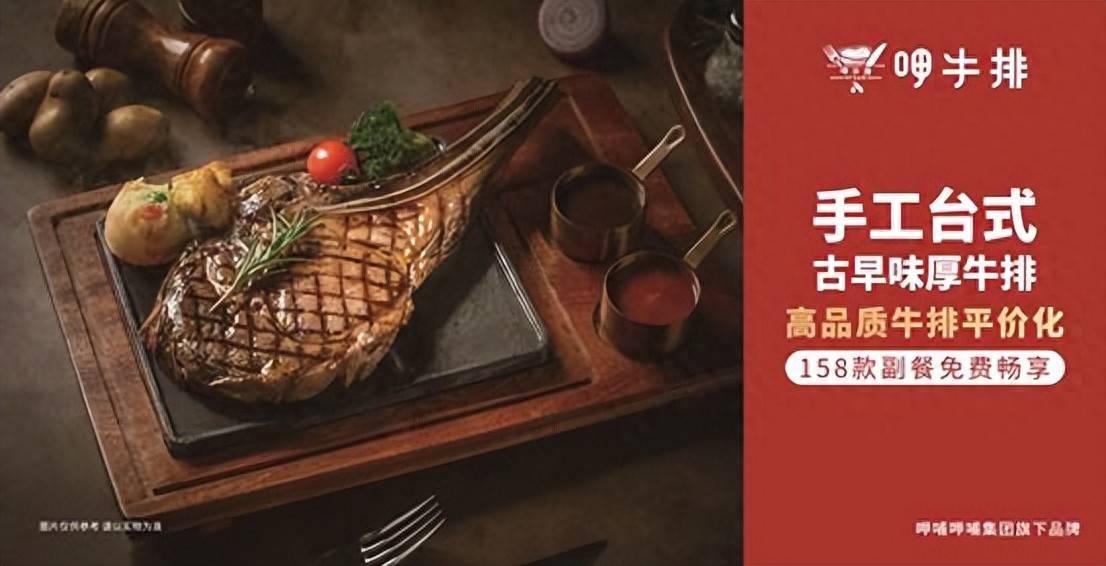
高品质牛排平价化

Search documents
呷哺呷哺集团跨界入局牛排赛道 推“呷牛排”品牌
Zheng Quan Ri Bao Zhi Sheng· 2026-01-21 09:40
Core Insights - Xiabuxiabu Group is entering the steak market with a new sub-brand "Xiniu Steak," aiming to provide high-quality steak at affordable prices, starting from 100 yuan, while offering a buffet of 158 dishes for free [1][3][5] Market Potential - The average beef consumption in China is only 6 kg per person, significantly lower than the USA's 36 kg and Japan's 12 kg, indicating a large untapped market potential [3] - The Chinese steak market is projected to reach approximately 400 billion yuan by 2025, with a total market size expected to reach 1.2 trillion yuan in the future [3] Business Strategy - The launch of "Xiniu Steak" is part of Xiabuxiabu Group's multi-brand and diversified development strategy, leveraging its nearly 30 years of global procurement and supply chain management experience [1][4][5] - The company aims to fill the gap in the market for high-quality, affordable steak, addressing the current pain points where mid-to-high-end steaks exceed 300 yuan, making them inaccessible to many consumers [3][5] Supply Chain and Quality Control - Xiabuxiabu Group has established a comprehensive supply chain management system, including its own organic ranch in Inner Mongolia and a global meat selection supply chain, ensuring stable supply and cost control of high-quality ingredients [4] - The steak will be crafted using a 24-hour marination technique and will feature Australian and New Zealand beef, ensuring a high-quality dining experience at a competitive price [4] Competitive Landscape - The current market lacks a leading national brand in the steak category, presenting an opportunity for Xiabuxiabu Group to establish itself as a key player [5] - The company plans to target consumers willing to spend around 100 yuan per meal, offering a differentiated experience with a variety of complimentary dishes [5] Future Plans - After the first store opens in February 2026, Xiabuxiabu Group will focus on optimizing its operational model and enhancing product and service standards, aiming to establish a hundred-store scale within three years [6]

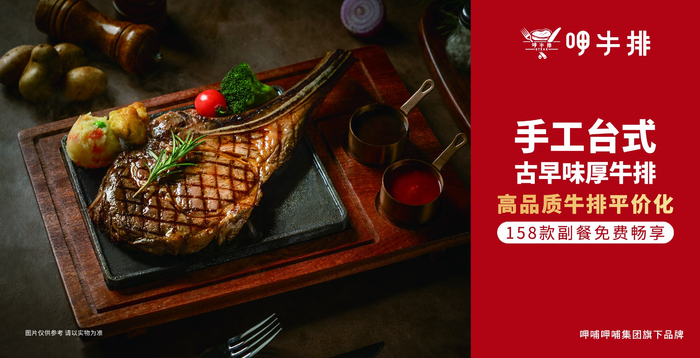
呷哺呷哺集团跨界推出新品牌“呷牛排”,预计三年达百店规模
Sou Hu Cai Jing· 2026-01-21 08:36
Core Insights - The core viewpoint of the articles is that the hot pot leader, Xiaobuxiang Group, is entering the steak market with a new sub-brand "Xiaoniupai," aiming to provide high-quality steak at affordable prices, thereby addressing a gap in the market [1][10]. Group 1: Market Opportunity - The Chinese beef consumption per capita is only 6 kg, significantly lower than the USA's 36 kg and Japan's 12 kg, indicating a large untapped market potential [3][11]. - The Chinese steak market is projected to reach approximately 400 billion yuan by 2025, with a total market size expected to reach 1.2 trillion yuan in the future [3][11]. - Current high-end steak prices often exceed 300 yuan, making them inaccessible for everyday consumers, highlighting a need for affordable quality options [3][10]. Group 2: Business Model and Strategy - "Xiaoniupai" will offer a unique model of "steak + unlimited dining," allowing consumers to enjoy high-quality steak starting from around 100 yuan, along with 158 complimentary dishes [1][11]. - The brand aims to break the traditional perception that high prices equate to quality, thus catering to the rising demand for quality dining experiences at lower price points [3][10]. Group 3: Supply Chain and Quality Control - Xiaobuxiang Group leverages nearly 30 years of global procurement and supply chain management experience to ensure stable supply and cost control for high-quality ingredients [6][10]. - The brand will utilize a unique 24-hour marination technique and collaborate with experienced chefs to deliver authentic Taiwanese-style steak, enhancing the overall dining experience [8][10]. Group 4: Brand Positioning and Future Plans - The launch of "Xiaoniupai" is part of the company's multi-brand strategy aimed at filling the existing void in the steak market, which currently lacks a dominant national brand [10][11]. - The company plans to optimize its operational model and service standards post-launch, with a goal of reaching 100 stores within three years, while continuously adjusting targets based on store profitability [11].