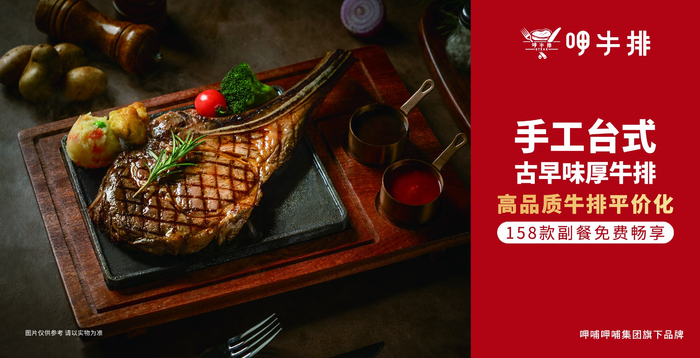
呷牛排

Search documents
呷哺呷哺五年亏15亿,平价火锅之王为何被年轻人拉黑?
虎嗅APP· 2026-03-16 14:17
Core Viewpoint - The article discusses the ongoing financial struggles of the hotpot chain company, Xiaobai Xiaobai, which has faced continuous losses for five years, leading to a significant decline in market value and operational challenges [5][6][7]. Financial Performance - Xiaobai Xiaobai has reported a cumulative net loss exceeding 1.5 billion RMB since 2021, with a projected revenue of approximately 3.8 billion RMB and a net loss between 290 million to 310 million RMB for the fiscal year 2025, indicating a year-on-year reduction in losses of 22.2% to 27.2% compared to 2024 [9][10]. - The company's revenue has decreased from a peak of 6.147 billion RMB in 2021 to an estimated 3.8 billion RMB in 2025, representing a decline of over 38% [12]. - The asset-liability ratio has been on the rise, reaching 74.75% in 2024 and 74.45% in the first half of 2025 [12]. Reasons for Losses - The continuous losses are attributed to several factors, including strategic missteps, aggressive expansion, unclear brand positioning, and increased competition in the hotpot industry [13]. - The company has been closing underperforming stores to optimize its asset structure, which has negatively impacted short-term revenue [13][19]. - The competitive landscape has intensified, with consumers becoming more price-sensitive, leading to a decline in average spending [13]. Brand Performance - The core brand, Xiaobai Xiaobai, has struggled to maintain its market position, with the mid-range brand, Coucou, experiencing a 25.8% drop in sales in the first half of 2025 [14]. - The average table turnover rate for Coucou has decreased from 1.6 times to 1.4 times, and same-store sales have dropped by 14% [14]. Operational Adjustments - In response to financial difficulties, Xiaobai Xiaobai has implemented a store closure strategy, shutting down 211 stores in 2024, including 138 from the main brand [17]. - The company has initiated the "Phoenix Return" internal partner program, allowing core store personnel to become partners, although this model has inherent risks and limitations [19][20]. Market Challenges - The hotpot industry is facing saturation, with increasing competition from both established brands and new entrants, as well as from supermarkets entering the market with competitive pricing [30][31]. - Consumer complaints regarding service quality and dining experience have increased, indicating a decline in customer satisfaction [33].


实探呷哺呷哺新副牌呷牛排首店
Xin Lang Cai Jing· 2026-02-12 10:13
Core Insights - The article discusses the recent trial operation of "Xia Niupai," a new sub-brand under the Xiaboo Group, which features a "steak + all-you-can-eat" model [1] Group 1 - The restaurant allows customers to order one steak and then choose from 15 categories and 158 different dishes [1] - The price range for the offerings is between 89 to 228 yuan [1]
瞄准平价牛排赛道 呷哺呷哺集团新品牌“呷牛排”首店将亮相北京
Bei Jing Shang Bao· 2026-01-22 13:15
Core Insights - The company, Xiaobuxiang Group, is entering the steak market with a new sub-brand "Xiaoniupai," set to open its first store on February 6 in Beijing's Changping Longde Plaza [1] - "Xiaoniupai" targets a customer base with an average spending of around 100 yuan, offering high-quality affordable steaks along with 158 complimentary side dishes, including appetizers, hot dishes, and desserts, while incorporating regional specialties for a differentiated experience [1] - The founder and chairman, He Guangqi, emphasized that "Xiaoniupai" is a key initiative in the company's multi-brand and diversified development strategy, aiming to leverage its strong supply chain to provide competitive ingredients and make high-quality steaks more accessible [1] Market Context - The steak restaurant market has seen challenges, with many establishments struggling to scale due to high average prices that limit customer reach, while lower-priced options often lack profitability and quality assurance [1] - He Guangqi believes that the combination of nearly 30 years of experience in beef and lamb supply will enable the company to control both the quality and cost of ingredients, thereby strengthening and expanding its steak business [1]
呷哺呷哺推新品牌呷牛排首店2026年2月北京开业
Zhong Guo Jing Ying Bao· 2026-01-22 02:28
Group 1 - The core viewpoint of the article is that Xiabuxiabu Group is entering the Western cuisine market by launching a new sub-brand "Xiaoniupai," which focuses on handmade Taiwanese-style thick steak and aims to provide high-quality steak at an affordable price [1][2] - The first store of "Xiaoniupai" is set to open on February 6, 2026, in Beijing, and the brand will offer a business model that includes 158 free dishes and afternoon tea drinks alongside the steak [1] - The founder and chairman of Xiabuxiabu, He Guangqi, emphasized that "Xiaoniupai" is a key initiative in the company's multi-brand and diversified development strategy, aiming to fill a market gap for affordable high-end steak [1][3] Group 2 - In recent years, Xiabuxiabu has adjusted its business operations due to declining performance, including reducing the average spending at its high-end hot pot brand "Coucou" and decreasing the total number of stores by 13% to 937 as of June 30, 2025 [2] - The company has seen a significant increase in its takeaway business, with monthly sales per store rising from 35,300 yuan in the first half of 2024 to 42,700 yuan in the first half of 2025, marking a growth of 20.9% [2] - The current market for steak lacks a national benchmark brand, presenting an opportunity for Xiabuxiabu to establish itself in a segment where there are no dominant players [2] Group 3 - The article highlights a market pain point where mid-to-high-end steak prices exceed 300 yuan, making it unaffordable for everyday consumers, while traditional budget steak options often lack quality [3] - There is a significant disparity in beef consumption between China and other countries, with China's per capita beef consumption at only 6 kg, which is less than one-sixth of that in the United States, indicating a large untapped market potential [3] - Industry forecasts predict that the Chinese steak market will reach approximately 40 billion yuan by 2025, with the total market size expected to grow to 120 billion yuan in the future [3]

呷哺呷哺再推新品牌“呷牛排” 进军西餐赛道
Zhong Guo Jing Ying Bao· 2026-01-22 01:40
Core Viewpoint - The hot pot leader, Xiaobai Group, is diversifying into the steak market with a new sub-brand "Xiaoniupai," set to open its first store on February 6, 2026, in Beijing, aiming to offer high-quality steak at affordable prices [2]. Group 1: Company Strategy - "Xiaoniupai" focuses on "handmade Taiwanese-style thick steak" and includes a business model of "steak + 158 free fusion dishes + afternoon tea drinks" [2]. - The founder and chairman, He Guangqi, emphasizes that "Xiaoniupai" is a key initiative in the group's multi-brand and diversified development strategy, leveraging nearly 30 years of global procurement and supply chain management experience [2]. - The goal is to popularize high-quality steak and fill a market gap by making premium steak affordable, starting at around 100 yuan [2]. Group 2: Market Context - The restaurant industry is facing intense competition, with both opportunities and challenges [2]. - The steak market currently lacks a national benchmark brand, presenting an opportunity for Xiaobai Group to establish itself in a category that has no dominant players [3]. - The average consumer price for mid-to-high-end quality steak exceeds 300 yuan, making it unaffordable for everyday consumption, while traditional low-cost steak options often lack quality [4]. Group 3: Market Potential - China's per capita beef consumption is only 6 kg, significantly lower than the United States at 36 kg and Japan at 12 kg, indicating a large untapped market potential [4]. - With the upgrading of consumer spending habits, high-protein, low-fat beef products are becoming increasingly popular, creating substantial growth opportunities for quality beef brands [4]. - Industry forecasts predict that by 2025, the Chinese steak market will reach approximately 40 billion yuan, with future growth potentially reaching 120 billion yuan [4].
呷哺呷哺集团推出新品牌“呷牛排”,发力平价赛道
Huan Qiu Wang· 2026-01-21 12:36
Core Viewpoint - The company, Xiabuxiabu Group, is expanding into the steak market with a new sub-brand "Xiaoniupai," aiming to offer high-quality steak at affordable prices, leveraging its extensive supply chain experience and addressing market gaps in the steak segment [1][2][5]. Group 1: Market Opportunity - The Chinese steak market is projected to reach a total value of 120 billion yuan, driven by a shift in consumer preferences towards high-protein, low-fat beef products [2]. - Current market challenges include high prices for mid-to-high-end quality steaks, often exceeding 300 yuan per meal, while traditional budget options fail to ensure quality [2][6]. - The "steak + all-you-can-eat" model is designed to disrupt the existing market logic of "high price = quality" and "low price = low quality," catering to the demand for quality at a reasonable price [2][6]. Group 2: Product and Quality Assurance - The new brand "Xiaoniupai" emphasizes a combination of Taiwanese-style handmade steaks and a diverse menu of 158 free dishes, including various cuisines and afternoon tea options [1][4]. - The company utilizes a robust global supply chain and strict quality control measures, sourcing beef from premium farms in Australia, New Zealand, the U.S., Argentina, Uruguay, and Brazil [3]. - A unique 24-hour marination technique and skilled chefs ensure that the steaks deliver a rich flavor experience, enhancing consumer satisfaction [3][4]. Group 3: Strategic Positioning - The launch of "Xiaoniupai" is a critical step in the company's multi-brand and diversified development strategy, aiming to fill the gap in the steak market where no dominant national brand currently exists [5]. - The company plans to leverage its supply chain advantages to create a competitive edge in the steak segment, which lacks established leading brands [5][6]. - Future growth strategies include optimizing operational models and focusing on quality, with a goal of reaching 100 stores within three years, adjusting targets based on profitability [6].
氪星晚报|联想集团与英伟达联合推出“联想人工智能云超级工厂”;OpenAI与盖茨基金会将向非洲医疗人工智能领域投资5000万美元;我国去年电影全产业链产...
3 6 Ke· 2026-01-21 11:40
Group 1: Nuclear Energy - Japan's Tokyo Electric Power Company has restarted the Kashiwazaki-Kariwa Nuclear Power Plant Unit 6, which had been offline since the 2011 earthquake [1] Group 2: Artificial Intelligence and Technology - Lenovo and NVIDIA have announced a collaboration to launch the "Lenovo AI Cloud Super Factory," aimed at transforming traditional data centers into efficient AI factories [1] - OpenAI has introduced an age prediction model in its ChatGPT service to help identify accounts belonging to users under 18, implementing protective measures for minors [2] - OpenAI and the Gates Foundation are investing $50 million in the "Horizon 1000" project to support AI applications in healthcare across Africa, starting with Rwanda [8] - Microsoft CEO Satya Nadella emphasized that the focus in the AI era should be on computational infrastructure and model orchestration rather than a single model [8] Group 3: Strategic Partnerships - Data堂 and 灵心巧手 have signed a strategic cooperation agreement to integrate their capabilities in the field of embodied intelligence, aiming for technological innovation and industry application [4] Group 4: Market Developments - The Qatar Investment Authority, valued at $580 billion, is considering a major restructuring to separate its overseas assets from domestic investments, enhancing its global investment strategy [2] - 永辉超市 has applied for multiple "胖小辉" trademarks, indicating potential expansion into various sectors [6] - 呷哺呷哺集团 is launching a new sub-brand "呷牛排," entering the steak market with its first store opening in February [7] Group 5: Film Industry - China's film industry is projected to reach a total output value of 817.26 billion yuan by 2025, with a box office multiplier of approximately 1:15.77, ranking among the top globally [9]

呷哺呷哺跨界布局牛排赛道 “呷牛排”计划三年布局超百家门店
Zheng Quan Shi Bao Wang· 2026-01-21 10:32
Core Viewpoint - The company, Xiabuxiabu Group, is expanding into the steak market with a new sub-brand "Xiaoniupai," aiming to offer high-quality steak at affordable prices, addressing a gap in the market for mid-range steak options [1][2]. Group 1: Company Strategy - The first store of "Xiaoniupai" will open on February 6 in Beijing, with plans to optimize operations and build a strong supply chain [1]. - The company aims to reach a target of 100 stores within three years, adjusting goals based on individual store profitability [1]. - The founder, He Guangqi, emphasizes the importance of leveraging nearly 30 years of global procurement and supply chain management experience to create a national brand for affordable high-quality steak [1][2]. Group 2: Market Context - The Chinese steak market is projected to reach approximately 400 billion yuan by 2025, with a total market size expected to hit 1.2 trillion yuan [2]. - Current market challenges include high average prices for mid-to-high-end steaks, often exceeding 300 yuan, making them inaccessible for everyday consumers [2]. - The company identifies a gap where traditional low-cost steak options lack quality, and high-cost options struggle to scale [2]. Group 3: Product Offering - "Xiaoniupai" will offer steak sourced from premium global farms in Australia, New Zealand, the USA, Argentina, Uruguay, and Brazil, along with a diverse menu of 158 dishes across various cuisines [3]. - The brand will also feature a 39.9 yuan afternoon tea option, enhancing the dining experience with multiple consumption scenarios [3]. Group 4: Additional Developments - The launch of "Xiaoniupai" follows the introduction of another new brand, "Xiabuxiabu Ranch," which focuses on a light luxury self-service hot pot experience, set to open its first location in Shanghai by December 31, 2025 [4]. - The company is actively pursuing a multi-brand strategy to cater to different market segments and consumer preferences [4].
呷哺呷哺“挤进”牛排赛道,打造全新子品牌能否闯出新增长路径?
Xin Jing Bao· 2026-01-21 09:41
Group 1 - The core point of the article is that Xiabuxiabu Group is entering the steak market with a new sub-brand "Xiniu Pai," aiming to open its first store in Beijing on February 6 and plans to achieve a hundred-store scale within three years [1][2] - The Chinese steak market is projected to reach a size of 35.9 billion yuan in 2024, with a year-on-year growth of 5.4%, and is expected to rise to 37 billion yuan in 2025, indicating significant growth potential [1] - Current market challenges include high average prices for mid-to-high-end steaks exceeding 300 yuan, while budget self-service steak options struggle with quality, creating a dilemma for consumers between quality and price [1] Group 2 - The founder and chairman of Xiabuxiabu Group, He Guangqi, emphasized that "Xiniu Pai" leverages nearly 30 years of global procurement and supply chain management experience, along with organic ranch resources from Inner Mongolia, to ensure high-quality beef procurement and cost control [2] - The business model of "Xiniu Pai" features "Taiwan-style handmade steak + 158 free Chinese and Western fusion dishes + unlimited afternoon tea," with prices starting from 100 yuan and promotional offers like 39.9 yuan for afternoon tea [2] - The trend of multi-brand exploration in the restaurant industry is highlighted, with leading companies diversifying through sub-brands to mitigate risks and tap into new market segments, as seen with competitors like Haidilao and Maliu Ji [2][3] Group 3 - Industry experts caution that developing sub-brands may lead to resource dilution, supply chain fragmentation, and management focus diversion, alongside the high costs of market validation [3] - There is a risk that consumer perceptions of the parent brand may create stereotypes, making it essential for sub-brands to achieve differentiation to avoid becoming "cold" upon launch [3] - Companies must establish clear brand distinctions and conduct sufficient market research when venturing into new segments to ensure successful cross-industry expansion [3]
呷哺呷哺集团跨界入局牛排赛道 推“呷牛排”品牌
Zheng Quan Ri Bao Zhi Sheng· 2026-01-21 09:40
Core Insights - Xiabuxiabu Group is entering the steak market with a new sub-brand "Xiniu Steak," aiming to provide high-quality steak at affordable prices, starting from 100 yuan, while offering a buffet of 158 dishes for free [1][3][5] Market Potential - The average beef consumption in China is only 6 kg per person, significantly lower than the USA's 36 kg and Japan's 12 kg, indicating a large untapped market potential [3] - The Chinese steak market is projected to reach approximately 400 billion yuan by 2025, with a total market size expected to reach 1.2 trillion yuan in the future [3] Business Strategy - The launch of "Xiniu Steak" is part of Xiabuxiabu Group's multi-brand and diversified development strategy, leveraging its nearly 30 years of global procurement and supply chain management experience [1][4][5] - The company aims to fill the gap in the market for high-quality, affordable steak, addressing the current pain points where mid-to-high-end steaks exceed 300 yuan, making them inaccessible to many consumers [3][5] Supply Chain and Quality Control - Xiabuxiabu Group has established a comprehensive supply chain management system, including its own organic ranch in Inner Mongolia and a global meat selection supply chain, ensuring stable supply and cost control of high-quality ingredients [4] - The steak will be crafted using a 24-hour marination technique and will feature Australian and New Zealand beef, ensuring a high-quality dining experience at a competitive price [4] Competitive Landscape - The current market lacks a leading national brand in the steak category, presenting an opportunity for Xiabuxiabu Group to establish itself as a key player [5] - The company plans to target consumers willing to spend around 100 yuan per meal, offering a differentiated experience with a variety of complimentary dishes [5] Future Plans - After the first store opens in February 2026, Xiabuxiabu Group will focus on optimizing its operational model and enhancing product and service standards, aiming to establish a hundred-store scale within three years [6]