
高抵押贷款利率

Search documents
美国11月成屋销售温和增长
Xin Lang Cai Jing· 2025-12-19 15:19
Core Viewpoint - In November, U.S. existing home sales experienced a slight increase of 0.5%, attributed to economic uncertainty and high mortgage rates suppressing demand [1] Group 1: Sales Data - The seasonally adjusted annual sales rate for existing homes reached 4.13 million units in November [1] - Economists forecasted that existing home sales would rise to 4.15 million units, reflecting a year-over-year decline of 1.0% [1] Group 2: Market Conditions - The number of homes listed for sale has decreased, indicating a tightening supply in the housing market [1]
布米普特拉北京投资基金管理有限公司:美国建筑支出连续两月下降
Sou Hu Cai Jing· 2025-09-05 09:25
Core Insights - The U.S. construction industry continues to be hampered by high mortgage rates, with July construction spending showing a month-over-month decline of 0.1%, aligning with economists' expectations, while June's data was revised to a decline of 0.4%. Year-over-year, July construction spending decreased by 2.8% [1][4]. Group 1: Private Construction Spending - Private construction spending in the U.S. fell by 0.2%, with residential construction investment only slightly increasing by 0.1%. The spending on new single-family homes also saw a minimal growth of 0.1%, which is insufficient to reverse the overall downward trend [4]. - In the second quarter, U.S. residential investment contracted at the fastest pace in two and a half years, and a further decline is expected in the third quarter, marking a potential third consecutive quarter of decline [4]. Group 2: Mortgage Rates and Market Conditions - High mortgage rates continue to suppress the vitality of the U.S. real estate market. Although there are expectations that the Federal Reserve may initiate rate cuts in September, leading to a slight decrease in mortgage rates from this year's highs, current rates remain elevated [4]. - Additionally, a slowdown in the labor market is also contributing to the suppression of home sales [4]. Group 3: Inventory and Non-Residential Spending - Notably, the inventory of newly built homes for sale reached its highest level in 16 years in July, indicating a supply-demand imbalance in the market. Multi-family housing unit spending decreased by 0.4%, while private non-residential construction investment fell by 0.5% [7]. - Non-residential construction spending has already contracted for two consecutive quarters in the second quarter [7]. Group 4: Public Construction Spending - In contrast to the private sector, public construction project spending showed growth, increasing by 0.3% month-over-month. State and local public sector construction spending rose by 0.1%, while federal project spending surged by 3.2% [7]. Group 5: Future Outlook - Analysts indicate that the ongoing decline in U.S. construction spending reflects the broader challenges facing the real estate market. Despite a recent decline in mortgage rates, they remain relatively high, continuing to suppress home-buying demand. Economic uncertainty is also making consumers more cautious in their purchasing decisions [9]. - The future recovery of the U.S. construction industry will depend on interest rate trends and overall economic performance. If the Federal Reserve proceeds with rate cuts, it may provide some uplift to the real estate market, but the high inventory levels and weak demand may require a longer time to fundamentally improve [9].

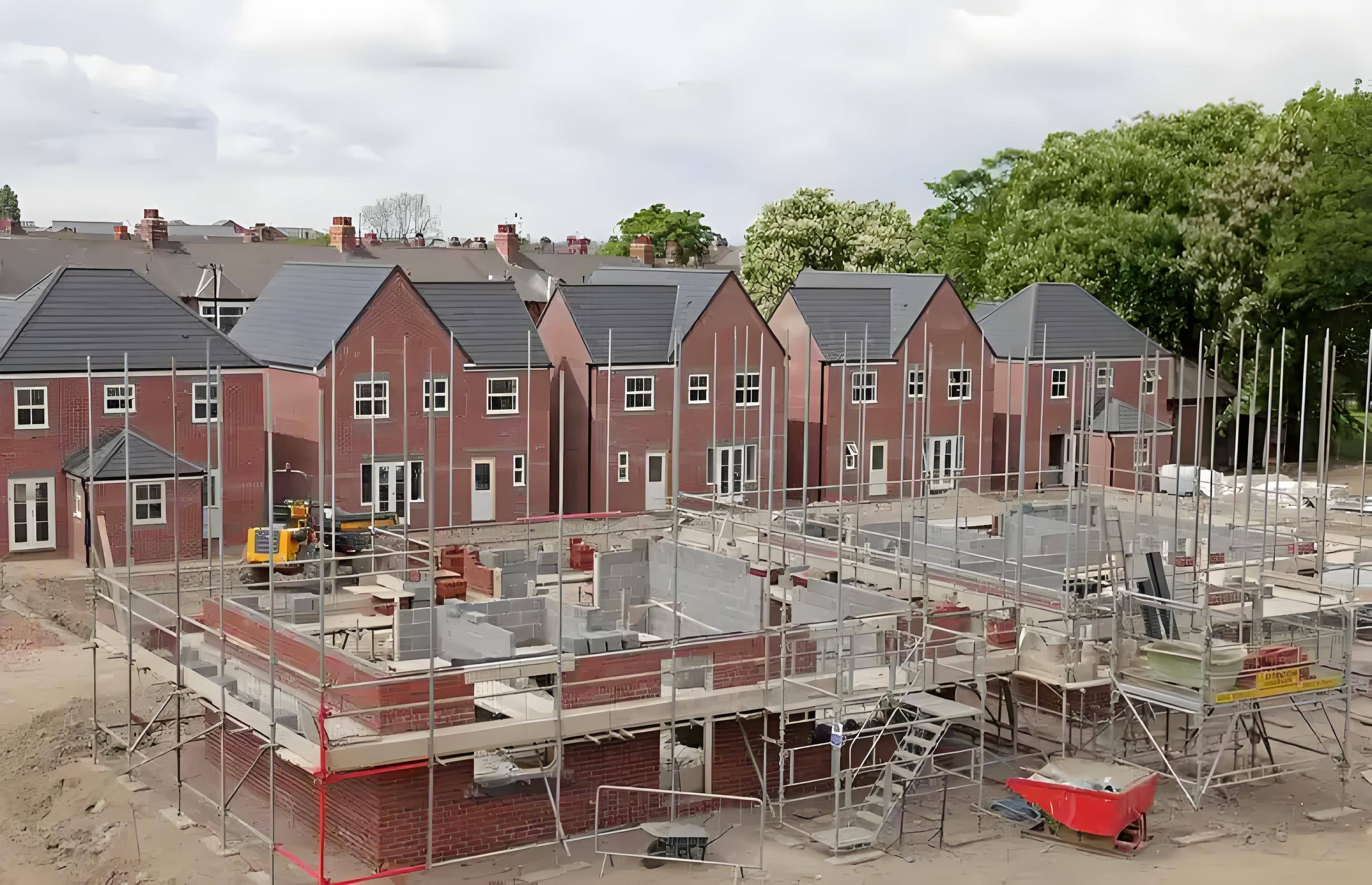
美国成屋销售跌至九个月低点,房价处于历史低位
news flash· 2025-07-23 14:08
Group 1 - The total number of existing home sales in the U.S. decreased by 2.7% year-over-year in June, reaching an annualized rate of 3.93 million units, below the expected 4 million units [1] - The supply of existing homes for sale is able to maintain a level of 4.7 months, marking the highest level since July 2016 [1] - Lawrence Yun, Chief Economist of the National Association of Realtors (NAR), stated that years of supply shortages are driving up home prices, and high mortgage rates are causing home sales to stagnate at cyclical lows [1] Group 2 - Former President Trump commented that the U.S. housing market is lagging due to Federal Reserve Chairman Jerome Powell's refusal to cut interest rates, referring to him as "Mr. Too Late" [1] - Trump is considering a proposal to eliminate capital gains tax on home sales [1]