高校博物馆开放

Search documents
北师大博物馆+1,春季学期开放
Xin Jing Bao· 2026-01-22 07:49
Core Viewpoint - The implementation plan for the "Collaborative Education System" in Beijing aims to enhance educational resources by opening university museums and key laboratories to middle and primary school students [1] Group 1: Policy and Implementation - The Beijing Municipal Education Commission and nineteen other departments have jointly developed the implementation plan for the "Collaborative Education System" [1] - The plan includes initiatives to promote the opening of university museums, school history museums, and key laboratories to younger students [1] Group 2: Museum Details - The Beijing Normal University Geological Museum has recently opened for trial operation, housing nearly 50,000 specimens of minerals and rocks [1] - The museum is currently in a trial phase, with a formal reservation system to be launched soon, allowing visitors to book in advance via email [1] - The museum will officially open in the spring semester and will organize volunteer explanations for middle school students during holidays [1] Group 3: Museum Features - The Geological Museum was established in 1999 and has been developed into a teaching laboratory with over 4,500 selected specimens [1] - The new museum is located on the second floor of the university's Science and Technology Building and features over 600 representative specimens across seven exhibition areas [1] - The exhibition areas include historical evolution, minerals, rocks, fossils, collections, donations, and interactive experience zones [1]
发挥高校博物馆文化亲和力
Ren Min Ri Bao· 2025-09-19 02:45
Group 1 - The article highlights the increasing public interest in university museums, showcasing rare exhibits that were previously hidden within campus settings [1][2] - University museums serve as cultural treasures, providing unique value in disseminating scientific knowledge and historical culture, supported by rich academic foundations [1][2] - Many university museums have extensive collections, such as Peking University's Sackler Museum with over 13,000 items and Capital Normal University's textbook museum with over 30,000 textbooks, reflecting the academic core of the institutions [1] Group 2 - To enhance public access to cultural treasures, universities need to explore more flexible opening mechanisms while balancing teaching order and social service capabilities [2] - Some universities are implementing refined management strategies, such as designated public visiting hours that do not interfere with teaching activities [2] - The use of digital technology and innovative exhibition methods, like the virtual inquiry system developed by Nanjing University of Chinese Medicine, can help bridge the gap between academic resources and the public [3] Group 3 - Opening university museums to the public is seen as a social responsibility and an opportunity to enhance public image, encouraging more universities to innovate and optimize their cultural resources [3]
发挥高校博物馆文化亲和力(微观)
Ren Min Ri Bao· 2025-09-18 22:12
Core Viewpoint - The article emphasizes the importance of university museums as cultural treasures that enhance public access to scientific knowledge and historical culture, while also highlighting the need for flexible opening mechanisms to balance educational priorities and social service capabilities [1][2]. Group 1: Importance of University Museums - University museums serve as cultural mines, showcasing rare artifacts and contributing to the dissemination of knowledge [1]. - Institutions like Peking University and Capital Normal University possess extensive collections, enhancing academic exploration and public understanding of various fields [1]. Group 2: Challenges and Solutions - Many university museums currently operate under "limited opening" conditions due to safety and educational constraints, requiring reservations for visits [1]. - To improve accessibility, universities are encouraged to adopt refined management strategies, such as designated public visiting hours that do not interfere with teaching [2]. Group 3: Innovation and Engagement - The use of digital technology, such as the virtual inquiry system developed by Nanjing University of Chinese Medicine, enhances visitor engagement and understanding of traditional practices like acupuncture [3]. - Opening university museums to the public is seen as an opportunity to fulfill social responsibilities and improve public image, fostering a vibrant connection between academia and society [3].
暑假一起去逛博物馆,22所首都高校43个博物馆向中小学生开放
Xin Jing Bao· 2025-07-10 12:47
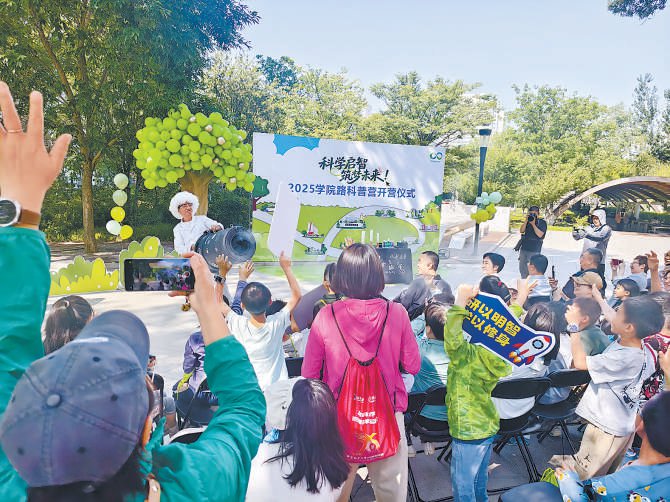
Core Points - The 2025 "Jingcai" summer theme activities for university museums in Beijing have officially started, with 22 universities opening 43 campus museums to middle and primary school students and the public [1][3] - The initiative aims to promote educational resource sharing and enhance the integration of schools and communities, providing immersive learning experiences [2][3] Group 1: Museum Activities - The summer program includes hands-on experiences such as observing insect fossils, touching various rocks, and engaging in calligraphy activities [2] - The Capital Normal University has opened 7 museums, offering professional guides and science courses to enrich participants' learning [2][3] - The museums cover diverse fields including archaeology, mechanical engineering, aerospace, national defense education, and cultural history, providing a platform for cultural appreciation and social practice [3][4] Group 2: Educational Resources - The "Beijing Education New Map" app allows students to view museum information and make reservations for visits, enhancing accessibility [3][5] - Students can create a personalized growth map by checking in at museums through the app, which records their visit history [5] - The initiative will continue post-summer, with plans to involve more university museums to enrich educational resources for middle and primary school students [5]
高校博物馆:欲出“象牙塔”,谁来推一把
Bei Jing Ri Bao Ke Hu Duan· 2025-06-02 21:15
Core Viewpoint - The article discusses the increasing popularity of university museums in Beijing, highlighting their rich collections and the challenges they face in accessibility and public engagement [1][12]. Group 1: University Museums' Appeal - There are 48 university museums across 27 universities in Beijing, showcasing collections that rival national and world-class museums [7]. - Beijing Forestry University Museum houses 350,000 specimens, including endangered species and historical collections dating back to 1905 [7]. - The geological museum at China University of Geosciences features over 4,000 specimens, illustrating Earth's 4.6 billion-year history [8]. Group 2: Accessibility Challenges - Accessing university museums often requires prior reservations, with some institutions likened to "grabbing a hospital expert appointment" due to high demand [9][11]. - Many museums have limited opening hours, often not accommodating weekends or holidays, making it difficult for working individuals to visit [10][11]. - Space constraints and staffing issues hinder the ability of university museums to open to the public, with many having less than 3,000 square meters of exhibition space [12]. Group 3: Solutions and Innovations - Universities are exploring various models to improve accessibility, such as dedicated entry points and volunteer programs [14][15]. - The Tsinghua University Art Museum has successfully attracted over 4 million visitors since its opening in 2016, demonstrating effective public engagement strategies [16]. - Collaborative efforts between universities and local communities aim to enhance the visibility and impact of university museums [18][19].