高质量就业岗位

Search documents
三季度城镇调查失业率5.2% 高质量就业岗位呈现新变化
2 1 Shi Ji Jing Ji Bao Dao· 2025-10-20 08:05
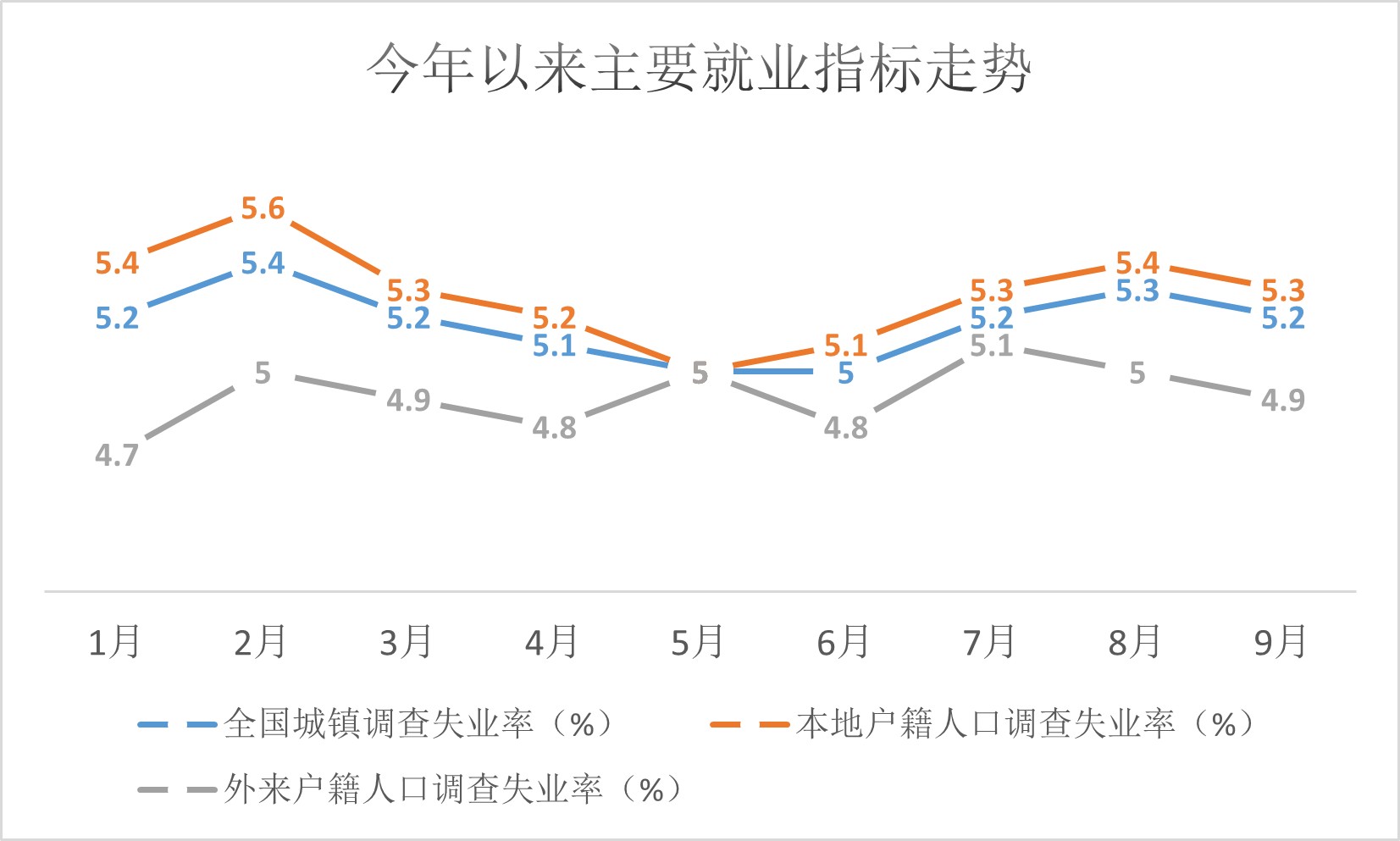
Economic Overview - The average urban survey unemployment rate for Q3 was 5.2%, unchanged from the same period last year, but increased by 0.2 percentage points from the previous quarter [3] - In September, the urban survey unemployment rate was 5.2%, a decrease of 0.1 percentage points from the previous month [1][3] - The unemployment rate for local registered labor was 5.3%, while for migrant labor it was 4.9%, both showing a decrease of 0.1 percentage points from the previous month [1] Youth Employment Challenges - The youth unemployment rate for those aged 16-24, excluding students, was 17.8% in July, rising by 3.3 percentage points from the previous month and by 0.7 percentage points year-on-year [3][4] - In August, the youth unemployment rate increased to 18.9%, up by 1.1 percentage points from July and by 0.1 percentage points year-on-year [3] - The employment situation for recent college graduates is particularly concerning, necessitating focused attention [4] High-Quality Job Opportunities - The ongoing recruitment for civil service positions is attracting a significant number of recent graduates, with the 2026 national civil service exam planning to recruit 38,100 individuals [5] - Over 60% of positions in the 2026 national exam are specifically targeted at recent graduates, indicating a strong emphasis on their employment [5] High-Tech Manufacturing Growth - The added value of high-tech manufacturing industries grew by 9.6% year-on-year in the first three quarters, with significant growth in integrated circuit manufacturing (22.4%) and electronic materials (20.5%) [6] - The added value of digital product manufacturing increased by 9.7%, while the information transmission and software services sector grew by 11.2% [6] - The proportion of recent graduates entering the manufacturing sector has steadily increased from 17.9% in 2020 to 22.5% in 2024, reflecting a growing interest in high-end manufacturing [6] Structural Employment Issues - There is a structural employment issue characterized by a mismatch between available jobs and qualified candidates, particularly in the manufacturing sector [7] - The proportion of individuals with higher education in digital technology engineering roles is significantly higher (12.6%) compared to those without higher education (3.9%), indicating a shift towards technology-intensive roles [7]