结构性就业问题

Search documents
着眼于“就业友好”,在高质量发展中筑牢民生根基
2 1 Shi Ji Jing Ji Bao Dao· 2025-11-24 22:54
就业是民生之本。《中共中央关于制定国民经济和社会发展第十五个五年规划的建议》明确提出,深入 实施就业优先战略,健全就业促进机制,构建就业友好型发展方式。这是"构建就业友好型发展方式"首 次被写入国家五年规划,标志着高质量发展进程将与就业提质扩容紧密结合,不断增强经济发展对就业 的带动能力。 构建就业友好型发展方式,必须强化产业与就业协同,推动财政、货币、投资、消费、产业、区域等政 策与就业政策协调联动、同向发力。我国在因地制宜发展新质生产力、培育壮大新兴产业、布局未来产 业的过程中,应着力扩大高质量就业供给。同时,要科学研判人力资源发展趋势,动态优化高等教育专 业与资源结构,加大技术技能人才培养力度。 在推进制造业转型升级的同时,需大力发展服务业这一就业最大"容纳器"。应推动传统制造业向服务型 制造转型,通过提升产业价值链,在研发、设计、营销、售后等环节创造更多专业岗位。此外,为顺应 人民美好生活需要与消费升级趋势,应重点支持文旅康养等需求旺盛的服务业发展。 激发民间投资活力、发展壮大民营经济同样关键。企业是就业的基本载体,民营企业更是创造就业的主 力军。除营造有利于企业稳岗扩岗的政策环境外,还应加大对创业活 ...
三季度城镇调查失业率5.2% 高质量就业岗位呈现新变化
2 1 Shi Ji Jing Ji Bao Dao· 2025-10-20 08:05
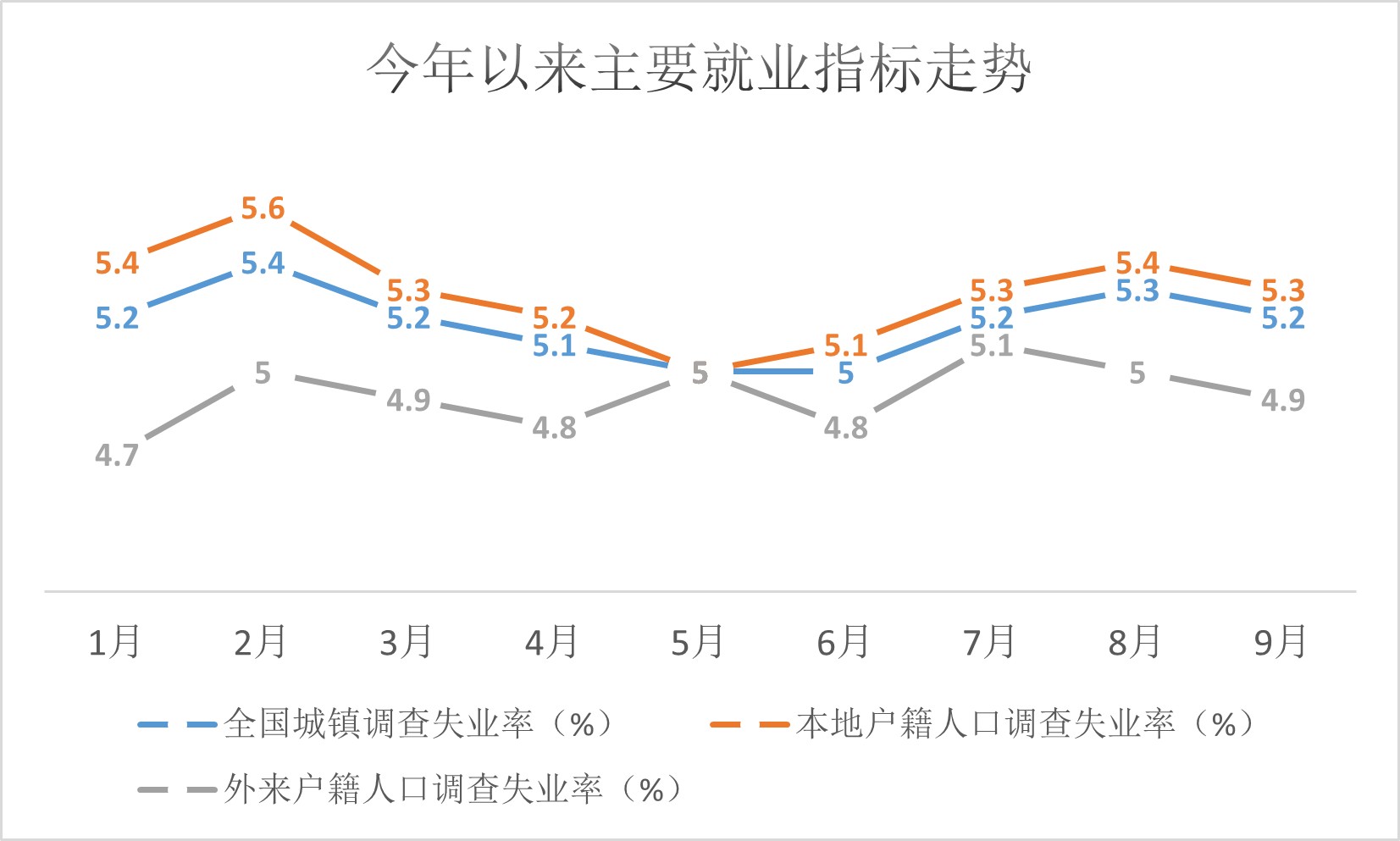
Economic Overview - The average urban survey unemployment rate for Q3 was 5.2%, unchanged from the same period last year, but increased by 0.2 percentage points from the previous quarter [3] - In September, the urban survey unemployment rate was 5.2%, a decrease of 0.1 percentage points from the previous month [1][3] - The unemployment rate for local registered labor was 5.3%, while for migrant labor it was 4.9%, both showing a decrease of 0.1 percentage points from the previous month [1] Youth Employment Challenges - The youth unemployment rate for those aged 16-24, excluding students, was 17.8% in July, rising by 3.3 percentage points from the previous month and by 0.7 percentage points year-on-year [3][4] - In August, the youth unemployment rate increased to 18.9%, up by 1.1 percentage points from July and by 0.1 percentage points year-on-year [3] - The employment situation for recent college graduates is particularly concerning, necessitating focused attention [4] High-Quality Job Opportunities - The ongoing recruitment for civil service positions is attracting a significant number of recent graduates, with the 2026 national civil service exam planning to recruit 38,100 individuals [5] - Over 60% of positions in the 2026 national exam are specifically targeted at recent graduates, indicating a strong emphasis on their employment [5] High-Tech Manufacturing Growth - The added value of high-tech manufacturing industries grew by 9.6% year-on-year in the first three quarters, with significant growth in integrated circuit manufacturing (22.4%) and electronic materials (20.5%) [6] - The added value of digital product manufacturing increased by 9.7%, while the information transmission and software services sector grew by 11.2% [6] - The proportion of recent graduates entering the manufacturing sector has steadily increased from 17.9% in 2020 to 22.5% in 2024, reflecting a growing interest in high-end manufacturing [6] Structural Employment Issues - There is a structural employment issue characterized by a mismatch between available jobs and qualified candidates, particularly in the manufacturing sector [7] - The proportion of individuals with higher education in digital technology engineering roles is significantly higher (12.6%) compared to those without higher education (3.9%), indicating a shift towards technology-intensive roles [7]