高质量运营

Search documents
资本局与双面牌:方源资本欲售CFB集团 DQ与棒约翰的中国命运十字路口
Xin Lang Cai Jing· 2026-02-25 10:51
Core Viewpoint - The potential sale of CFB Group by FountainVest Partners reflects a significant shift in the Chinese private equity market, highlighting the need for international brands to adapt their survival strategies in a competitive landscape where growth opportunities are diminishing [1][10]. Group 1: Transaction Overview - FountainVest Partners is considering selling its stake in CFB Group, which operates over 1,800 stores in Greater China and holds franchises for Dairy Queen and Papa John's, with an estimated valuation of $500 million (approximately 3.45 billion RMB) [1][10]. - FountainVest acquired CFB Group from EQT AB in 2022 for about $160 million (approximately 1.022 billion RMB), and a successful exit at $500 million would yield significant returns, exceeding 2.5 billion RMB [2][11]. - The timing of the potential sale is strategic, as the Chinese restaurant capital market has shown a dichotomy since 2025, with financing challenges on one side and a scarcity of quality assets on the other [3][12]. Group 2: CFB Group's Performance - Under FountainVest's management, CFB Group has transitioned from scale expansion to high-quality operations, establishing a solid performance foundation that enhances its market value [3][12]. - Dairy Queen has become a leading player in the Chinese ice cream market, with over 1,800 stores and a significant contribution from new product launches, which accounted for over 60% of annual sales in 2025 [5][14]. - The brand's innovative approach, including the introduction of over 150 new products in 2025, has significantly increased its appeal among younger consumers, with the demographic share rising from 42% in early 2020 to 68% in early 2025 [5][14]. Group 3: Challenges and Strategies - CFB Group faces a duality in its operations, with Dairy Queen thriving while Papa John's struggles in the competitive landscape, where it has only about 300 stores compared to its competitors [6][16]. - Papa John's has adopted a pragmatic survival strategy, shifting to a delivery-focused model and raising prices to improve product quality, which has stabilized customer traffic and sales [7][16]. - The valuation of CFB Group is complex, as potential buyers will assess Dairy Queen and Papa John's differently, with Dairy Queen seen as a cash cow and Papa John's as needing a more profound business model transformation [8][17]. Group 4: Market Implications - The rumored sale of CFB Group signifies a new normal in the Chinese restaurant industry, where brands must continuously evolve to survive, indicating that ownership is not permanent but rather a phase in the ongoing market dynamics [8][17]. - For FountainVest, a successful exit at $500 million would mark a significant achievement in its investment career, while CFB Group's future will depend on maintaining innovation and quality in its offerings [8][17].
金科易主,黄红云谢幕,1470亿债务走向终局
Xin Lang Cai Jing· 2025-09-29 01:07
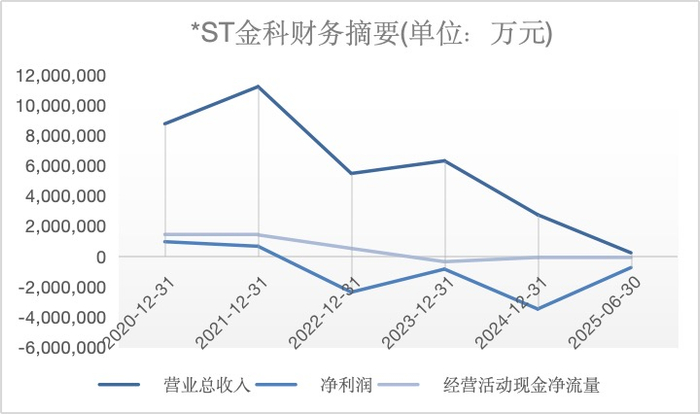
Core Viewpoint - Huang Hongyun, the founder of Jinke Group, has relinquished control of the company due to overwhelming debt pressures, marking a significant shift in the company's management and ownership structure [1][2]. Company Summary - Jinke Group has entered a debt restructuring process, signing agreements with CITIC Trust to establish a service trust for its equity and debt [1]. - The restructuring plan has reached a critical phase, with the transfer of 3 billion shares to all restructuring investors completed [2]. - The company's total debt has reached 147 billion yuan, with over 8,400 creditors involved [2]. - The actual control of Jinke has shifted from Huang Hongyun to a state of no actual controller, indicating a significant change in governance [2][11]. Financial Overview - Jinke's total assets are reported at 175.75 billion yuan, while total liabilities stand at 200.60 billion yuan, resulting in a severe debt crisis [6]. - The company has faced liquidity issues, leading to a default on a 3.25 billion yuan USD bond with a coupon rate of 6.85% [6]. - The restructuring plan includes a capital increase, with 5.29 billion shares being converted to equity, raising the total share count to 10.63 billion [9]. Industry Context - Jinke's restructuring is seen as a reference case for other distressed real estate companies amid a broader industry downturn [2][12]. - The trend of debt restructuring among real estate firms is accelerating, with 77 companies reported to have defaulted on debts, and over 12 trillion yuan in debt restructuring plans approved [12]. - The restructuring process is characterized by a shift from high leverage to a focus on sustainable operations, with various methods such as debt-to-equity swaps being employed [12][14].