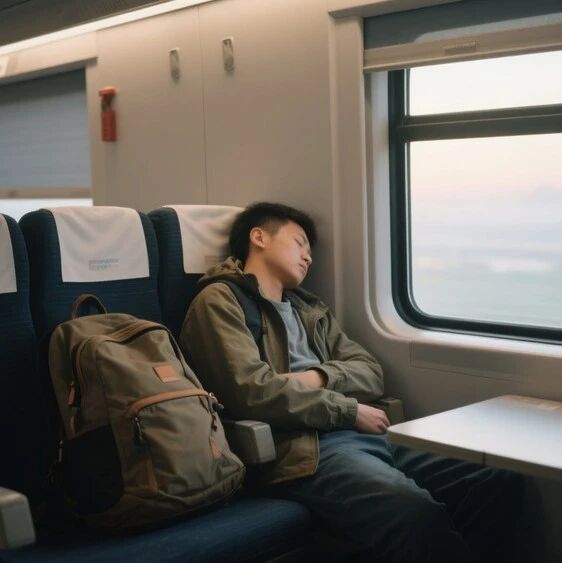
高铁通勤

Search documents
北京往返雄安更便捷了
Bei Jing Wan Bao· 2026-01-26 06:44
Core Insights - The launch of the G8859 high-speed train marks a significant improvement in connectivity within the Beijing-Tianjin-Hebei region, facilitating easier commuting for passengers [2][3] - The new train schedule has reduced travel times significantly, with the journey from Beijing West to Baiyangdian taking approximately 1 hour and 5 minutes, a reduction of over 30 minutes compared to previous options [3] - The implementation of a new train operation schedule nationwide has also led to a reduction in the interval between trains on the Beijing-Shanghai high-speed rail to as short as 3 minutes, enhancing travel convenience [4][5] Group 1: G8859 High-Speed Train Launch - The G8859 train operates a closed-loop route connecting Beijing West, Baoding East, Baiyangdian, and Tianjin West, catering primarily to commuters and business travelers [2][3] - Initial passenger numbers for the G8859 train were 138, with a significant portion traveling to Baiyangdian, indicating strong demand for cross-city commuting options [4] Group 2: Beijing-Shanghai High-Speed Rail Adjustments - The new train schedule at Beijing South Station has increased the number of scheduled trains to 266.5 pairs, with 140 pairs specifically for the Beijing-Shanghai route [4][5] - The introduction of additional services and amenities on the G9 train, such as mobile charging options and comfort items, reflects a focus on enhancing the travel experience for business passengers [5]

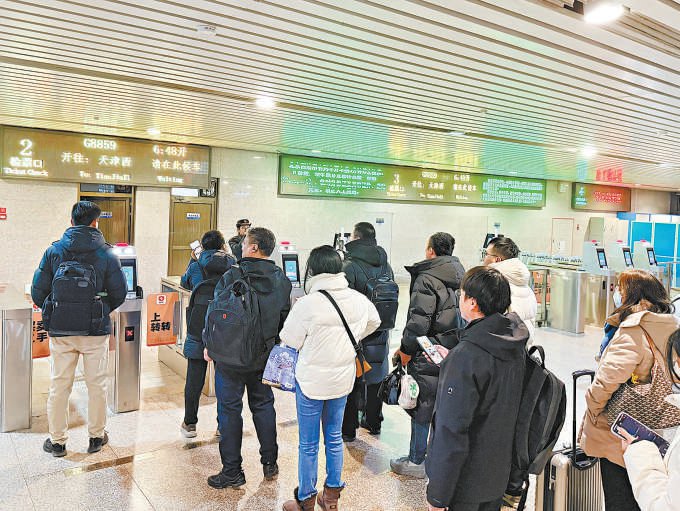
今起北京铁路首开环京津冀高铁列车,市民前往雄安新区通勤更便利
Xin Jing Bao· 2026-01-26 03:09
Core Viewpoint - The introduction of direct high-speed train services between Beijing West Station and Baiyangdian Station significantly enhances commuting efficiency for workers traveling to the Xiong'an New Area, reflecting the growing demand for intercity travel in the Beijing-Tianjin-Hebei region [1][2][3]. Group 1: Train Service Details - The new high-speed train G8859 departs from Beijing West Station at 6:48 AM and arrives at Baiyangdian Station at 7:53 AM, with a return service at 5:16 PM from Tianjin West Station [2]. - A total of 199 pairs of passenger trains are scheduled from Beijing West Station, including 138 pairs of high-speed trains, with four new trains added to Baiyangdian Station [1][3]. Group 2: Commuter Impact - The direct train service reduces travel time for commuters, as previously, travelers had to transfer at Baoding, leading to longer journey times [3]. - Commuters like Ms. Sun have reported significant time savings, with the new service allowing for a 10-minute journey from Baiyangdian Station to their workplace in the Xiong'an New Area [2]. Group 3: Broader Transportation Developments - The new train service is part of a broader initiative to support the large-scale construction and functional transfer of Beijing's non-capital functions to Xiong'an New Area, addressing the increasing commuter flow between these regions [3]. - The opening of the G357 train to Yan'an marks the beginning of a "five-hour transportation circle" between Beijing and Yan'an, enhancing travel efficiency and promoting tourism in the region [3]. Group 4: Operational Adjustments - Following the timetable adjustment, some trains have changed their starting stations, and the Beijing West Station has implemented enhanced training and service guidance to ensure smooth travel for passengers [4].
6小时通勤,月花4000:高铁上班族,悄悄爆发
36氪· 2025-12-16 00:12
Core Viewpoint - High-speed rail commuting is becoming a global trend, with increasing numbers of people using it as a daily transportation method for work, particularly in major urban areas in China [7][44]. Group 1: High-Speed Rail Commuting in China - As of 2025, there will be 265.5 pairs of commuter trains operating around Beijing, covering 10 high-speed rail lines, with over 220,000 passengers commuting daily [7]. - The "high-speed rail bus" model has been implemented since 2008, allowing for fixed schedules and high-frequency departures, making it easier for commuters [18]. - High-speed rail commuting is not only prevalent in the Beijing-Tianjin-Hebei region but also in the Greater Bay Area, Yangtze River Delta, Chengdu-Chongqing, and Wuhan urban circles [7][18]. Group 2: Commuter Experiences - Commuters like Li Chengzi and Mei have adapted to long daily commutes, often spending around 6 hours traveling 400 kilometers round trip [9][20]. - The cost of commuting can be significant, with Li Chengzi spending approximately 4,000 yuan per month, comparable to renting a place in Beijing [16]. - The introduction of "count tickets" has made it easier for frequent commuters to manage costs, although they still face challenges during peak times [15][17]. Group 3: Global Context - High-speed rail commuting is not unique to China; cities like Tokyo and Paris have established efficient systems that transport millions daily [44]. - The trend reflects a broader shift in urban living, where individuals seek to balance work and family life by splitting their residences between cities [39][40].
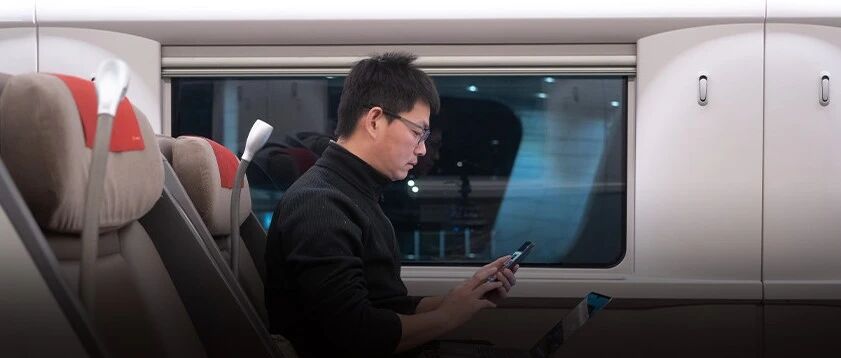
6小时通勤,月花4000:高铁上班族,悄悄爆发
虎嗅APP· 2025-12-14 08:50
Core Viewpoint - The article highlights the growing trend of high-speed rail commuting in China, illustrating how individuals are adapting their lives around this mode of transportation to balance work and family life [4][40]. Group 1: High-Speed Rail Commuting - Increasing numbers of people are using high-speed trains as a daily commuting tool, with statistics showing that by 2025, there will be 265.5 pairs of commuter trains operating around Beijing, serving over 220,000 passengers daily [4][12]. - High-speed rail is becoming a preferred choice due to its punctuality, spaciousness, and stability, transforming train carriages into mobile "capsule hotels" where commuters can rest, work, or eat [5][30]. - The "high-speed rail bus" model has been implemented since the opening of the Beijing-Tianjin intercity railway in 2008, providing fixed schedules and flexible ticketing options to facilitate commuting [15][16]. Group 2: Commuter Experiences - Commuters like Li Chengzi and Mei have shared their experiences of long daily commutes, with Li traveling 400 kilometers daily and spending nearly 6 hours commuting, yet finding it less painful over time [6][20]. - The cost of commuting can be significant, with Li's monthly expenses reaching around 4,000 yuan, comparable to renting a place in Beijing [15][20]. - The article also discusses the emotional aspects of commuting, with individuals expressing a desire to be present in their families' lives despite the challenges of long-distance travel [20][40]. Group 3: Regional Variations - Different urban areas in China, such as the Greater Bay Area and Yangtze River Delta, are also adopting high-speed rail commuting, creating half-hour commuting circles [4][12]. - In cities like Hangzhou and Shenzhen, high-speed rail is being used as a substitute for subways, providing a more comfortable commuting experience [27][29]. - The article notes that high-speed rail commuting is becoming a global trend, with examples from cities like Tokyo and Paris showcasing efficient commuter systems [32].