黄河治理

Search documents
廉洁文化中国行丨大河奔腾向前进
Zhong Yang Ji Wei Guo Jia Jian Wei Wang Zhan· 2026-01-08 23:51
Core Viewpoint - The article emphasizes the historical significance and ongoing importance of the Yellow River, particularly focusing on the Sanmenxia Water Conservancy Project as a symbol of resilience and progress in water management in China [8][9][11]. Group 1: Historical Context - The Yellow River is recognized as one of the most challenging rivers to manage globally, with its governance being a long-standing aspiration for the Chinese people [8]. - The Sanmenxia Water Conservancy Project, initiated in 1957, is hailed as a pivotal achievement in controlling the Yellow River's flooding, fundamentally altering its historical pattern of frequent breaches [9][11]. - The project has undergone multiple renovations and operational adjustments, establishing a solid foundation for the long-term stability of the Yellow River basin [9]. Group 2: Cultural Significance - The article highlights the cultural legacy associated with the Yellow River, referencing historical figures like Emperor Taizong of the Tang Dynasty and Mao Zedong, who have expressed the river's profound national significance [9][10]. - The Sanmenxia area is depicted as a site of artistic inspiration, with notable works created by artists like Wu Zuoren, capturing the spirit of the era and the monumental efforts in river management [10]. Group 3: Modern Developments - The Sanmenxia Water Conservancy Project continues to play a vital role in ecological protection and high-quality development within the Yellow River basin, reflecting a commitment to sustainable management practices [11][18]. - Recent initiatives have focused on enhancing water source conservation, soil preservation, and pollution control, marking a significant shift towards proactive river governance [18]. - The article notes the strategic elevation of ecological protection and high-quality development in the Yellow River basin as a national priority, showcasing the government's commitment to sustainable practices [18].

致敬!首批“河南楷模”丨张金良:愿做黄河一粒沙
He Nan Ri Bao· 2025-12-09 23:49
Core Viewpoint - The article highlights the significant contributions of Zhang Jinliang, a leading figure in the management and innovation of the Yellow River, showcasing his dedication and the technological advancements achieved in river management over the past four decades [2][8]. Group 1: Contributions to Yellow River Management - Zhang Jinliang has dedicated over 40 years to the Yellow River, overcoming numerous global challenges in river management through technological innovation [2][3]. - He led the first large-scale artificial prototype experiment for Yellow River water and sediment regulation in 2002, which successfully enhanced the river's flow capacity by 400 cubic meters per second [3][4]. - The third water and sediment regulation experiment in 2004 introduced the "artificially shaped heavy flow" method, marking a world-first achievement in sediment management [4]. Group 2: Technological Innovations - Zhang's team developed a high-performance inorganic loess solidifying agent, which improved sediment dam capacity by 30%-40% and reduced construction costs by 25%-35% [5][6]. - He invented a new method for rock breaking using high-pressure water, addressing challenges in hard rock excavation [6][7]. - Zhang has been instrumental in creating the "Yellow River Basin Ecological Protection and High-Quality Development Water Security Guarantee Plan," contributing to national water management strategies [7]. Group 3: Mentorship and Legacy - Zhang emphasizes the importance of passing knowledge to younger generations, having mentored many who have become leaders in engineering projects [6][8]. - His approach to training includes hands-on experience in the field, ensuring that new talents understand practical applications of their studies [6][8]. - Zhang's commitment to the Yellow River and his role as a mentor reflect a deep sense of responsibility and dedication to the future of water management in China [8].

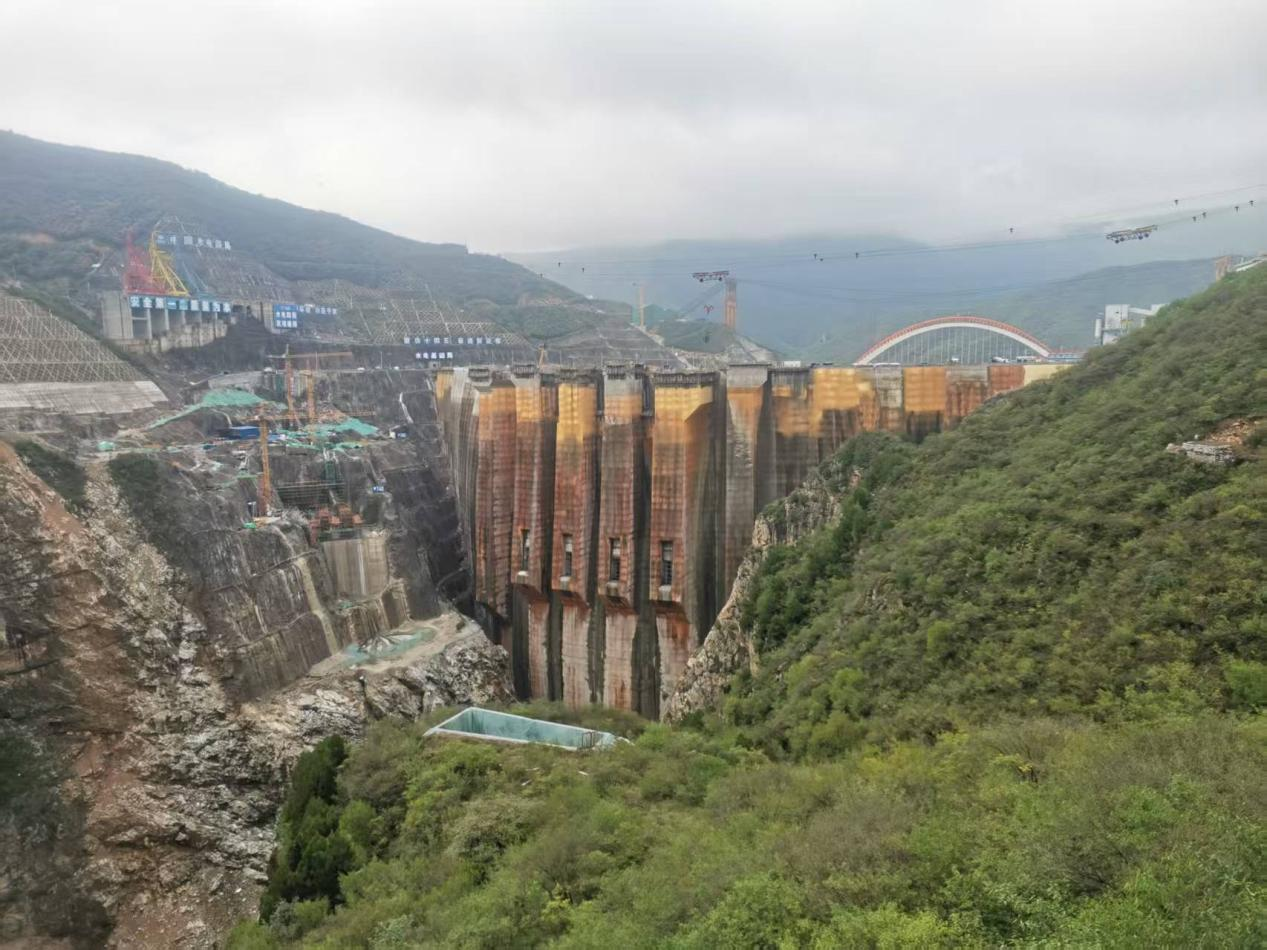
行走江河看中国|智慧引领、精准调控 东庄水利枢纽“以坝御洪”护佑黄河安澜
Yang Shi Wang· 2025-10-18 07:11
Core Viewpoint - The construction of the Dongzhuang Water Conservancy Hub is a significant development project aimed at enhancing flood control, sediment management, and regional water supply in Shaanxi Province, contributing to the ecological protection and sustainable development of the Yellow River basin [1][3][4]. Group 1: Flood Control and Sediment Management - The Dongzhuang Water Conservancy Hub will improve flood control standards from a 10-year to a 20-year frequency, reducing the impact of 100-year floods to 50-year floods in the Weihe River downstream [3]. - The project is expected to intercept 3.051 billion tons of sediment from the Jing River and 2.5 billion tons from the Yellow River, significantly alleviating the sediment burden on the downstream waterways [3]. Group 2: Water Supply and Irrigation - Upon completion, the hub will provide an annual water supply of 435 million cubic meters to urban and industrial areas, achieving a water supply guarantee rate of 95% [4]. - The irrigation guarantee rate for the Jinghui Canal irrigation area will increase from 30% to 50%, supporting regional agricultural development [4]. Group 3: Power Generation and Environmental Impact - The hub will feature four mixed-flow generating units with a total capacity of 110 megawatts, generating an average of 285 million kilowatt-hours annually, saving 90,000 tons of coal and reducing carbon dioxide emissions by approximately 250,000 tons [4]. - The project will create a 97-kilometer long water surface area, improving local microclimates and providing better habitats for fish and migratory birds [5]. Group 4: Technological Innovations and Milestones - The planning and construction of the Dongzhuang Water Conservancy Hub have involved overcoming significant technical challenges, leading to the development of advanced systems such as digital twin technology and visual monitoring platforms [6]. - The project is recognized for several world-first achievements, including being the first high arch dam built primarily for flood control and sediment reduction [6].