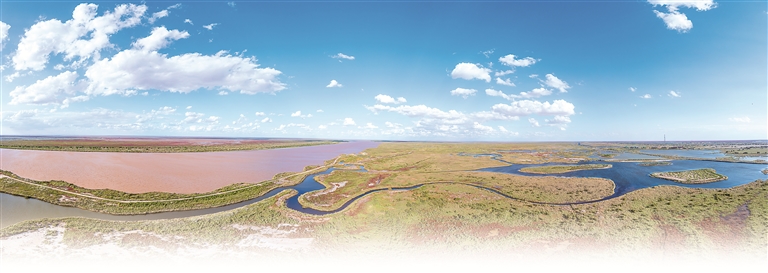
三门峡水利枢纽工程

Search documents
从“那时”到“这时”丨从“忧患河”到“幸福河”
He Nan Ri Bao· 2026-01-26 23:42
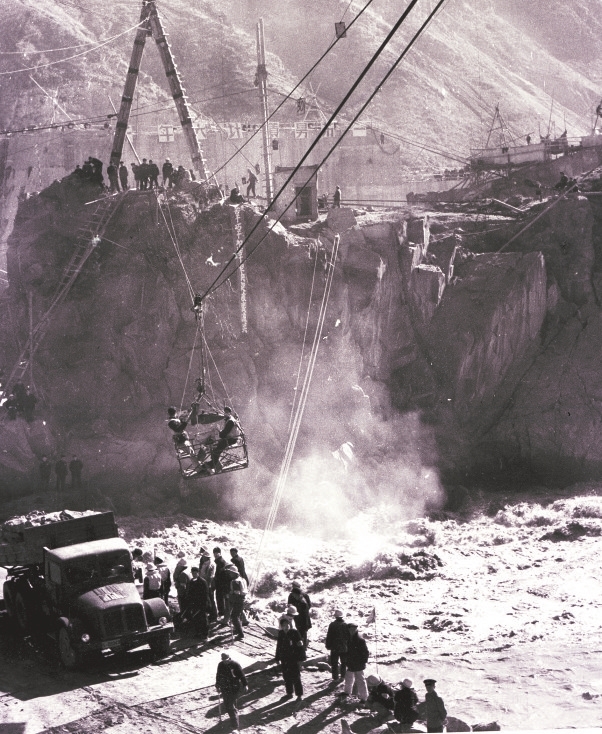
Core Insights - The article highlights the historical significance and modern transformation of the Sanmenxia Water Conservancy Project on the Yellow River, emphasizing its role in flood control, ecological protection, and smart water management [3][4]. Group 1: Historical Context - The Sanmenxia Water Conservancy Project, initiated in 1957, was the first large-scale water conservancy project built on the Yellow River in New China, constructed by thousands of workers under challenging conditions [3]. - The dam, measuring 713 meters in length and 106 meters in height, controls 91.5% of the Yellow River's watershed area, providing safety for 170 million people downstream [3]. Group 2: Ecological and Technological Advancements - Since 2009, the region has developed a 1,194-kilometer composite ecological corridor along the Yellow River, addressing soil erosion over an area of 6,779 square kilometers, with the river's water quality stabilizing at Class II [4]. - The Sanmenxia reservoir has created over 100 square kilometers of wetlands, increasing bird species from 175 to 315, attracting thousands of swans for wintering [4]. Group 3: Modern Water Management - The project has evolved from "engineering water management" to "ecological river protection," integrating safety, ecology, and intelligence into a modern water management system [4]. - The dam features 354 monitoring points forming a "nerve network," with robots conducting 24-hour inspections, achieving millimeter-level data precision [4]. - AI algorithms can forecast water conditions 72 hours in advance with over 95% accuracy, and during the 2025 water and sediment regulation period, the reservoir will provide 475 million cubic meters of water for sediment flushing [4]. Group 4: Future Recommendations - Suggestions for enhancing Yellow River protection include improving regional collaboration mechanisms, establishing cross-provincial compensation systems, and innovating cultural tourism linkages to promote the Yellow River's story globally [6].

廉洁文化中国行丨大河奔腾向前进
Zhong Yang Ji Wei Guo Jia Jian Wei Wang Zhan· 2026-01-08 23:51
Core Viewpoint - The article emphasizes the historical significance and ongoing importance of the Yellow River, particularly focusing on the Sanmenxia Water Conservancy Project as a symbol of resilience and progress in water management in China [8][9][11]. Group 1: Historical Context - The Yellow River is recognized as one of the most challenging rivers to manage globally, with its governance being a long-standing aspiration for the Chinese people [8]. - The Sanmenxia Water Conservancy Project, initiated in 1957, is hailed as a pivotal achievement in controlling the Yellow River's flooding, fundamentally altering its historical pattern of frequent breaches [9][11]. - The project has undergone multiple renovations and operational adjustments, establishing a solid foundation for the long-term stability of the Yellow River basin [9]. Group 2: Cultural Significance - The article highlights the cultural legacy associated with the Yellow River, referencing historical figures like Emperor Taizong of the Tang Dynasty and Mao Zedong, who have expressed the river's profound national significance [9][10]. - The Sanmenxia area is depicted as a site of artistic inspiration, with notable works created by artists like Wu Zuoren, capturing the spirit of the era and the monumental efforts in river management [10]. Group 3: Modern Developments - The Sanmenxia Water Conservancy Project continues to play a vital role in ecological protection and high-quality development within the Yellow River basin, reflecting a commitment to sustainable management practices [11][18]. - Recent initiatives have focused on enhancing water source conservation, soil preservation, and pollution control, marking a significant shift towards proactive river governance [18]. - The article notes the strategic elevation of ecological protection and high-quality development in the Yellow River basin as a national priority, showcasing the government's commitment to sustainable practices [18].