黄金消费维权

Search documents
足金“不足”?鉴定有点难
Sou Hu Cai Jing· 2026-02-06 09:44
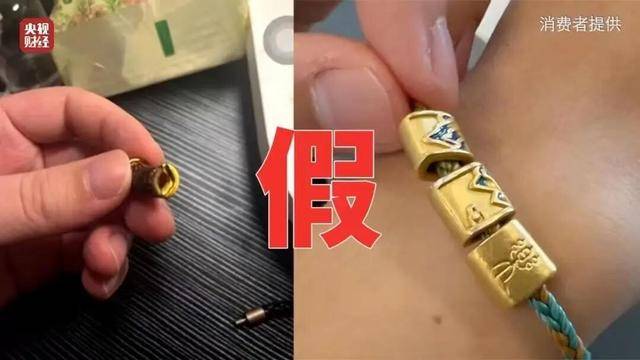
Core Viewpoint - The recent controversy surrounding Chow Sang Sang's gold jewelry highlights significant consumer trust issues in the gold market, with many consumers questioning the reliability of well-known brands due to quality complaints and deceptive practices [1][3]. Group 1: Consumer Complaints - There are over ten thousand complaints related to gold quality on a complaint platform, involving well-known brands like China Gold and Lao Feng Xiang, with online purchases showing a particularly high incidence of issues [3]. - Consumers have reported cases where gold jewelry changed color after a short period of use, with sellers often attributing the problem to improper wear or exposure to chemicals, rather than acknowledging potential quality issues [3][6]. - Online stores frequently engage in deceptive practices, such as selling items that appear to be solid gold but contain inferior metals, leading to significant consumer losses when these stores close shortly after sales [3][6]. Group 2: Challenges in Quality Verification - Consumers face difficulties in verifying the quality of gold jewelry due to a confusing array of certification bodies, with many not being recognized by sellers, leading to a lack of accountability [4][6]. - The cost of professional appraisal can be prohibitive, often exceeding the value of the jewelry itself, discouraging consumers from pursuing claims [6]. - Many consumers find themselves unable to seek redress as sellers may have already closed their shops or provided false information, complicating the process of claiming refunds or replacements [6]. Group 3: Legal Protections and Regulatory Actions - According to consumer protection laws, sellers are obligated to provide accurate information about product materials and purity, and failure to do so can result in liability for damages [7]. - If discrepancies in gold purity are found, consumers can demand refunds and may be entitled to additional compensation if fraud is proven [7]. - Regulatory bodies have begun to take action against fraudulent practices in the gold market, with significant penalties imposed on non-compliant institutions [7].


金价大跌销量反冷?周六福店员剪价签拒称重,投诉解决率垫底?
Sou Hu Cai Jing· 2025-07-04 09:31
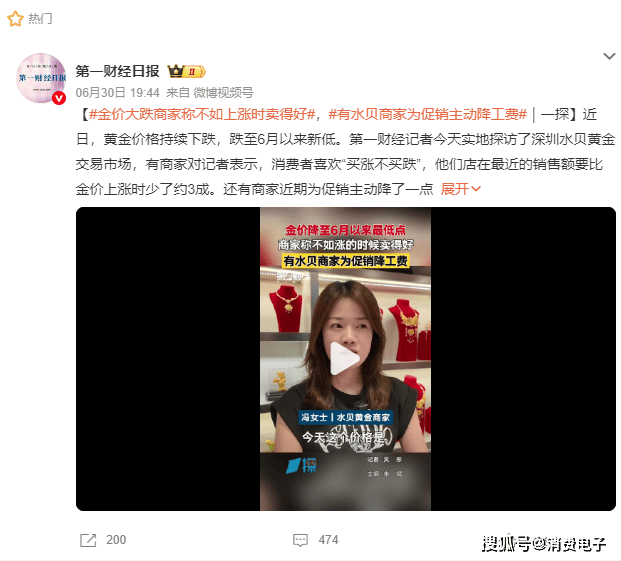
Core Viewpoint - The recent decline in gold prices has led to a paradoxical decrease in sales for jewelers, as consumer behavior tends to favor purchasing during price increases rather than decreases [1] Group 1: Market Trends - Gold prices have dropped to a new low since June, impacting sales negatively, with some jewelers reporting a 30% decrease in sales compared to when prices were rising [1] - Despite fluctuating gold prices, the consumption of gold jewelry remains strong, indicating a persistent consumer interest in the market [3] Group 2: Consumer Complaints - The number of complaints in the gold jewelry industry surged to 8,544 in 2024, a 136.28% increase year-on-year, with total claims exceeding 95.23 million yuan [3] - The complaints are primarily focused on false advertising, pricing disputes, and difficulties in obtaining refunds, with young women emerging as the most active complainants [5][12] - The effective resolution rate for complaints in the industry stands at 36.59%, with a total of 33.46 million yuan recovered for consumers [3] Group 3: Complaint Characteristics - Complaints related to false advertising account for 22.82% of total complaints, with issues such as mislabeling K-gold as pure gold and misleading promotional tactics being common [5] - Pricing disputes make up 19.05% of complaints, with consumers expressing concerns over opaque pricing methods and hidden conditions in promotional offers [7] - Refund disputes constitute 16.35% of complaints, with many consumers reporting that merchants do not allow returns on gold jewelry after purchase [7] Group 4: Brand Performance - China Gold leads in complaint volume with 19.74% of total complaints, followed by Zhou Li Fu and Lao Feng Xiang [8] - Lao Feng Xiang has the highest complaint resolution rate at 94.08%, significantly above the industry average, while Zhou Li Fu's resolution rate is notably low at 15.07% [7][8] Group 5: Consumer Demographics - Female consumers account for 86.02% of complaints, highlighting their dominant role in gold jewelry purchases and their heightened awareness of consumer rights [12] - The age group of consumers filing complaints has shifted, with those born after 2000 now representing 45.18% of complaints, surpassing those born in the 1990s [12] Group 6: Regional Insights - Guangzhou has the highest complaint rate at 5.54%, followed by Dongguan and Shanghai, reflecting the regional distribution of gold jewelry consumption capabilities [15]