5G-A×AI

Search documents
全运火炬传递 5G-A机器人全球首棒独立开跑
Zheng Quan Ri Bao· 2025-11-04 13:08
Core Viewpoint - The integration of 5G-A technology and embodied intelligent robots has achieved a breakthrough, exemplified by the first human-like robot torch relay at the 15th National Games, setting a benchmark for the large-scale application of networked robots [2][4]. Group 1: Technological Advancements - The robot torchbearer utilized stable 5G-A connectivity and a new motion control algorithm, enabling it to independently complete the torch relay without reliance on remote control [2]. - 5G-A's low-latency and high-reliability network serves as the communication foundation for the robot's autonomous torch relay, ensuring precision and continuity in its movements [2][4]. - China Mobile implemented a dual-frequency network (2.6GHz + 4.9GHz) to enhance network connectivity, allowing the robot to operate in outdoor environments with continuous coverage and increased network capacity [3]. Group 2: Intelligent Data Transmission - The robot required real-time transmission of various critical data types, including high-definition video and joint posture control commands, which was supported by an innovative 5G-A "perception-computation-intelligence" integrated base station architecture [3]. - New capabilities in 5G-A were introduced to meet the demands for multi-modal data classification and resource intelligent scheduling, ensuring precise data transmission and instantaneous cloud decision-making for the robot [3][4]. Group 3: Performance and Reliability - The robot's smooth and precise actions depend on stable data transmission, leading to the application of new 5G-A technologies that enhance reliability and reduce latency, transforming the network's performance from "best effort" to "guaranteed delivery" [4]. - The integration of 5G-A capabilities allows the robot to leverage a "cloud brain" while maintaining a lightweight body, enhancing endurance, reliability, and adaptability across various scenarios [4]. Group 4: Industry Impact and Future Directions - The successful completion of the torch relay showcased the innovative synergy between mobile communication and embodied intelligence, laying a solid foundation for an open, collaborative, and innovative 5G-A intelligent industry ecosystem [4]. - China Mobile, as the largest mobile operator globally, is committed to deepening the integration of AI and information communication technologies, with over 2.65 million 5G base stations and extensive 5G-A network coverage [5]. - Future collaborations with industry partners will focus on advancing technology research and innovation in the field of 5G-A and embodied intelligence, facilitating broader applications of robots across various sectors [5].



高铁隧道看视频,5G-A这样改变生活
Sou Hu Cai Jing· 2025-10-16 12:49
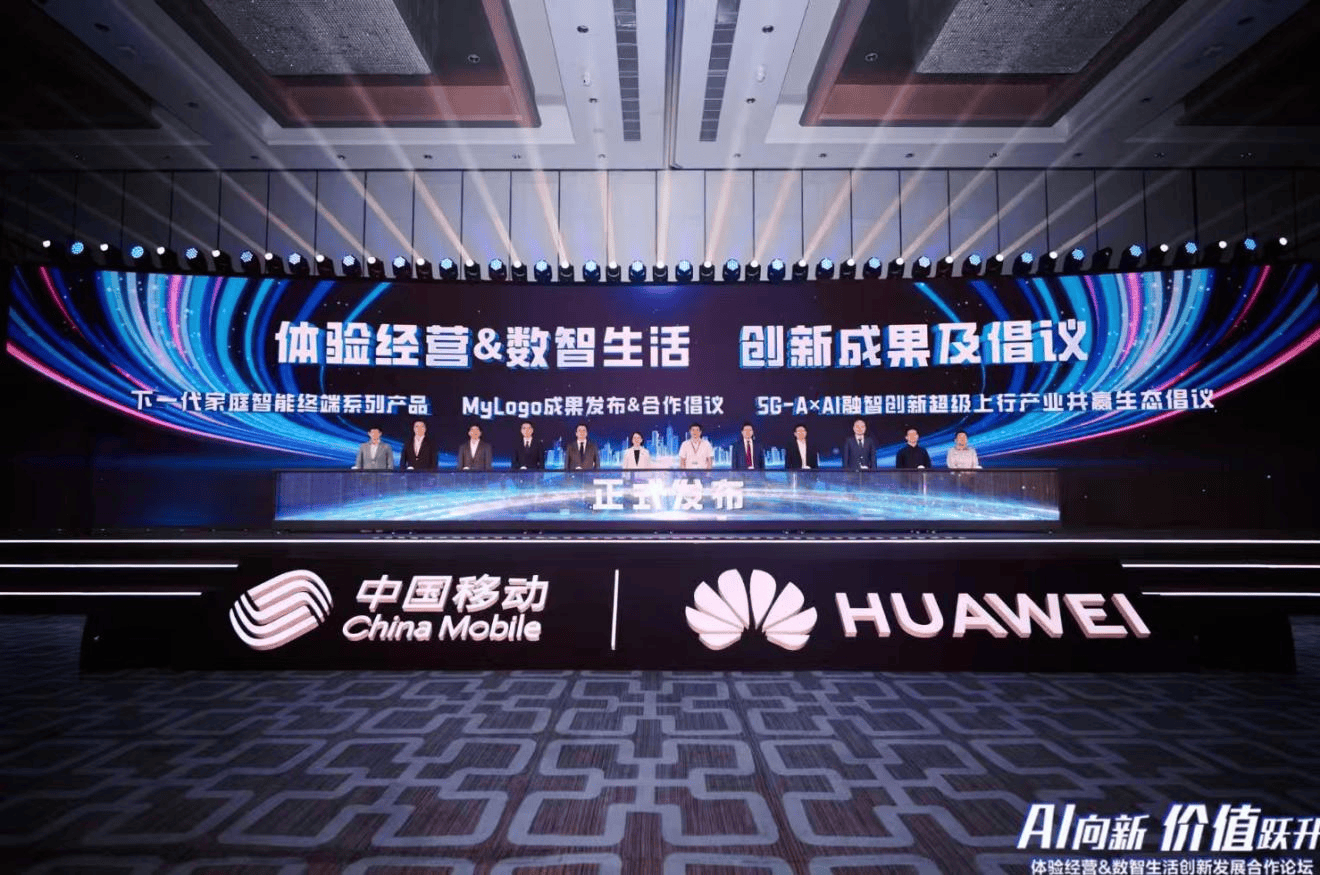
Core Insights - The article discusses Huawei's launch of next-generation smart home terminal products and the "5G-A × AI" ecosystem initiative, aiming to reshape digital life over the next decade [1][3]. Group 1: Smart Home and User Experience - The new smart home terminals are designed to reconstruct interaction points, making returning home feel like "future living" [3]. - 5G-A's scenario-based services aim to integrate high-quality experiences into everyday mobile usage, enhancing user convenience [3]. Group 2: Infrastructure and Industry Support - The "super uplink" solution is positioned as foundational for AI implementation, supporting the intelligent transformation of industries [3]. - Guangdong Mobile's launch of the first commercial "5G-A high-speed train acceleration package" offers 2GB of targeted data and 24-hour dedicated network acceleration, achieving stable download speeds exceeding 3Gbps [3][4]. Group 3: AI Integration and Technological Advancements - The integration of AI transforms 5G-A from a "high-speed network" to an "intelligent hub," exemplified by the Global通 AI phone that combines various services tailored to high-end users [4]. - The "super uplink" speed of 3Mbps to 20Mbps enhances the efficiency of cloud perception and feedback, enabling applications in industrial monitoring, remote surgery, and high-definition streaming [4]. Group 4: Industry Transformation - The collaboration between 5G-A and AI is reshaping industry dynamics, as seen in the use of AI robots in unmanned restaurants that can process orders in real-time with millisecond latency [5]. - In industrial settings, intelligent devices leverage 5G-A's connectivity to interact with thousands of sensors, optimizing production processes for higher efficiency [5].