AI+传统产业

Search documents
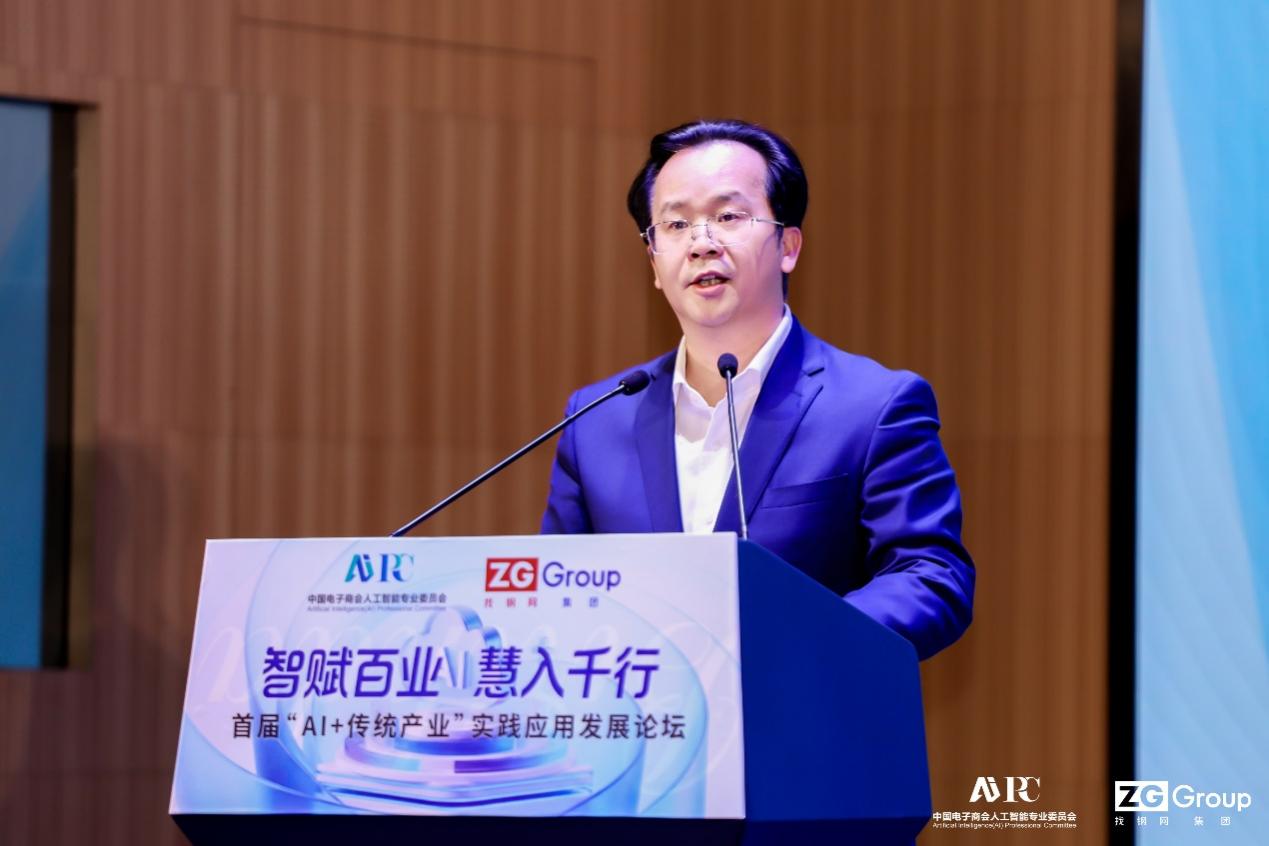
“AI+传统产业”实践应用发展论坛上,找钢网探索AI与传统产业融合新路径
Sou Hu Cai Jing· 2026-02-12 07:01
Core Insights - The forum "AI + Traditional Industry" held in Shanghai highlighted the integration of AI technology into traditional industries, showcasing valuable experiences from companies like Zhaogang Network [1][3]. Group 1: AI Application in Traditional Industries - Zhaogang Network has established a production service system focused on the entire transaction process in the steel industry since its inception in 2012 [3]. - The company employs a dual strategy for AI application, developing its own industry-specific AI models while also collaborating with leading enterprises to enhance user experience and address technical issues [5]. - Zhaogang Network has developed 12 AI Agents and 4 flagship AI products that significantly improve efficiency across the entire sales process and internal management [3]. Group 2: Technological Advancements and Collaborations - The SaleMatch trading engine, developed by Zhaogang Network, has improved its message processing capacity to over 10 million messages daily with an accuracy rate exceeding 95% [3]. - The partnership with Tencent led to the establishment of Tengcai Technology, which has expanded its business from steel to other rapidly fluctuating industrial raw materials, demonstrating the cross-industry application of Zhaogang Network's AI capabilities [3]. - The forum featured representatives from major tech companies like Tencent, Alibaba, Baidu, and JD, indicating the significant influence of the event in the AI and traditional industry landscape [5]. Group 3: Future Prospects and Industry Impact - Zhaogang Network aims to be among the first companies to enter the "A2A" era, which encompasses "Agent to Agent," "Application to Application," and "Area to Area" interactions, facilitating AI capabilities throughout the supply chain [5]. - The practical achievements of Zhaogang Network serve as a reference for the deep integration of AI into traditional industries, contributing to the high-quality development of the Chinese economy [5].

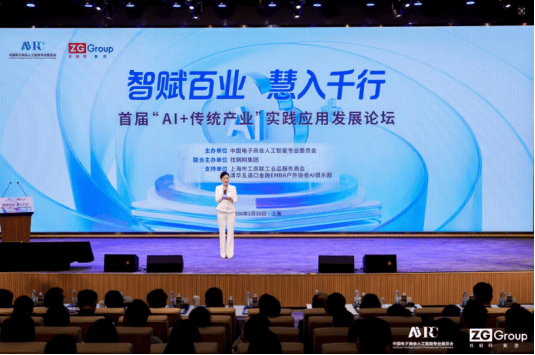
首届“AI+传统产业”实践应用发展论坛在上海举办 探索人工智能产业化路径
Zheng Quan Shi Bao Wang· 2026-01-19 08:20
Group 1 - The forum "AI + Traditional Industry" aims to explore the integration of artificial intelligence into traditional industries to drive high-quality development of the real economy [1][2] - The Vice President of the China Electronics Chamber of Commerce emphasized the importance of focusing on real application scenarios and building a sustainable collaborative ecosystem for AI integration [1] - The founder and CEO of Zhaogang Group highlighted the need for long-term viable application paths for AI in traditional industries, showcasing Zhaogang's efforts in embedding AI capabilities into key operational areas [2][3] Group 2 - The China Electronics Chamber of Commerce released the "2025 Artificial Intelligence Industry Development White Paper," which outlines the global AI industry landscape and key application directions [2] - Various industry leaders shared insights on AI's practical applications, indicating that AI has the potential to transform multiple sectors, including B2B growth and international trade [3][4] - A collaborative initiative was launched to promote standardization and ecological cooperation in AI applications across industries, involving multiple stakeholders from technology companies, academic institutions, and industry platforms [5]
首届“AI+传统产业”实践应用发展论坛举办 探索人工智能产业化路径
Zhong Guo Jin Rong Xin Xi Wang· 2026-01-17 01:32
Core Viewpoint - The forum highlighted the transition of artificial intelligence (AI) from isolated applications to deep integration with traditional industries, emphasizing the importance of real-world applications and sustainable collaborative ecosystems for driving high-quality development in the real economy [1][5][10]. Group 1: Forum Highlights - The forum "AI + Traditional Industries" was organized by the China Electronics Chamber of Commerce and foundry group, focusing on how AI can enhance industrial applications and promote economic transformation [1]. - Keynote speakers included representatives from various sectors, discussing the need for AI to move beyond concepts to establish long-term, replicable application paths within industries [5][9]. - The China Electronics Chamber of Commerce's AI Committee released the "2025 AI Industry Development White Paper," outlining the global AI landscape and providing guidance for government and enterprise practices [7]. Group 2: Industry Perspectives - The Shanghai Jiading District emphasized AI as a crucial driver for new productivity and development momentum, particularly in automotive and integrated circuit industries [3]. - Find Steel Network, as a platform rooted in the complex steel industry, has integrated AI capabilities into key operational areas, enhancing efficiency and collaboration [5]. - Industry leaders discussed the structural impact of AI on various sectors, including energy, light industry, infrastructure, healthcare, and electronics, highlighting the need for businesses to leverage AI for industry transformation [8][9]. Group 3: Collaborative Efforts - A roundtable discussion featured representatives from investment institutions, AI tech companies, and academia, focusing on the real-world effectiveness of AI in business and the importance of systematic integration into business processes [9][10]. - The forum concluded with a ceremony to launch initiatives for standardization and ecosystem collaboration, aiming to facilitate AI's sustainable application in industrial contexts [10][11].