AI就业末日

Search documents
AI为什么还没有替代你的工作?
Hu Xiu· 2025-05-30 05:48
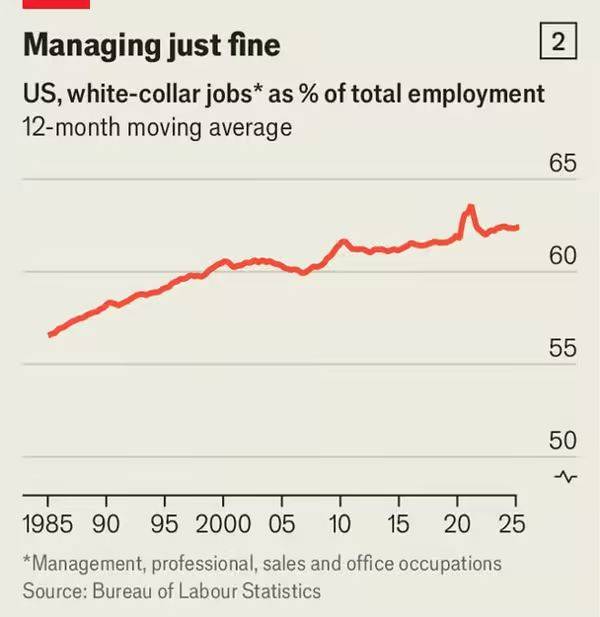
Group 1: Employment Trends - Despite concerns about automation leading to job losses, the number of professionals in interpreting and translation has increased by 7% over the past year in the U.S., indicating that AI may enhance efficiency and create new demand in certain sectors [1] - The unemployment rate for recent graduates is approximately 4%, which is historically low, suggesting that attributing job market challenges solely to AI lacks sufficient evidence [5] - Employment in white-collar jobs has slightly increased over the past year, even in roles considered most susceptible to AI impact [5] Group 2: Corporate Attitudes Towards AI - A notable shift in attitude is observed in companies like Klarna, where the CEO emphasized the continued necessity of human intervention in customer service despite AI automation [3] - Less than 10% of U.S. companies have scaled AI applications in core business processes, indicating that while enthusiasm for AI is high, practical implementation remains limited [7] - AI is primarily enhancing existing employee productivity rather than directly replacing jobs, allowing workers to focus on more creative and strategic tasks [7] Group 3: Investment and Market Sentiment - The capital market has shifted from initial enthusiasm for AI to a more cautious stance, with many companies feeling pressure after failing to achieve expected returns on AI investments [9] - The percentage of companies abandoning AI pilot projects has risen from 17% to 42% over the past year, reflecting challenges in effectively integrating AI into existing business models [9][12] - Major tech companies face significant challenges during this "trough of disillusionment," including data integration issues, talent shortages, high implementation costs, and compliance risks [12] Group 4: Long-term Economic Perspectives - The "Productivity J-Curve" theory suggests that the positive impacts of AI on productivity may not be immediately visible and could initially lead to stagnation as companies invest in necessary adjustments [14] - The "Modern Productivity Paradox" indicates that despite rapid advancements in AI, macroeconomic productivity growth remains sluggish, highlighting a potential disconnect between technological progress and productivity statistics [15] - Historical patterns show that transformative technologies often undergo phases of initial disappointment before leading to significant economic and social changes [16] Group 5: Societal Implications of AI - The focus on whether AI will replace human jobs may distract from more critical discussions about how AI can enhance productivity and overall wealth creation [17] - The historical context of the Industrial Revolution illustrates that while machines replaced many jobs, they also significantly increased overall productivity and wealth [18] - The core question surrounding AI's future is whether it will contribute to overall economic growth or exacerbate wealth distribution issues, impacting societal equity [19][20] Group 6: Future Considerations - Current discussions about AI often center on immediate concerns like job displacement and ethical considerations, potentially overlooking broader strategic issues [21] - The future of AI requires collaborative efforts from businesses, researchers, policymakers, and the public to create supportive frameworks for its development [22] - The ongoing evolution of AI presents both challenges and opportunities, necessitating a collective approach to ensure it serves the greater good of society [23]