AI算力技术竞争

Search documents
油价急速跳水失守60美元,黄金冲破4330美元,逼近历史新高
2 1 Shi Ji Jing Ji Bao Dao· 2025-12-16 14:56
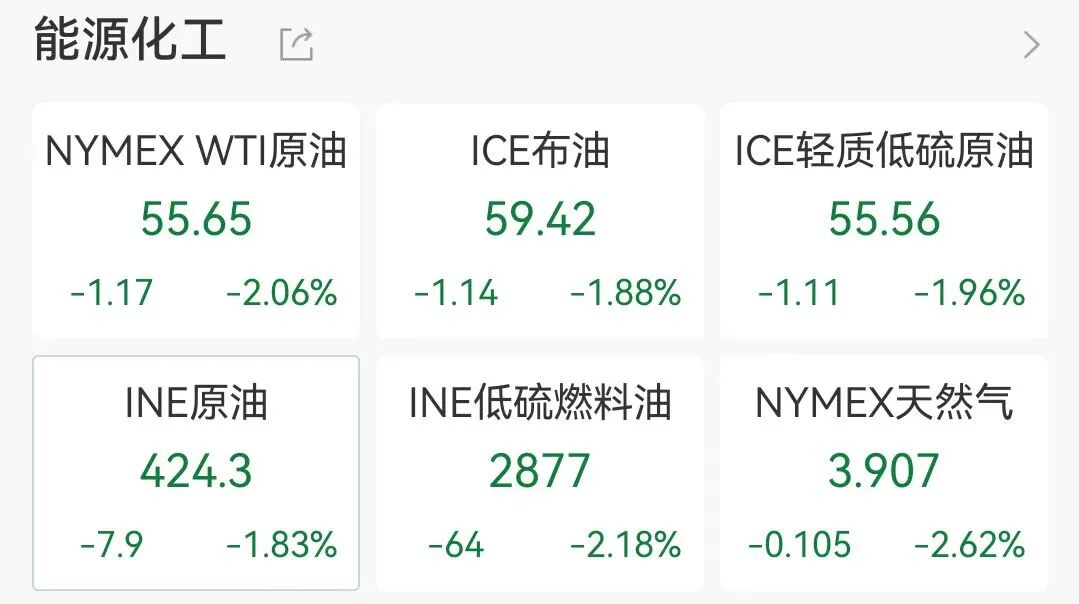
Core Viewpoint - The recent sharp decline in international oil prices is attributed to a combination of disappointing U.S. employment data and ongoing concerns about global economic recovery, leading to a bearish outlook on oil demand [3][5]. Group 1: Oil Price Movement - On December 16, WTI crude oil futures fell by 2.06% to $55.65 per barrel, while ICE Brent crude dropped nearly 2% to $59.62 per barrel, marking the first time it fell below $60 since May [1]. - As of December 15, ICE Brent crude has seen a year-to-date decline of 19.13%, and WTI crude has dropped 20.97%, indicating a significant downward trend in both major oil futures [5]. Group 2: Economic Indicators - The U.S. non-farm payroll data for November showed an increase of 64,000 jobs, surpassing market expectations, but the unemployment rate rose to 4.6%, the highest since September 2021 [3]. - The International Monetary Fund (IMF) projects global economic growth rates of 3.2% in 2025 and 3.1% in 2026, which, while slightly improved from earlier forecasts, remain below the growth expected for 2024 [5]. Group 3: Supply and Demand Dynamics - The OECD has issued a cautious forecast, predicting a decline in U.S. economic growth from 2.8% in 2024 to 2.0% in 2025, and further down to 1.7% in 2026, influenced by tariffs, slowing consumer spending, and government shutdowns [6]. - The International Energy Agency (IEA) reported a significant oversupply in the oil market, with global oil supply expected to exceed demand by 3.84 million barrels per day [6]. Group 4: Future Trends - Despite short-term pressures on the oil market, long-term dynamics may shift due to the rising demand for electricity driven by AI technology, which could increase natural gas demand and subsequently impact oil prices [7]. - Morgan Stanley has warned that by 2028, the rapid growth of AI data centers could lead to a potential electricity shortfall of up to 20% in the U.S., while the EIA predicts that global electricity demand from data centers will more than double by 2030 compared to 2024 [7].