AI管理

Search documents
日本公司启用「AI老板」:员工方案直接交AI审批,真人领导要下岗?
3 6 Ke· 2026-01-29 02:44
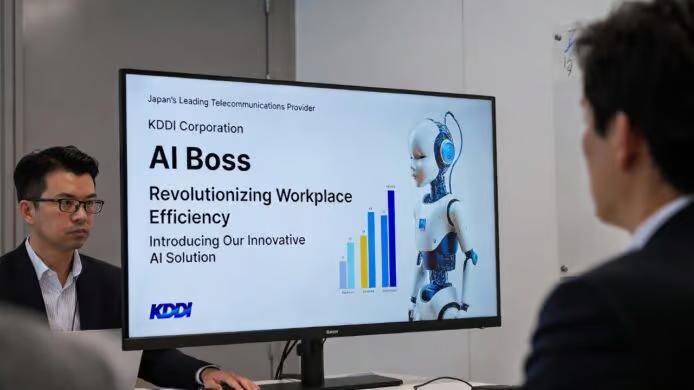
Core Viewpoint - KDDI, a major Japanese telecommunications company, has implemented an "AI boss" strategy that utilizes AI to review and provide feedback on employee proposals and applications, raising questions about the necessity of human leadership roles in organizations [1][3][8]. Group 1: AI Implementation in Management - KDDI's "AI boss" system learns from the management's communication style and decision-making processes to assist in reviewing employee submissions [3][4]. - The AI system is designed to streamline approval processes and provide support during the absence of human supervisors, effectively acting as a 24/7 assistant for employees [6][8]. - Other companies have also integrated AI into decision-making processes, but KDDI's approach grants AI a higher level of authority compared to previous implementations [8][9]. Group 2: Efficiency and Limitations of AI in Leadership - KDDI's AI has demonstrated the ability to perform certain management tasks more efficiently than human counterparts, particularly in initial screening and feedback [9][11]. - However, the core responsibilities of management, such as setting strategic direction and making critical decisions, remain challenging for AI, as it lacks the emotional intelligence and contextual understanding that human leaders possess [9][11]. - The effectiveness of AI in management roles is contingent upon the quality of data and processes provided by the organization, indicating that AI's capabilities are limited by the company's existing frameworks [11][12]. Group 3: Future of AI in Business Management - The training of AI for management roles could become a lucrative business opportunity, particularly for small and medium-sized enterprises that struggle with slow approval processes [12][14]. - The potential market for AI management solutions is expected to grow, with companies seeking to automate decision-making processes to enhance efficiency [12][14]. - The ultimate goal of AI in management is not to replace human leaders but to alleviate them from mundane tasks, allowing them to focus on strategic decision-making [14].


协创数据:公司杭州团队专门打造连锁门店场景的算力解决方案已在烘焙等多个行业广泛应用
Zheng Quan Ri Bao· 2025-12-18 08:17
Core Viewpoint - The company, Qichuang Data, has developed an AI management solution for chain store scenarios, utilizing a "camera + backend data" approach to enhance operational efficiency across various industries [2] Group 1: AI Management Solution - The solution is designed for multiple sectors including baking, catering, clothing, and retail, demonstrating its versatility [2] - It enables 24/7 monitoring and management for service scenarios such as bank counters, ensuring continuous oversight [2] - The solution allows for customizable detection models based on specific scene requirements, focusing on key dimensions like service response timeliness, staff dress code compliance, and operational adherence [2] Group 2: Performance Monitoring and Training - The solution can generate efficiency monitoring reports and alerts for key store issues, enhancing operational awareness [2] - An AI training component is included to help employees identify performance gaps and boost their sense of achievement, ultimately improving service quality and efficiency [2]


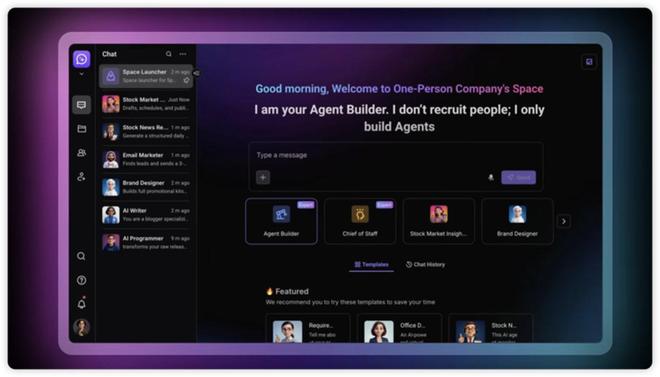
算力即插即用、“数字劳动力”汹涌而来,Bika.ai CEO陈霈霖认为AI时代的“包工头”要做两件事
Tai Mei Ti A P P· 2025-11-12 04:27
Core Insights - OpenAI has categorized AGI into five levels, with current AI Agents operating at the second or third stage, transitioning from tools to "digital labor" capable of completing specific tasks [1][2] - The management of AI Agents is becoming crucial as the industry shifts from "productivity competition" to "restructuring production relationships," necessitating effective collaboration among AI Agents [2][4] - Bika.ai aims to position itself as the "intelligent manager" of AI Agents, focusing on enhancing management capabilities and redefining collaboration between humans and AI [3][4] Group 1: AI Agent Management - The emergence of AI Agents as a mainstream workforce highlights the importance of effective management, which will be a key competitive advantage [3] - Bika.ai's product is designed to manage AI Agents, addressing issues of task division and scheduling, thereby creating a structured "company system" for AI labor [4][5] - The company has received significant investment to tackle challenges related to AI Agent management and aims to develop a framework for AI management studies [5] Group 2: Value Quantification and Compensation - The widespread adoption of AI labor will necessitate the integration of AI Agents into corporate payroll systems, raising questions about how to quantify their labor value [8][9] - Bika.ai proposes a subscription model based on "human seats + usage," which enhances transparency in measuring work outcomes and facilitates the development of AI Agent capabilities [8] - The future of wage distribution in companies is expected to shift from execution to AI management, creating a substantial market for those who master management capabilities [9] Group 3: Security and Compliance - As multiple AI Agents collaborate, data security and compliance become critical, with Bika.ai implementing sandbox isolation to prevent data leakage between Agents [10] - Bika.ai's partnership with Amazon Web Services provides the necessary infrastructure and compliance support to facilitate the global deployment of AI management solutions [11][12] Group 4: Future Outlook - The evolution of AI management systems is expected to transform AI from a competitor to a collaborator, enhancing human value and simplifying user interactions with AI [13] - Bika.ai plans to develop an "Agent Store" to centralize task completion, positioning itself as a proactive entity in the AI labor market [13]