AI资源争夺

Search documents
金银暴跌只是开始?单日暴跌10%!警惕5000美元下的暗涌:去美元化与AI争矿时代的财富重构危机
Sou Hu Cai Jing· 2026-02-01 12:06
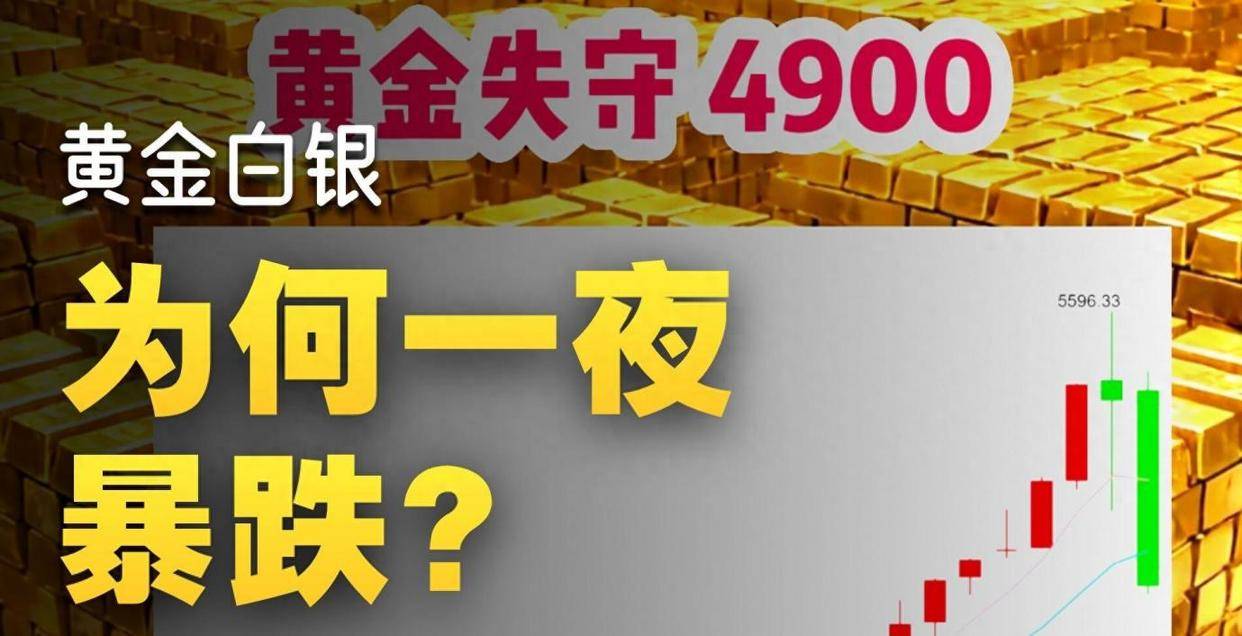
Core Viewpoint - The global precious metals market experienced a historic crash on January 30, 2026, with gold prices plummeting over 10% in a single day, marking the largest daily drop since 1983 [1][3]. Group 1: Market Reaction - Gold prices fell from a high of $5,450 to a low of $4,686 per ounce within half an hour, a drop of $380 [1][3]. - Silver prices saw an even more severe decline, with intraday losses reaching 35%, falling below $80 [1][3]. - The market's panic spread globally, affecting various financial instruments and leading to significant losses in related sectors [1][6]. Group 2: Causes of the Crash - The catalyst for the crash was the appointment of hawkish former Fed governor Kevin Walsh as the new Fed Chair, which was interpreted as a signal for a shift in monetary policy [3][8]. - Prior expectations of three interest rate cuts in the first half of 2026 were quickly abandoned, leading to a surge in the dollar index by 0.93% to 97.03 and a spike in 10-year Treasury yields by 18 basis points [3][8]. - The rapid sell-off was exacerbated by a buildup of speculative positions and a technical correction, as gold had previously surged over 23% in January 2026, reaching a peak of $5,626.80 [3][5]. Group 3: Impact on Trading and Investment - The Chicago Mercantile Exchange raised the margin requirement for gold futures from 5% to 6%, reducing leverage from 23 times to 16.7 times, which forced many high-leverage accounts to liquidate positions [5][6]. - Algorithmic trading triggered stop-loss orders, creating a feedback loop of selling that further drove down prices [5][6]. - The crash led to a significant decline in domestic gold contracts, with the Shanghai gold futures dropping 12% and A-share gold stocks collectively losing over 100 billion yuan in market value [6][8]. Group 4: Broader Economic Context - The crash reflects deeper issues within the U.S. dollar credit system and the competition for AI resources, as the U.S. national debt surpassed $38 trillion and the dollar's share of global reserves fell to a historic low of 56.3% [8]. - Central banks, particularly in emerging markets like China, India, and Russia, have been increasing their gold reserves, indicating a shift towards gold as a non-sovereign asset [8]. - Historical patterns show that shifts in Fed monetary policy are core variables affecting gold price volatility, with high leverage and market bubbles amplifying declines [8].