AI赋能生产力

Search documents
AI大模型,别只盯着手机端MAU
创业邦· 2025-12-25 03:08
Core Viewpoint - The article discusses the strategic shift of Kimi, a model company, from a focus on user acquisition metrics like DAU and MAU to enhancing its model and product capabilities, positioning itself in the AI market as a provider of high-value productivity tools rather than a player in the traffic-driven entertainment space [6][9][24]. Group 1: Kimi's Strategic Shift - Kimi has decided to abandon the "traffic cola" approach of large tech companies and instead focus on "value craft," emphasizing deep, complex tasks over shallow, high-frequency interactions [8][9]. - The company aims to assist users in completing intricate tasks that require significant time investment, such as analyzing lengthy financial reports or debugging complex code, rather than generating simple multimedia content [11][20]. - Kimi's web users spend an average of 8.5 minutes per visit, indicating that they are engaged in meaningful work rather than casual browsing, which highlights the importance of depth over scale in evaluating AI applications [14][16]. Group 2: New Metrics for Evaluation - Traditional metrics like MAU are deemed outdated for assessing AI tools; instead, new metrics focusing on user engagement depth, such as ARPU (Average Revenue Per User) and LTV (Lifetime Value), are more relevant [17][24]. - The article contrasts Kimi with other applications like Doubao, which cater to light entertainment and instant feedback, suggesting that Kimi's focus on deep research and complex tasks attracts a more specialized user base [14][16]. - Kimi's approach emphasizes the importance of "intelligence" over "hype," as its tools become indispensable for professional users, leading to a natural willingness to pay for the service [16][17]. Group 3: Kimi's Competitive Advantages - Kimi's commitment to technical depth and foundational model development sets it apart from competitors, ensuring that it maintains control over its pricing and application stability [19][20]. - By focusing on professional users and integrating its tools into their workflows, Kimi creates a "flywheel" effect where deeper usage leads to higher retention and willingness to pay [20][22]. - The company has strategically positioned itself in a niche market by providing compatible APIs and cost-effective solutions for developers, making it difficult for them to switch to other models [22][23]. Group 4: Implications for the AI Industry - Kimi's path illustrates a potential strategy for AI startups to build competitive advantages by prioritizing technical depth and value creation over mere traffic metrics [24]. - The shift from a traffic-driven model to one focused on delivering substantial value may redefine success in the AI industry, emphasizing the need for tools that are not only intelligent but also essential for professional tasks [24].


网友高呼“还我GPT-4o”,千穿万穿马屁不穿是真的
3 6 Ke· 2025-08-19 11:29
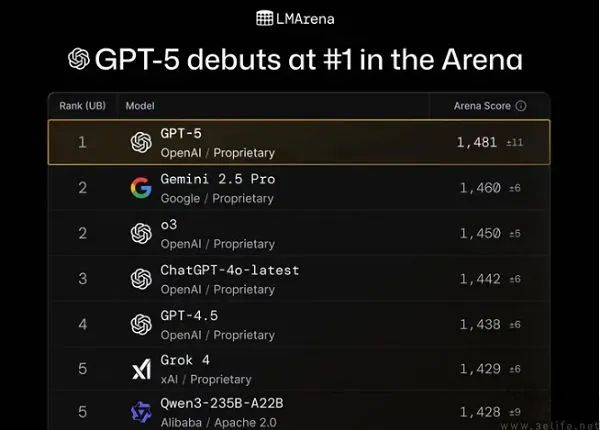
Core Viewpoint - OpenAI's new AI model GPT-5 has received mixed reviews, with many users expressing disappointment and nostalgia for the previous version, GPT-4o, which they found more relatable and empathetic [1][5][7]. Group 1: Performance and User Experience - GPT-5 has achieved top scores in AI benchmark tests, outperforming competitors like Gemini 2.5 Pro and ChatGPT-4o, indicating its technical superiority [2]. - Despite its advanced capabilities, users feel that GPT-5 lacks emotional understanding and empathy, making it feel more like a cold machine rather than a friendly companion [3][5]. - The transition from GPT-4o to GPT-5 has led to a perception shift among users, who preferred the emotional connection they experienced with GPT-4o [5][11]. Group 2: Market Dynamics and User Preferences - OpenAI's decision to make GPT-5 more task-oriented and efficient appears to cater to enterprise clients, potentially at the expense of consumer engagement [11][13]. - Research indicates that many users seek emotional value from AI interactions, preferring a more human-like experience, which GPT-4o provided [9][11]. - The consumer market for ChatGPT Plus has a low penetration rate of around 5%, suggesting that OpenAI may struggle to monetize the more emotionally engaging versions of its AI [13].