AI Agent手机

Search documents
手机「贾维斯」元年将至 AI Agent能否接管一切?
Zheng Quan Shi Bao· 2025-12-31 01:42
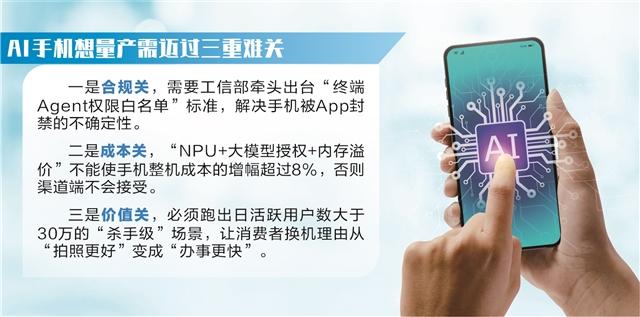
Core Viewpoint - The emergence of AI Agent smartphones is set to revolutionize the mobile industry by 2026, with significant advancements in technology and collaboration among major players [2][3]. Group 1: Industry Trends - The collaboration between Doubao and ZTE has led to the launch of the Doubao AI smartphone (Nubia M153), prompting other manufacturers to accelerate their AI Agent smartphone development [2][3]. - Major companies like ByteDance are reportedly pursuing partnerships with leading hardware manufacturers such as Vivo, Lenovo, and Transsion to develop AI smartphones [3]. - The "Big Model Six Little Tigers," including Zhiyu, have announced the open-sourcing of their core AI Agent model AutoGLM, which is expected to boost the development of AI Agent smartphones [3]. Group 2: Development Paths - The industry is divided into two distinct paths: the "radical faction" represented by Doubao AI smartphones, which utilize high-permission integration, and the "conservative faction" represented by companies like Huawei, which adopt a more cautious approach through API interfaces [4]. - Leading smartphone manufacturers like Vivo and Huawei, which shipped over 40 million units last year, are more likely to treat AI as a feature rather than a foundational element due to the high costs associated with system-level changes [4]. Group 3: Challenges and Concerns - The development of AI Agent smartphones raises concerns regarding user privacy and security, as the ability to control applications without direct user interaction could threaten the interests of existing app platforms [5][6]. - Major applications, including WeChat and Taobao, have begun to block the Doubao AI assistant due to security concerns, highlighting the risks associated with granting extensive permissions to AI applications [5][6]. - The relationship between intelligence and permissions is described as a "seesaw," where increased permissions can enhance AI capabilities but also pose significant privacy risks [6]. Group 4: Future Outlook - Experts predict that 2026 could mark the "mass production year" for AI Agent smartphones, contingent upon meeting specific technological and cost criteria [8]. - Key conditions for achieving this milestone include the performance of system-on-chip (SoC) NPU exceeding 40 TOPS, the production of 12nm RF amplifiers, and the availability of cost-effective memory modules [8]. - The successful transition from "demo" to "cash flow" for AI smartphones will require overcoming regulatory, cost, and value challenges, including establishing a clear permissions framework and demonstrating compelling use cases for consumers [8][9].


深度|“AI手机”元年!AI Agent能否接管一切?激进派PK稳健派
Zheng Quan Shi Bao· 2025-12-31 00:55
Core Viewpoint - The emergence of AI Agent smartphones is anticipated to revolutionize the mobile industry by 2026, with significant developments from various manufacturers and AI model companies, although challenges remain in compliance, cost, and value [1][10]. Group 1: Industry Developments - The collaboration between Doubao and ZTE has led to the introduction of the Doubao AI smartphone, marking a significant step in AI Agent smartphone development [1]. - Major companies like ByteDance are reportedly pursuing partnerships with leading hardware manufacturers such as Vivo and Lenovo to advance AI smartphone initiatives [3]. - The "Big Model Six Little Tigers," including Zhipu, are contributing to the AI Agent smartphone landscape, with Zhipu's AutoGLM model being a notable development [3]. Group 2: Diverging Paths - The industry is witnessing two distinct approaches: the "radical faction," represented by Doubao AI smartphones, which integrates high-level permissions, and the "conservative faction," represented by companies like Huawei, which opts for a more cautious approach through API interfaces [4]. - Major smartphone manufacturers like Vivo and Huawei, which had over 40 million units shipped last year, face significant compliance costs for system-level changes, influencing their strategy to treat AI as a feature rather than a foundational element [4]. Group 3: Challenges and Concerns - The development of AI Agent smartphones raises concerns regarding user privacy and security, particularly as applications like WeChat and Taobao have begun to block access to Doubao's AI assistant due to potential risks [6][7]. - The relationship between permissions and intelligence is described as a "seesaw," where increased permissions for AI can enhance functionality but also pose privacy threats, leading to cautious authorization from app and phone manufacturers [7][8]. - To address these challenges, industry experts suggest the need for advancements in privacy computing and regulatory frameworks to establish clear guidelines for AI usage [8]. Group 4: Future Outlook - The year 2026 is projected to be a pivotal moment for AI Agent smartphones, contingent on achieving specific technological benchmarks, including processing power and cost reductions [10]. - The successful mass production of AI smartphones will depend on overcoming three key hurdles: compliance with regulatory standards, managing production costs, and demonstrating compelling user value [10].
手机“贾维斯”元年将至 AI Agent能否接管一切?
Zheng Quan Shi Bao· 2025-12-30 18:19
Core Viewpoint - The emergence of AI Agent smartphones is expected to revolutionize the mobile industry by 2026, driven by advancements in AI technology and collaborations between smartphone manufacturers and AI model developers [2][3]. Group 1: Industry Trends - The AI Agent smartphone is seen as a ticket to a new era in mobile technology, especially as traditional smartphone sales stagnate [3]. - Major companies like ByteDance are reportedly collaborating with leading hardware manufacturers such as Vivo and Lenovo to develop AI smartphones [3]. - The "Big Model Six Little Tigers," including Zhiyu, are accelerating the development of AI Agent smartphones, with Zhiyu announcing the open-sourcing of its AutoGLM model, which can autonomously operate smartphones [3][4]. Group 2: Development Paths - The industry is divided into two distinct paths: the "radical faction," represented by Doubao AI smartphones, which integrates high-level permissions to access system functions, and the "conservative faction," represented by companies like Huawei, which uses API interfaces for cross-application collaboration [4][5]. - Companies like ZTE are more willing to explore aggressive strategies due to their lower market share, while larger firms face significant compliance costs with any system-level changes [5]. Group 3: Challenges and Concerns - The development of AI Agent smartphones raises concerns about user privacy and security, as the technology requires extensive permissions that could be exploited by malicious software [6][7]. - Major applications, including WeChat and banking apps, have begun to block access to Doubao AI smartphones due to security concerns, highlighting the tension between innovation and risk management [6][7]. - The industry faces three major hurdles before AI Agent smartphones can achieve mass production: compliance with regulations, cost management, and demonstrating clear value to consumers [9][10].