
豆包AI手机(努比亚M153)

Search documents
豆包 AI 手机的崛起正挑战既有 App 生态体系
Counterpoint Research· 2026-01-12 02:45
Core Insights - The article discusses the launch of the Nubia M153, the first native AI smartphone developed by ByteDance and ZTE, which was released as a "technology preview" on December 1, 2025, and sold out quickly, indicating strong market interest [4] - According to Counterpoint's "AI 360" report, the global smartphone shipment share supporting GenAI is expected to exceed 30% in 2025, up from 20% in 2024, and reach 57% by 2029, highlighting the growing importance of AI in high-end smartphones [5] - The article emphasizes the competitive landscape between smartphone brands and internet giants, focusing on user engagement, service entry control, and high-value data acquisition [8][10] Market Trends - The Nubia M153 is equipped with a Snapdragon 8 Elite platform, and future iterations are expected to enhance NPU performance to 80-100 TOPS, raising hardware requirements for smartphones [5] - AI functionalities are increasing the demand for RAM and ROM, as well as high-bandwidth memory, while also raising power consumption by approximately 8%-12%, posing challenges for battery technology [5] AI Capabilities - The core advantage of the Doubao AI smartphone lies in its ability to understand user intent and execute tasks across multiple apps, although it still faces challenges in complex, multi-app scenarios [6][8] - The high-privilege simulation operations of Doubao AI are causing friction with existing app ecosystems, triggering security mechanisms in major applications like WeChat and Alipay [6][8] Strategic Partnerships - The collaboration between ByteDance and ZTE mirrors the division of labor seen in other tech partnerships, with Doubao providing AI capabilities and Nubia handling hardware design [10] - The article suggests that smartphone brands with established ecosystems may not adopt the same division of labor, instead exploring open and collaborative app frameworks [10] Future Outlook - The article anticipates that smartphone brands and leading apps will gradually reach a consensus on standardized ecological interfaces, allowing system-level AI to act as a unified scheduling hub [10] - The control of high-value data and data security will remain central issues in ongoing negotiations between smartphone manufacturers and app developers [10]


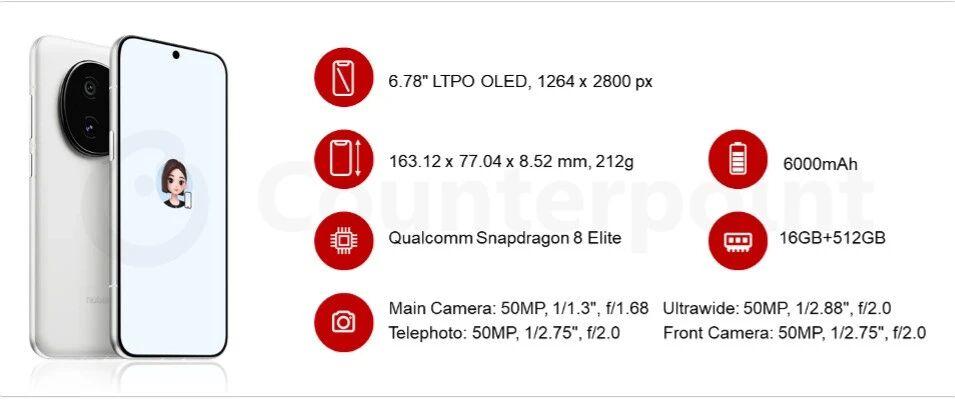
手机「贾维斯」元年将至 AI Agent能否接管一切?
Zheng Quan Shi Bao· 2025-12-31 01:42
Core Viewpoint - The emergence of AI Agent smartphones is set to revolutionize the mobile industry by 2026, with significant advancements in technology and collaboration among major players [2][3]. Group 1: Industry Trends - The collaboration between Doubao and ZTE has led to the launch of the Doubao AI smartphone (Nubia M153), prompting other manufacturers to accelerate their AI Agent smartphone development [2][3]. - Major companies like ByteDance are reportedly pursuing partnerships with leading hardware manufacturers such as Vivo, Lenovo, and Transsion to develop AI smartphones [3]. - The "Big Model Six Little Tigers," including Zhiyu, have announced the open-sourcing of their core AI Agent model AutoGLM, which is expected to boost the development of AI Agent smartphones [3]. Group 2: Development Paths - The industry is divided into two distinct paths: the "radical faction" represented by Doubao AI smartphones, which utilize high-permission integration, and the "conservative faction" represented by companies like Huawei, which adopt a more cautious approach through API interfaces [4]. - Leading smartphone manufacturers like Vivo and Huawei, which shipped over 40 million units last year, are more likely to treat AI as a feature rather than a foundational element due to the high costs associated with system-level changes [4]. Group 3: Challenges and Concerns - The development of AI Agent smartphones raises concerns regarding user privacy and security, as the ability to control applications without direct user interaction could threaten the interests of existing app platforms [5][6]. - Major applications, including WeChat and Taobao, have begun to block the Doubao AI assistant due to security concerns, highlighting the risks associated with granting extensive permissions to AI applications [5][6]. - The relationship between intelligence and permissions is described as a "seesaw," where increased permissions can enhance AI capabilities but also pose significant privacy risks [6]. Group 4: Future Outlook - Experts predict that 2026 could mark the "mass production year" for AI Agent smartphones, contingent upon meeting specific technological and cost criteria [8]. - Key conditions for achieving this milestone include the performance of system-on-chip (SoC) NPU exceeding 40 TOPS, the production of 12nm RF amplifiers, and the availability of cost-effective memory modules [8]. - The successful transition from "demo" to "cash flow" for AI smartphones will require overcoming regulatory, cost, and value challenges, including establishing a clear permissions framework and demonstrating compelling use cases for consumers [8][9].
深度|“AI手机”元年!AI Agent能否接管一切?激进派PK稳健派
Zheng Quan Shi Bao· 2025-12-31 00:55
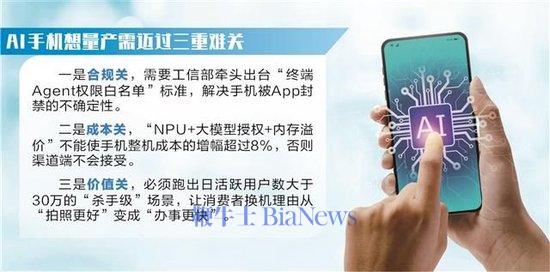
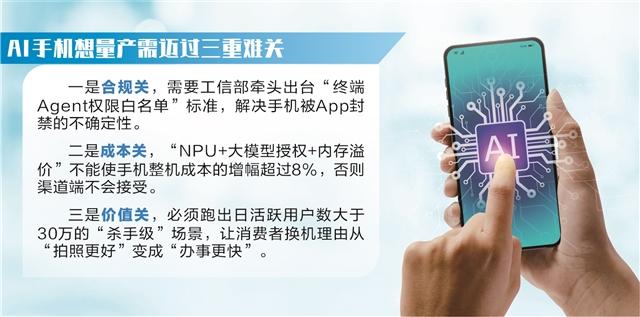
Core Viewpoint - The emergence of AI Agent smartphones is anticipated to revolutionize the mobile industry by 2026, with significant developments from various manufacturers and AI model companies, although challenges remain in compliance, cost, and value [1][10]. Group 1: Industry Developments - The collaboration between Doubao and ZTE has led to the introduction of the Doubao AI smartphone, marking a significant step in AI Agent smartphone development [1]. - Major companies like ByteDance are reportedly pursuing partnerships with leading hardware manufacturers such as Vivo and Lenovo to advance AI smartphone initiatives [3]. - The "Big Model Six Little Tigers," including Zhipu, are contributing to the AI Agent smartphone landscape, with Zhipu's AutoGLM model being a notable development [3]. Group 2: Diverging Paths - The industry is witnessing two distinct approaches: the "radical faction," represented by Doubao AI smartphones, which integrates high-level permissions, and the "conservative faction," represented by companies like Huawei, which opts for a more cautious approach through API interfaces [4]. - Major smartphone manufacturers like Vivo and Huawei, which had over 40 million units shipped last year, face significant compliance costs for system-level changes, influencing their strategy to treat AI as a feature rather than a foundational element [4]. Group 3: Challenges and Concerns - The development of AI Agent smartphones raises concerns regarding user privacy and security, particularly as applications like WeChat and Taobao have begun to block access to Doubao's AI assistant due to potential risks [6][7]. - The relationship between permissions and intelligence is described as a "seesaw," where increased permissions for AI can enhance functionality but also pose privacy threats, leading to cautious authorization from app and phone manufacturers [7][8]. - To address these challenges, industry experts suggest the need for advancements in privacy computing and regulatory frameworks to establish clear guidelines for AI usage [8]. Group 4: Future Outlook - The year 2026 is projected to be a pivotal moment for AI Agent smartphones, contingent on achieving specific technological benchmarks, including processing power and cost reductions [10]. - The successful mass production of AI smartphones will depend on overcoming three key hurdles: compliance with regulatory standards, managing production costs, and demonstrating compelling user value [10].
深度|“AI手机”元年!AI Agent能否接管一切?激进派PK稳健派
证券时报· 2025-12-31 00:34
Core Viewpoint - The emergence of AI Agent smartphones is expected to reshape the mobile industry by 2026, driven by advancements in AI technology and collaboration between hardware and AI model companies [1][2]. Group 1: Industry Trends - Since 2025, the collaboration between Doubao and ZTE has led to the introduction of the Doubao AI smartphone (Nubia M153), prompting various smartphone manufacturers and AI model companies to accelerate the development of AI Agent smartphones [2][5]. - 2026 is anticipated to be the year of mass production for AI Agent smartphones, although the industry is divided into "radical" and "conservative" development paths, facing challenges related to compliance, costs, and value [2][7]. Group 2: Competitive Landscape - Major companies like ByteDance are actively pursuing partnerships with leading hardware manufacturers such as Vivo, Lenovo, and Transsion for AI smartphone collaborations [5]. - The "Big Model Six Little Tigers," including Zhipu, have announced the open-sourcing of their core AI Agent model AutoGLM, which is expected to accelerate the development of AI Agent smartphones [6]. Group 3: Technical and Compliance Challenges - The successful mass production of AI Agent smartphones hinges on three critical factors: the computational power of mobile SoCs exceeding 40 TOPS, the production of RF amplifiers below 12nm, and the availability of 8GB LPDDR5X modules at around $70, which would lower BOM costs to below $320 [13]. - There are significant concerns regarding privacy and security, as the AI Agent's ability to operate across applications raises risks of unauthorized access and misuse, leading to some major apps blocking the Doubao AI smartphone [9][11]. Group 4: Market Dynamics - The smartphone market is currently experiencing stagnant growth, making AI Agent smartphones a key focus for companies seeking to innovate and capture new market opportunities [5]. - The development of AI Agent smartphones is seen as a potential "ticket" to a new era in mobile technology, with companies like Huawei integrating AI capabilities into their flagship devices [6][7].

手机“贾维斯”元年将至 AI Agent能否接管一切?
Zheng Quan Shi Bao· 2025-12-30 18:19
Core Viewpoint - The emergence of AI Agent smartphones is expected to revolutionize the mobile industry by 2026, driven by advancements in AI technology and collaborations between smartphone manufacturers and AI model developers [2][3]. Group 1: Industry Trends - The AI Agent smartphone is seen as a ticket to a new era in mobile technology, especially as traditional smartphone sales stagnate [3]. - Major companies like ByteDance are reportedly collaborating with leading hardware manufacturers such as Vivo and Lenovo to develop AI smartphones [3]. - The "Big Model Six Little Tigers," including Zhiyu, are accelerating the development of AI Agent smartphones, with Zhiyu announcing the open-sourcing of its AutoGLM model, which can autonomously operate smartphones [3][4]. Group 2: Development Paths - The industry is divided into two distinct paths: the "radical faction," represented by Doubao AI smartphones, which integrates high-level permissions to access system functions, and the "conservative faction," represented by companies like Huawei, which uses API interfaces for cross-application collaboration [4][5]. - Companies like ZTE are more willing to explore aggressive strategies due to their lower market share, while larger firms face significant compliance costs with any system-level changes [5]. Group 3: Challenges and Concerns - The development of AI Agent smartphones raises concerns about user privacy and security, as the technology requires extensive permissions that could be exploited by malicious software [6][7]. - Major applications, including WeChat and banking apps, have begun to block access to Doubao AI smartphones due to security concerns, highlighting the tension between innovation and risk management [6][7]. - The industry faces three major hurdles before AI Agent smartphones can achieve mass production: compliance with regulations, cost management, and demonstrating clear value to consumers [9][10].


线上“百万标价”,线下却“查无此机”!记者实探华强北豆包AI手机销售情况
Hua Xia Shi Bao· 2025-12-15 12:09
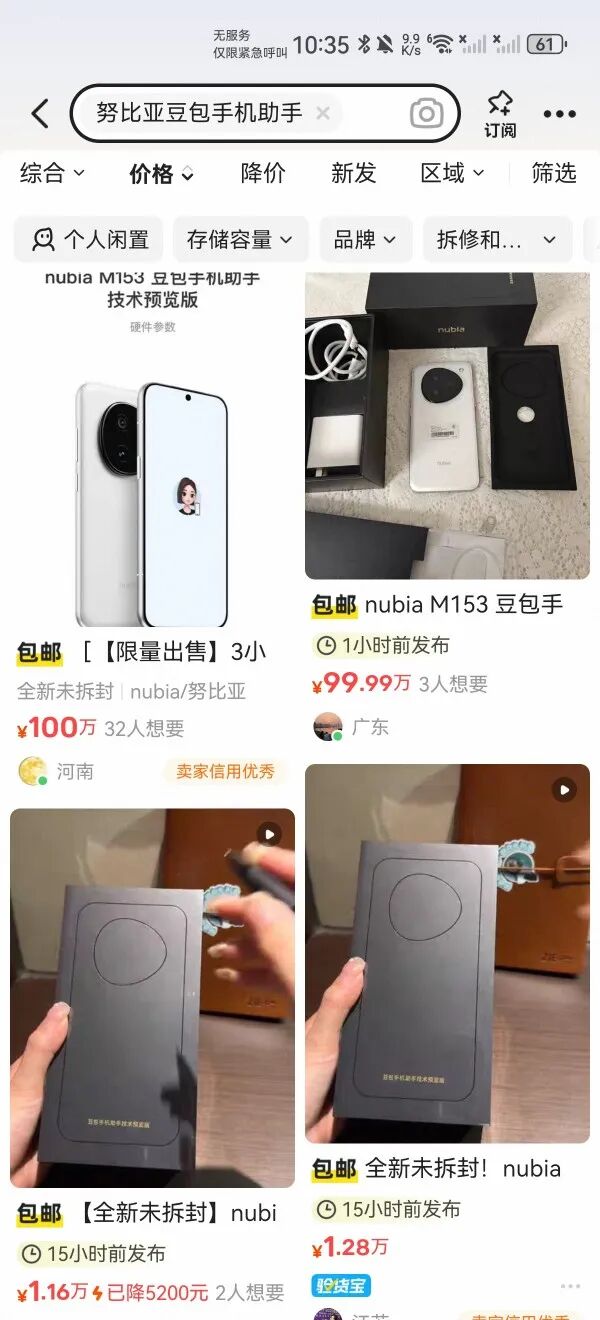
Core Viewpoint - The launch of the Nubia M153 (Doubao AI Phone) by ByteDance and ZTE has led to a significant price surge in the second-hand market, with listings reaching as high as 1 million yuan, despite the product being largely unavailable in physical stores, highlighting the challenges of AI technology implementation [1][2][6]. Group 1: Market Reaction - The Doubao AI Phone has seen extreme price fluctuations, with listings on platforms like Xianyu ranging from 3,800 yuan to 1 million yuan, reflecting a speculative market sentiment rather than actual sales [2][5]. - The phone's rental market is thriving, with daily rental prices between 69 yuan and 399 yuan, indicating higher demand for rental than for purchase [5]. - Market participants express skepticism about the high online prices, suggesting they are not serious sales but rather attempts to generate hype [5][6]. Group 2: Technological and Ethical Concerns - The price bubble surrounding the Doubao AI Phone represents an extreme case of "technological expectation securitization," where speculative trading of conceptual products distorts the actual pace and direction of technological development [6]. - The phone's operational design conflicts with existing mobile internet ecosystems, leading to restrictions from major applications like WeChat and Alipay, which perceive the AI's capabilities as a threat to their operational integrity [9][10]. - The situation raises broader questions about the future of human-computer interaction and the balance of data ownership and control among users, manufacturers, AI agents, and applications [11][12]. Group 3: Industry Implications - The cold reception of the Doubao AI Phone in physical markets suggests that product value is determined more by its integration into existing consumer habits and reliable supply chains than by its futuristic narrative [8]. - The incident reflects a disconnect between the hype surrounding AI technology and the practical, stable user experiences required for widespread adoption [12]. - The need for new regulatory frameworks to address the ethical implications of AI technology and its integration into society is emphasized, highlighting the importance of responsible innovation and sustainable development in the AI sector [12].
实探深圳华强北二手手机市场:豆包AI手机引发“入口争夺战” 权限合规、数据主权成博弈焦点
Zheng Quan Shi Bao· 2025-12-11 03:12
Core Viewpoint - The emergence of the Nubia M153 AI phone, also known as the "Doubao AI phone," has sparked a new round of competition for mobile entry points in the AI era, with significant price fluctuations in the second-hand market due to restrictions imposed by major apps like WeChat and Alipay [1][4]. Group 1: Market Dynamics - The Doubao AI phone, developed by ByteDance and ZTE, is the only phone that integrates the Doubao AI assistant into its operating system, fundamentally changing how users interact with apps [2][3]. - Initially, the Doubao AI phone was sold at a price of 3,499 yuan, but it reached a peak resale price of 36,000 yuan in the second-hand market before experiencing a significant price drop due to app restrictions [1][3]. - The phone's high resale price was driven by scarcity and emotional premium, as it was sold through a limited F-code system, creating a perception of exclusivity [3]. Group 2: App Restrictions and Market Impact - Major applications like Taobao, Meituan, and Alipay have restricted the use of the Doubao AI phone, leading to a decline in its resale value as users face login issues and operational limitations [4][5]. - The restrictions are primarily justified by concerns over privacy and data security, but they also reflect a deeper conflict over control of user engagement and advertising revenue [5][6]. Group 3: Future of AI Phones - The trend towards AI integration in smartphones is expected to grow, with projections indicating that by 2026, AI phones could account for over 50% of the Chinese smartphone market, reaching 147 million units [7]. - Despite current challenges such as technical limitations and regulatory compliance, the demand for efficient intelligent interactions suggests that AI phones will eventually overcome existing barriers [8][9].

遭多款主流APP“围剿” 豆包AI手机引发“入口争夺战”
Jing Ji Wang· 2025-12-11 02:38
Core Insights - The AI phone, Nubia M153, originally priced at 3499 yuan, has seen its price in the second-hand market soar to 36,000 yuan, but has faced restrictions from major apps like WeChat and Alipay, igniting a new "mobile entry competition" in the AI era [1][4] - The phone's unique integration of the Doubao AI assistant into its operating system has changed user interaction with apps, allowing for automated tasks, which initially drove high demand and prices in the second-hand market [2][3] Market Dynamics - The Doubao AI phone has transitioned to the second-hand market after its initial limited release, with reports of high premiums, although prices have recently dropped due to restrictions from major applications [2][3] - The highest recorded price for the Doubao AI phone reached 36,000 yuan, but many listings have since fallen to around 3999 yuan, indicating a significant price correction [3] Competitive Landscape - Major applications like Taobao, Meituan, and Alipay have restricted the use of the Doubao AI phone, affecting its functionality and contributing to the decline in its market price [4][5] - The restrictions are framed as privacy and security concerns, but they also reflect deeper issues regarding control over user engagement and data sovereignty [5][6] Industry Trends - The trend towards AI integration in smartphones is expected to grow, with projections indicating that by 2026, AI phones could account for over 50% of the Chinese smartphone market [7] - Despite the potential for AI technology to revitalize the smartphone industry, challenges remain in terms of technical capabilities, ecosystem integration, and regulatory compliance [7][8] Future Outlook - While short-term challenges exist for AI phones, the long-term demand for efficient intelligent interactions suggests that these devices will eventually overcome current obstacles [8][9]
深度丨实探深圳华强北二手手机市场:豆包AI手机引发“入口争夺战” 权限合规、数据主权成博弈焦点
Zheng Quan Shi Bao· 2025-12-11 00:39
Core Viewpoint - The emergence of the Doubao AI phone, priced originally at 3,499 yuan, has sparked a new "mobile entry competition" in the AI era, with its resale price in the second-hand market reaching as high as 36,000 yuan before facing restrictions from major apps like WeChat and Alipay, leading to a significant price drop [1][4]. Group 1: Market Dynamics - The Doubao AI phone, a collaboration between ByteDance's AI assistant Doubao and ZTE's Nubia M153, is the only phone with Doubao embedded in its operating system, fundamentally changing how users interact with apps [2][3]. - Initially, the Doubao AI phone required a limited F-code for purchase, creating a supply constraint that led to high demand and price premiums in the second-hand market [2][3]. - The highest resale price for the Doubao AI phone reached 36,000 yuan, but many listings have since dropped to around 3,999 yuan, reflecting a decrease in demand due to app restrictions [3]. Group 2: App Restrictions and Market Impact - Major applications like Taobao, Meituan, and Alipay have restricted the use of the Doubao AI phone, citing privacy and security concerns, which has contributed to the decline in its market price [4][5]. - The Doubao AI phone's ability to automate app interactions poses a threat to the traditional user engagement models of these apps, which rely on direct user interactions for revenue generation [5][6]. Group 3: Future of AI Phones - The trend towards AI integration in smartphones is expected to grow, with projections indicating that by 2026, AI phone shipments in China could reach 147 million units, accounting for over half of the market [6]. - Despite current challenges such as compliance and ecosystem friction, the demand for efficient smart interactions suggests that AI phones will eventually overcome existing barriers [7][8].

实探深圳华强北二手手机市场: 豆包AI手机引发“入口争夺战” 权限合规、数据主权成博弈焦点
Zheng Quan Shi Bao· 2025-12-10 20:01
Core Insights - The AI phone, Nubia M153, originally priced at 3499 yuan, has seen its price in the second-hand market soar to 36,000 yuan, indicating a fierce competition for mobile entry points in the AI era [1] - The phone's high demand has led to a significant price drop due to restrictions imposed by major apps like WeChat and Alipay, which has affected its usability [1][4] Group 1: Market Dynamics - The Nubia M153, known as the "Doubao AI phone," is the only device that integrates the Doubao AI assistant into its operating system, fundamentally changing user interaction with apps [2] - Initially, the phone was sold through a limited F-code system, creating a scarcity that drove up prices in the second-hand market [3] - The peak price for the Doubao AI phone reached 36,000 yuan, but it has since dropped to around 3999 yuan due to restrictions on its use by various apps [3] Group 2: Competitive Landscape - Major applications like Taobao, Meituan, and Alipay have restricted the use of the Doubao AI phone, citing privacy and security concerns, which has contributed to the decline in its market price [4][5] - The core conflict between the Doubao AI phone and major apps revolves around "entry control" and "data sovereignty," as the AI assistant's capabilities bypass traditional user interactions that these apps rely on for revenue [5][6] Group 3: Future Trends and Challenges - The trend towards AI integration in smartphones is expected to grow, with projections indicating that by 2026, AI phone shipments in China could reach 147 million units, accounting for over half of the market [7] - Despite the potential for AI phones, challenges remain, including technical limitations, lack of standardized interfaces, and compliance issues regarding privacy and data security [7][8] - Long-term demand for efficient intelligent interaction suggests that AI phones will eventually overcome current obstacles [8][9]