AI CITY

Search documents
华为云城市峰会在乌兰察布召开,当地已吸引67个数据中心项目
Guan Cha Zhe Wang· 2025-12-18 09:04
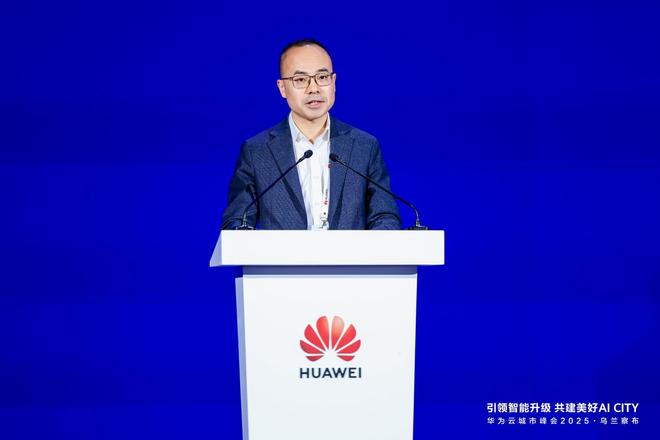
Core Insights - Artificial intelligence is rapidly reshaping the global economy, transitioning from a "data-driven" to a "Token-driven" development model [1] - The summit focused on the transformation of cities from "energy output areas" to "AI productivity output areas," emphasizing the construction of a "Token City" to boost the digital economy in Ulanqab [1] Group 1: Summit Highlights - The summit "Leading Intelligent Upgrade, Building a Beautiful AI CITY" was held in Ulanqab, gathering industry experts and leaders to discuss key pathways for urban transformation [1] - Liu Junyi, Deputy Director of the Inner Mongolia Government Service and Data Management Bureau, highlighted Ulanqab as a crucial growth pole for the region's digital economy and outlined four key hopes for the summit [2] Group 2: Strategic Initiatives - Ulanqab is leveraging strategic opportunities such as "East Data West Computing" and "Beijing-Mongolia Cooperation," focusing on the computing power industry as a top priority for digital economic development [4] - Since 2013, Ulanqab has signed contracts with 53 companies to establish 67 data centers, with total investments exceeding 260 billion yuan and a computing power scale surpassing 120,000 P [4] Group 3: AI and Token Services - The concept of "Token City" aligns with Huawei Cloud's "AI CITY" strategy, emphasizing the need for AI Token services that address specific business problems [6] - Token services are identified as a key infrastructure for accelerating the implementation of AI CITY, serving as both a means to access AI capabilities and a measure of a city's AI potential [6] Group 4: Urban Development Paradigms - The National Information Center's Director, Shan Zhiguang, discussed the shift in urban development paradigms driven by AI, moving towards a new architecture that integrates distributed intelligent systems [8] - Ulanqab's "Grassland Cloud Valley" is positioned as a powerful computing cluster, attracting significant investments and forming an integrated ecosystem of government, industry, academia, and research [10] Group 5: AI Applications and Innovations - Various case studies presented at the summit illustrated the tangible value of AI in different industries, including a unified AI operation system for the coal industry and an AI model for environmental management [12][14] - The summit concluded with the signing of a comprehensive cooperation agreement between Ulanqab and Huawei Cloud, launching the "Inner Mongolia AI Pioneer Plan" to accelerate AI application across multiple sectors [18]

华为云城市峰会在乌兰察布举行 共绘“草原云谷”迈向“Token之都”新蓝图
Huan Qiu Wang Zi Xun· 2025-12-17 09:18
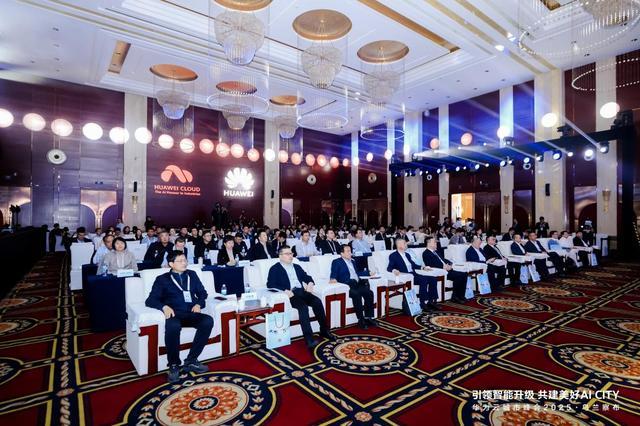
Core Viewpoint - The Huawei Cloud City Summit 2025, held in Ulanqab, Inner Mongolia, focuses on the transformation of cities driven by artificial intelligence, emphasizing the shift from "data-driven" to "Token-driven" development [1][3]. Group 1: AI City Development - Ulanqab is positioned as a key growth area for digital economy development in Inner Mongolia, with a focus on building a new foundation for "AI CITY" and enhancing digital governance capabilities [3]. - The summit aims to foster collaboration among government, enterprises, research institutions, and ecological partners to promote intelligent urban transformation and high-quality digital economic development [3][8]. Group 2: Infrastructure and Investment - Ulanqab has signed contracts with 53 companies to establish 67 data centers, with a total investment exceeding 260 billion yuan, and a computing power scale of over 120,000 P, with over 90% being intelligent computing [9]. - The city is leveraging strategic opportunities such as "East Data West Computing" and "Beijing-Mongolia Cooperation" to develop its computing power industry as a top priority in the digital economy [9][11]. Group 3: Huawei's Role - Huawei Cloud emphasizes the need for AI Token services that address real business problems, committing to increase investments in AI and computing power to support Ulanqab in building a secure and efficient AI CITY foundation [12]. - The collaboration between Huawei and Ulanqab has deepened over the years, focusing on various initiatives from digital governance to AI cloud services and smart industry education [12]. Group 4: AI Applications and Initiatives - The summit showcased multiple industry applications of AI, including an industrial internet platform aimed at enhancing regional intelligent capabilities and environmental governance solutions utilizing AI for pollution control [13][14]. - Ulanqab and Huawei Cloud signed a comprehensive cooperation agreement and launched the "Inner Mongolia AI Pioneer Plan," targeting key areas such as smart manufacturing and digital governance to accelerate the large-scale implementation of AI technology [15].
华为AI城市峰会:共建城市数智底座,AI CITY先锋城市案例发布
Sou Hu Cai Jing· 2025-09-28 09:48
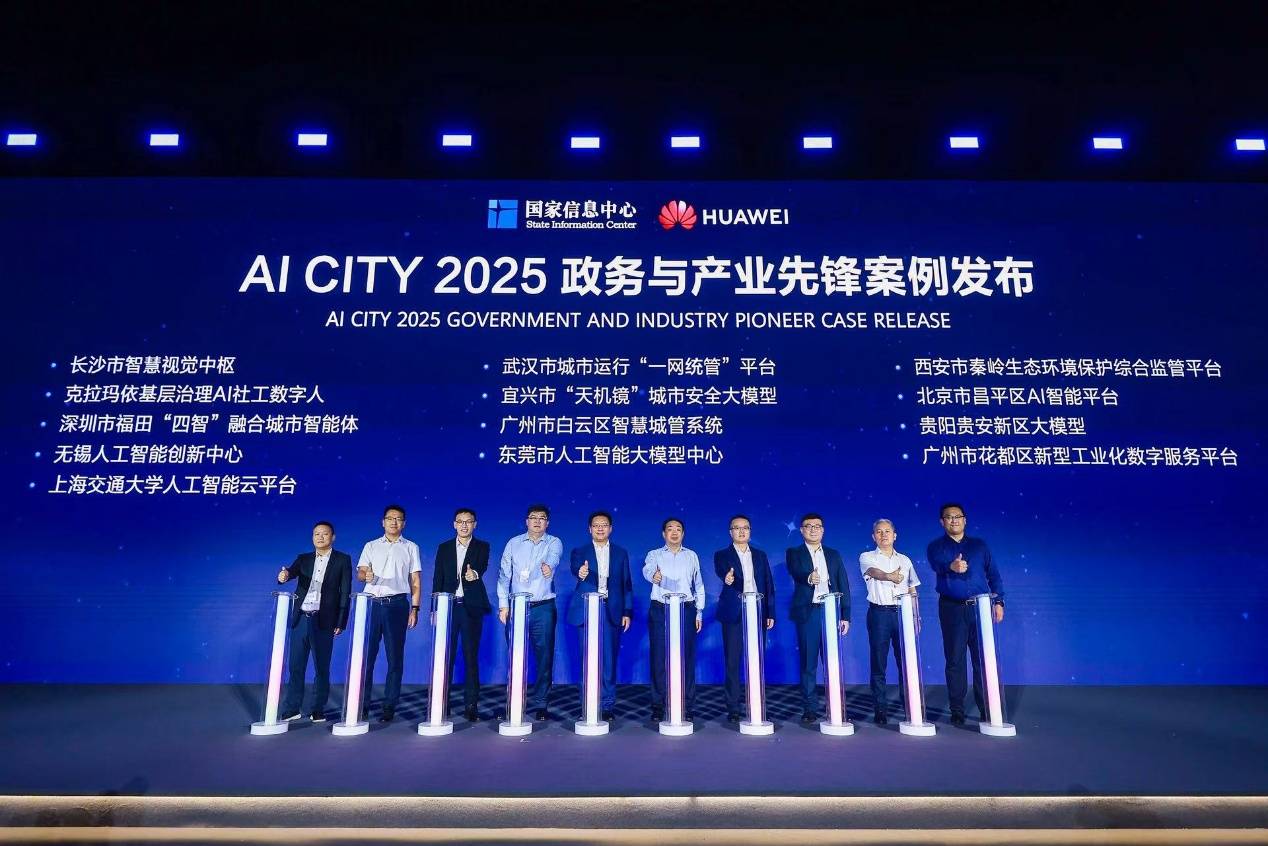
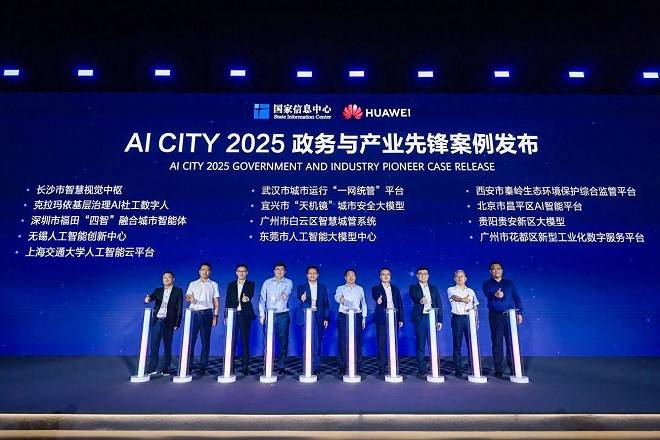
Core Insights - The AI City Summit held during Huawei Connect 2025 focused on the theme of building an intelligent world cloud foundation to accelerate smart governance and industrial upgrades [1][3] - The summit gathered industry experts, government representatives, and ecosystem partners to discuss the rapid evolution of AI technology and its role in driving systematic innovation in smart city construction [1][3] Group 1: AI CITY Development - Huawei and the National Information Center released the "AI CITY 2025 Government and Industry Pioneer Cases," highlighting the transformative impact of AI on urban governance and development paradigms [3] - The AI CITY initiative aims to integrate AI technology deeply into urban modernization and industrial advancement, marking a new phase of comprehensive intelligent transformation in China's smart city development [3][5] Group 2: AI CITY "1234MNX" Framework - The AI CITY "1234MNX" framework addresses challenges in smart city construction, including data silos, insufficient AI scene adaptation, and information security issues [5][6] - The framework consists of one intelligent cloud foundation, two major security systems, three AI engineering platforms, and four types of operations, aiming to enhance resource efficiency and model application [6] Group 3: Practical Applications and Achievements - The framework has shown initial value in practical applications, such as enhancing government services in Shenzhen and revolutionizing urban management in Guangzhou [6][8] - In the industrial sector, the AI CITY initiative has significantly reduced product design cycles and improved manufacturing accuracy, demonstrating its effectiveness in driving industrial upgrades [6][8] Group 4: Future Outlook and Collaboration - Huawei's vision for the future of AI CITY includes collaboration with research institutions and enterprises to innovate and create intelligent upgrade cases for urban governance and industry [7][11] - The company emphasizes the importance of talent cultivation and invites partners to join the AI CITY industry innovation plan to promote comprehensive intelligent transformation [7][11] Group 5: AI Infrastructure and Ecosystem - Huawei Cloud's infrastructure developments, such as the CloudMatrix384 super node and the Pangu model, are designed to support large-scale AI applications and enhance urban decision-making capabilities [8][9] - The company aims to build a robust AI ecosystem that fosters local AI applications, industry ecosystems, and professional talent development, contributing to the overall impact of AI in urban settings [9][11]
HC2025 AI城市峰会:共建城市数智底座,AI CITY先锋城市案例发布
Sou Hu Cai Jing· 2025-09-22 17:35
Core Viewpoint - The AI City Summit held during Huawei's Connect 2025 focuses on the integration of artificial intelligence in urban governance and industrial upgrades, emphasizing the transition to a smart city framework driven by AI technology [1][3]. Group 1: AI CITY Framework - Huawei and the National Information Center released the "AI CITY 2025 Government and Industry Pioneer Cases," highlighting the transformative impact of AI on urban governance and development [3]. - The AI CITY "1234MNX" framework addresses challenges in urban governance and industrial upgrades, moving beyond traditional data-driven smart cities to a model driven by "models + knowledge" [5][6]. - The framework includes a unified intelligent cloud base, a dual security system, three AI engineering platforms, and various operational categories to enhance resource efficiency and innovation [6]. Group 2: Practical Applications and Achievements - The AI CITY framework has shown initial value in practical applications, such as the intelligent upgrade in Shenzhen, which serves over 150,000 users daily across 240 scenarios [6]. - In Guangzhou, the "1+4+N" smart city management system has revolutionized urban management, while the industrial platform in Huadu has significantly reduced product design cycles and improved efficiency [6]. - The Dongguan AI model center has increased manufacturing line inspection accuracy to 99%, showcasing the practical benefits of AI integration in various sectors [6]. Group 3: Future Prospects and Initiatives - Huawei's future vision for AI CITY includes collaboration with research institutions and enterprises to innovate urban governance and industrial upgrade cases [7]. - The company aims to enhance AI talent cultivation to support long-term industrial development and invites partners to join the AI CITY industry innovation plan [7]. - Huawei emphasizes the importance of a robust computing foundation and the development of AI models to support urban applications and ecosystem growth [8][12]. Group 4: AI's Role in Urban Development - AI is positioned as a core driver for transforming urban production, lifestyle, and governance, with significant implications for public services and industrial applications [11]. - Various successful AI applications have been implemented across cities, such as the data circulation platform in Shanghai and the digital assistant in Guizhou, enhancing service efficiency and user experience [11][12]. - Huawei's commitment to building an open and shared computing system aims to integrate global capabilities into local AI ecosystems, fostering innovation and collaboration [12].