昇腾AI云服务

Search documents
做“难而正确的选择”,华为云产业智能化的“深潜”逻辑
Jing Ji Wang· 2026-02-02 07:11
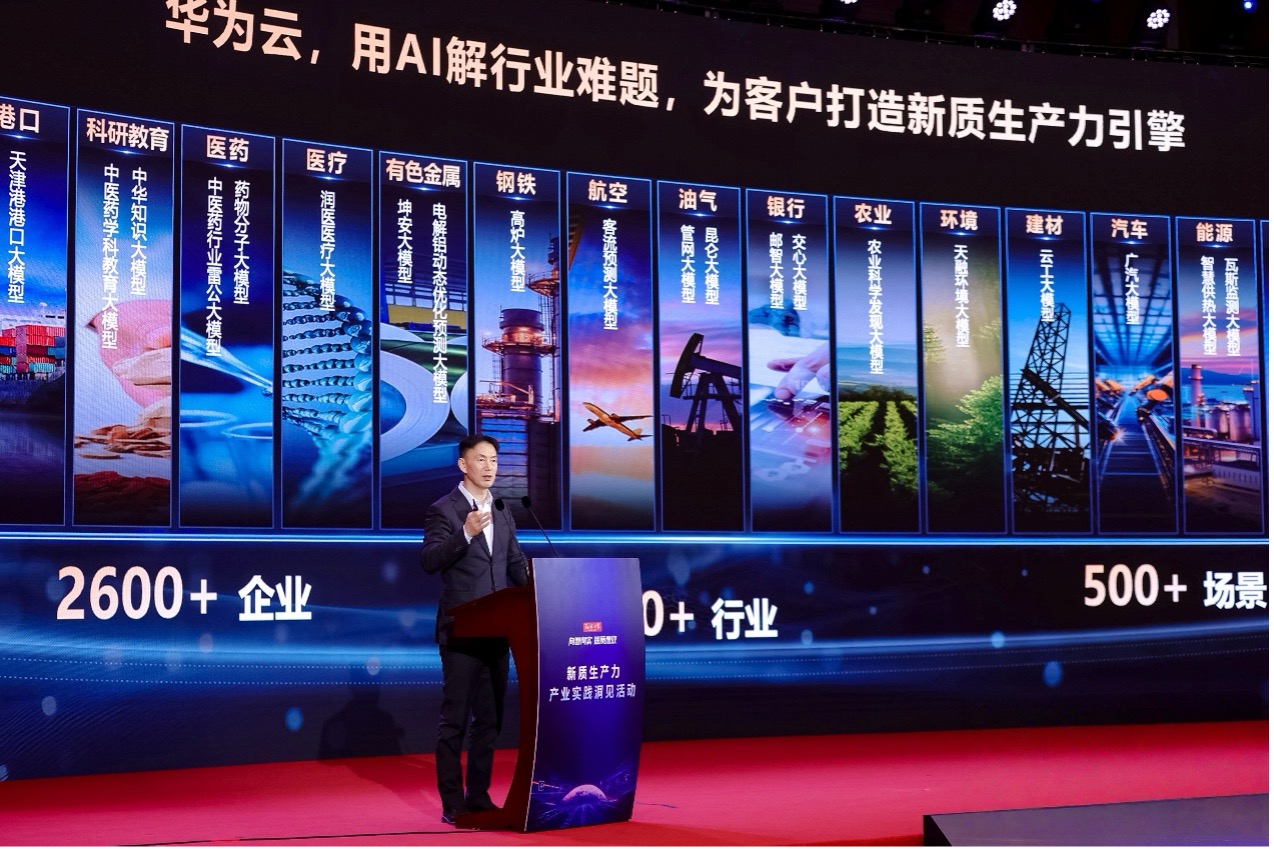
Core Insights - Artificial intelligence (AI) has transitioned from a topic of discussion to a strategic focus for industries, especially following the Chinese government's endorsement of AI integration into various sectors [1][3] - Huawei Cloud has been recognized for its AI infrastructure and industry integration, showcasing its role in transforming AI from a conceptual tool to a practical business engine [1][7] Group 1: AI Integration and Industry Transformation - AI technology is systematically reshaping various industries, with Huawei Cloud emphasizing the importance of combining computational power with industry-specific scenarios [3][7] - The collaboration between Huawei Cloud and Nanjing Steel has led to the development of the "Yuanye Steel Model," which has implemented 20 intelligent applications across four business areas, enhancing production processes [4] - In Inner Mongolia, Huawei Cloud's partnership has resulted in the world's first fleet of 100 autonomous electric mining trucks, demonstrating significant operational efficiency and safety improvements [4] Group 2: Achievements and Impact - Huawei Cloud has enabled substantial efficiency gains across multiple sectors, such as reducing inspection times from 6 hours to 20 minutes in industrial inspections, achieving over 98% accuracy in fault detection [5] - In the steel industry, AI has improved temperature prediction accuracy in blast furnaces to 80%, leading to a fuel saving of approximately 7,800 tons per furnace annually [5] - The company has developed over 30 industry-specific AI models, serving more than 500 scenarios and 2,600 enterprises across various fields, contributing to high-quality industrial development in China [9] Group 3: Strategic Approach and Future Directions - Huawei Cloud aims to tackle complex industry challenges by focusing on three key areas: understanding physical environments, managing specialized data, and ensuring effective implementation of AI solutions [8] - The company positions itself as a "technical partner," providing comprehensive AI services that include not only computational power but also development frameworks and industry solutions [8] - Looking ahead, Huawei Cloud is committed to continuous innovation in core technologies and collaborative efforts with industry partners to embed AI deeply into core business processes, thereby creating new industrial value [9]

智链全球,蝶变未来:华为云助力金蝶构建敏捷智能全球化供应链
Xin Lang Cai Jing· 2025-12-23 12:26
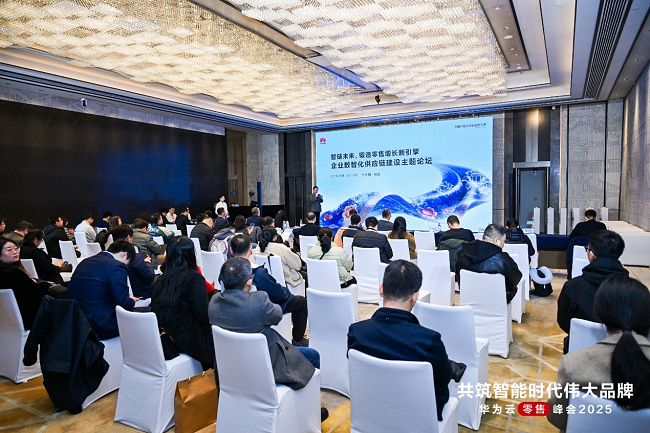
Core Insights - The digital economy is reshaping global supply chains, making the construction of an agile, compliant, and intelligent global supply chain system essential for companies to overcome growth bottlenecks and succeed in international competition [1][9]. Group 1: Challenges Faced by Companies - Companies face complex compliance and regulatory requirements across different countries, leading to high risks of violations [4][12]. - Cross-border logistics increase supply chain costs while decreasing agility due to extended supply chain links [4][12]. - Weak logistics infrastructure in emerging markets affects fulfillment and reverse logistics experiences [4][13]. - Localization challenges arise from misalignment between product specifications and local demands, along with competition from local brands [4][14]. Group 2: Solutions and Collaborations - Kingdee and Huawei Cloud have formed a comprehensive partnership to create a global intelligent management foundation, addressing the need for an integrated platform that combines global compliance, supply chain collaboration, and data intelligence [4][14]. - Kingdee's cloud services reach 172 countries and regions, serving over 7.4 million enterprises and institutions, necessitating a highly reliable, secure, and intelligent underlying technology platform [4][14]. - The collaboration leverages Huawei's Ascend AI cloud services and GaussDB database to provide robust engines for global operations and deep intelligent analysis [6][16]. Group 3: Practical Outcomes - The partnership has successfully assisted over a thousand outbound enterprises across various industries, including manufacturing, home furnishings, and building materials [8][17]. - Many international companies utilize the platform to support multiple languages and accounting standards, ensuring compliance and collaboration among global employees [8][17]. - Domestic enterprise groups have established online global sales processes and financial accounting systems, enhancing supply chain visibility and operational efficiency across multiple countries [8][17].
华为云城市峰会在乌兰察布召开,当地已吸引67个数据中心项目
Guan Cha Zhe Wang· 2025-12-18 09:04
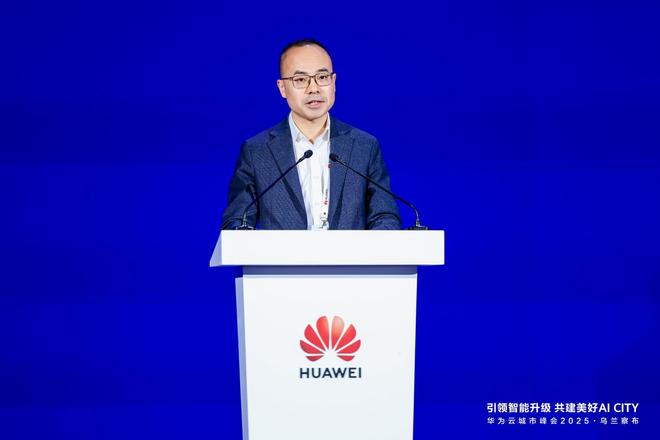
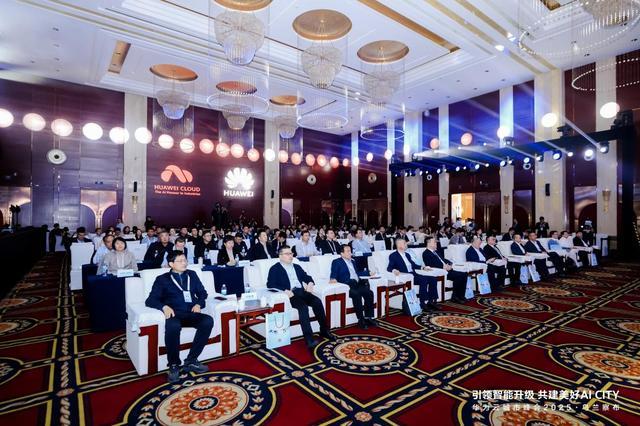
Core Insights - Artificial intelligence is rapidly reshaping the global economy, transitioning from a "data-driven" to a "Token-driven" development model [1] - The summit focused on the transformation of cities from "energy output areas" to "AI productivity output areas," emphasizing the construction of a "Token City" to boost the digital economy in Ulanqab [1] Group 1: Summit Highlights - The summit "Leading Intelligent Upgrade, Building a Beautiful AI CITY" was held in Ulanqab, gathering industry experts and leaders to discuss key pathways for urban transformation [1] - Liu Junyi, Deputy Director of the Inner Mongolia Government Service and Data Management Bureau, highlighted Ulanqab as a crucial growth pole for the region's digital economy and outlined four key hopes for the summit [2] Group 2: Strategic Initiatives - Ulanqab is leveraging strategic opportunities such as "East Data West Computing" and "Beijing-Mongolia Cooperation," focusing on the computing power industry as a top priority for digital economic development [4] - Since 2013, Ulanqab has signed contracts with 53 companies to establish 67 data centers, with total investments exceeding 260 billion yuan and a computing power scale surpassing 120,000 P [4] Group 3: AI and Token Services - The concept of "Token City" aligns with Huawei Cloud's "AI CITY" strategy, emphasizing the need for AI Token services that address specific business problems [6] - Token services are identified as a key infrastructure for accelerating the implementation of AI CITY, serving as both a means to access AI capabilities and a measure of a city's AI potential [6] Group 4: Urban Development Paradigms - The National Information Center's Director, Shan Zhiguang, discussed the shift in urban development paradigms driven by AI, moving towards a new architecture that integrates distributed intelligent systems [8] - Ulanqab's "Grassland Cloud Valley" is positioned as a powerful computing cluster, attracting significant investments and forming an integrated ecosystem of government, industry, academia, and research [10] Group 5: AI Applications and Innovations - Various case studies presented at the summit illustrated the tangible value of AI in different industries, including a unified AI operation system for the coal industry and an AI model for environmental management [12][14] - The summit concluded with the signing of a comprehensive cooperation agreement between Ulanqab and Huawei Cloud, launching the "Inner Mongolia AI Pioneer Plan" to accelerate AI application across multiple sectors [18]
内蒙古乌兰察布打造北方AI产业高地
Zhong Guo Jing Ji Wang· 2025-12-18 06:03
Core Insights - The summit focused on transforming Ulanqab from an "energy output city" to an "AI productivity output city" through AI technology, aiming to accelerate the development of the digital economy in the region [1][2] - Ulanqab has positioned itself as a significant growth pole for digital economy, with strategic partnerships with leading companies like Huawei to enhance its AI capabilities and infrastructure [1][3] Group 1: Strategic Initiatives - Ulanqab has signed agreements with 53 companies to establish 67 data centers, with a total investment exceeding 260 billion yuan, and a computing power scale surpassing 120,000 P, with over 90% being intelligent computing [2] - The city aims to leverage its advantages in government services and public welfare to create intelligent solutions that enhance efficiency and satisfaction for citizens and businesses [2][3] Group 2: Collaborative Efforts - Ulanqab and Huawei have collaborated on various projects, including the launch of AI cloud services and the establishment of a digital intelligence industry academy to address local talent shortages [3][4] - The city plans to integrate its green energy resources with AI capabilities, focusing on projects that combine green electricity, computing power, and data to create a sustainable digital ecosystem [4] Group 3: Future Directions - Ulanqab will continue to capitalize on national strategies like "East Data West Calculation" and "South Guizhou North Ulanqab" to attract top-tier internet platforms and AI unicorns [4] - The establishment of collaborative innovation ecosystems involving government, industry, academia, and research will be prioritized to enhance the region's AI and computing infrastructure [4]
华为云城市峰会在乌兰察布举行 共绘“草原云谷”迈向“Token之都”新蓝图
Huan Qiu Wang Zi Xun· 2025-12-17 09:18
Core Viewpoint - The Huawei Cloud City Summit 2025, held in Ulanqab, Inner Mongolia, focuses on the transformation of cities driven by artificial intelligence, emphasizing the shift from "data-driven" to "Token-driven" development [1][3]. Group 1: AI City Development - Ulanqab is positioned as a key growth area for digital economy development in Inner Mongolia, with a focus on building a new foundation for "AI CITY" and enhancing digital governance capabilities [3]. - The summit aims to foster collaboration among government, enterprises, research institutions, and ecological partners to promote intelligent urban transformation and high-quality digital economic development [3][8]. Group 2: Infrastructure and Investment - Ulanqab has signed contracts with 53 companies to establish 67 data centers, with a total investment exceeding 260 billion yuan, and a computing power scale of over 120,000 P, with over 90% being intelligent computing [9]. - The city is leveraging strategic opportunities such as "East Data West Computing" and "Beijing-Mongolia Cooperation" to develop its computing power industry as a top priority in the digital economy [9][11]. Group 3: Huawei's Role - Huawei Cloud emphasizes the need for AI Token services that address real business problems, committing to increase investments in AI and computing power to support Ulanqab in building a secure and efficient AI CITY foundation [12]. - The collaboration between Huawei and Ulanqab has deepened over the years, focusing on various initiatives from digital governance to AI cloud services and smart industry education [12]. Group 4: AI Applications and Initiatives - The summit showcased multiple industry applications of AI, including an industrial internet platform aimed at enhancing regional intelligent capabilities and environmental governance solutions utilizing AI for pollution control [13][14]. - Ulanqab and Huawei Cloud signed a comprehensive cooperation agreement and launched the "Inner Mongolia AI Pioneer Plan," targeting key areas such as smart manufacturing and digital governance to accelerate the large-scale implementation of AI technology [15].
华为云又有大动作
华尔街见闻· 2025-12-06 11:10
Core Viewpoint - The article discusses Huawei Cloud's significant organizational changes aimed at enhancing its competitiveness in the AI and cloud computing sectors, emphasizing a strategic shift towards becoming a "computing black land" to support various industries [4][7][14]. Organizational Changes - Huawei Cloud has undergone a major organizational adjustment, moving its R&D organization under the ICT (Information and Communication Technology) division and establishing five cloud service product lines: Infrastructure Cloud Services, Data & AI Cloud Services, Database Cloud Services, Security Cloud Services, and HCS [5][6]. - The leadership has also changed, with Zhang Pingan appointed as the chairman and Zhou Yuefeng as the CEO of Huawei Cloud, indicating a focus on commercializing cloud services [5][6]. Strategic Focus - The strategic focus of Huawei Cloud is now on AI and computing, aiming to leverage its accumulated ICT and IT technology advantages to enhance cloud platform competitiveness through system-level innovation and soft-hard collaboration [6][7][14]. - The company aims to transform the AI wave into stable, scalable commercial revenue through products like Tokens services and AI PaaS [8][9]. Market Position and Performance - Huawei Cloud's revenue from cloud computing was approximately 38.52 billion yuan in the previous year, showing a modest year-on-year growth of 8.5%, which accounted for only 4.5% of total revenue [9]. - In comparison, Alibaba Cloud reported a 34% year-on-year revenue growth to 39.82 billion yuan in the third quarter, highlighting the competitive landscape [10]. Future Directions - Huawei Cloud's future development will focus on "3+2+1" business segments, which include general computing, intelligent computing, storage, AI PaaS, databases, and security [11][14]. - The organization is consolidating resources to support the development of the Ascend cloud, Pangu large model, and intelligent computing integration, indicating a commitment to enhancing its AI capabilities [13][14].

华为云又有大动作
Hua Er Jie Jian Wen· 2025-11-28 06:31
Core Insights - Huawei Cloud is undergoing significant organizational changes to enhance its competitiveness in the AI and cloud computing sectors, with a focus on commercializing its services [2][4][10] Organizational Changes - Huawei Cloud has shifted its R&D organization under the ICT (Information and Communication Technology) division, establishing five cloud R&D product lines: Infrastructure Cloud Services, Data & AI Cloud Services, Database Cloud Services, Security Cloud Services, and HCS [2][3] - Zhang Pingan has been appointed as the chairman of Huawei Cloud, while Zhou Yuefeng has taken over as CEO, indicating a strategic leadership shift [2][3] Strategic Focus - The company aims to position Huawei Cloud as a "black land" for computing power, facilitating the growth of various applications on its platform [4][6] - Huawei Cloud plans to leverage its accumulated ICT and IT technology advantages to enhance its cloud platform's competitiveness through hardware-software synergy and system-level innovation [4][6] Market Position and Performance - Huawei Cloud's revenue from cloud computing was approximately 38.52 billion yuan in the previous year, reflecting a year-on-year growth of only 8.5%, which constitutes 4.5% of the total revenue [6] - In comparison, Alibaba Cloud reported a 34% year-on-year revenue growth in the third quarter, highlighting the competitive landscape [7] Recent Adjustments - In August, Huawei Cloud underwent another major organizational adjustment, consolidating several departments to focus more on AI and computing power, while reducing investments in non-core strategic areas [8][9] - The restructuring includes the integration of the Pangu large model department into other divisions, emphasizing a shift towards AI and intelligent computing [9][10]
828 B2B企业节云企家企业交流会成功举办
Sou Hu Cai Jing· 2025-09-26 15:00
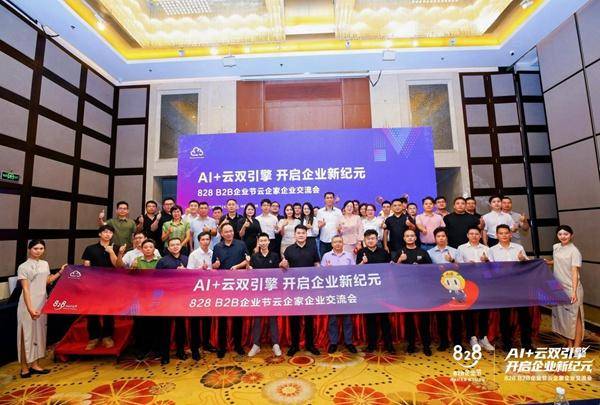
Group 1 - The event "AI + Cloud Dual Engine, Opening a New Era for Enterprises" was successfully held in Liuzhou, focusing on the integration of artificial intelligence and cloud computing to drive the digital transformation of manufacturing in Guangxi [2][3] - Key stakeholders, including Huawei Cloud and local industry associations, emphasized the importance of AI and cloud technology in enhancing operational efficiency and exploring new business opportunities for enterprises [2][3] - The event served as a platform for companies to establish initial cooperation intentions with Guangxi Yunqijia, aiming to explore AI joint solutions based on Huawei Cloud [4][5] Group 2 - Professor Zhu Jianyong from Guangxi University highlighted national and regional policies promoting AI development, suggesting measures to support the industrialization of smart products and the creation of high-quality industrial datasets [3] - Guangxi Yunqijia's General Manager Chen Siwei discussed how the "Cloud + AI" dual engine can lower digitalization barriers and facilitate data-driven decision-making for businesses [3] - Huawei Cloud's solution architect introduced the Ascend AI Cloud service's Maas token model, which helps clients access large model capabilities efficiently and cost-effectively, promoting the widespread application of large models [3]
慧科讯业出席华为全联接大会,共探企业AI降本增效新路径
Sou Hu Cai Jing· 2025-09-24 10:32
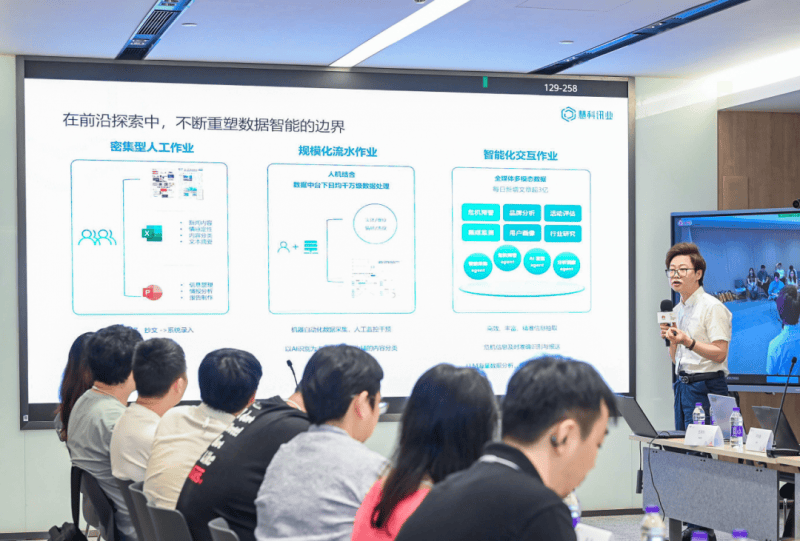
Core Insights - The Huawei Connect 2025 conference highlighted the rapid growth of the MaaS (Model as a Service) industry, which is crucial for the large-scale implementation of AI technologies [1] - Wisers, as a key partner of Huawei, showcased its enterprise-level AI productivity engine based on Huawei Cloud, emphasizing the importance of scalable and controllable AI applications [1][3] Industry Trends - The demand for large model services is accelerating, leading to an explosive growth trend in the MaaS industry [1] - The conference featured discussions on the evolution of MaaS platforms, providing actionable solutions for enterprises to enhance productivity in the AI era [1] Company Developments - Wisers has implemented a dual-active LLM and free distillation industry model (2+1) on Huawei Cloud, enabling more accurate and faster industry-specific applications [3] - The company faces challenges in the deployment of large models, including difficulties in computing power acquisition and high technical barriers, which it addresses through six core advantages of Huawei Cloud [3][4] Technological Advancements - Wisers' self-developed media big data mining and analysis model (Wisers Industry LLM) leads the industry in effectiveness and efficiency, unlocking significant AI commercial value [3] - The model can accurately identify complex semantics and filter irrelevant content, enhancing the efficiency and timeliness of alerts [3][4] Future Outlook - Wisers aims to build an AI-driven intelligent data platform and business decision solutions, collaborating with industry partners to promote broader and deeper AI applications [5]
HC2025 AI城市峰会:共建城市数智底座,AI CITY先锋城市案例发布
Sou Hu Cai Jing· 2025-09-22 17:35
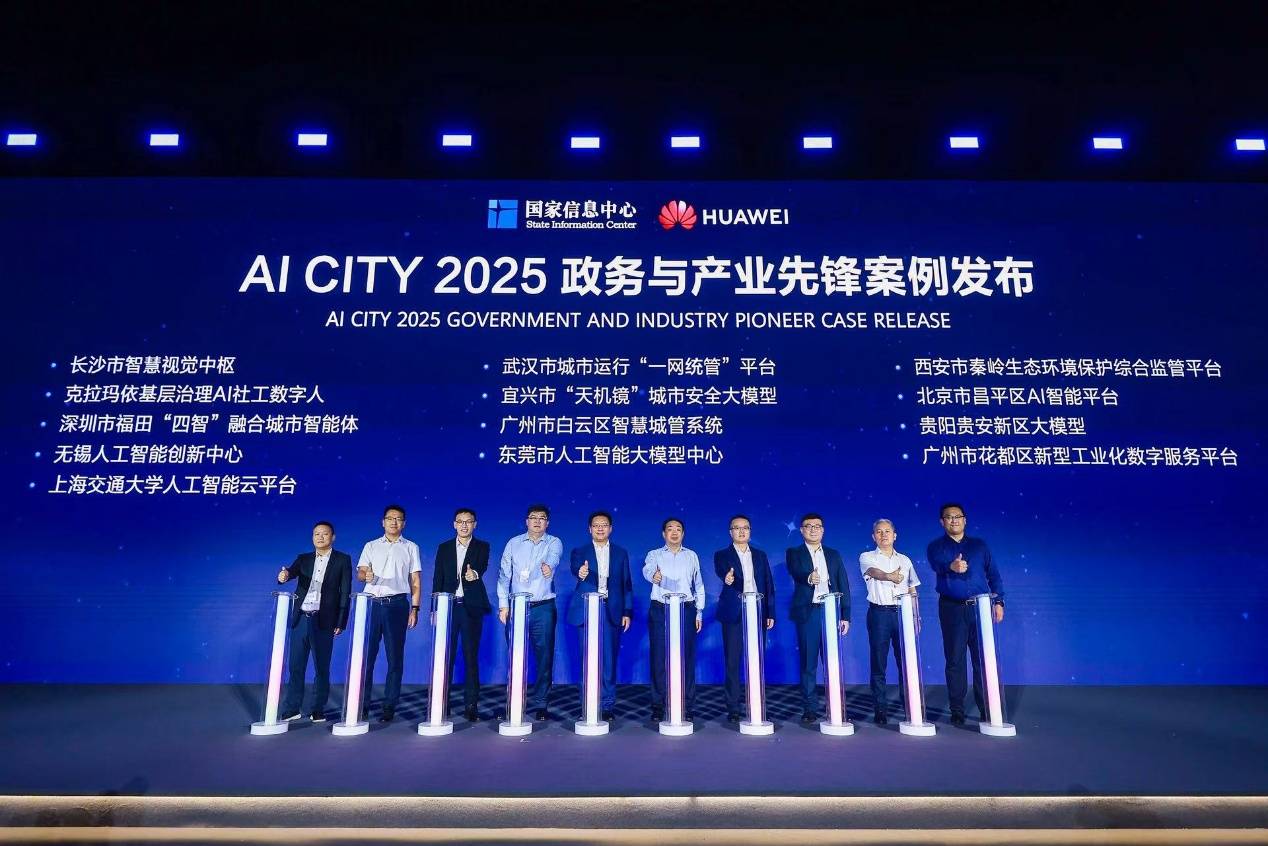
Core Viewpoint - The AI City Summit held during Huawei's Connect 2025 focuses on the integration of artificial intelligence in urban governance and industrial upgrades, emphasizing the transition to a smart city framework driven by AI technology [1][3]. Group 1: AI CITY Framework - Huawei and the National Information Center released the "AI CITY 2025 Government and Industry Pioneer Cases," highlighting the transformative impact of AI on urban governance and development [3]. - The AI CITY "1234MNX" framework addresses challenges in urban governance and industrial upgrades, moving beyond traditional data-driven smart cities to a model driven by "models + knowledge" [5][6]. - The framework includes a unified intelligent cloud base, a dual security system, three AI engineering platforms, and various operational categories to enhance resource efficiency and innovation [6]. Group 2: Practical Applications and Achievements - The AI CITY framework has shown initial value in practical applications, such as the intelligent upgrade in Shenzhen, which serves over 150,000 users daily across 240 scenarios [6]. - In Guangzhou, the "1+4+N" smart city management system has revolutionized urban management, while the industrial platform in Huadu has significantly reduced product design cycles and improved efficiency [6]. - The Dongguan AI model center has increased manufacturing line inspection accuracy to 99%, showcasing the practical benefits of AI integration in various sectors [6]. Group 3: Future Prospects and Initiatives - Huawei's future vision for AI CITY includes collaboration with research institutions and enterprises to innovate urban governance and industrial upgrade cases [7]. - The company aims to enhance AI talent cultivation to support long-term industrial development and invites partners to join the AI CITY industry innovation plan [7]. - Huawei emphasizes the importance of a robust computing foundation and the development of AI models to support urban applications and ecosystem growth [8][12]. Group 4: AI's Role in Urban Development - AI is positioned as a core driver for transforming urban production, lifestyle, and governance, with significant implications for public services and industrial applications [11]. - Various successful AI applications have been implemented across cities, such as the data circulation platform in Shanghai and the digital assistant in Guizhou, enhancing service efficiency and user experience [11][12]. - Huawei's commitment to building an open and shared computing system aims to integrate global capabilities into local AI ecosystems, fostering innovation and collaboration [12].