
AI Productivity

Search documents
Morgan Stanley sees AI jobs surge in 3 areas related to AI—even though there’s not enough revenue yet
Yahoo Finance· 2026-03-13 06:42
Core Insights - Morgan Stanley highlights a shift in the relationship between revenue growth and headcount growth due to AI, suggesting that AI is intensifying work rather than reducing it [1][3] - Despite concerns about job losses, many CEOs are still planning to hire more employees, indicating a complex labor market dynamic influenced by AI [1][3] AI's Impact on Labor Demand - The investment bank identifies three areas where AI is creating demand for workers, even as it threatens to displace jobs in other sectors [2][3] - Discussions at the Technology, Media & Telecom Conference focused on how AI can enhance productivity without increasing headcount, with many companies reporting positive results [4] Job Creation vs. Job Displacement - Deutsche Bank Research Institute predicts that while AI may displace 92 million jobs, it could also create 170 million new roles, suggesting a net positive effect on employment [5] - Morgan Stanley emphasizes that the disruption caused by AI is already occurring, with immediate effects on the labor market [5] Skilled Trades Demand - Morgan Stanley identifies skilled trades as a critical and underappreciated sector, with a significant demand for electricians, electrical engineers, and construction workers driven by AI infrastructure development [6] - Executives from CoreWeave report a shortage of thousands of skilled-trade workers necessary for data center construction, indicating a persistent supply-demand gap due to the time required to acquire relevant skills [7]
Greggs H2 Earnings Call Highlights
Yahoo Finance· 2026-03-03 18:30
Core Viewpoint - Greggs reported a challenging market environment with like-for-like sales growth of 1.6% in early 2026 and total sales growth of 6.3% for the first nine weeks, impacted by adverse weather conditions and lower price inflation compared to the previous year [1][4] Sales Performance - Full-year total sales for 2025 grew just under 7%, with like-for-like growth of 2.4% in company-managed shops and 4.3% in franchise shops [4][7] - Market share of visits increased by 0.5 percentage points to 8.6%, while overall market visits declined by over 3% [3][7] Financial Overview - Underlying operating profit and profit before tax were in line with expectations, but statutory operating profit fell by 4% and profit before tax decreased by 9.4% [6][8] - Diluted earnings per share declined by 10.7%, attributed to a higher effective tax rate [9] Cost Dynamics - The company experienced 5.6% cost inflation in 2025, expecting it to moderate to around 3% in 2026, with food and packaging inflation anticipated to be low single digits [11] - Wage inflation was reported at just over 8% in 2025, expected to decrease to around 4% in 2026 [12] Capital Expenditure and Cash Flow - Capital expenditure peaked at £287 million in 2025, with guidance of around £200 million for 2026 and £150-170 million thereafter [5][16] - Operating cash inflow was £273 million, with net cash at year-end reported at £46 million [17] Expansion Strategy - The company plans to open around 120 net new shops in 2026, maintaining a target cash return of 25% on shop investments [18][19] - Evening trading has become the fastest-growing segment, reaching 9.4% of sales, with significant growth opportunities in evening delivery [21] Product Innovation - Greggs is evolving its menu to reflect consumer trends, introducing new items such as Tandoori Chicken Pizza and Iced Matcha Latte [22] - The company is investing in technology to support product innovation and improve customer experience [20][14] Supply Chain Developments - Investment in two new national distribution centers is underway to enhance logistics capacity for up to 3,500 shops, with expected openings in 2026 and 2027 [23] - The company anticipates a cost impact from the new Derby site, which will affect profit outlook in the second half of 2026 [24]
pass Diversified LLC(CODI) - 2025 Q4 - Earnings Call Transcript
2026-02-26 23:00
Financial Data and Key Metrics Changes - For Q4 2025, GAAP net revenue was $468.6 million, down 5.1% year-over-year, primarily due to the impact of Lugano and deconsolidation [13] - GAAP net loss for the quarter was $78.8 million, including over $25 million in one-time Lugano investigation restatement costs [14] - For the full year, net revenues were $1.9 billion, up 4.8%, while GAAP net loss was $293.7 million, including approximately $60 million in investigation and restatement-related expenses [14][15] - Excluding Lugano, net sales were $1.8 billion, up 3.9%, with Subsidiary Adjusted EBITDA at $345.8 million, an increase of 8.8% [15][16] Business Line Data and Key Metrics Changes - Consumer net sales increased by 3.7%, while industrial net sales increased by 4.1%, with acquisition-related growth at Altor offset by global trade disruption at Arnold [15] - Consumer businesses grew Adjusted EBITDA by 13.8%, while industrial Adjusted EBITDA grew by only 1.1% due to challenges faced by Arnold [15][16] Market Data and Key Metrics Changes - Arnold ended the year with a backlog more than 40% higher than the prior year-end, indicating strong demand in aerospace and defense markets [8] - Quoting activity for Arnold is at an all-time high, although recent export restrictions from China may create near-term disruptions [9][32] Company Strategy and Development Direction - The company aims to reduce its leverage ratio through organic growth and attractive divestitures, with a focus on closing the gap between share price and intrinsic value [6][10] - The strategic plan includes executing selective acquisitions combined with strong operations to generate durable shareholder value [7][20] Management's Comments on Operating Environment and Future Outlook - Management acknowledged that 2025 was a challenging year but expressed confidence in the resilience of their subsidiaries and the normalization of operations [5][20] - The outlook for 2026 includes expectations for mid-single-digit growth in Subsidiary Adjusted EBITDA, with a focus on operational execution and cash conversion [6][18] Other Important Information - The company ended the year with $68 million in cash and cash equivalents and approximately $96 million available on its revolver [17] - A sale-leaseback for some Altor facilities was announced, freeing up over $11 million in cash for debt repayment [17] Q&A Session Summary Question: Update on sale processes and interest levels - Management indicated strong interest in their assets, with multiple bidders expected for the subsidiaries considered for divestiture [26][27] Question: Outlook for Arnold and Altor - Arnold is expected to see growth despite geopolitical risks, while Altor's outlook is more cautious due to vaccine sales and tariff impacts [30][34] Question: Wider range in branded consumer business outlook - The wider range is attributed to both tariff-related uncertainties and general economic conditions affecting consumer spending [46][47] Question: Leadership change at PrimaLoft - A strong new leader has been brought in to accelerate growth and market penetration at PrimaLoft, which is well-positioned for future success [49][52] Question: Pulse check on 5.11 - The professional side of 5.11 is performing well, while the consumer side faces challenges due to inflation and tariffs affecting demand [56][58] Question: Leverage targets and M&A market conditions - The company targets a long-term leverage ratio of 3 to 3.5 times, with a short-term goal of around 4 times, requiring some deleveraging events [63][65]

美国股票观点:AI 交易的扩散与收窄-US Equity Views_ The broadening and narrowing of the AI trade
2026-02-25 04:07
Summary of Key Points from the Conference Call Transcript Industry Overview - The focus of the conference call is on the AI industry, particularly the capital expenditure (capex) trends among hyperscalers and the implications of AI disruption risks on various sectors [1][2][3]. Core Insights and Arguments 1. **AI Capex Trends**: - Hyperscaler capex is projected to reach $667 billion in 2026, reflecting a 62% increase compared to 2025, with a notable rise of $127 billion since the start of the 4Q earnings season [2][12][16]. - Capex is expected to account for over 90% of hyperscaler cash flows in 2026, surpassing levels seen during the Dot Com Boom [19][21]. 2. **Market Volatility**: - Recent volatility in the AI trade has been driven by capex surprises and concerns over disruption risks, leading to a 55% rally in memory stocks year-to-date, while software stocks have declined by 24% [1][57]. 3. **Disruption Risks**: - The uncertainty surrounding AI disruption is expected to persist, with companies needing to demonstrate earnings stability to regain investor confidence [7][72]. - The perceived threat of AI automation on labor costs has led to a sell-off in software stocks, with a 23% decline over six weeks [57][66]. 4. **Investment Sentiment**: - Investors are currently skeptical about the long-term growth outlook for public companies in the AI space, favoring private companies perceived to be more effective in capturing AI-related revenues [3][62]. - The market is witnessing a divergence in performance among hyperscalers, with a focus on revenue growth as a key driver for stock performance [45][47]. 5. **Future Catalysts**: - Three potential catalysts for a market inflection in hyperscalers are identified: acceleration in AI-related revenues, deceleration in capex growth, and a shift in the macroeconomic backdrop [46][52]. - The need for companies to quantify productivity gains from AI is emphasized, with only 10% of S&P 500 companies having done so in recent earnings calls [8][78]. Additional Important Insights - **Valuation Concerns**: - Hyperscaler valuations are currently elevated, with a P/E ratio of 24x, ranking in the 14th percentile compared to the past decade [48][54]. - Memory stocks have seen significant price increases driven primarily by earnings growth, trading at a forward P/E of 12x, which is a discount compared to the broader market [37][40]. - **AI Adoption**: - Approximately 35% of large companies are utilizing AI, with 54% of S&P 500 firms mentioning AI in the context of productivity during the 4Q earnings season [74][75]. - **Sector Performance**: - The performance of AI infrastructure stocks (Phase 2) has been strong, while Phase 3 companies, which are expected to generate AI-enabled revenues, have faced challenges due to disruption fears [10][11]. - **Long-term Outlook**: - The transition from AI infrastructure to application layers is expected to create distinct winners and losers in the equity market, necessitating a more granular analysis of competitive positioning and pricing power [60][61]. This summary encapsulates the key points discussed in the conference call, highlighting the current state and future outlook of the AI industry and its associated investment landscape.
Big Ideas 2026: Our Key Takeaways
ARK Invest· 2026-02-17 21:00
Join us as the ARK team takes a deep dive into our Big Ideas 2026 research report. To follow along, make sure to download the full report at https://www.ark-invest.com/big-ideas-2026 Key Sections: 00:00:00 The Great Acceleration 00:16:13 AI Infrastructure 00:27:56 The AI Consumer Operating System 00:38:23 AI Productivity 00:43:18 Bitcoin 00:55:29 Tokenized Assets 01:00:23 Decentralized Finance Applications 01:04:40 Multiomics 01:18:06 Reusable Rockets 01:22:45 Robotics 01:32:54 Distributed Energy 01:37:47 A ...


硅谷最新调研:2026年,AI Agent到底会走向哪?
3 6 Ke· 2026-01-28 10:24
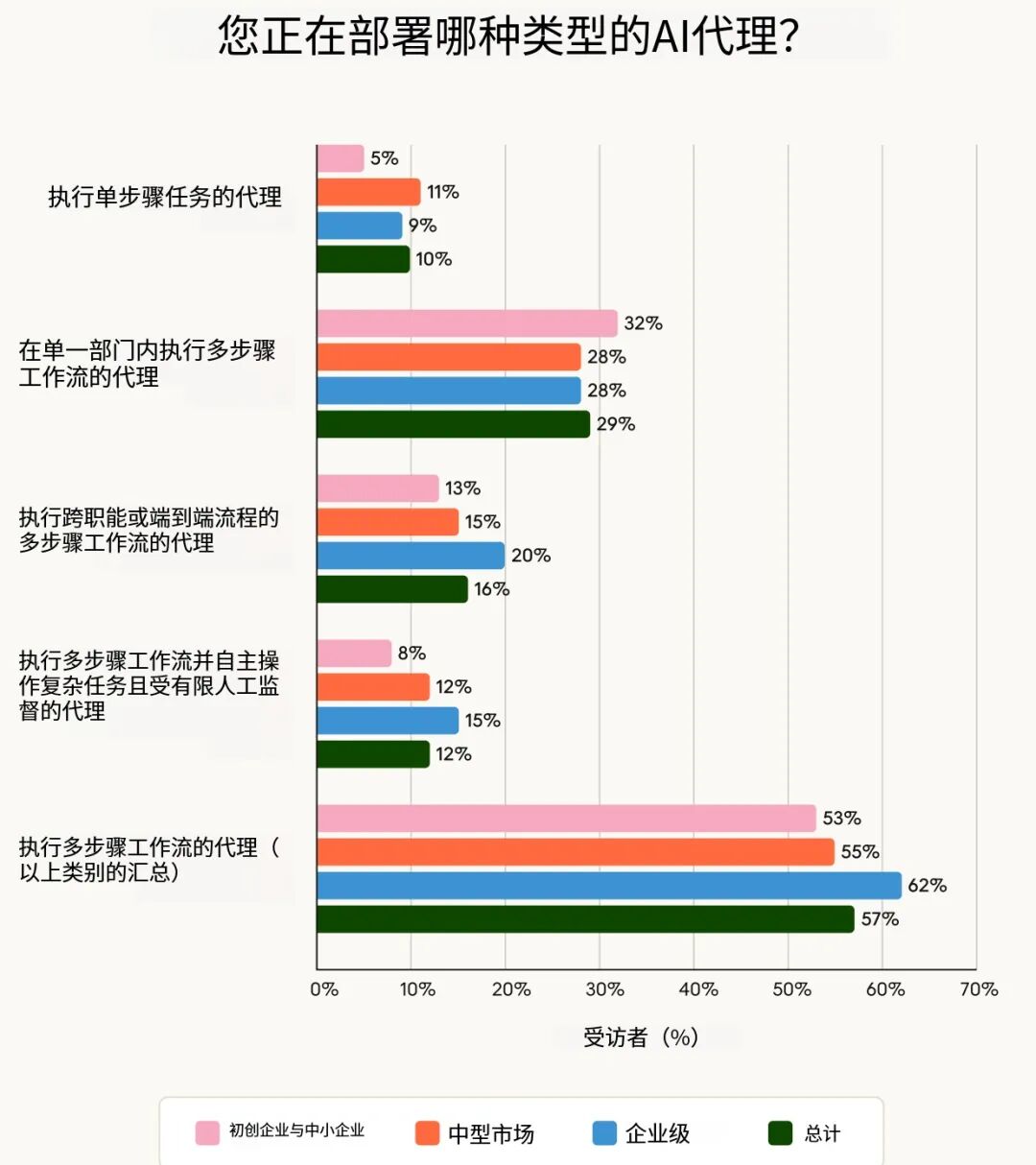
Core Insights - By 2026, AI is expected to transition from a conceptual tool to a tangible productivity driver within enterprises, with intelligent agents acting as the key mechanism for integrating this productivity into production systems [2][63] - The focus of AI discussions has shifted from the strength of models to their practical application in production and the realization of tangible benefits [2][63] Group 1: Current Landscape of AI Deployment - Over 90% of organizations are utilizing AI-assisted programming, with 86% moving beyond experimental phases to deploy these agents in production code development [5][9] - 57% of organizations have implemented intelligent agents in multi-stage workflows, with 16% advancing to cross-functional processes [3][5] - The majority of organizations (81%) plan to adopt more complex AI applications by 2026, with 39% focusing on multi-step processes and 29% on cross-functional projects [54][3] Group 2: Productivity and Efficiency Gains - AI agents are enhancing productivity across the entire development lifecycle, with time savings reported in planning (58%), code generation (59%), documentation (59%), and testing (59%) [13][15] - 80% of organizations report measurable economic returns from their investments in AI agents, indicating a shift from speculative ROI to actual business value [36][41] - Efficiency improvements are expected to be the primary driver for AI adoption, with 44% of organizations anticipating faster task completion [28][31] Group 3: Expanding Use Cases and ROI Measurement - 56% of organizations plan to prioritize AI agents for research and reporting tasks, indicating a shift towards viewing AI as enterprise-level infrastructure rather than just departmental tools [20][23] - Data analysis and reporting generation are seen as the most impactful use cases, with 60% of organizations identifying them as high-impact applications [24][27] - The anticipated ROI from AI deployment is expected to span multiple functions, with software development (57%) and customer service (55%) projected to see the most significant impacts [33][36] Group 4: Future Pathways for AI Adoption - Organizations are optimistic about the potential of AI agents to deliver significant business impacts by 2026, with a strong confidence observed among larger enterprises [43][46] - The main barriers to AI implementation are identified as data integration and quality challenges, with 46% of organizations citing integration with existing systems as a primary obstacle [47][50] - 81% of organizations plan to develop more complex AI projects by 2026, indicating a readiness to tackle more challenging use cases that require cross-functional coordination [54][57]
AI Productivity Is Rising Fast and the Labor Market Is Falling Behind
Investing· 2026-01-16 11:00
Core Insights - The article provides a comprehensive market analysis focusing on investment opportunities and trends in various sectors [1] Group 1: Market Trends - The analysis highlights significant shifts in market dynamics, particularly in technology and healthcare sectors, indicating a growing interest from investors [1] - Emerging markets are showing resilience, with a notable increase in foreign investments, suggesting a potential for high returns [1] Group 2: Investment Opportunities - Specific companies within the renewable energy sector are identified as having strong growth potential due to increasing demand for sustainable solutions [1] - The financial services industry is experiencing a transformation driven by fintech innovations, presenting new avenues for investment [1] Group 3: Economic Indicators - Key economic indicators such as GDP growth rates and unemployment figures are discussed, providing context for market performance and investor sentiment [1] - Inflation rates are monitored closely, as they impact consumer spending and overall economic stability, influencing investment strategies [1]


Lightspeed Commerce Focuses On Growth, Buybacks, And AI Productivity (Upgrade)
Seeking Alpha· 2025-12-18 21:31
Core Insights - Donovan Jones is an IPO research specialist with 15 years of experience in identifying high-quality IPO opportunities [1] - He leads the investing group IPO Edge, which provides actionable information on growth stocks through various resources including IPO filings, previews, calendars, and a comprehensive guide to IPO investing [1] Group 1 - IPO Edge offers a database of U.S. IPOs and tracks upcoming IPOs, providing investors with essential information throughout the IPO lifecycle [1] - The group aims to assist investors from the filing stage to listing, including quiet period and lockup expiration dates [1]


2026 年亚洲新兴市场股票展望 - 不确定世界中的稳健策略-Investor Presentation-2026 Asia EM Equity Outlook –A Robust Approach for an Uncertain World
2025-11-24 01:46
Summary of the 2026 Asia EM Equity Outlook Conference Call Industry Overview - Focus on Asia Emerging Markets (EM) equity outlook for 2026 - Emphasis on macroeconomic uncertainty and market risk management Key Points and Arguments 1. **Market Risk Positioning**: - Recommendation for tight market-risk positions against benchmarks with a slight preference for Japan over other emerging markets in 2026 [14][22][26] 2. **Stock Selection Strategy**: - Emphasis on stock selection through GEM, APxJ, China, Japan, and Thematic Focus Lists to generate alpha amidst macro uncertainty [14][22] 3. **Earnings and Valuation Targets**: - Raised base case targets while highlighting a wider bear to bull spread; moderate optimism on China with an equal-weight recommendation [14][26] - Specific earnings per share (EPS) targets for Japan's TOPIX index: ¥185 (+9%) for F3/25, ¥198 (+7%) for F3/26, and ¥225 (+14%) for F3/27 [26] 4. **Regional Allocations**: - Small overweights in India, Brazil, UAE, and Singapore; underweights in Saudi Arabia, Indonesia, and Taiwan [14][22] - Core overweights in Financials, Consumer Discretionary/E-commerce, and Industrials; underweight in Energy and Materials [14] 5. **Market Performance Rankings**: - Historical performance rankings indicate Japan, Hong Kong, and India as top performers in various years, with significant fluctuations in other markets like Brazil and China [18][19] 6. **Valuation Metrics**: - Forward P/E ratios forecasted: 15.0x for Japan, 13.0x for EM, and 12.7x for China [36] - Consensus EPS trends show positive revisions for Japan and China, with EM moving to neutral [32][34] 7. **Market Index Targets**: - MSCI EM index target set at 1,800 for December 2026, with a current price of 1,372 [26] - TOPIX index target set at 4,250 for December 2026, with a current price of 3,300 [26] Additional Important Insights - **Earnings Revision Breadth**: Positive for Japan and China, indicating potential upward momentum in earnings forecasts [32] - **Active Allocations**: Current active allocations show a preference for Japan and India, with adjustments in Taiwan and Saudi Arabia [38] - **Long-term Structural Trends**: Expectation of an extension of the post-2013 structural uptrend for the TOPIX index [22] This summary encapsulates the critical insights and recommendations from the conference call, providing a comprehensive overview of the Asia EM equity outlook for 2026.