AI supply chain

Search documents
Tesla Just Snubbed TSMC — Musk Is Quietly Building A Sovereign Chip Chain
Benzinga· 2026-03-18 22:17
Core Insights - Tesla is strategically reducing its dependence on Asian semiconductor supply chains by establishing domestic manufacturing for AI chips in the U.S. [2][3][4] - The move to produce AI chips at Samsung's Texas facility starting in 2027 signifies a shift towards a more self-sufficient and resilient supply chain for Tesla [2][4][5] - This strategy aims to ensure that Tesla's AI initiatives, including Full Self-Driving and Optimus, are not hindered by external factors, thereby enhancing its competitive edge in the AI landscape [4][5][6] Group 1 - Tesla's shift to in-house chip design and U.S.-based manufacturing represents the emergence of a 'sovereign' AI supply chain [4][5] - The focus is not solely on outperforming TSMC in technology but on mitigating risks associated with global supply chain vulnerabilities [3][4] - By controlling its chip production, Tesla aims to optimize for reliability and certainty in its AI rollout, contrasting with competitors who prioritize performance and cost [5][6] Group 2 - The establishment of a domestic chip supply chain is a significant power play, indicating Tesla's ambition to become a key player in the semiconductor ecosystem [6] - This strategy is not a rejection of TSMC but rather a signal of Tesla's intent to gain more control over its supply chain [6] - The combination of in-house design, U.S.-based manufacturing, and global deployment positions Tesla uniquely in the market [7]



Micron: The 4-To-1 New Catalyst (NASDAQ:MU)
Seeking Alpha· 2026-03-17 15:27
Group 1 - The article highlights a gap in the AI supply chain related to memory, specifically addressing the bottleneck being formed in this sector [1] - Micron Technology is mentioned as a key player in the memory market, indicating its relevance to the ongoing developments in AI supply chains [1] Group 2 - The author emphasizes the importance of sustained profitability, characterized by strong margins, stable and expanding free cash flow, and high returns on invested capital, as a more reliable driver of returns than valuation alone [1] - The investment strategy focuses on undervalued growth stocks and high-quality dividend growers, suggesting a long-term investment approach [1]

AGM Group Accelerates Global AI Supply Chain Construction Through Financing
Globenewswire· 2026-02-03 12:50
Core Insights - AGM Group Holdings Inc. has successfully completed strategic financing initiatives, including an up-to $25 million equity line of credit and multiple convertible note issuances, marking its entry into a high-growth phase driven by AI and core hardware [1][2] - The company aims to utilize the newly acquired funds for deep R&D into next-generation AI ASIC chips to address the growing demand for AI computing power [2][3] R&D Focus - The funding will support the optimization of ASIC chips specifically designed to enhance AI training and storage efficiency, addressing I/O bottlenecks in large-scale AI model training [3] - The company is committed to developing high-performance AI chips and servers to build a robust global AI supply chain [1][4] Supply Chain Strategy - AGM's supply chain strategy is based on "vertical integration + global collaboration," which is seen as a critical factor for survival in the increasingly complex global trade environment [4] - The company is strengthening its control over core components and reducing reliance on third-party generic parts through self-reliant manufacturing capabilities [7] Market Positioning - The company expresses confidence that its financing moves are strategic choices aimed at securing its position in the AI sector, transforming capital into tangible R&D outcomes and market share [5] - AGM is working closely with global technology partners to co-develop decentralized computing networks, ensuring the global allocation of AI computing resources [7]

把握全球增长机遇-AI 在亚洲供应链的更广泛深度渗透_ Seizing the Global Growth Opportunity_ A broader and deeper AI presence in the Asian supply chain
2026-01-13 02:11
Summary of Key Points from the Conference Call Industry Overview - Focus on the Asia technology (hardware) sector, particularly the AI supply chain, as a priority investment area for 1H26 due to its significant influence on earnings growth amid concerns over smartphone/PC demand and auto production recovery [2][12] Core Themes and Stock Recommendations 1. **AI Supply Chain Investment**: - Emphasis on investing in the AI supply chain, which is expected to drive earnings growth despite potential slowdowns in other sectors [2][12] - Anticipation of clearer benefits from AI for earnings in 2026, with no signs of slowdown heading into 2027 [12] 2. **Under-the-Radar AI Themes**: - Five notable themes identified: 1. **Power Consumption**: Opportunities in power supply, power rack products, capacitors, and power semiconductors. Companies to watch include Delta Electronics, Panasonic HD, Murata Mfg., Taiyo Yuden, and Renesas Electronics [6][25] 2. **Data Transmission**: Advancements in large-scale data transmission technologies, with companies like Fujikura and Mitsubishi Electric highlighted [6][25] 3. **Niche Components**: Price stabilization and increases in demand for components like MLCCs and substrates, with key players including Murata Mfg. and SEMCO [6][25] 4. **Physical AI Integration**: Companies like Hitachi and Mitsubishi Electric are leading in embedding AI into industrial applications [6][27] 5. **Software/Services Disruption**: Generative AI's potential to improve productivity in Japan's software industry, with Fujitsu and NEC as key players [6][27] 3. **High-Profile Sub-Sectors**: - Continued growth in foundry, memory, semiconductor production equipment, AI servers, and edge AI, with recommended stocks including TSMC, Samsung Electronics, and Hon Hai [30][31] Market Dynamics and Risks - **Top-Down Risks**: - Concerns regarding valuations, implementation risks, over-investment, monetization challenges, and funding sources, particularly with emerging players in the market [13] - **Bottom-Up Perspective**: - Fundamentals differ from the IT bubble of 2000, with a larger scale and longer timeline for AI infrastructure development, and sound supply chain management in Asian hardware [14][16] Technological Advancements - **Power Consumption Trends**: - Significant rise in power consumption for AI servers, with expectations for voltage increases to 800V and beyond, creating business opportunities for power-related products [33][38] - **Data Transmission Innovations**: - Transition to higher communication speeds (800-1.6Tbps) and co-packaged optics (CPO) expected to enhance industry value [58][59] Conclusion - The Asia technology sector, particularly the AI supply chain, presents substantial investment opportunities driven by technological advancements and evolving market dynamics. Key players and themes are positioned to benefit from these trends, while investors should remain cautious of potential risks associated with rapid market changes.
X @Bloomberg
Bloomberg· 2025-12-12 08:25
ASML's chipmaking machines are so indispensable to the world's tech ecosystem, it's now Europe's most valuable company.@TomMackenzieTV explains why they are such a vital piece of the AI supply chain https://t.co/5iLj9Oi6Le https://t.co/g59suB1IxB ...
OpenAI teams up with Foxconn to develop AI infrastructure hardware in US. Details here
MINT· 2025-11-21 03:15
Core Insights - OpenAI is collaborating with Hon Hai Precision Industry Co. (Foxconn) to design and produce hardware for data centres, addressing the increasing demand for AI infrastructure [1][2][3] - The partnership aims to enhance Foxconn's manufacturing operations in the US, focusing on server racks, cabling, power systems, and other essential data centre equipment [2][3] - OpenAI plans to share insights on emerging hardware needs to inform Foxconn's design and development efforts for US-manufactured hardware [3] OpenAI's Strategic Moves - OpenAI has recently finalized multibillion-dollar deals with cloud providers and chipmakers, including Nvidia and AMD, to expand its data centre footprint [4] - The company is also increasing control over the AI supply chain by purchasing chips and components from Broadcom, despite concerns about a potential AI bubble [5] Foxconn's Long-term Goals - The agreement with OpenAI reflects Foxconn's strategy to diversify its involvement in the AI ecosystem and reduce reliance on iPhone assembly for Apple [6] - Foxconn is ramping up AI server manufacturing in the US, aligning with governmental demands and mitigating tariff risks [7] - The actual benefits of the partnership for Foxconn remain uncertain, although it is part of a broader initiative to invest significantly in AI infrastructure [6][7]

中国科技与通信_2025 年第二季度后美欧市场反馈-China Technology & Communications_ Post 2Q25 US_EU Marketing Feedback
2025-10-31 00:59
Summary of Conference Call Notes Industry Overview - **Industry**: China Technology & Communications - **Key Focus**: Increasing interest in China tech from institutional investors in the US and EU, particularly in AI supply chain beneficiaries and related technologies Core Insights and Arguments 1. **Investor Interest in China Tech**: There is a growing interest among long-only (LO) investors in quality tech names listed on the H-share market, which is expected to attract more attention and fund flows [1][1][1] 2. **AI Supply Chain Expectations**: Investors are keen on understanding the pricing of AI expectations and preferred supply chains in HK/China stocks. Concerns were raised about an overly bullish view on the US$2.5 trillion capex outlook from OpenAI [1][1][1] 3. **Potential Upside in AI Capex**: Anticipated upside from CSP/AI capex hikes for 2026 and improved visibility for 2027 capex/supply chain demand is expected during the upcoming results season [1][1][1] 4. **Risks in AI Supply Chain**: Potential risks include delays in Rubin and ASIC system deliveries in 2H26, which could impact the expected growth in high-speed optics modules [1][1][1] 5. **PCB Supply Tightness**: PCB supply tightness is expected to continue into 2026, with aggressive players like VGT likely to capture additional demand from ASICs [1][1][1] Company-Specific Insights Alibaba (BABA) - **Capex Needs**: Investors are interested in Alibaba's required capex for a 10x capacity datacenter expansion and the availability of AI chips to support this growth [1][1][1] - **Competitive Position**: China is viewed as a strong competitor to the US in AI development, although challenges remain in AI chipsets [1][1][1] Apple - **Foldable iPhone**: Increased interest in the foldable iPhone due to better-than-expected iPhone 17 sales. The expected price for the foldable iPhone could exceed US$2500, with Lens Tech identified as a key beneficiary [4][4][4] Xiaomi - **Factory Status and Market Sentiment**: Investors are inquiring about the status of Xiaomi's Beijing factory phase 2 and its impact on smartphone memory prices. The stock is expected to trade in the HK$45-50 range in the near term [5][5][5] - **Catalysts for Growth**: Upcoming catalysts include ramping EV delivery and new product launches [5][5][5] Smart Glasses - **Market Interest**: There is increasing interest in smart glasses as AI edge devices, with Goertek and Sunny Optical identified as major beneficiaries [6][6][6] Semiconductor Localization - **Capacity and Demand**: The current 7nm-equivalent wafer capacity is expected to support local AI chip demand, which is likely to double by 2026. Memory expansion is anticipated to accelerate due to advancements in stacking etching tools [7][7][7] AI Monetization - **Challenges in ToC Segment**: Investors noted that the ToC segment is difficult to monetize for AI LLMs, while ToB is more focused on software products for SMEs [8][8][8] Other Important Insights - **Investor Sentiment**: There is a general consensus among investors regarding the fragmentation in China's software sectors, which may hinder concentration in AI monetization for the next 5-10 years [8][8][8] - **Disappointment in GDS/VNET**: Foreign investors viewed GDS and VNET as disappointing due to share price volatility and returns, despite potential benefits from China AI capex [1][1][1] Companies Mentioned - **Key Companies**: Alibaba Group Holding (BABA), Apple Inc. (AAPL), Xiaomi (1810.HK), Sunny Optical Technology Group (2382.HK), Goertek (002241.SZ), among others [9][9][9]


芯原股份-IP 并购:拟收购视频处理器 IP 供应商 Pixelworks;人工智能 ASIC 项目强化
2025-10-22 02:12
Summary of VeriSilicon's Conference Call Company Overview - **Company**: VeriSilicon (688521.SS) - **Industry**: Semiconductor and IP Solutions Key Points Acquisition Announcements - VeriSilicon announced an agreement to acquire Pixelworks Semiconductor Technology (Shanghai) Co., Ltd. for Rmb929 million (US$130 million) in cash, acquiring 97.89% of the subsidiary's shares, with plans to hold 100% post-transaction closure expected by the end of 2025 [1][2][3] - This acquisition follows a proposed acquisition of Nuclei, a RISC-V CPU IP development company [1] Strategic Synergies - The integration of Pixelworks' image post-processing capabilities is expected to enhance VeriSilicon's total image solutions for smartphone clients and expand its reach into AI ASIC projects for devices such as AI glasses, AI TVs, and AI projectors [3] - Management anticipates that the combined technologies will allow VeriSilicon to offer GPU IP solutions with improved performance and lower power consumption, targeting data center and gaming clients [3] Industry Trends - The semiconductor industry in China is experiencing a consolidation trend, with several acquisitions announced since May 2025, including VeriSilicon's acquisition of Nuclei and others by Primarius and Sai Micro [4] - The average deal size for recent semiconductor M&A transactions is US$77 million, indicating a positive outlook for the semiconductor ecosystem in China [4] Financial Projections - Revenue projections for VeriSilicon show a significant increase from Rmb2,338 million in 2023 to Rmb5,269 million in 2026, representing a 48% year-over-year growth [10] - The company expects to achieve a net income of Rmb1,338 million by 2026, with an EPS of Rmb2.54 [10][14] Risks and Challenges - Potential risks include slower-than-expected technology development, higher costs for talent acquisition and retention, and weaker customer spending on IP and new chipset projects [12] Investment Rating - Goldman Sachs maintains a "Buy" rating on VeriSilicon with a 12-month target price of Rmb284, indicating an upside potential of 68.5% from the current price of Rmb168.50 [11][14] Financial Metrics - The company’s gross margin is projected to stabilize around 44.2% in 2026, while operating margins are expected to improve significantly from -2.4% in 2025 to 20.2% in 2027 [10] - R&D expenses are projected to be 40% of revenue in 2025, reflecting a strong commitment to innovation [10] Conclusion VeriSilicon is strategically positioning itself for growth through acquisitions and enhanced capabilities in the semiconductor industry, with optimistic financial projections and a solid investment rating from Goldman Sachs. However, the company must navigate potential risks associated with technology development and market conditions.

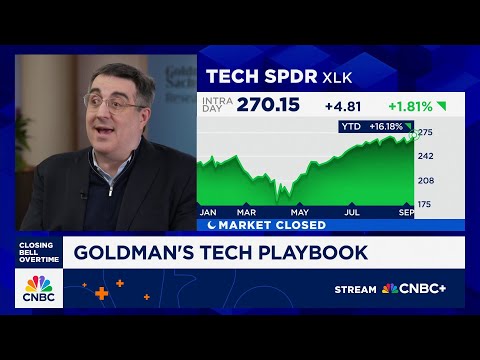
Everyone in the AI pipeline remains capacity constrained, says Goldman Sachs' Eric Sheridan
CNBC Television· 2025-09-10 21:06
AI Demand & Capacity - AI供应链中的每个参与者都面临产能限制,需求超过了供应能力 [3][4] - 对消费者和企业AI服务的需求持续存在,满足需求仍然是一个挑战 [6] - 许多首席财务官表示,在内部部署AI已带来实际的生产力提升 [6] Infrastructure & Beneficiaries - 目前仍处于AI基础设施建设阶段,基础设施提供商受益 [7][8] - 半导体行业和云计算公司(如谷歌云)是主要受益者 [8] - 谷歌云的积压订单可能在未来两年内转化为接近其当前收入两倍的收入 [8] Digital Advertising Disruption - AI可能对数字广告行业产生颠覆性影响,广告的创建、投放和衡量将更多地由AI系统完成 [10] - 利润池可能从传统广告系统转移到数字广告生态系统,规模高达3000亿美元 [11] - Meta等公司在收入增长方面看到了持续的势头 [11]