Cross - sell

Search documents
Helios Stock: Emerging Growth Catalysts and the Key Risks in 2026
ZACKS· 2026-03-20 16:40
Core Viewpoint - Helios Technologies, Inc. (HLIO) is focusing on internal growth strategies rather than relying on macroeconomic improvements, emphasizing new product launches and a stronger go-to-market approach [1][3] Growth Strategy - The company aims to increase the pace of new product launches and expand its commercial funnel to drive growth through its own initiatives [1][4] - Helios reported over $50 million in new commercial wins in 2025, with expectations for continued growth into 2026 [3][9] Market Dynamics - In cyclical industries, maintaining market share during demand fluctuations is crucial, and Helios is positioning itself to capitalize on this by enhancing its product and commercial execution [2][3] - The Electronics segment is projected to grow by 7% in 2026, outpacing the Hydraulics segment, which is expected to grow by 5% [6][9] Product and Market Focus - The company is prioritizing cross-selling to deepen customer relationships and increase share of wallet, with a focus on consistent wins across various markets [4][5] - The Health & Wellness market is a targeted initiative aimed at gaining market share in a low-growth category through effective product and channel execution [5] Operational Enhancements - Helios plans to increase capital spending in 2026 to support productivity and automation, which is expected to enhance growth and margin [11] - The company is also exploring new adjacencies, such as the aerospace market, to diversify growth opportunities beyond its core industrial cycles [8][10] Risks and Challenges - Tariff costs are anticipated to remain a challenge, with higher costs expected in early 2026 due to previous ramp timing [13] - The company faces execution risks, particularly in the second half of 2026, where delays in customer approvals or product launches could impact revenue [14][15]



JPMorgan Bets on Branches: How Will This Translate to Revenue Growth?
ZACKS· 2026-02-20 15:51
Core Viewpoint - JPMorgan is focusing on physical distribution as a growth strategy in the digital era, planning to open over 160 new branches in 2026 and renovate hundreds of existing locations, alongside hiring approximately 1,100 new staff [1][8]. Group 1: Expansion Strategy - The bank aims to expand its wallet share in underpenetrated markets, with new branches serving as key points for acquiring primary checking relationships and retail deposits, which are essential for balance sheet growth and recurring net interest income (NII) [2][8]. - JPMorgan's branch expansion targets fast-growing regions where competitors have reduced their presence, allowing the bank to establish early relationships and scale over time, potentially evolving new sites into full-service advisory hubs [4]. Group 2: Cross-Selling Opportunities - JPMorgan's branches will facilitate the distribution of higher-fee products, enhancing the adoption of credit cards, mortgages, small-business services, and wealth management offerings, thereby diversifying revenue streams beyond NII [3][8]. - The bank's strategy includes leveraging in-person interactions to boost cross-selling potential, which is crucial for maintaining low customer churn [3]. Group 3: Competitive Landscape - Competitors like Bank of America and Citigroup are also enhancing their cross-sell opportunities, with Bank of America linking loyalty programs to checking accounts and Citigroup integrating its retail banking with wealth management services [5][6]. Group 4: Financial Performance and Estimates - JPMorgan's shares have appreciated by 16.6% over the past six months, and the Zacks Consensus Estimate indicates a 5.5% rise in earnings for 2026 and a 7.6% increase for 2027, with recent upward adjustments in earnings estimates [7][11]. - The bank currently trades at a price-to-tangible book (P/TB) ratio of 3.04X, which is below the industry average [9].


Fastly (NYSE:FSLY) Conference Transcript
2025-12-08 14:42
Summary of Fastly's Q3 Earnings Call Company Overview - **Company**: Fastly - **Industry**: Network Services and Security Solutions Key Highlights - **Q3 Performance**: Fastly reported $158 million in revenue, reflecting a 15% year-over-year growth, marking the third consecutive quarter of re-accelerating growth [2][5] - **Profitability**: Achieved record profitability and free cash flow, with guidance indicating a positive free cash flow for the year [2][5] - **Management Changes**: Rich Wrong, the new CFO, emphasized the importance of execution and leveraging Fastly's strong product offerings to increase market share [3] Revenue Breakdown - **Network Services**: Constituted 75% of Fastly's business, with strong traffic growth anticipated for Q4 [5] - **Security Segment**: Grew by 30% year-over-year, driven by successful cross-selling initiatives [5][6] Cross-Sell Strategy - **Cross-Selling Success**: The company has expanded its security product offerings from one to five products over the past 18 months, enhancing cross-sell opportunities [10][16] - **Customer Engagement**: A significant contract was signed with a top 10 customer, contributing to a $5 million quarter-over-quarter increase in security revenue [10][11] Operational Changes - **Management Focus**: The management team, led by CEO Kip Compton, is focused on improving decision-making speed and clarity, enhancing accountability through key metrics, and fostering a culture of transparency [24][25] - **Employee Empowerment**: Initiatives to educate employees on metrics and their impact on company performance have been implemented, leading to increased ownership and motivation [26][30] Market Dynamics - **Traffic Growth**: Fastly is experiencing a traffic growth rate of 25% to 30% year-over-year, attributed to the increasing complexity of internet usage and successful customer acquisition strategies [33][34] - **Pricing Environment**: The pricing environment is described as rational, with the company moving past previous headwinds caused by competitors' irrational pricing strategies [34][42] Capital Structure and Financial Outlook - **Debt Management**: Fastly has $343 million in cash and $338 million in debt, with plans to refinance a convertible note due in March 2026 [43][44] - **Capital Expenditure**: The company plans to maintain capital expenditures at 10%-11% of revenues, with a focus on infrastructure spending [47][48] - **Free Cash Flow Guidance**: For 2025, Fastly expects to generate $25-35 million in free cash flow, with a goal of maintaining profitability and positive cash flow in the future [53][54] Future Growth Opportunities - **Market Penetration**: Fastly sees significant growth opportunities in the web application and API protection market, indicating that they are under-penetrated in this space [21] - **Product Development**: Future product enhancements will focus on feature rollouts rather than new product categories, particularly in the security segment [17][18] Conclusion Fastly is positioned for continued growth with a strong focus on execution, cross-selling, and operational improvements. The company is optimistic about its market opportunities and financial health, aiming to leverage its product suite and management strategies to enhance profitability and cash flow in the coming years.

Tyler Technologies (NYSE:TYL) FY Conference Transcript
2025-11-18 22:32
Tyler Technologies (NYSE: TYL) FY Conference Summary Company Overview - **Company**: Tyler Technologies - **Industry**: Public Sector Software Solutions - **Conference Date**: November 18, 2025 Key Points Company Performance and Growth - Tyler Technologies is on track or ahead of its 2030 targets, with higher growth in the transaction business and significantly higher cash flow margins than planned for 2025 [5][7] - The company has achieved over 85% recurring revenues from SaaS, maintenance, and transactions, providing a stable growth base [11] - The transition from on-premise to cloud services is progressing, with expectations that 80% of on-prem customers will migrate to the cloud by 2030 [34][39] Market Dynamics - The public sector market is characterized by slow growth and long sales cycles, but Tyler has good long-term visibility due to the necessity of replacing outdated systems [9][10] - Despite some initial uncertainty in the market due to external factors, demand for Tyler's services remained stable [12][14] Technology and AI Integration - AI was not a focus in 2023, but the company plans to integrate AI into its products and internal processes moving forward [6][7] - The shift towards cloud services is expected to enhance operational efficiency and margins, with a target of achieving a 30% operating margin by 2030 [7][44] Financial Outlook - Tyler anticipates around 20% SaaS revenue growth for the next year, driven by existing bookings and pricing increases [26][30] - The company expects to generate $1 billion in free cash flow by 2030 [7][68] Transaction Revenue Growth - The acquisition of NIC in 2021 has opened up cross-sell opportunities, particularly in the state government market, and has enhanced transaction revenue growth [50][53] - Transaction revenues are projected to grow at a CAGR of 10-13% through 2030, with early successes in integrating payment solutions into existing software products [53] M&A Strategy - Tyler Technologies is open to pursuing M&A opportunities, particularly in the GovTech space, with a focus on strategic fit and cultural alignment [61][63] - The company has a strong track record in acquisitions and plans to be more active in the coming years, especially as it has reduced its debt and has significant cash reserves [61][66] Future Outlook - In three years, Tyler expects to be well along in its cloud transition, with clearer insights into AI's impact on revenues and cost efficiencies, aiming to approach a $4 billion valuation with $1 billion in free cash flow [67][68] Additional Insights - The company is focusing on improving operational efficiencies through technology, addressing staffing shortages in government sectors, and enhancing customer experiences with cloud solutions [15][17][39] - Tyler's hybrid model of payment processing allows for flexibility and has driven higher-than-expected transaction growth [55][59]

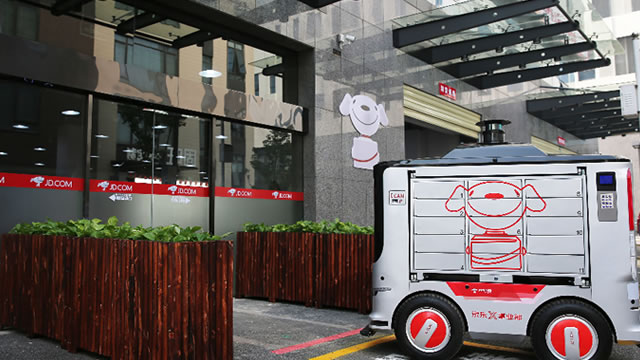
JD.com's Food Delivery Isn't A Side Bet — It's Converting Users At Nearly 50%
Benzinga· 2025-11-13 18:18
Core Insights - JD.com has shifted its narrative from being solely a logistics powerhouse to a significant player in the food delivery market, achieving nearly 50% conversion of new users into active retail users [1][5]. Group 1: Business Performance - JD's food delivery business has shown double-digit GMV growth quarter over quarter, indicating strong performance despite intensified competition [3]. - The average order price has increased, and the order mix has improved, suggesting a healthier business model [3][4]. - The platform's daily active users (DAUs) have grown at industry-leading rates, with shopping frequency up over 40% year on year, enhancing user engagement [4]. Group 2: User Acquisition and Retention - The conversion rate for the earliest group of food delivery users reached close to 50% in Q3, showcasing an unmatched cross-sell rate in China's e-commerce landscape [5]. - Retention rates for food delivery users are relatively high, contributing positively to overall user engagement [5]. Group 3: Financial Health - JD has narrowed its food delivery losses in Q3, indicating improved unit economics and more targeted subsidies [6]. - The food delivery initiative is viewed as a user-acquisition strategy with a high return on investment (ROI), potentially becoming a new growth engine for various categories [7].

Shift4 Payments(FOUR) - 2025 Q3 - Earnings Call Transcript
2025-11-06 14:30
Financial Data and Key Metrics Changes - Gross revenue less network fees reached $589 million, up 61% year over year, while adjusted EBITDA was $292 million, reflecting a 56% increase [3][14] - Excluding the impact of Global Blue, gross revenue less network fees grew 19% year over year, with organic growth at 18% [4][15] - Adjusted free cash flow was a record $141 million, with a conversion rate of 48% [18] Business Line Data and Key Metrics Changes - Subscription and other revenue was $119 million in Q3, up 16% compared to the same period last year, driven by market-leading vertical software solutions [15] - Blended spreads on payment volume remained stable at 62 basis points, with expectations for full-year spreads to exceed 60 basis points [14][15] Market Data and Key Metrics Changes - In Asia, same-store sales were negative 11% in Q3 but showed recovery in October [5] - Global Blue contributed $156 million to gross revenue less network fees and $68 million to EBITDA, despite headwinds in the Asia-Pacific market [17] Company Strategy and Development Direction - The company aims for 30% plus gross revenue less network fee growth over the medium term, supported by attractive capital allocation opportunities [4] - The acquisition of Bambora, a $90 billion payment gateway, is expected to enhance customer acquisition and product capabilities [12][37] - The company is focused on deleting non-core business lines and enhancing revenue quality through strategic divestitures [11][15] Management's Comments on Operating Environment and Future Outlook - Management noted volatility in same-store sales, particularly in the restaurant and hospitality sectors, but emphasized the company's diversified and scaled operations [5][6] - The competitive landscape remains unchanged, with the company holding leading positions in various verticals [6][7] - Management expressed optimism about the potential of AI applications to enhance operational leverage and decision-making [17] Other Important Information - The board authorized a new $1 billion stock repurchase program, the largest in the company's history, to take advantage of current valuation levels [13][20] - The company reaffirmed its full-year 2025 guidance, expecting volume to range from $207 billion to $210 billion, representing 26%-27% year-over-year growth [22][23] Q&A Session Summary Question: What are the implications of Jared getting nominated to NASA? - Management indicated that it could simplify the company's structure and share class, with Jared remaining the largest shareholder [30] Question: Can you provide more context around the $90 billion gateway opportunity with Bambora? - Management highlighted the potential for revenue synergies and the importance of converting existing customers to a consolidated payment solution [33][36] Question: How does the company view organic growth moving forward? - Management confirmed that the 18% organic growth excludes acquisition impacts and aligns with medium-term guidance [41][80] Question: What is the company's philosophy on guidance? - Management emphasized a cautious approach to guidance, reflecting the current macroeconomic environment and industry volatility [51][56] Question: How does the company plan to utilize the new share buyback authorization? - Management stated that the current valuation presents an attractive opportunity for share repurchases without compromising other investment priorities [67][70]

Lesaka(LSAK) - 2025 Q4 - Earnings Call Transcript
2025-09-11 13:02
Financial Performance - Lesaka Technologies reported net revenue of R5.3 billion and EBITDA of R922 million for FY 2025, with adjusted earnings increasing from R51 million to R186 million, resulting in adjusted earnings per share growing from R0.80 to R2.29 [3][4] - The company refinanced its debt, leading to an increase in gross debt to fund acquisitions, with net debt to adjusted EBITDA ratio increasing to 2.9 times, although annualizing Q4 adjusted EBITDA results in a leverage ratio of 2.2 times [3][11] - Q4 net revenue was R1.5 billion, up 47% year on year, with group adjusted EBITDA of R306 million, reflecting a 61% increase [10][12] Business Line Performance - The Merchant business achieved net revenue of R3 billion, up 46% year on year, and EBITDA of R657 million, up 20% year on year, driven partly by acquisitions [5][37] - The Consumer business saw net revenue grow by 35% to R1.7 billion and EBITDA increase by 83% to R435 million, reflecting strong performance in cross-selling initiatives [5][51] - The Enterprise business reported a decline in net revenue by 9% to R651 million and EBITDA decreased from R55 million to R24 million due to restructuring and closure of non-core units [6][58] Market Performance - The Merchant division expanded its footprint to 84,541 points of presence, up from 51,880 a year ago, with throughput reaching R35.5 billion, reflecting a 15% year-on-year growth [31][32] - The Consumer division increased its market share from 9.1% to 13.6%, with a notable migration of customers from Postbank [45][49] - The Enterprise division is expected to contribute more significantly to total segment adjusted EBITDA in FY 2026, with a focus on channel expansion and technology updates [59] Company Strategy and Industry Competition - Lesaka aims to build an integrated, multi-product platform for merchants, focusing on cross-selling and bundling services to enhance customer relationships [22][30] - The company is consolidating its brands under a single identity to streamline operations and improve market strategy [26][64] - The acquisition of BankZero is anticipated to enhance Lesaka's product offerings, allowing for banking services tailored to small-to-medium merchants [60][62] Management Commentary on Operating Environment and Future Outlook - Management expressed confidence in the company's growth trajectory, emphasizing the importance of strategic acquisitions and operational efficiencies [8][60] - The focus remains on sustainable growth, capital discipline, and enhancing shareholder value, with expectations for continued strong performance in the Consumer and Merchant divisions [21][40] - The company is optimistic about the integration of BankZero and its potential to reduce costs and expand product offerings [60][63] Other Important Information - Lesaka's adjusted earnings per share grew by 211% to R0.99 in Q4, reflecting strong underlying business performance [17] - The company incurred significant non-cash charges related to goodwill impairments and transaction costs, which impacted the overall net loss position [14][16] - Operating cash flow increased to R370 million in Q4, indicating strong cash generation capabilities [17][18] Q&A Session Summary Question: What are the expectations for the Merchant division's growth? - Management highlighted the focus on bolstering unit economics and extracting efficiencies from the Merchant platform, with an expectation of continued growth driven by cross-selling initiatives [37] Question: How is the integration of BankZero expected to impact the business? - The integration is anticipated to enhance product offerings, reduce costs, and provide banking services to the merchant base, thereby increasing competitiveness [60][62]

Tyler Technologies (NYSE:TYL) 2025 Conference Transcript
2025-09-10 18:52
Summary of Tyler Technologies Conference Call Company Overview - **Company**: Tyler Technologies (NYSE: TYL) - **Industry**: Software solutions for state and local government Core Competencies and Market Position - Tyler Technologies has been focused on the state and local government market, which is characterized as slow-moving and conservative, requiring a long-term view in decision-making [5][6] - The company emphasizes building long-term customer relationships, often accepting initial losses on implementations for future value [6] Future Outlook and Technology Adoption - There is a growing demand for technology in local government due to workforce challenges, leading to opportunities for AI integration [8][9] - The company anticipates that labor shortages will drive behavioral changes in government operations, which have historically been resistant to change [9] Market Dynamics and Procurement Processes - Initial anxiety in the marketplace regarding federal government actions caused delays in procurement processes, but these effects are now considered temporary [11][12] - Local governments are expected to adopt technology incrementally rather than making speculative bets, often looking to the private sector for innovation [14][15] AI and Customer Engagement - Tyler Technologies is cautious about rushing AI features to market without clear ROI, focusing on practical applications like automating data entry from court documents [16][17] - The company aims to repurpose existing staff to higher-value tasks rather than laying them off, leveraging AI for routine work [17] Cloud Transition and Customer Experience - The company is actively transitioning its software to the cloud, with varying timelines for different customer segments [20][21] - Tyler Technologies has reduced its software version footprint to improve consistency and customer experience [25][26] - The partnership with Amazon Web Services (AWS) is highlighted as a key factor in facilitating cloud migration and scalability [27] Payments Strategy - Tyler Technologies aims to differentiate its payments business from commoditized providers, focusing on value-added services that enhance customer retention [34][35] - The company is moving away from low-margin payment services acquired through NIC, targeting higher-value transactions [35] Cross-Selling and Customer Relationships - The company seeks to increase the average number of products per customer from 2-3 to 8-10, leveraging existing relationships to cross-sell complementary products [41][50] - A "no wrong door" philosophy is being implemented to improve customer experience across different service areas [52] M&A Strategy and Cultural Integration - Tyler Technologies emphasizes the importance of cultural fit in acquisitions, focusing on companies that align with its values and customer service approach [68][69] Competitive Landscape - The slow-moving nature of the government software market acts as a barrier to entry for new competitors, with Tyler's established customer base and low churn rate (1.5%-2%) providing a competitive advantage [74][75] Key Metrics and Performance Tracking - The company tracks metrics such as products per customer and annual recurring revenue (ARR) to gauge success and customer engagement [66] This summary encapsulates the key points discussed during the Tyler Technologies conference call, highlighting the company's strategic focus, market dynamics, and future opportunities in the government software sector.
Tyler Technologies (TYL) FY Conference Transcript
2025-08-13 19:57
Summary of Tyler Technologies (TYL) FY Conference Call - August 13, 2025 Company Overview - **Company**: Tyler Technologies (TYL) - **Industry**: Software solutions for government agencies Key Points and Arguments Macro Environment and Impact - In Q1, there was significant market noise related to federal spending and its trickle-down effects on state and local governments, causing delays in processes and bookings [4][5] - Only about 5% of Tyler's business is directly with the federal government, indicating limited direct impact from federal spending changes [5] - By Q2, it was clear that the impacts observed in Q1 were mostly temporary, with clients indicating minimal effect on their spending with Tyler [5][6] Government Efficiency and Technology Adoption - Increased focus on government efficiency is expected to drive demand for Tyler's technology solutions, as governments seek to replace outdated systems [6] - Sequential growth in bookings was observed in Q2, with many deals that were paused in Q1 moving forward [6] Booking Dynamics - Bookings are influenced by new SaaS customers, renewals, and expansions, with a noted uplift in revenue from customers migrating from on-premise to cloud solutions [13][14] - The company anticipates a good year for bookings, although not as strong as the previous year, with a target of around 20% SaaS growth through 2025 [18][19] Cloud Migration and Customer Base - A significant portion of Tyler's customer base remains on-premise, particularly larger customers, but there is a strong expectation for migration to the cloud [20][21] - The peak of cloud migrations is expected around 2027-2028, driven by larger customers [22] - Approximately 80-85% of the on-premise customer base is expected to migrate to the cloud by 2030 [22] New Business Opportunities - Over 60% of government systems are still legacy systems, presenting a steady replacement market for Tyler [29] - The company sees potential for accelerated system replacements as governments seek efficiency gains [31] Cross-Selling and Payments Growth - Cross-selling opportunities are significant, with the average customer using 2-3 Tyler products, and the potential for 8-10 products [32] - Transaction growth in payments has exceeded expectations, driven by higher volumes and new customer acquisitions [35][36] Operating Leverage and Profitability - Tyler aims for a 30%+ operating margin by 2030, with improvements expected primarily from gross margins [50][51] - AI is anticipated to enhance internal efficiencies and revenue growth, contributing to future margin improvements [51] Capital Allocation and M&A Strategy - The company has shifted focus from debt repayment to potential M&A opportunities, with plans to become more active in acquisitions [56][57] - Opportunistic buybacks are also expected to rise in priority following debt repayment [57] Additional Important Insights - The company is implementing a strategy where new features will only be available in the cloud version, incentivizing customers to migrate [23][24] - Cybersecurity concerns, such as ransomware, are motivating customers to move to cloud solutions for enhanced security [25] - The hybrid revenue model, where some software solutions are paid for through transaction fees, is becoming more common, providing flexibility for customers [42][46] This summary encapsulates the key insights from the Tyler Technologies conference call, highlighting the company's strategic direction, market dynamics, and growth opportunities.
Is StoneCo's 2027 TPV Target Achievable Amid Rising Competition?
ZACKS· 2025-07-21 16:51
Core Insights - StoneCo Ltd. is strategically focusing on the micro, small, and medium business (MSMB) segment in Brazil's digital payments landscape, reporting a 17% year-over-year growth in MSMB total payment volume (TPV) to R$119.5 billion in Q1 2025 [1][7] - The company’s bundling strategy has led to a significant increase in heavy users, rising to 38% from 26% year-over-year, indicating strong cross-sell momentum [2][7] - StoneCo projects a continued growth trajectory with MSMB TPV expected to exceed R$670 billion by 2027, reflecting a 14% compound annual growth rate (CAGR) [3][7] Company Performance - StoneCo's active MSMB client base increased by 17% year-over-year to 4.3 million, demonstrating robust traction despite macroeconomic challenges [1][7] - The company has seen a 95% year-over-year growth in PIX transactions, which are replacing traditional debit transactions and enhancing client deposits [2] - StoneCo's shares have surged 71.5% year-to-date, outperforming the broader industry and the S&P 500 Index [6] Peer Comparison - PagSeguro Digital Ltd. reported an 11.2% year-over-year increase in MSMB TPV to R$95.2 billion, with MSMB segment accounting for 74% of its total TPV in Q1 2025 [4] - MercadoLibre, Inc. achieved a total payment volume of $58.3 billion, up 43% year-over-year, with significant growth in active fintech users [5] Financial Estimates - The Zacks Consensus Estimate for StoneCo's 2025 EPS suggests a 10.37% growth year-over-year, while the 2026 estimate indicates a 16.11% increase [8] - StoneCo's current forward 12-month P/E ratio is 8.42X, significantly below the industry average of 40.18X, indicating a potentially undervalued stock [10]