Economic moat

Search documents
3 Core Stocks to Scale Back On
Youtube· 2026-03-24 15:15
Hi, I'm Susan Jabinsky, co-host of the Morning Filter podcast. Now, on a recent episode, Morning Stars chief US market strategist Dave Sakara talked about how to know when it's time to take profits on a core holding. Dave said that when a core holding moves too far into overvalued territory, especially if it's becoming an overweight position in your portfolio, well, that's when it may be time to take some profits.With that in mind, today we're highlighting three core stocks that look overvalued. According t ...



3 of the Most Important Questions to Ask Before Buying a Stock
Yahoo Finance· 2026-03-23 11:35
Investors should be familiar with the fact that the stock market is arguably the best means of building significant wealth. It won't happen overnight, and it requires patience and discipline. But the rewards are worth it. In the past decade, the S&P 500 index generated a total return of 283% (as of March 19). There are many companies, Amazon (NASDAQ: AMZN) being a great example, that have performed even better. So you might be interested in learning how to filter the sea of potential opportunities into a ...

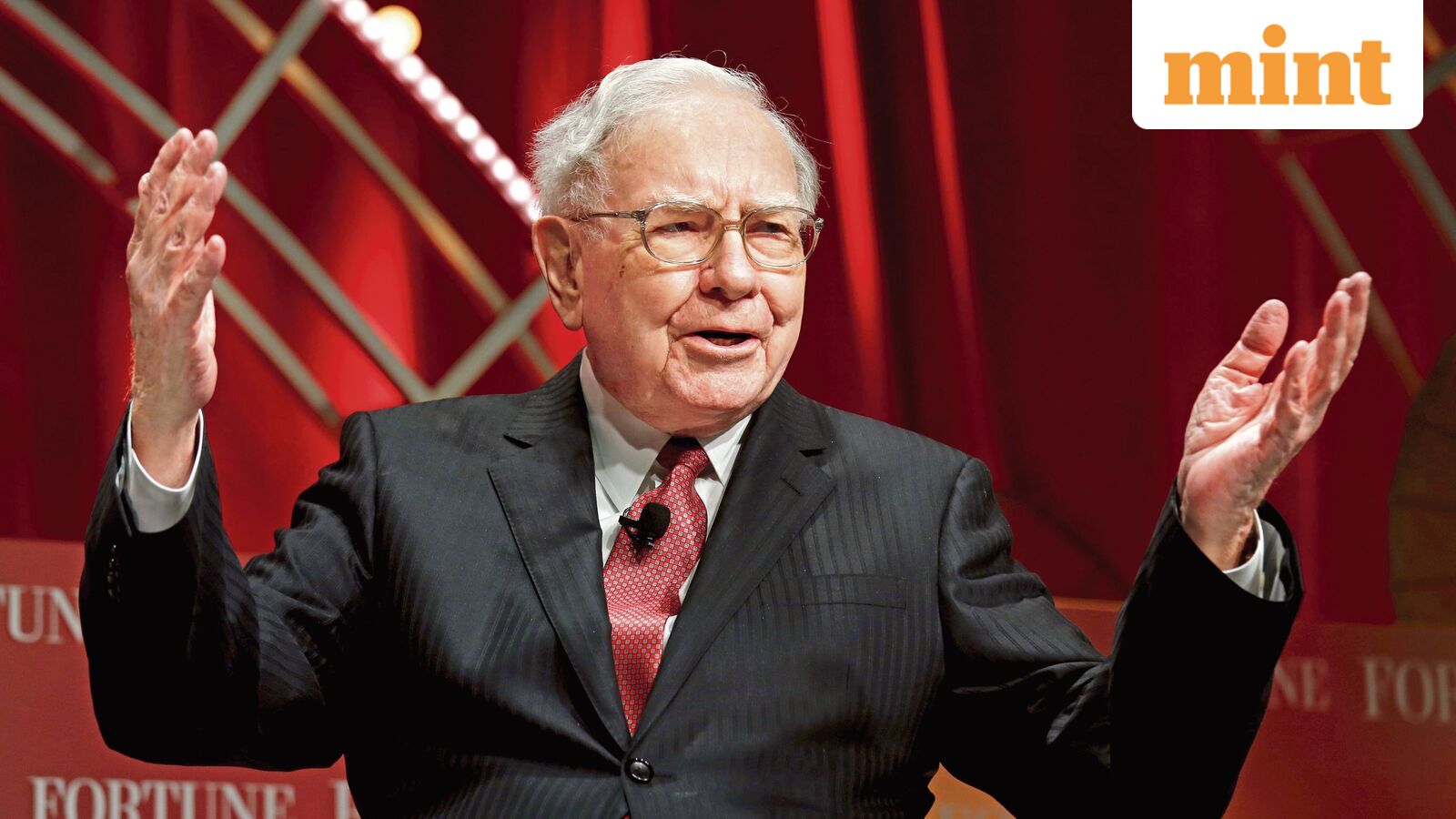
Quote of the Day by Warren Buffet: ‘Bad news is an investor’s best friend. It lets you…’
MINT· 2026-03-10 10:18
Core Insights - Warren Buffett emphasizes the importance of simplicity in investment strategies, weighing pros and cons, and holding onto stocks for long-term benefits rather than selling at the first price spike [1] Investment Philosophy - Buffett's quote "Bad news is an investor's best friend" suggests that market downturns provide opportunities to buy stocks at lower prices, making them more accessible [2] - He believes that confidence in a company's fundamentals allows investors to take advantage of market crashes to acquire shares that would otherwise be too expensive [3] - Buffett advises seizing rare big opportunities in life, stating that failing to act on significant chances is a major mistake [4] Company Analysis - Buffett recommends investing in companies with an "economic moat," indicating a strong competitive advantage and long-term growth prospects [5] - He encourages ignoring market noise and making objective decisions, asserting that good companies will continue to thrive regardless of market fluctuations [6] Background on Warren Buffett - Warren Buffett, known as the 'Oracle of Omaha,' transformed Berkshire Hathaway from a failing textile company into a $1.2 trillion empire over nearly 60 years, achieving over 55,000% returns [8] - Buffett's investment strategy has led to significant holdings in companies like Apple, Bank of America, and Coca-Cola, which now represent 70% of Berkshire's $263 billion stock portfolio [9]
Invest Like Warren Buffett with These ETFs
247Wallst· 2026-03-06 13:39
Core Insights - Warren Buffett, at 95 years old, has a net worth of approximately $142.1 billion, attributed to investments in companies with a wide economic moat, dividends, proven earnings, and simplicity in understanding [1] Group 1: Investment Strategies - Buffett recommends investing in low-cost S&P 500 index funds, specifically highlighting the Vanguard S&P 500 ETF (VOO) as a viable option [2] - The VOO ETF tracks the performance of the S&P 500, including both value and growth stocks from various sectors, featuring major companies like Nvidia, Microsoft, Apple, Amazon, Alphabet, and Berkshire [3] - The VOO ETF has an expense ratio of 0.03% and offers a quarterly yield, with recent dividends of $1.771 on December 24, $1.74 on October 1, and $1.7447 on July 2 [4] Group 2: ETFs with Economic Moat - The VanEck Morningstar Wide Moat ETF (MOAT) focuses on companies with sustainable competitive advantages, including Estee Lauder, Teradyne, Boring, Alphabet, Nike, and NXP Semiconductors, with an expense ratio of 0.47% [5] - The MOAT ETF yields 1.29% and pays annual dividends, with recent payouts of $1.2675 on December 24 and $0.7285 on December 22, 2023 [6] Group 3: Berkshire Hathaway Exposure - The VistaShares Target 15 Berkshire Select Income ETF (OMAH) has an expense ratio of 0.95% and mirrors the 20 largest holdings of Berkshire Hathaway while generating monthly income [7] - Key holdings include Berkshire Hathaway, Apple, American Express, Bank of America, and Chevron, with a yield of 0.79% and recent monthly dividends of just over 23 cents [8] Group 4: High-Yield Dividend Stocks - The Schwab US Dividend Equity ETF (SCHD) tracks 100 high-yielding dividend stocks, with an expense ratio of 0.06% and a yield of 3.37%, significantly higher than the S&P 500's dividend yield [11][12] - Recent dividends include just over 27 cents on December 15, 26 cents on September 29, and 26 cents on June 30, with the ETF's price increasing from about $27.50 to $31.65 since January [12][13] Group 5: Large Cap Value Stocks - The Schwab U.S. Large Cap Value ETF (SCHV) has an expense ratio of 0.04% and a yield of 1.93%, holding large-cap value stocks such as Berkshire Hathaway, Johnson & Johnson, and Exxon Mobil [14] - Recent dividends include just over 16 cents on December 10, 14 cents on September 29, and 14 cents on June 30, with the ETF's price rising from about $29.50 to $32 since January [15]

Microsoft: It Is Just A Dip, Not A Bargain (NASDAQ:MSFT)
Seeking Alpha· 2026-02-05 05:41
Core Viewpoint - The analysis indicates a shift towards greater risk for Microsoft Corporation (MSFT) and other major tech stocks, suggesting a potential decline in their market performance over the long term [1]. Group 1: Company Analysis - The focus is on high-quality companies that possess a competitive advantage (economic moat) and high levels of defensibility, which are expected to outperform the market in the long run [1]. - The analysis includes companies from both European and North American markets, without restrictions on market capitalization, covering a range from large-cap to small-cap companies [1]. Group 2: Analyst Background - The analyst has a Master's Degree in Sociology with a focus on organizational and economic sociology, and a Bachelor's Degree in Sociology and History, providing a strong academic foundation for the analysis [1].


3 Things Every American Express Investor Needs to Know
Yahoo Finance· 2026-02-04 20:50
Core Insights - American Express reported a 10% year-over-year increase in revenue and a 13% rise in net income for Q4 2025, indicating positive financial trends [1] Group 1: Brand and Network Effect - Berkshire Hathaway holds 22% of American Express shares, reflecting the company's strong economic moat [2] - American Express offers premium credit cards that attract affluent customers who value excellent service and rewards [3] - The company operates a robust transaction processing infrastructure with 153 million active cards and 160 million merchant locations, creating a powerful network effect [4] - The competitive position of American Express is expected to remain strong due to its high-quality business model [5] Group 2: Revenue Composition - In Q4, American Express generated $9.9 billion from merchants, accounting for about half of its revenue, and collected $2.6 billion from membership fees [6] - Only 24% of sales came from net interest income, reducing credit risk and cyclicality compared to industry peers [6] - The company's ability to attract higher-income customers supports a spend-centric model, with average card member spending exceeding $25,000 in 2025 [7] Group 3: Stock Performance and Valuation - American Express shares have delivered a total return of 641% over the past 10 years, driven by strong financial performance [8]

Meet the "Magnificent Seven" Stock Berkshire Hathaway and Investing Legend Warren Buffett Should Have Bought. (Hint: It's Not Apple, Amazon, or Alphabet.)
Yahoo Finance· 2026-02-04 17:05
Core Insights - Warren Buffett's investment strategy focuses on acquiring businesses with economic moats, which provide durable competitive advantages [1] - The tech sector has become a significant area of investment for Buffett, with notable acquisitions including Apple, Amazon, and Alphabet [2][4] - Meta Platforms, despite its strong performance, was not included in Buffett's portfolio, which raises questions about his investment criteria [5][6] Group 1: Investment Philosophy - Buffett's approach emphasizes understanding a company's products, financials, industry landscape, and management before investing [6] - The concept of economic moats is central to Buffett's investment decisions, allowing companies to maintain competitive advantages over time [1] Group 2: Tech Sector Investments - Apple shares have increased by 966% over the past decade, while Amazon shares rose by 169% since Q1 2019, and Alphabet's stock grew by 39% since Q3 2025 [4] - These investments have proven successful, although the long-term impact of the Alphabet acquisition remains to be seen [4] Group 3: Meta Platforms Analysis - Meta Platforms has a significant economic moat, characterized by strong network effects from its social media applications [7] - The company reported 3.58 billion daily active users in Q4 2025, highlighting its vast user base and engagement potential [8] - Meta's ability to collect extensive data enhances its algorithmic capabilities, improving user engagement and advertising effectiveness [8]


UnitedHealth: All Risks Are Priced In
Seeking Alpha· 2026-01-30 03:50
Core Insights - The analysis focuses on high-quality companies that can outperform the market over the long term due to competitive advantages and high levels of defensibility [1] Group 1: Investment Focus - The focus is on European and North American companies, without constraints regarding market capitalization, ranging from large cap to small cap [1] Group 2: Analyst Background - The analyst has an academic background in sociology, holding a Master's Degree in Sociology with an emphasis on organizational and economic sociology, and a Bachelor's Degree in Sociology and History [1]


3 Reasons Why Warren Buffett Would've Loved Chipotle Stock
Yahoo Finance· 2026-01-29 17:25
Core Insights - Warren Buffett's capital allocation strategies at Berkshire Hathaway have resulted in a 20% compound annual return, highlighting the importance of his public equities portfolio management [1] Group 1: Economic Moat - Chipotle Mexican Grill has established a significant economic moat in the competitive restaurant industry, recognized for pioneering the fast casual concept in the U.S. [4] - The brand's popularity is evidenced by reaching 40 million rewards members by mid-2024, just five years after launching its loyalty program [4] Group 2: Customer Value Proposition - Chipotle's success is attributed to its strong customer value proposition, offering fresh ingredients at attractive price points, appealing to consumers seeking alternatives to fast food [6] - Recent menu innovations, such as protein cups and red chimichurri, demonstrate the company's commitment to catering to changing customer preferences [6] Group 3: Financial Performance - As of Q3 2025, Chipotle operated 3,916 company-owned stores, generating $3 billion in revenue for the quarter, which supports its strong financial position [8] - The scale of operations allows Chipotle to invest in marketing and technology, spreading costs over a larger sales base [8] Group 4: Growth Strategy - Chipotle has been expanding its store footprint by building new locations with drive-thrus, enhancing high-margin digital sales and improving customer accessibility [7] - The CEO emphasized that the company's value proposition has never been stronger, indicating confidence in future growth [7]

MSCI: Simply A Solid Investment (NYSE:MSCI)
Seeking Alpha· 2026-01-28 19:46
Core Viewpoint - The analysis indicates an improved outlook for MSCI Inc. after a previously bearish stance, focusing on high-quality companies with competitive advantages and defensibility in the market [1]. Group 1: Company Analysis - MSCI Inc. is highlighted as a company that can outperform the market over the long term due to its economic moat and high levels of defensibility [1]. - The analysis emphasizes a focus on both European and North American companies, without constraints on market capitalization, ranging from large cap to small cap [1]. Group 2: Analyst Background - The analyst has a Master's Degree in Sociology with a focus on organizational and economic sociology, and a Bachelor's Degree in Sociology and History, providing a strong academic foundation for the analysis [1].