Engram模块

Search documents
DeepSeek新模型曝光?“MODEL1”现身开源社区
Shang Hai Zheng Quan Bao· 2026-01-21 21:31
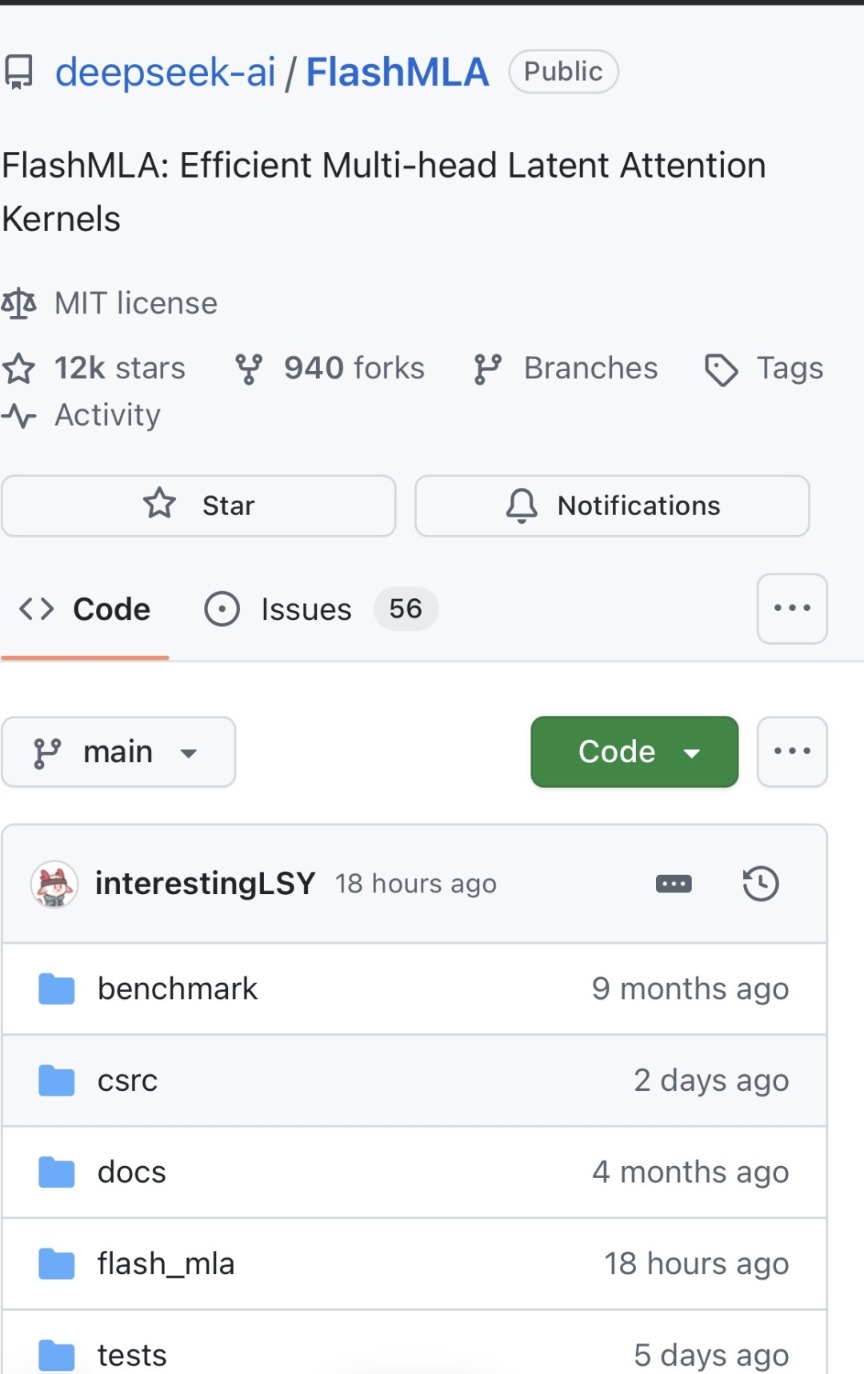
Core Insights - DeepSeek has updated its FlashMLA code on GitHub, revealing the previously undisclosed "MODEL1" identifier, which may indicate a new model distinct from the existing "V32" [3][4] - The company plans to launch an "open source week" in February 2025, gradually releasing five codebases, with Flash MLA being the first project [4] - Flash MLA optimizes memory access and computation processes on Hopper GPUs, significantly enhancing the efficiency of variable-length sequence processing, particularly for large language model inference tasks [4] Company Developments - DeepSeek's upcoming AI model, DeepSeek V4, is expected to be released around the Lunar New Year in February 2025, although the timeline may vary [4] - The V4 model is an iteration of the V3 model released in December 2024, boasting advanced programming capabilities that surpass current leading models like Anthropic's Claude and OpenAI's GPT series [5] - Since January 2026, DeepSeek has published two technical papers introducing a new training method called "optimized residual connections (mHC)" and a biologically inspired "AI memory module (Engram)" [5] Industry Context - The introduction of the Engram module aims to improve knowledge retrieval and general reasoning, addressing inefficiencies in the Transformer architecture [5] - The support from Liang Wenfeng's private equity firm, which has achieved a 56.55% average return in 2025, has bolstered DeepSeek's research and development efforts [5]


砸完你的 砸你的
Datayes· 2026-01-21 10:54
Core Viewpoint - The article discusses the recent performance of the A-share market, highlighting significant gains in technology stocks, particularly in the semiconductor sector, driven by supply shortages and price increases in CPUs and memory chips [1][18]. Group 1: Market Performance - On January 21, the three major indices in the A-share market collectively rose, with the Shanghai Composite Index increasing by 0.08%, the Shenzhen Component Index by 0.70%, and the ChiNext Index by 0.53% [18]. - The total trading volume across the three markets was 26,240 billion, a decrease of 1,804.27 billion from the previous day, with over 300 stocks rising [18]. - A total of 91 stocks hit the daily limit up, with the maximum consecutive limit up reaching 16 [18]. Group 2: Semiconductor Sector - The semiconductor sector saw a significant rebound, with domestic chip stocks surging. Notably, Longxin Technology hit the daily limit up, and several other stocks like Yingfang Micro and Tongfu Microelectronics also reached their daily limits [18]. - The increase in stock prices is attributed to a shortage in memory chips, with U.S. companies like Micron, Seagate, and SanDisk hitting record highs [18]. - Intel and AMD are expected to raise server CPU prices by 10%-15% in 2026, further driving interest in the semiconductor supply chain [2][18]. Group 3: CPU Demand and AI Impact - The demand for CPUs is projected to increase significantly due to the rise of AI agents, with estimates suggesting a need for up to 1,760,899 CPUs in optimistic scenarios for 2024, compared to a global shipment of 3,200 million CPUs [3]. - The article emphasizes that CPUs may become a bottleneck before GPUs in AI applications, as they are crucial for generating and evaluating tasks in reinforcement learning [11]. - A new paradigm proposed in the DeepSeek paper highlights the importance of CPU memory in handling large parameters, suggesting a shift in how AI models are structured [11][12]. Group 4: Material Costs and Industry Outlook - Japanese semiconductor material manufacturer Resonac announced a price increase of over 30% for PCB materials starting March 1, which could impact the overall cost structure in the semiconductor industry [12]. - Goldman Sachs projects a compound annual growth rate of 34% for optical modules from 2026 to 2028, with expected shipments reaching 94 million units by 2028, indicating a positive outlook for the optical communication sector [18].