GLP - 1类代谢药物

Search documents
巨头卷向“三重靶点”减重药,国内价格战即将打响
Di Yi Cai Jing· 2025-12-12 09:38
Core Insights - Eli Lilly's new GLP-1 weight loss drug retatrutide has shown a nearly 29% weight reduction in patients during late-stage clinical trials, along with additional benefits in alleviating knee pain [1][2] - The competitive landscape for next-generation weight loss drugs is intensifying, with major pharmaceutical companies like Pfizer also making significant moves in the market [1][3] Group 1: Eli Lilly's Developments - Eli Lilly's retatrutide targets three mechanisms: GLP-1, GIP, and glucagon, which may enhance weight loss efficacy by suppressing appetite, controlling blood sugar, and increasing calorie expenditure [2] - The company has submitted an oral weight loss drug for FDA approval, expected to launch next year, intensifying competition with Novo Nordisk [2] Group 2: Market Dynamics - The inclusion of Eli Lilly's tirzepatide in the medical insurance system starting January 1, 2026, is anticipated to reshape the market dynamics for GLP-1 drugs [5][6] - Novo Nordisk's core patent for semaglutide in China is set to expire in March 2026, which could lead to increased competition and price reductions in the market [5][6] Group 3: Pfizer's Strategic Moves - Pfizer has entered a global exclusive collaboration with Shanghai Fosun Pharmaceutical to develop a GLP-1 drug currently in Phase I clinical trials, with a deal worth over $2 billion [3][4] - The company aims to enhance its pipeline in obesity treatment, which is a strategic focus for future growth [4] Group 4: Industry Trends - The market is expected to see a significant increase in the supply of GLP-1 drugs, surpassing previous trends seen with PD-1 targeted therapies, leading to a potential price war by 2026 [7] - As of August this year, there are 52 GLP-1 receptor agonist candidates in clinical development for diabetes treatment in China, with 53 candidates for obesity treatment also in development [7]

每月花3000元买长寿:“口服衰老抑制剂”瑞拓龄走红,是科学还是生意?
3 6 Ke· 2025-10-23 12:14
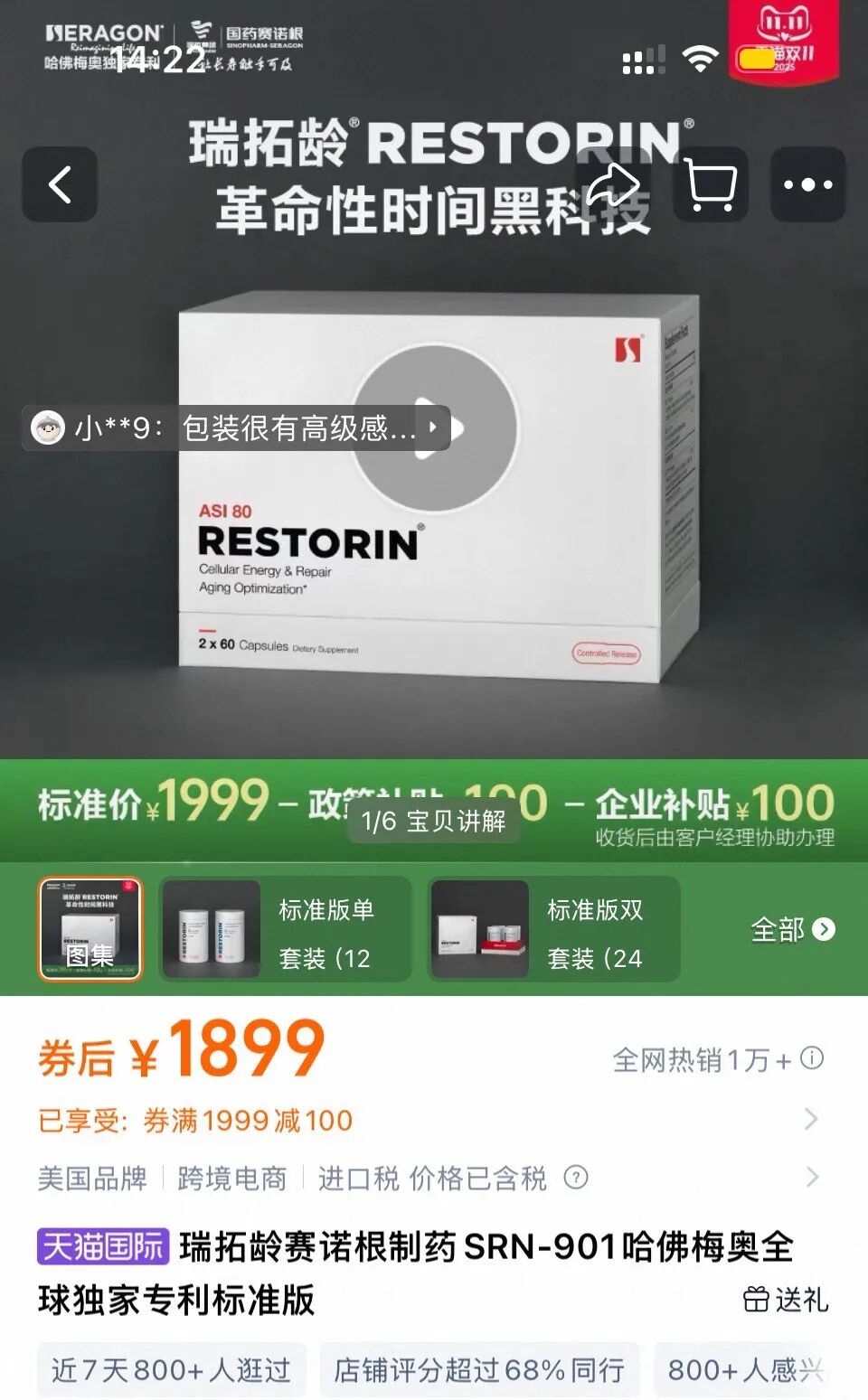
Core Insights - The product "Restorin" (瑞拓龄), marketed as an "oral aging inhibitor," has gained popularity in China, with sales exceeding 10,000 units since its launch [1][3][4] - The product is developed by Guoyao Sainogen, a joint venture between China National Pharmaceutical Group and American Seragon Biosciences, focusing on anti-aging and longevity medicine [3][4][21] - The underlying mechanism of Restorin is based on the SRN-901 drug candidate, which has shown promising results in preclinical mouse studies, extending lifespan by 34% [6][10][22] Company Overview - Guoyao Sainogen was established during the 2023 China International Import Expo, serving as the operational platform for Seragon in China and the Asia-Pacific region [4][21] - The company is primarily focused on e-commerce operations and brand promotion rather than drug development and registration [15][22] Product Details - Restorin is sold in units of 60 capsules per box at a price of approximately 2000 RMB, with monthly costs reaching 2000-3000 RMB based on recommended dosages [1][3] - The product contains various ingredients aimed at promoting mitochondrial regeneration and energy metabolism, targeting health-conscious middle-aged consumers [13][22] Regulatory Status - Despite being marketed with a drug-like narrative, Restorin is classified as a dietary supplement rather than a pharmaceutical drug, allowing it to bypass rigorous clinical trial requirements [14][19] - In the U.S., dietary supplements are regulated under the Dietary Supplement Health and Education Act (DSHEA), which requires safety and truthful labeling but not efficacy validation [14][19] Market Trends - The anti-aging and longevity sector is experiencing significant growth, with over 200 companies globally and a total valuation exceeding $60 billion [25][26] - The rise of products like Restorin reflects a broader trend of consumer interest in health management and longevity, driven by public health anxieties and technological advancements [3][22] Scientific Context - The SRN-901 candidate has not yet entered formal clinical trials, with existing studies primarily focused on safety rather than efficacy [8][10] - The decline of NAD+ levels with age has made it a focal point in anti-aging research, with various products claiming to enhance NAD+ levels [7][28] Consumer Perception - Consumer feedback on Restorin has been mixed, with some reporting improved energy and sleep quality, while others experienced adverse effects [13][30] - Marketing strategies often blur the lines between dietary supplements and pharmaceuticals, creating a perception of scientific credibility without validated efficacy [17][19]