Geopolitical risk in oil market

Search documents
JPMorgan Just Made A Call That Contradicts Everything The Market Is Doing Right Now
Benzinga· 2026-03-13 19:43
Core Viewpoint - The ongoing conflict in the Middle East is causing unprecedented supply disruptions in the global oil market, with the International Energy Agency (IEA) highlighting the severity of the situation [1] Oil Production Cuts - By early March, Gulf countries have collectively reduced oil production by at least 10 million barrels per day due to a lack of storage capacity [2] - Iraq has cut production by up to 2.6 million barrels per day, while Kuwait has also announced reductions, influenced by regional threats [3] Market Impact - The significant reduction in oil supply is preventing a large volume of oil from reaching the global market, with JPMorgan estimating potential cuts nearing 12 million barrels per day if the Strait of Hormuz remains closed [4] - The IEA's release of 400 million barrels from strategic reserves has not impacted oil prices, as these reserves are insufficient for prolonged disruptions of this magnitude [4] Scenarios for Conflict Resolution - JPMorgan outlines two potential scenarios: a quick resolution through military action or diplomacy, or a prolonged conflict leading to a ground war to reopen the Strait of Hormuz [5][6] - In both scenarios, energy stocks are expected to perform well, either through immediate gains or as the only sector generating earnings growth amid broader market challenges [7] Investment Strategy - JPMorgan has adopted a tactically bearish stance on U.S. equities, suggesting that the market is underestimating the geopolitical risks associated with the current supply disruption [8] - The recommendation to maintain long positions in energy while shorting the broader market is contingent on the reopening of the Strait or a credible resolution to the conflict [9]



Here's what surging oil prices mean for consumers
Youtube· 2026-03-06 18:31
Group 1 - Qatar's energy minister indicated that all Gulf exporters could potentially shut down production within days, which could drive oil prices to $150 per barrel, with Brent crude already reaching its highest level since April 2024 at over $90 [1] - Iraq has already begun to shut in some production due to a lack of storage options for oil, highlighting operational disruptions in the market [1] - JP Morgan noted a shift in the market from purely geopolitical risk to tangible operational disruptions, with $17 billion worth of crude products and LNG cargos currently trapped in the Persian Gulf [2] Group 2 - Product markets are tightening, with gasoline futures reaching nearly a two-year high and retail gasoline prices hitting $3.32 per gallon, while European diesel is experiencing its largest weekly rise on record [3] - If Brent prices reach $150, retail gasoline prices could potentially rise to $5.50 per gallon, indicating significant inflationary pressures on consumers [4] - The upcoming spring and summer driving season is expected to further increase gasoline demand, contributing to rising prices [5]
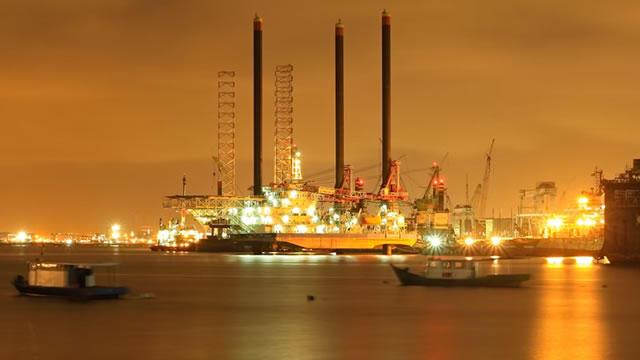
Hormuz Freeze Sends Brent-Dubai Spread to Multi-Year High
Yahoo Finance· 2026-03-03 15:30
Core Insights - The global oil market is currently experiencing significant disruption, as evidenced by Brent crude's premium over the Dubai benchmark reaching its widest level since 2022 [1][5]. Price Movements - As of Tuesday morning, Brent crude was trading at approximately $83–$84 per barrel, reflecting an increase of over 7% for the day, while Dubai crude remained around $68, showing minimal movement [2]. - The spread between Brent futures and Dubai swaps surged to over $6 per barrel, a significant increase from less than $2 just a week prior to the onset of the Iran conflict [2]. Market Dynamics - Brent serves as the global pricing reference for much of the seaborne oil trade, while Dubai is the key marker for Middle Eastern crude entering Asia. A large premium of Brent over Dubai indicates tightness and risk in Atlantic Basin oil supplies compared to Gulf-linked supplies [3]. - The futures market is reacting in real-time to these risks, pricing in potential shortages even before physical oil flows are visibly affected [3]. Geopolitical Factors - The disruption in tanker traffic through the Strait of Hormuz, due to threats from Iran and ongoing military actions, has led to a freeze in shipping activity. This situation has created uncertainty in trading Middle Eastern benchmarks [4]. - The widening gap between Brent and Dubai prices reflects the geopolitical premium being absorbed by Brent, with analysts warning that prolonged disruption could lead to upstream production cuts in the region [5]. Future Outlook - The market is currently debating the duration of the supply risk, with concerns that if the situation in the Strait of Hormuz does not normalize, oil prices could reach $100 per barrel as a potential floor rather than a ceiling [5].
Reddit Is Bullish on XLE But Crude Oil Tells a Different Story
247Wallst· 2026-03-03 11:56
Group 1 - The Energy Select Sector SPDR ETF (XLE) has gained 27% year-to-date, driven by escalating tensions between Iran and Israel [1] - Exxon Mobil (XOM) and Chevron (CVX) constitute 41.6% of XLE, providing direct upstream exposure to crude oil prices [1] - WTI crude oil prices increased by 15% to $66 per barrel, but have not maintained the $70 level since July 2025 [1] Group 2 - Reddit sentiment regarding XLE has increased from a quarterly average of 67.6 to a weekly average of 69.4, indicating a bullish outlook [1] - Discussion volume on Reddit has shifted from low to moderate, with 654 upvotes and 119 comments across tracked posts [1] - The sentiment score for XLE is holding in a range of 68-72, suggesting sustained conviction rather than a temporary spike [1] Group 3 - Analysts note that if WTI crude breaks and holds above $70, the operational leverage in XLE's top holdings could support the current rally [1] - The fund has a 2.59% dividend yield and a 0.08% expense ratio, which may attract investors [1] - The broader market remains stable, with the VIX at 19.86 and the 10-year Treasury yield at 4.02%, indicating selective positioning in energy rather than a general flight to safety [1]


Trio Petroleum (TPET) Rockets As Iran Conflict Tightens Global Oil Supplies
Benzinga· 2026-03-02 21:12
Group 1 - Trio Petroleum Corp (NYSE:TPET) is experiencing a significant surge in stock price due to increased trading in small-cap oil and gas stocks following U.S. and Israeli military actions in Iran and Tehran's closure of the Strait of Hormuz, a critical crude oil transit route [1] - The company's stock is climbing as investors anticipate that tight physical supply will enhance the economics of Trio's portfolio, which focuses on higher-risk, higher-reward assets [2] - Trio Petroleum, incorporated in 2021, operates primarily in oil and gas exploration and development, with its flagship project being the South Salinas project in Monterey County, where it holds a majority working interest in approximately 9,300 acres [2] Group 2 - The company also has interests in the Asphalt Ridge heavy-oil project in Utah and heavy-oil properties in Saskatchewan and Alberta, Canada [3] - The ongoing conflict in the Middle East is contributing to an energy rally, with higher crude prices potentially accelerating the development of Trio's Canadian assets; however, the stock remains highly sensitive to fluctuations in commodity prices and geopolitical developments [4] - As of the latest data, Trio Petroleum shares have surged by 169.05%, reaching a price of $1.13 [5]

Oil Market: How Likely Is a Protracted Closure of the Strait of Hormuz?
Youtube· 2026-02-23 09:52
Core Viewpoint - The closure of the Strait of Hormuz would have significant repercussions on global oil markets due to its critical role in seaborne oil transportation, with a substantial portion of global oil trade passing through this route [1][2][3]. Group 1: Importance of the Strait of Hormuz - The Strait of Hormuz is a vital artery for oil transportation, with approximately 20 million barrels per day of oil and petroleum products, accounting for about 25% of global seaborne oil trade and 20% of global oil consumption [2]. - Half of the oil transported through the strait originates from Saudi Arabia and the UAE, while the other half comes from Iraq, Kuwait, and Iran, with significant export volumes directed to China and India [4]. Group 2: Potential Impact of Closure - A protracted blockage of the Strait of Hormuz would lead to material repercussions for both exporting and importing countries, making such a scenario highly unlikely due to the intersection of multiple economic and geopolitical interests [3][4]. - Even a temporary blockage would result in an immediate and significant market reaction, increasing the risk premium substantially, although the extent of the impact would depend on the duration of the closure [5].
12 Best Oil and Gas Stocks to Buy Right Now
Insider Monkey· 2026-02-07 16:20
Oil Market Overview - Oil prices have increased, with Brent crude futures rising by 50 cents (0.74%) to $68.05 per barrel and US West Texas Intermediate crude gaining 26 cents (0.41%) to close at $63.55 per barrel, recovering from earlier losses [1] - Investor concerns persist regarding the potential for military conflict between the US and Iran, despite recent discussions mediated by Oman [2][3] Geopolitical Impact - The ongoing tensions between the US and Iran pose a risk to oil flows, particularly through the Strait of Hormuz, which is crucial for global oil transportation, accounting for about one-fifth of global oil consumption [3] - If tensions ease, there is potential for a decline in oil prices [3] Investment Opportunities in Oil and Gas Stocks - A list of the 12 best oil and gas stocks to buy has been compiled based on market capitalization and hedge fund sentiment, indicating strong institutional interest [6][7] - Duke Energy Corporation (NYSE:DUK) and Occidental Petroleum Corporation (NYSE:OXY) are highlighted as top picks, with recent price target adjustments from various research firms indicating ongoing interest and potential for growth [8][13]


Oil prices rise more than 2% as Trump weighs strikes on Iran
CNBC· 2026-01-29 13:24
Core Viewpoint - Crude oil prices increased over 2% due to rising tensions involving potential U.S. military strikes on Iran, an OPEC member, which could disrupt crude supplies in the region [1][2]. Group 1: Oil Price Movement - U.S. crude oil rose by $1.56, or 2.5%, reaching $64.77 per barrel [1] - Global benchmark Brent crude increased by $1.59, or 2.3%, to $69.99 per barrel [1] Group 2: U.S. Military Actions - President Trump is considering targeted military strikes on Iranian security forces to encourage anti-government protests and potentially facilitate regime change [1] - The Abraham Lincoln Carrier Strike Group has been deployed to the Middle East as a warning to Iran regarding its nuclear program [2] Group 3: Iranian Unrest - Iran has initiated a security crackdown to suppress protests, resulting in thousands of deaths [2] - The oil market is closely observing the situation, as unrest and possible U.S. intervention could lead to supply disruptions [2]
Oil hits 4-month high as Trump renews Iran threats, but crude's momentum may be fleeting
MarketWatch· 2026-01-28 17:19
Core Viewpoint - President Donald Trump is increasing pressure on Iran, indicating that a "massive armada" is heading towards the country and emphasizing that time is limited for Tehran to finalize a nuclear deal [1] Group 1 - The U.S. administration is signaling a strong military presence in the Middle East as a means to influence Iran's nuclear negotiations [1] - The warning from President Trump suggests a potential escalation in U.S.-Iran tensions, which could impact regional stability and global oil markets [1]

World's most vital oil chokepoint back in focus amid possible U.S. intervention in Iran
CNBC· 2026-01-12 06:08
Core Insights - The Strait of Hormuz is under scrutiny due to potential U.S. intervention in Iran, which could disrupt a critical energy chokepoint through which nearly a third of the world's seaborne crude flows transit [2][4]. Group 1: Market Impact - A disruption in the Strait of Hormuz could lead to a global oil and gas crisis, especially if the Iranian regime feels threatened [3]. - Approximately 13 million barrels per day of crude oil transited the Strait in 2025, representing about 31% of global seaborne crude flows [4]. - Analysts predict that oil prices could spike by $10 to $20 per barrel in the event of a complete closure of the Strait, while a fear of closure could raise prices by a few dollars per barrel [7]. Group 2: Risk Assessment - Military action against Iran carries significantly higher risks compared to Venezuela due to the volume of crude and refined product supply involved [6]. - Experts estimate a 70% likelihood of selective U.S. strikes on Iran, which could lead to immediate oil price spikes [6]. - Despite the potential for disruption, most analysts believe catastrophic outcomes remain low-probability events, as Iran may not fully close the Strait due to regional power dynamics and U.S. naval presence [8]. Group 3: Supply Dynamics - The oil market is currently leaning towards oversupply, with an estimated excess supply of 2.5 million barrels per day in January and over 3 million barrels per day in February and March [9]. - Any closure of the Strait would likely be met with a show of force by the U.S. and allies to restore oil flows [9]. Group 4: Geopolitical Context - The geopolitical situation in the Middle East is more complex than in Latin America, making it difficult for the U.S. to adopt a Venezuela-style strategy towards Iran [11]. - The current U.S. strategy appears to focus on consolidating power in the Western Hemisphere rather than direct military action against Iran [11].