
Identity Management

Search documents
BMO Upgrades Okta to Outperform on Strong Identity Management Outlook
Financial Modeling Prep· 2026-03-06 19:20
Core Viewpoint - BMO Capital upgraded Okta, Inc. from Market Perform to Outperform, raising its price target to $97 due to increased confidence in the durability of Okta's revenue growth [1] Group 1: Revenue Growth and Market Position - The primary reason for the upgrade is the belief that identity management will be crucial for the adoption of AI agents, positioning Okta to benefit from this emerging market [1] - Okta Identity Governance (OIG) is highlighted as having significant potential for expansion, with expectations of maintaining flat to slightly higher subscription revenue growth in fiscal 2027 compared to fiscal 2026 [2] Group 2: Future Revenue Contributions - AI agent-related revenue contributions are anticipated to remain minimal in fiscal 2027 but are expected to become a more significant driver starting in fiscal 2028 [2]


Okta(OKTA) - 2026 Q4 - Earnings Call Transcript
2026-03-04 23:02
Financial Data and Key Metrics Changes - The company achieved a record total contract value of nearly $1.3 billion in Q4, surpassing a major milestone of $3 billion in annual contract value [15][16] - The company closed out FY 2026 achieving the Rule of 40, indicating a balance of growth and profitability [15] - The balance sheet remains strong with over $2.5 billion in cash equivalents and short-term investments [16] Business Line Data and Key Metrics Changes - New products represented approximately 30% of Q4 bookings, with an average contract uplift of about 40% when included in deals [6][15] - Okta Identity Governance (OIG) now has over 2,000 customers, highlighting significant market demand for modern governance solutions [6] Market Data and Key Metrics Changes - The total contract value generated through strategic go-to-market channels, such as AWS Marketplace, grew over 45% in FY26 to approximately $750 million [16] - The company expects total revenue growth of 9% for Q1 FY 2027 and for the full year FY 2027, with a non-GAAP operating margin of 25%-26% [19][20] Company Strategy and Development Direction - The company aims to secure its position as the standard for securing agentic AI, focusing on large customers and the U.S. federal vertical [12][13] - The strategy includes leveraging partnerships with Global System Integrators to enhance customer relationships and drive growth [35][36] Management's Comments on Operating Environment and Future Outlook - Management expressed confidence in the strong demand for identity solutions, particularly in the context of AI and agentic systems [5][7] - The company is optimistic about the potential of new products, particularly in the AI market, and believes that identity security is foundational for future software development [9][14] Other Important Information - A $1 billion share repurchase program was announced to take advantage of perceived undervaluation [17] - The company is transitioning more of its professional services business to partners, which is expected to enhance long-term growth despite a short-term revenue impact [20] Q&A Session Summary Question: Can you talk more about pricing for AI agent products? - Management noted that AI agent products are crucial and had a strong quarter, with significant potential for future growth, although they are still relatively small compared to overall revenue [24][25] Question: What are the go-to-market changes and international growth opportunities? - Management confirmed that the go-to-market structure is stable, with increased productivity and low attrition, and emphasized the importance of partnerships with Global System Integrators [32][34] Question: How does the company view competition in the identity market? - Management acknowledged confusion in the market regarding identity infrastructure versus identity security, emphasizing their unique position in offering both [45][46] Question: Can you provide insights on the pricing model for agentic products? - Management explained that pricing is still being refined, with a focus on capturing value based on the number of connections agents make [62][63] Question: How does the company view the growth profile of Auth0? - Management expressed optimism about Auth0's potential, noting that the CIAM market is evolving and that Auth0 for AI Agents is positioned to deliver significant value [76][79]
OKTA, Inc. (NASDAQ:OKTA): A Promising Investment in Identity Management Solutions
Financial Modeling Prep· 2026-01-23 02:00
Core Insights - OKTA, Inc. is a leading provider of identity and access management solutions, offering a cloud-based platform for user authentication management [1] - Competitors include major companies like Microsoft and IBM, which also provide identity management solutions [1] Recent Performance - OKTA has demonstrated resilience with a 30-day gain of 3.13%, indicating positive market sentiment and investor confidence [2] - Despite a recent 2.95% decline over the past 10 days, this dip may present a strategic buying opportunity for investors [2] Growth Potential - The stock has a projected price increase of 21.40%, suggesting it is currently undervalued [3] - Analysts have set a target price of $110.67, indicating substantial upside potential from current levels [3] Financial Health - OKTA has a strong Piotroski Score of 8, reflecting solid financial health in terms of profitability, leverage, liquidity, and operating efficiency [4] - This robust financial stability makes OKTA appealing to investors seeking long-term growth opportunities [4] Investment Appeal - The combination of recent performance, growth potential, and strong financial health positions OKTA as an attractive investment option [5] - The recent dip in stock price could serve as an entry point for investors looking to capitalize on the company's promising future [5]
Okta, Inc. (NASDAQ:OKTA): A Promising Investment in Identity Management Solutions
Financial Modeling Prep· 2026-01-06 02:00
Core Viewpoint - Okta, Inc. is a leading provider of identity and access management solutions, crucial for businesses to protect sensitive data and streamline user access across applications [1] Group 1: Recent Performance - In recent trading, OKTA has shown a 0.55% gain over the past 30 days, despite a slight decline of about 2.70% in the last 10 days, indicating potential buying opportunities for investors [2][6] - The company recently touched a local minimum, which could signal a potential reversal, presenting a favorable price point for entry [4][6] Group 2: Growth Potential - Analysts project a stock price growth potential of 25.46%, suggesting significant upside from current levels, supported by a strong Piotroski Score of 8, indicating financial health and operational efficiency [3][6] - With a target price of $110.12, there is considerable room for appreciation, making OKTA a compelling choice for growth-oriented investors [4][6] Group 3: Overall Assessment - Okta, Inc. presents a balanced mix of recent performance, growth potential, and financial stability, making it a top pick for investors looking to capitalize on its future prospects [5]
Okta CEO Sees Big Opportunity in AI
Bloomberg Technology· 2025-12-03 20:03
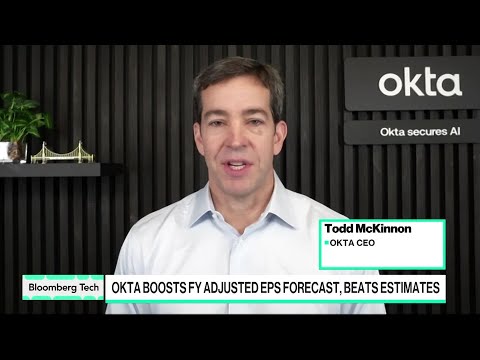
Business Performance - The company had a solid third quarter [1] - The core business is profitable and growing at a nice clip [11] Market Opportunity & Strategy - The market is digesting the massive opportunity to secure AI, especially securing identity [2] - Companies are struggling to connect AI agents to their data securely and manageably [4][5] - The company offers a solution to connect AI agents to data securely, enabling governance and management [6] - The company differentiates itself by offering customers choice across different platforms, avoiding vendor lock-in [8][9] - The opportunity to secure AI could be bigger than the company's core business [12] Market Concerns & Future Outlook - The market is questioning whether the company's revenue growth will flatline to sub 10% [10] - The company sees a massive upside in securing AI, potentially larger than its core business [11][12] - Companies are exploring various approaches to adopt generative AI solutions, including using SaaS providers, building in-house, and hiring consultants [14][15]
Okta CEO Sees Big Opportunity in AI
Youtube· 2025-12-03 20:03
Core Insights - The company is experiencing significant inbound interest for new products, particularly in the area of connecting agents to company data securely [4][6][11] - There is a recognition in the market of the necessity to secure identity as part of the broader opportunity in AI [2][12] - The company offers flexibility by allowing clients to choose various technologies and platforms without being locked into a single provider [8][9] Market Dynamics - The market is currently digesting the potential for growth in AI and the importance of data connectivity for effective agent functionality [2][10] - Companies face challenges in integrating AI solutions with their existing data systems, leading to a choice between comprehensive access or limited functionality [5][6] - The competitive landscape includes major players like Microsoft and Palo Alto Networks, but the company differentiates itself by promoting a multi-platform approach [7][8] Adoption Trends - There is a mix of strategies among companies, including internal development, consulting assistance, and reliance on generative AI offerings from major providers [13][15] - Key factors such as security, identity management, and access permissions are seen as critical to advancing AI adoption [16] - The company believes that the opportunity in securing AI could surpass its core business, indicating a strong growth potential [12][11]

Jim Cramer Says He Like Okta Because He Likes Identity Management
Yahoo Finance· 2025-09-24 08:28
Core Insights - Okta, Inc. (NASDAQ:OKTA) is recognized for its identity and access management solutions, which include products like Single Sign-On and Adaptive Multi-Factor Authentication [1] - Jim Cramer expressed a preference for Palo Alto Networks (PANW) over Okta due to their acquisition of CyberArk, which enhances their identity management capabilities [1] - Cramer previously indicated a preference for CrowdStrike over Okta, citing significant price movements in CrowdStrike's stock [1] - There is a belief that certain AI stocks may offer greater upside potential compared to Okta, suggesting a shift in investment focus [1] Company Overview - Okta provides a comprehensive platform for identity management, including features for universal login, attack protection, and extensibility [1] - The company's solutions are designed to secure users, applications, and cloud infrastructure, indicating a strong position in the cybersecurity market [1] Market Context - The discussion around Okta highlights the competitive landscape in identity management, particularly with the advancements made by Palo Alto Networks [1] - The mention of AI stocks suggests a growing trend in the market where investors are looking for undervalued opportunities with potential benefits from current economic trends [1]
Digital Duct Tape Bleeding Billions From Corporate America
Forbes· 2025-09-22 11:54
Core Insights - Digital initiatives in corporate America are failing to meet expectations, leading to significant productivity losses estimated at 21% due to disconnected systems and excessive manual intervention [2][4][26] - Companies are struggling with complex financial infrastructures, often managing multiple applications and logins, which complicates financial oversight and increases operational inefficiencies [3][5][30] - The fragmentation of data assets is resulting in a massive loss of potential value, as companies are not compensated for the data they provide to AI systems, leading to a significant wealth transfer to AI companies [10][12][13] Group 1: Digital Friction and Productivity Loss - Fortune 500 companies operate on an average of 254 applications, with employees managing 47 passwords, contributing to a 21% productivity drain [2][3] - Financial teams at large corporations face challenges in data reconciliation, spending excessive time on manual processes rather than strategic cash flow management [5][30] - The complexity of cross-border payments results in companies incurring 3% to 5% in transaction fees due to multiple intermediaries, highlighting the inefficiencies in current systems [6] Group 2: Financial Infrastructure Challenges - A treasury executive reported managing $2 billion across 27 financial relationships monthly, with significant time lost in reconciling data formats [5] - McKinsey research indicates that two-thirds of large tech programs exceed budgets and timelines, often by 50% or more, underscoring the challenges in financial infrastructure [5] - Companies are exploring next-generation financial solutions to unify management across traditional and digital assets, but regulatory uncertainties hinder widespread adoption [9][10] Group 3: Data Asset Management - Major publishers are losing out on the value generated from their content, which is used to train AI models worth billions without receiving compensation [10][12] - Startups are emerging with blockchain-based solutions aimed at providing transparency and compensation for data contributions, but established AI companies resist these changes [13] - The current landscape reflects a significant wealth transfer occurring in real-time, as companies fail to monetize their data effectively [10][12] Group 4: Identity Management Issues - IT departments spend 30% of their time on password resets, indicating a significant inefficiency in identity management systems [14] - Employees often have fragmented digital identities across various platforms, complicating integration and data management [15][16] - Major identity providers benefit from maintaining silos, which creates challenges for companies trying to streamline their identity management processes [15] Group 5: Access Complexity - Routine business operations, such as currency conversion, are hindered by complex interfaces, leading to significant time losses [19][20] - Traditional financial service providers have little incentive to simplify processes, as complexity supports their pricing models [20] - Emerging platforms are attempting to simplify access to digital assets, but compliance and auditability remain critical factors for enterprise adoption [21][22] Group 6: Regulatory and Competitive Landscape - Upcoming regulatory deadlines, such as EU DORA compliance in January 2025, are reshaping competitive advantages in the industry [28] - Companies that view compliance as a burden may miss opportunities for efficiency improvements [28] - The smart money is moving towards simplifying operations, as evidenced by companies like American Airlines and Reddit optimizing their processes and monetizing data effectively [24][25]

US stocks pull back from records, getting access to IPOs as a retail trader
Youtube· 2025-09-16 21:52
Group 1: IPO Access for Retail Investors - Retail investors are gaining increased access to IPOs, traditionally dominated by wealthy clients and institutions, with brokers now allocating shares to retail clients [3][4][5] - Retail investors previously received less than 5% of IPO shares, but recent trends show a shift towards more equitable distribution [5][6] - Companies like Bullish and Gemini are directly engaging with retail platforms to enhance access for ordinary investors, indicating a growing recognition of retail's role in the market [5][8] Group 2: Market Trends and Investor Behavior - The narrative around retail investors has shifted, with them now being seen as stabilizing forces in the market, contrary to previous perceptions of them as weak hands [12][14] - Retail investors are characterized by a buy-and-hold strategy, showing resilience during market sell-offs and actively participating in market dips [13][14] - The trend of democratizing access to private companies and IPOs is seen as beneficial, allowing smaller investors to participate in opportunities previously reserved for institutions [15][16] Group 3: AI and Identity Management - Companies are increasingly recognizing the importance of identity management as foundational for deploying AI agents, which require secure access controls [21][22] - The integration of AI is seen as a means to enhance operational efficiency and customer satisfaction, with companies like Octa leveraging AI to improve productivity [38] - The government sector is investing heavily in technology modernization, creating opportunities for identity management solutions to support new initiatives and applications [34][35] Group 4: Economic Indicators and Market Reactions - The Federal Reserve's upcoming interest rate decision is anticipated to influence market dynamics, with expectations of a rate cut [40][41] - Recent housing data indicates a potential decline in housing starts, reflecting broader economic trends [42] - The dollar has experienced significant weakness, down 11.63% year-to-date, impacting international investment and commodity prices [45][46]
Okta (OKTA) 2025 Conference Transcript
2025-06-10 16:30
Summary of Conference Call Company and Industry - **Company**: Okta - **Industry**: Identity and Access Management (IAM) Software Key Points and Arguments Strategic Focus Areas - Okta aims to become one of the world's most secure companies, emphasizing four key areas: security, new product introduction, partner ecosystem penetration, and go-to-market specialization [2][3][7] - Go-to-market specialization is highlighted as the most exciting area for growth in the next 12 to 18 months, with a focus on deepening product knowledge and specialization in various geographies and segments [3][6][7] Market Segmentation and Performance - The U.S. public sector accounts for less than 10% of Okta's total business, with federal contracts being a small subset of that [9][10] - Despite short-term turbulence due to macroeconomic uncertainties, Okta believes it is well-positioned for long-term growth in the federal sector, aligning with government priorities of security, modernization, and efficiency [12] Guidance and Growth Expectations - Okta's guidance reflects a more conservative approach compared to previous years, with a focus on reducing variability in revenue growth expectations [15][20] - The company is targeting revenue growth rates of 9% to 10%, which is a shift from the higher growth rates seen in previous years [18][21] New Logo Growth and Market Opportunities - Okta sees significant opportunities for new logo growth, particularly in the identity solution market, despite concerns about market saturation [23][24] - The company emphasizes the importance of both quantity and quality in new logos, with a focus on accounts generating over $100,000 in Annual Contract Value (ACV) [26][27] Competitive Landscape - Microsoft is identified as the primary competitor in the workforce identity space, with Okta maintaining a competitive edge through product differentiation [35][37] - The competitive dynamics remain stable, with no significant changes noted in the strategies of competitors like Ping and ForgeRock since they went private [40] Governance and Lifecycle Management - Governance is seen as a key growth area, with Okta aiming to increase its penetration from the current 1,300 governance customers out of over 20,000 total customers [41][42] - Lifecycle management is considered a subset of governance, with upsell opportunities from existing customers [65][66] Product Development and Future Outlook - Okta acknowledges that its Privileged Access Management (PAM) capabilities are still developing but sees potential for growth in this area over the next 12 to 18 months [75][78] - The nonhuman identity market is viewed as an emerging opportunity, with Okta positioned to address the challenges associated with managing nonhuman identities [80][85] Financial Guidance and Market Trends - The recent guidance for CRPO (Contracted Recurring Revenue) was weaker than expected, reflecting the company's cautious approach to market conditions and the costs associated with specialization [97][99] - Okta is optimistic about long-term growth despite current challenges, with a focus on execution and market adaptation [99][100] Additional Important Insights - Okta's strategy includes a cohesive platform approach that integrates various identity management solutions, which is expected to enhance customer value and ROI [56][58] - The company is aware of the technology sprawl in the market and aims to consolidate offerings under a single provider model over time [59][60]