Interest rate policy

Search documents
Fed's Powell says no need to hike interest rates now — officials should look past higher energy prices
New York Post· 2026-03-30 20:18
Core Viewpoint - Federal Reserve Chair Jerome Powell indicated that there is no immediate need to raise interest rates despite rising energy prices due to the war on Iran, suggesting that these price increases should be viewed as short-term impacts [1][6]. Group 1: Interest Rate Policy - Powell stated that the current target range for interest rates of 3.5% to 3.75% is appropriate as the Fed assesses the long-term effects of the Iran war and tariffs on prices [6]. - The likelihood of an interest rate hike by December has dropped significantly to 2.2%, down from over 50% earlier in the week, reflecting traders' reactions to Powell's comments [5]. - Powell emphasized that raising interest rates now would be ineffective, as the effects of monetary policy take time to manifest in the economy [6][7]. Group 2: Economic Context - Powell noted that inflation expectations appear to be well anchored beyond the short term, but acknowledged that the Fed may need to address this issue in the future [2]. - He mentioned that the economic effects of the current energy supply shock are still uncertain, and the Fed will remain mindful of the broader economic context when making decisions [4][6]. - Fed Governor Stephen Miran, who has consistently dissented in meetings, supports the idea of looking through the current energy supply shock and suggests that interest rates could be lowered gradually over the course of a year [7][8]. Group 3: Future Outlook - The Fed's recent meeting indicated a divided outlook among policymakers, with some members not expecting any rate cuts this year, while the "dot plot" suggests one rate cut this year and another in 2027 [9]. - Powell refrained from commenting on the plans of his potential successor regarding interest rates, highlighting the uncertainty surrounding future Fed leadership [10].

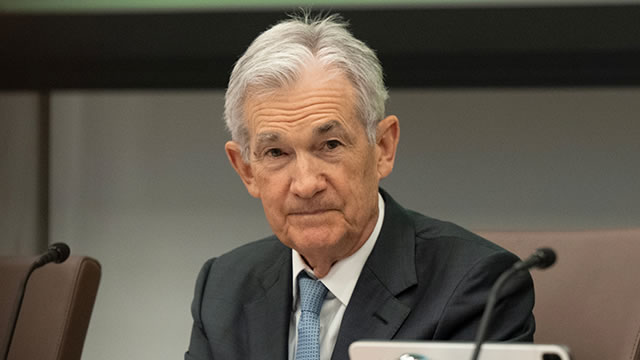
Federal Reserve Chair Jerome Powell Just Gave Investors Great News
Yahoo Finance· 2026-03-30 18:12
Group 1 - Oil prices have surged recently due to the war in Iran, raising concerns among investors about the Federal Reserve's interest rate policy [1] - The market has shifted its expectations from forecasting interest rate cuts this year to predicting no changes for the foreseeable future, with a potential rate hike in late 2027 [1][4] - Federal Reserve Chair Jerome Powell indicated that the current federal funds rate range of 3.50%-3.75% is appropriate and that inflation expectations appear well anchored beyond the short term [2][3] Group 2 - Powell emphasized the importance of looking through the current oil supply shock, suggesting that premature rate hikes could negatively impact the economy if the oil shock subsides [5] - The Fed is also monitoring the labor market, which has shown signs of weakness, and economic growth appears to be slowing [5] - Kevin Warsh, President Trump's potential successor for Fed chair, is expected to favor rate cuts over hikes, which could influence future monetary policy [6]
Danske Bank (OTCPK:DNKE.Y) Update / briefing Transcript
2026-03-27 13:32
Danske Bank Q1 2026 Pre-Close Call Summary Company Overview - **Company**: Danske Bank (OTCPK:DNKE.Y) - **Date of Call**: March 27, 2026 Key Industry Insights - **Macroeconomic Trends**: - Euro area growth outlook is better than expected, with resilient labor markets and inflation below the 2% target [2][3] - Danish GDP forecast increased to 3% from 2.7%, and Swedish GDP forecast increased to 2.8% from 2.6% [3] - Low unemployment and growing real wages in Denmark expected to drive domestic growth despite lower consumer sentiment [3] Financial Performance Highlights - **Net Interest Income (NII)**: - Q4 2025 had a non-recurring benefit of approximately DKK 0.2 billion [4][5] - Slight improvement in overall credit demand noted at the beginning of Q1 2026 [5] - Q1 has two fewer interest days compared to Q4, estimated day effect of DKK 65 million to DKK 70 million [5] - **Funding Costs**: - CIBOR remained flat, while STIBOR increased by around 12 basis points and NIBOR by around 3 basis points [6] - Issued approximately DKK 42 billion in Q1, aligning with a full-year funding plan of DKK 90 billion to DKK 110 billion [6] - Redeemed around DKK 20 billion in Q1 [6] - **Interest Rate Sensitivity**: - Estimated negative impact of DKK 650 million per 25 basis points hike across all currencies [7] - Positive effect of around DKK 450 million estimated for a 25 basis points hike [8] Fee Income and Trading Activity - **Fee Income**: - Everyday banking fees benefited from healthy corporate activity and improving customer sentiment [9] - Investment fees impacted by market volatility and customer investment activity [9] - Refinancing fees from adjustable-rate mortgages expected to be approximately DKK 50 million lower than Q4 2025 [10] - **Trading Income**: - Customer-driven trading income primarily affected by customer activity levels in Q1 [10] Credit Quality and Loan Impairments - **Loan Impairments**: - Full-year loan impairment guidance remains at around DKK 1 billion [12] - No immediate impact on credit portfolio despite geopolitical uncertainties [12] Capital and Regulatory Updates - **Capital Requirements**: - Conglomerate directive led to a DKK 4 billion increase in credit risk REA related to the insurance business [12][38] - CET1 ratio reflects additional distribution outside of the ordinary dividend policy [13] Future Outlook - **Guidance Adjustments**: - Company maintains a pragmatic view on guidance adjustments based on macroeconomic developments and will comment on any material impacts during the Q1 report [18] Additional Notes - **Market Activity**: - Seasonal trends in refinancing noted, with a shift towards more adjustable-rate mortgages expected to increase refinancing activity over time [43] - **Upcoming Events**: - Q1 interim report scheduled for April 30, 2026, with a conference call for investors and analysts at 8:30 AM CET [13][29]
Average US long-term mortgage rate leaps to 6.38%, the highest level in more than 6 months
Yahoo Finance· 2026-03-26 16:03
Core Insights - The average long-term U.S. mortgage rate has reached its highest level in over six months, now at 6.38%, up from 6.22% last week, and compared to 6.65% a year ago [1] - Rising mortgage rates are significantly increasing borrowing costs for homebuyers, limiting their purchasing power [2] - The average rate for 15-year fixed-rate mortgages has also increased to 5.75% from 5.54% last week, compared to 5.89% a year ago [3] Mortgage Rate Influences - Mortgage rates are influenced by various factors, including the Federal Reserve's interest rate policies and bond market expectations regarding the economy and inflation [4] - The 10-year Treasury yield, which serves as a benchmark for mortgage pricing, has risen to 4.39% from approximately 4.26% a week prior [4] - Higher oil prices are contributing to increased inflation expectations, which in turn are pushing up mortgage rates [5] Federal Reserve Actions - The Federal Reserve recently decided to maintain current interest rates, with Chair Jerome Powell indicating a cautious outlook for the U.S. economy and inflation due to geopolitical tensions [6] Housing Market Conditions - The U.S. housing market has been experiencing a downturn since 2022, with home sales at a 30-year low and remaining sluggish in early 2023 [7] - Despite a slowdown in home price growth in many areas, affordability challenges persist as wage growth has not kept pace with rising home prices [8]
Trump's Iran War Sparks Bond Market Revolt, Gold's Worst Week Since 1983 And More: This Week In Economy
Benzinga· 2026-03-22 10:01
Economic Policy Developments - The ongoing war in Iran has led to a surprising prediction of a potential interest rate hike by the end of the year, contrasting with the previously anticipated 60 basis points of cuts [2] - The Trump administration's 60-day waiver of the Jones Act aims to address surging fuel and fertilizer prices during the Iran War, but is viewed as a short-term solution to a deeper economic crisis [5] Market Reactions - The gold market experienced its worst weekly performance since 1983, attributed to the weak performance of SPDR Gold Shares stock and the impact of the ongoing Iran war [4] - Reports of a potential intervention in the commodities market by the Treasury Department were dismissed as rumors, indicating a lack of confidence in government intervention strategies [6] Consumer Impact - A controversial statement from a top White House advisor regarding the financial impact of the U.S.-Israeli war with Iran on American consumers sparked outrage, especially as gas prices reached $3.84 a gallon, a 24.8 cent increase from the previous year [3]

Fed split holds as Iran war scrambles rate path
Yahoo Finance· 2026-03-18 21:42
Economic Outlook - The Federal Reserve's dual mandate requires balancing full employment and price stability, with current economic uncertainty heightened by geopolitical events, particularly the Iran war [1][4] - Economic activity is reportedly expanding at a solid pace, but job gains remain low and the unemployment rate has not changed significantly in recent months [2][4] Inflation and Interest Rates - Inflation remains stubbornly high, with producer prices showing unexpected acceleration prior to the Iran war, leading to a divided vote on interest rates [5][17] - The Federal Open Market Committee (FOMC) decided to hold the benchmark federal funds rate steady at 3.50% to 3.75%, reflecting concerns over both inflation and unemployment [3][11] Stagflation Concerns - The ongoing Iran war has reignited fears of stagflation, characterized by rising prices and slowing growth, complicating the Fed's monetary policy decisions [4][19] - Fed Chair Jerome Powell stated that while inflation is a concern, he does not currently see signs of stagflation, emphasizing that the economy is performing well despite challenges [20][25] Future Projections - The Fed's "dot plot" indicates a potential quarter-point rate cut in 2026 and another in 2027, contingent on inflation trends [14][18] - Recent GDP growth was revised down to 0.7% for Q4 2025, with an unemployment rate reported at 4.4%, indicating economic weakness [17]
Larry Kudlow: This would do DAMAGE to the US economy
Youtube· 2026-03-18 21:00
Core Viewpoint - The article discusses the implications of Federal Reserve Chairman Jay Powell's statements regarding his tenure and the potential impact on the stock market and economic policy, particularly in relation to inflation and interest rates. Group 1: Federal Reserve and Economic Policy - Fed Chairman Jay Powell indicated he would remain on the board until an investigation is concluded, which negatively affected the stock market, causing the Dow to drop over 700 points [2][3]. - The Fed's economic projections now suggest only one rate cut for the year, a reduction from three projected cuts prior to the conflict in Iran, indicating a shift towards a higher interest rate policy [3][4]. - The article argues that the Fed's current models predict only 2% economic growth, which is seen as overly pessimistic compared to the author's belief in a potential 5% growth post-war [7]. Group 2: Inflation and Market Reactions - Higher inflation is anticipated alongside a slight increase in economic growth, with the Fed signaling a tighter monetary policy that could harm the American economy [4][5]. - The M2 money supply is growing at 3.5%, and the dollar is strengthening, which are viewed as counterinflationary factors [7]. - The article emphasizes the need for a leadership change at the Fed, advocating for Kevin Worsh to replace Powell to adopt policies that favor lower tax rates and deregulation, which are believed to stimulate growth and reduce inflation [5][6][8].

Fed votes to hold rates steady, notes 'uncertain' impacts from Iran war
CNBC· 2026-03-18 18:02
Core Viewpoint - The Federal Reserve decided to maintain its key interest rate in a range of 3.5%-3.75% amid higher-than-expected inflation and mixed labor market signals, while also considering geopolitical tensions [1][5]. Economic Projections - The Federal Reserve's updated projections indicate a GDP growth rate of 2.4% for this year, slightly higher than previous estimates, and a solid growth rate of 2.3% for 2027, an increase of three-tenths of a percentage point [7]. - The inflation outlook has been revised upwards, with expectations for the personal consumption expenditures price index to reflect a 2.7% inflation rate for both headline and core [8]. Interest Rate Outlook - The Federal Open Market Committee (FOMC) signaled expectations for a few rate cuts ahead, with the "dot plot" indicating one reduction this year and another in 2027, although the timing remains uncertain [3][4]. - Seven out of 19 FOMC participants expect rates to remain unchanged this year, an increase from the previous update [4]. Geopolitical Impact - The ongoing conflict in the Middle East, particularly the war with Iran, has created uncertainty that could keep inflation above the Fed's 2% target, affecting the U.S. economy [5][8]. Political Context - President Trump has been vocal in urging the Fed to lower rates, criticizing Powell for not convening a special meeting to address inflation and geopolitical uncertainties [9]. - Powell's term as Fed Chair is set to end in May, with Trump nominating Kevin Warsh as his successor, who has shown a preference for lower rates [10].

Central banks face policy trap as Iran war drives inflation shock just as growth momentum fades
Yahoo Finance· 2026-03-17 10:00
Central Banks and Economic Outlook - The ongoing conflict in Iran has complicated the global economic landscape for major central banks, as rising energy prices challenge the easing inflation pressures and the potential for rate cuts [1][3] - Central banks, including the Federal Reserve, European Central Bank, and Bank of England, are expected to maintain current borrowing costs, reflecting a cautious approach amid the renewed energy shock [2][3] Inflation and Economic Growth Dynamics - The surge in fuel costs is likely to increase headline inflation and broader price pressures, which may necessitate keeping interest rates elevated or tightening policy further [4] - Higher energy prices act as a tax on households and businesses, potentially slowing consumption and investment, which typically would support lower borrowing costs [5] Market Reactions and Expectations - Bond markets have begun to reflect the tension between inflation risks and economic growth, with yields on short-dated Treasurys, such as the US two-year, rising approximately 25 basis points over the past month as traders adjust expectations for rate cuts [7]
European markets struggle for direction as oil prices fluctuate
CNBC· 2026-03-17 06:13AI Processing
Traders work on the floor of the New York Stock Exchange at the opening bell, March 12, 2026.LONDON — European stocks are set to open broadly flat on Tuesday as global markets remain volatile and oil prices continue to fluctuate.The U.K.'s FTSE 100 index is seen opening 0.1% higher while Germany's DAX, France's CAC 40 and Italy's FTSE MIB are expected to be flat, according to data from IG.Regional markets regained ground on Tuesday morning as investors continued to weigh ongoing unrest in the Middle East an ...