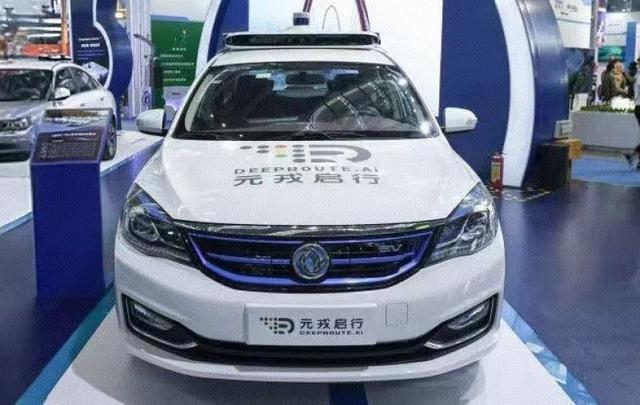
L4级全无人驾驶

Search documents
L3级自动驾驶商业化落地再提速,元戎启行:2026年力争累计交付突破一百万辆
Hua Xia Shi Bao· 2026-01-16 13:58
Group 1 - By the end of 2025, China's first batch of L3 autonomous vehicles will receive exclusive licenses, marking the transition from technical testing to commercial deployment [2] - In early January 2026, Yuanrong Qixing announced a partnership with a leading international OEM for L3 autonomous driving, representing the first international collaboration of its kind for domestic smart driving companies in 2026 [2] - The introduction of exclusive licenses and international collaboration is seen as a significant milestone, indicating that 2026 will be the year when L3 autonomous driving commercialization truly begins [2] Group 2 - L3 autonomous driving represents a turning point, shifting from driver-assisted systems (L2 and L2+) to highly automated systems where the vehicle takes over driving tasks under specific conditions [3] - The transition to L3 requires higher safety and reliability standards, focusing on environmental perception stability and decision-making predictability [3] - The challenge in moving from L2+ to L3 lies in redefining responsibility; once a system is classified as L3, the responsibility shifts from the driver to the system during its operation [4] Group 3 - Yuanrong Qixing's collaboration with an international OEM is a milestone in China's autonomous driving sector, moving beyond previous partnerships that focused on Robotaxi demonstrations and hardware collaborations [4] - Yuanrong Qixing aims for L4 fully autonomous driving from the outset, emphasizing the system's understanding and judgment capabilities without relying on high-precision maps [5] - The company's city NOA system is designed for nationwide deployment without the need for city-specific adaptations, showcasing its technological advancements [5] Group 4 - In 2025, over 200,000 vehicles equipped with Yuanrong Qixing's assisted driving system are expected to be delivered, involving more than 15 mass-produced models [6] - The collaboration with domestic OEMs allows for faster project rhythms and shorter feature rollout cycles, necessitating efficient communication and delivery mechanisms [6] - The differences in focus between domestic and international OEMs highlight varying approaches to L3 product planning, with domestic firms prioritizing efficiency and rapid iteration, while international firms emphasize safety and regulatory compliance [6]