城市NOA系统

Search documents
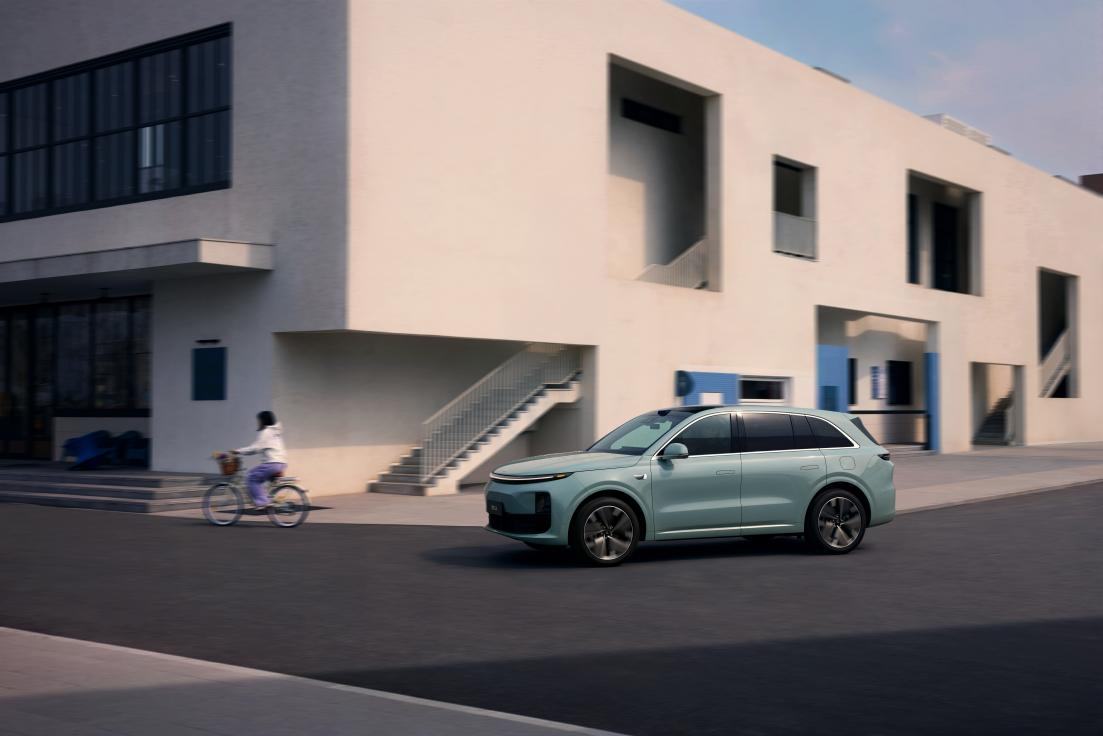
地平线(09660)与轻舟智航深度协同 行业首个单征程6M城区NOA量产交付
智通财经网· 2026-01-22 08:01
Core Insights - The first end-to-end city NOA solution based on Horizon's Journey 6M chip has been officially delivered, marking a significant milestone in urban mobility [1] - The collaboration between Li Auto, Lightyear, and Horizon showcases a complete closed-loop from technology development to large-scale delivery [7] Group 1: Product and Technology - The city NOA system, built on a single Journey 6M chip, offers advanced defensive driving capabilities, enhancing safety during urban travel [2][5] - The system utilizes 128 TOPS of computing power, optimizing safety and traffic efficiency while supporting various sensor integrations [4] - The Journey 6M chip enables lightweight urban driving assistance and memory driving functions, significantly improving performance and reducing costs [4] Group 2: Industry Collaboration - The partnership between Horizon, Lightyear, and Li Auto exemplifies a strong industry collaboration, achieving multiple industry records since their strategic alliance began in May 2022 [7] - Horizon is also collaborating with Bosch, Denso, and other partners to promote the mass production of the city NOA solution, targeting the 100,000 yuan market segment [8] - The ecosystem collaboration is seen as a key pathway to advancing the widespread adoption of intelligent driving technology [8] Group 3: Market Impact - Li Auto's L series models are equipped with the Journey 6M chip, enhancing their reputation as reliable and user-friendly smart driving vehicles [7] - The successful deployment of the city NOA solution is expected to accelerate the scale of mass production in the intelligent driving sector [8] - Horizon aims to continue building a reliable and inclusive future for intelligent driving through its collaborative ecosystem approach [10]


地平线与轻舟智航深度协同 行业首个单征程6M城区NOA量产交付
Zhi Tong Cai Jing· 2026-01-22 07:57
Core Viewpoint - The launch of the first end-to-end city NOA solution based on Horizon's single Journey 6M chip marks a significant advancement in urban driving assistance technology, developed by Li Auto in collaboration with Lightyear Intelligent Navigation [1][6]. Group 1: Product Features - The city NOA system utilizes 128 TOPS computing power to enhance user experience, transitioning from "usable" to "well-used" in urban driving scenarios [1]. - The system is designed to provide human-like defensive driving capabilities, ensuring safety by anticipating and mitigating risks in various urban environments [1][3]. - The integration of advanced algorithms and hardware allows for significant optimization in computing performance and power consumption, reducing system complexity and overall costs [4]. Group 2: Strategic Partnerships - The collaboration between Horizon, Lightyear Intelligent Navigation, and Li Auto represents a successful model of industry cooperation, completing a full cycle from technology development to large-scale delivery [6]. - Since their strategic partnership began in May 2022, Horizon and Lightyear have achieved multiple industry milestones, including the rapid deployment of the Journey 6 solution [6]. - Horizon is also collaborating with Bosch, Denso, and other partners to promote the mass production of the city NOA solution, targeting the 100,000 yuan market segment [7]. Group 3: Market Impact - The deployment of the Journey 6M chip in Li Auto's L series models is expected to enhance the brand's reputation for safety and reliability in smart driving [6]. - The successful integration of the city NOA system is anticipated to drive a new wave of mass production, reinforcing the importance of ecosystem collaboration in advancing widespread adoption of smart driving technologies [7][9].
L3级自动驾驶商业化落地再提速,元戎启行:2026年力争累计交付突破一百万辆
Hua Xia Shi Bao· 2026-01-16 13:58
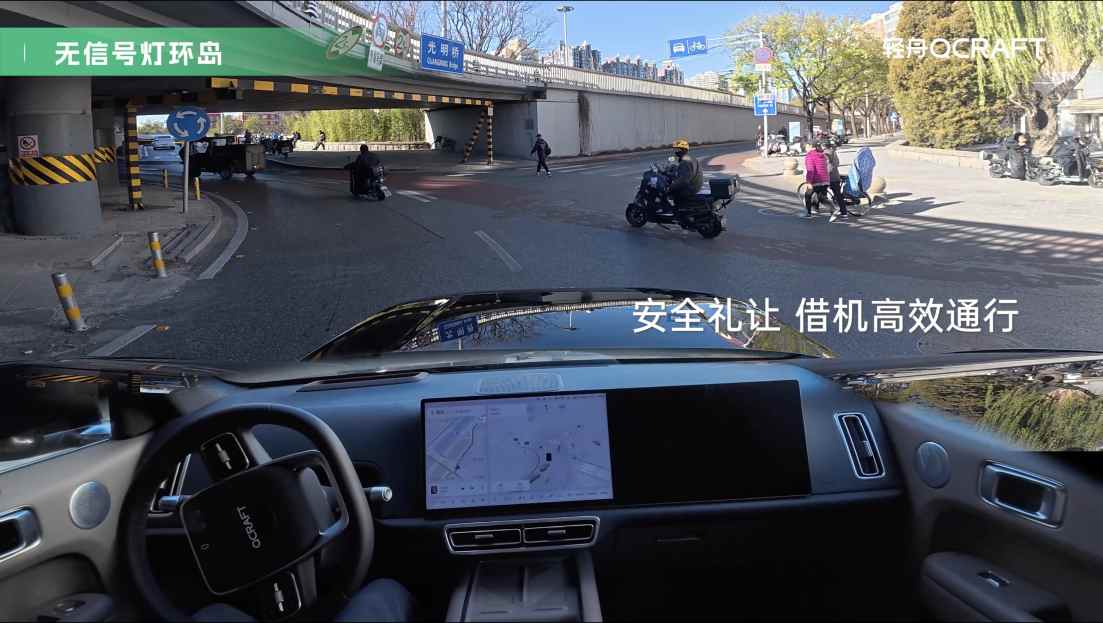
Group 1 - By the end of 2025, China's first batch of L3 autonomous vehicles will receive exclusive licenses, marking the transition from technical testing to commercial deployment [2] - In early January 2026, Yuanrong Qixing announced a partnership with a leading international OEM for L3 autonomous driving, representing the first international collaboration of its kind for domestic smart driving companies in 2026 [2] - The introduction of exclusive licenses and international collaboration is seen as a significant milestone, indicating that 2026 will be the year when L3 autonomous driving commercialization truly begins [2] Group 2 - L3 autonomous driving represents a turning point, shifting from driver-assisted systems (L2 and L2+) to highly automated systems where the vehicle takes over driving tasks under specific conditions [3] - The transition to L3 requires higher safety and reliability standards, focusing on environmental perception stability and decision-making predictability [3] - The challenge in moving from L2+ to L3 lies in redefining responsibility; once a system is classified as L3, the responsibility shifts from the driver to the system during its operation [4] Group 3 - Yuanrong Qixing's collaboration with an international OEM is a milestone in China's autonomous driving sector, moving beyond previous partnerships that focused on Robotaxi demonstrations and hardware collaborations [4] - Yuanrong Qixing aims for L4 fully autonomous driving from the outset, emphasizing the system's understanding and judgment capabilities without relying on high-precision maps [5] - The company's city NOA system is designed for nationwide deployment without the need for city-specific adaptations, showcasing its technological advancements [5] Group 4 - In 2025, over 200,000 vehicles equipped with Yuanrong Qixing's assisted driving system are expected to be delivered, involving more than 15 mass-produced models [6] - The collaboration with domestic OEMs allows for faster project rhythms and shorter feature rollout cycles, necessitating efficient communication and delivery mechanisms [6] - The differences in focus between domestic and international OEMs highlight varying approaches to L3 product planning, with domestic firms prioritizing efficiency and rapid iteration, while international firms emphasize safety and regulatory compliance [6]
驭浪“十四五” 启航“十五五” 汽车供应链企业的新年心声
Zhong Guo Qi Che Bao Wang· 2026-01-09 01:13
Core Insights - The automotive industry is undergoing a significant transformation, with the supply chain demonstrating resilience and evolving from a follower to a leader in electric, intelligent, connected, and low-carbon technologies [2] - The "14th Five-Year Plan" period has seen various companies achieve notable advancements and innovations, setting the stage for the "15th Five-Year Plan" [3][4][5][6][8][9] Achievements and Experiences - Desay SV achieved a compound annual growth rate of 34% in R&D investment over the past five years, establishing 12 global R&D centers and successfully launching multiple innovative technologies [3] - MogoCar released the first deep understanding model, MogoMind, and secured a project for L4 autonomous buses in Singapore, marking international recognition of its technology [4] - Times Intelligent introduced an integrated intelligent chassis, achieving global-leading performance in energy management and safety [5] - Yuanrong Qixing delivered over 200,000 vehicles equipped with its urban NOA system, showcasing its mass production capabilities [6][7] - Pony.ai became one of the few companies to operate fully unmanned L4 Robotaxis, accumulating over 10 million kilometers of safe driving [8] - Baixinniu's L4 autonomous logistics vehicles are operational in over 170 cities, emphasizing the importance of understanding logistics scenarios for sustainable value creation [9] Challenges and Solutions - Desay SV faces challenges in integrating technology and brand value in diverse regional markets, implementing a "2+1+1" international organizational model to address this [10] - MogoCar's main challenge is adapting autonomous vehicles to complex urban environments, which it addresses by enhancing AI capabilities and real-time data integration [11] - Times Intelligent is working to establish trust in its innovative chassis technology amidst a lack of industry maturity [12] - Yuanrong Qixing focuses on the VLA model to handle complex urban scenarios, continuously optimizing its data collection and processing [13] - Pony.ai aims to overcome technical, policy, and market acceptance challenges through technology enhancement and collaboration [14] - Baixinniu has refined its logistics focus to address commercial viability and customer needs, establishing partnerships with major logistics companies [15] Technological Trends - Desay SV is focused on AI technology driving innovation in smart vehicles, anticipating 2025 as the year AI cockpit models will be widely adopted [17] - MogoCar emphasizes the scaling of L4 autonomous driving technology, particularly in public transport [18] - Times Intelligent is concentrating on L3 to L4 autonomous driving technology and integrated control systems [19] - Yuanrong Qixing is advancing the VLA model for enhanced understanding and reasoning in complex driving scenarios [20] - Pony.ai identifies AI as a key driver for industry development, leveraging advancements in integrated circuits and deep learning [21] - Baixinniu is focused on end-to-end architecture and world models for logistics vehicles, aiming for breakthroughs in safety and efficiency [22] Future Development Expectations - Desay SV plans to accelerate international market expansion and enhance user experience through technological innovation [23] - MogoCar aims to deepen AI model capabilities and expand its market presence, starting with Singapore [24] - Times Intelligent seeks to scale its products in passenger vehicles and promote international collaboration [24] - Yuanrong Qixing targets a cumulative delivery of 1 million vehicles by 2026, focusing on mass production of assisted driving [25] - Pony.ai aims for profitability while advancing core technology and industry collaboration [25] - Baixinniu anticipates significant growth in L4 autonomous logistics vehicles, aiming for a global market presence [25] Differentiated Competitive Advantage - Desay SV emphasizes an "open, full-stack, rapid realization" growth model to achieve resilient, high-quality growth [27] - MogoCar focuses on integrating AI capabilities with real-world data to adapt to complex urban scenarios [28] - Times Intelligent aims to build a high-barrier system capability through innovative technologies and a sustainable supply chain [28] - Yuanrong Qixing believes in a long-term, consistent technology roadmap combined with strong engineering and user understanding [29] - Pony.ai prioritizes continuous R&D investment to build a robust technological moat [30] - Baixinniu integrates various supply chain elements to create a comprehensive operational model for sustainable growth [31]

元戎启行、毫末智行背后的投资人,对长城汽车爱恨两重天
Tai Mei Ti A P P· 2025-11-30 13:02
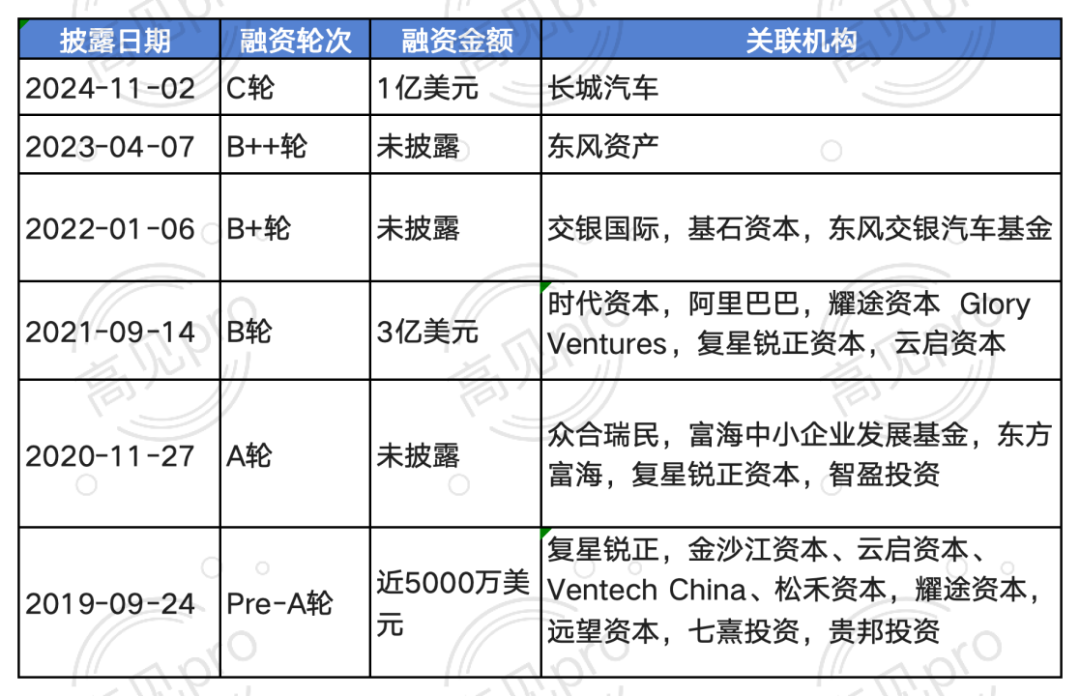
Core Insights - Yuanrong Qixing and Haomo Zhixing, both established in 2019, are experiencing vastly different trajectories as of winter 2025, with Yuanrong Qixing showing significant growth and Haomo Zhixing facing operational stagnation [1][2]. Company Performance - Yuanrong Qixing has delivered over 200,000 vehicles equipped with its urban NOA system, achieving a market share of nearly 40% among third-party suppliers in a single month [1]. - The CEO of Yuanrong Qixing, Zhou Guang, indicated plans to accelerate production and expand into Robotaxi and overseas markets [1]. - In contrast, Haomo Zhixing announced a company-wide shutdown starting November 24, 2024, with no set date for resumption, and has faced significant layoffs and executive departures since 2024 [1][2]. Investment Landscape - Yuanrong Qixing has maintained a steady financing pace, completing six rounds of funding with a total exceeding $500 million, including a recent $100 million Series C round led by Great Wall Motors [4][5]. - The investment structure of Yuanrong Qixing evolved significantly after its Series A and B rounds, with major players like Alibaba and Dongfeng Motor Group entering as strategic investors, indicating strong industry recognition of its technology [6][7]. - Haomo Zhixing has completed seven funding rounds, but its investor landscape has shifted, with a decline in participation from prominent investors like Hillhouse Capital and Meituan, signaling a loss of confidence in its growth potential [11][12][13]. Strategic Relationships - The relationship between Yuanrong Qixing and Great Wall Motors has evolved from a client-supplier dynamic to a deeper strategic partnership, enhancing both companies' operational synergies [7]. - Haomo Zhixing, originally incubated by Great Wall Motors, has struggled to establish independent market competitiveness, leading to a significant decline in investor interest [13][15]. Future Outlook - Yuanrong Qixing's increased delivery volumes in 2025 are seen as a strong foundation for potential public listing preparations, with recent investor exits interpreted as a positive signal for its market ambitions [10]. - Haomo Zhixing's future remains uncertain, with ongoing discussions about share buybacks at previous high valuations, but disagreements on pricing reflect the company's current operational challenges [15].

对话周光:用三部爆款车,元戎启行正式坐上牌桌
3 6 Ke· 2025-11-26 09:49
Core Insights - The autonomous driving industry has not seen new "winners" for a long time, but Yuanrong Qihang has emerged as a significant player, achieving a monthly market share of nearly 40% in the urban NOA third-party supplier market within just 14 months of operation [2][3] - The high-level assisted driving market is nearing a reshuffle, with a few key players dominating the landscape, including Yuanrong Qihang, Huawei, and Momenta [2] - Yuanrong Qihang's commercial breakthrough in 2024 is crucial, having secured a project with Great Wall Motors and significantly increasing the sales of the Blue Mountain model equipped with urban NOA [3][4] Company Performance - Yuanrong Qihang has delivered a total of 200,000 vehicles, marking a rapid commercial success [4] - The Blue Mountain model's sales surged to 6,019 units in a month, nearly tripling from the previous month, indicating strong market demand [3] - The company has received a $100 million exclusive investment from Great Wall Motors, enhancing their partnership and support for future projects [3] Market Dynamics - The shift from high-level assisted driving as an "add-on" to a core competitive factor among automakers is reshaping the industry [3] - Yuanrong Qihang's strategy focuses on producing a limited number of high-quality models, akin to Apple's approach in the tech industry [7] - The company plans to expand its customer base, including potential partnerships with joint venture automakers [9] Future Outlook - Yuanrong Qihang aims to achieve a delivery scale of one million vehicles in the coming year, positioning itself as a leader in urban NOA mass production [4] - The company is also preparing to launch its Robotaxi business in 2026, indicating a shift towards data-driven and collaborative evolution in autonomous driving [4] - The CEO emphasizes the importance of accumulating data through mass production to support the development of fully autonomous vehicles [13][12] Competitive Landscape - The current market has only three core players, suggesting a stable competitive environment with limited room for new entrants [7] - Yuanrong Qihang's AI capabilities are seen as a significant advantage over competitors, which may struggle to transition from traditional engineering to AI-driven approaches [16][17] - The company maintains strategic partnerships with chip manufacturers to enhance its competitive edge without venturing into hardware production [21][22]
元戎启行已实现20万辆城市NOA量产车型交付
Zhong Zheng Wang· 2025-11-24 07:39
Core Insights - Yuanrong Qixing showcased multiple models equipped with its combined auxiliary driving solutions at the 2025 Guangzhou Auto Show, demonstrating the adaptability and scalability of its systems across various vehicle types including SUVs, MPVs, and off-road vehicles [1] - As of now, Yuanrong Qixing has delivered 200,000 mass-produced vehicles equipped with its City NOA (Navigation Auxiliary Driving) system, with a target to exceed 1 million cumulative deliveries by 2026 [1] - The company achieved nearly 40% market share in the third-party City NOA market within just over a year, reflecting strong recognition of its technological capabilities and delivery performance [1] Business Development - Yuanrong Qixing's auxiliary driving solutions have contributed to the sustained sales growth of its partner models, while the company accelerates its Robotaxi business [2] - A strategic agreement was reached with the Wuxi municipal government to establish a testing and R&D base, with plans to launch Robotaxi services using consumer-grade mass-produced vehicles by the end of this year [2] - Unlike the traditional "modified vehicle + high-precision map" approach, Yuanrong Qixing's Robotaxi vehicles are built on consumer-grade mass-produced cars, resulting in lower deployment costs and enhanced system stability and platform compatibility [2] Technological Advancements - Yuanrong Qixing is advancing its RoadAGI initiative through its self-developed VLA model, which integrates VLA and VLN core models to enable mobile intelligent agents to navigate autonomously in real environments using natural language commands [2] - The application scenarios for RoadAGI include public roads, campus pathways, and indoor shopping malls, facilitating "any point to point" navigation [2]
对近期重要经济金融新闻、行业事件、公司公告等进行点评:晨会纪要-20251124
Xiangcai Securities· 2025-11-24 02:02
Macro Strategy - The LPR remained unchanged in November, with the 1-year and 5-year rates at 3.00% and 3.50% respectively, indicating stable monetary policy despite weak macro data in October [2][3] - A-share indices experienced significant declines from November 17 to 21, with the Shanghai Composite Index down 3.90% and the ChiNext Index down 6.15%, primarily due to reduced expectations for a December rate cut by the Federal Reserve [3][4] - All primary industries in the A-share market declined, with energy metals and communication equipment showing the highest cumulative gains for 2025 at 83.18% and 78.97% respectively [5][6] Investment Recommendations - For the long term, 2026 is expected to be a year of growth driven by the "14th Five-Year Plan," with a stable A-share market anticipated [7] - Short-term strategies should focus on sectors benefiting from long-term capital inflows, traditional sectors related to "anti-involution," and consumer areas such as motorcycles and medical services [7] North Exchange Overview - As of November 21, 2025, the North Exchange had 284 listed stocks, with an average total market value of 864.16 billion yuan, a decrease of 4.16% from the previous week [10][11] - Notable new listings included Dapeng Industrial, which saw a 1211.11% increase in its stock price during its first week [10][12] Medical Services Industry - The pharmaceutical and biological sector fell by 6.88%, underperforming the Shanghai Composite Index by 3.11 percentage points [16][17] - The medical services sector's PE ratio is currently at 31.22, with a recent decline of 2.25 [18] - High-growth areas such as ADC and TIDES CDMO are recommended for investment, with companies like WuXi AppTec and WuXi Biologics highlighted [19][20][21] Automotive Industry - Yuanrong Qixing showcased 200,000 mass-produced vehicles at the Guangzhou Auto Show, aiming for a cumulative delivery of 1 million vehicles by 2026 [23][24] - The automotive sector is expected to benefit from the acceleration of intelligent technology adoption and supportive policies for vehicle consumption [25][26] - Investment opportunities are significant in the automotive and parts sectors, particularly for companies involved in smart components and electric vehicles [26][27]
人机共驾不是权宜之计!业内专家热议智驾安全 中科院王宏安:机器不可能完全取代人
Mei Ri Jing Ji Xin Wen· 2025-10-27 12:17
Core Viewpoint - The discussion on intelligent driving safety is ongoing, emphasizing that human-machine collaboration will be crucial for future developments in autonomous driving technology [1][3]. Group 1: Human-Machine Collaboration - Current intelligent driving capabilities do not meet user expectations, highlighting the need to build trust between humans and machines to optimize collaboration [3][4]. - If humans disengage from driving control, their driving skills may deteriorate, leading to risky behavior due to overconfidence in autonomous systems [3][4]. Group 2: Industry Challenges - The urban navigation assistance feature (NOA) in intelligent driving vehicles faces challenges due to the complexity and diversity of China's traffic infrastructure, affecting user trust in these systems [3][4]. - Companies are focusing on enhancing the capabilities of intelligent driving products to handle complex scenarios, including increasing computational power and automating data processes for rapid system iteration [4]. Group 3: Technological Advancements - The integration of large models in AI is expected to improve human-machine interaction by better understanding commands and emotional nuances [4]. - In five years, AI-driven vehicles may evolve from mere tools to intelligent companions, with systems potentially available in vehicles priced around 100,000 yuan [5]. - The automotive industry anticipates the mass production of intelligent cabins with long-term memory capabilities, leading to personalized driving experiences [5].