MOVE

Search documents
美股资产大幅缩水后的反思:本轮大崩盘的真凶不是 AI?
Sou Hu Cai Jing· 2026-02-07 12:53
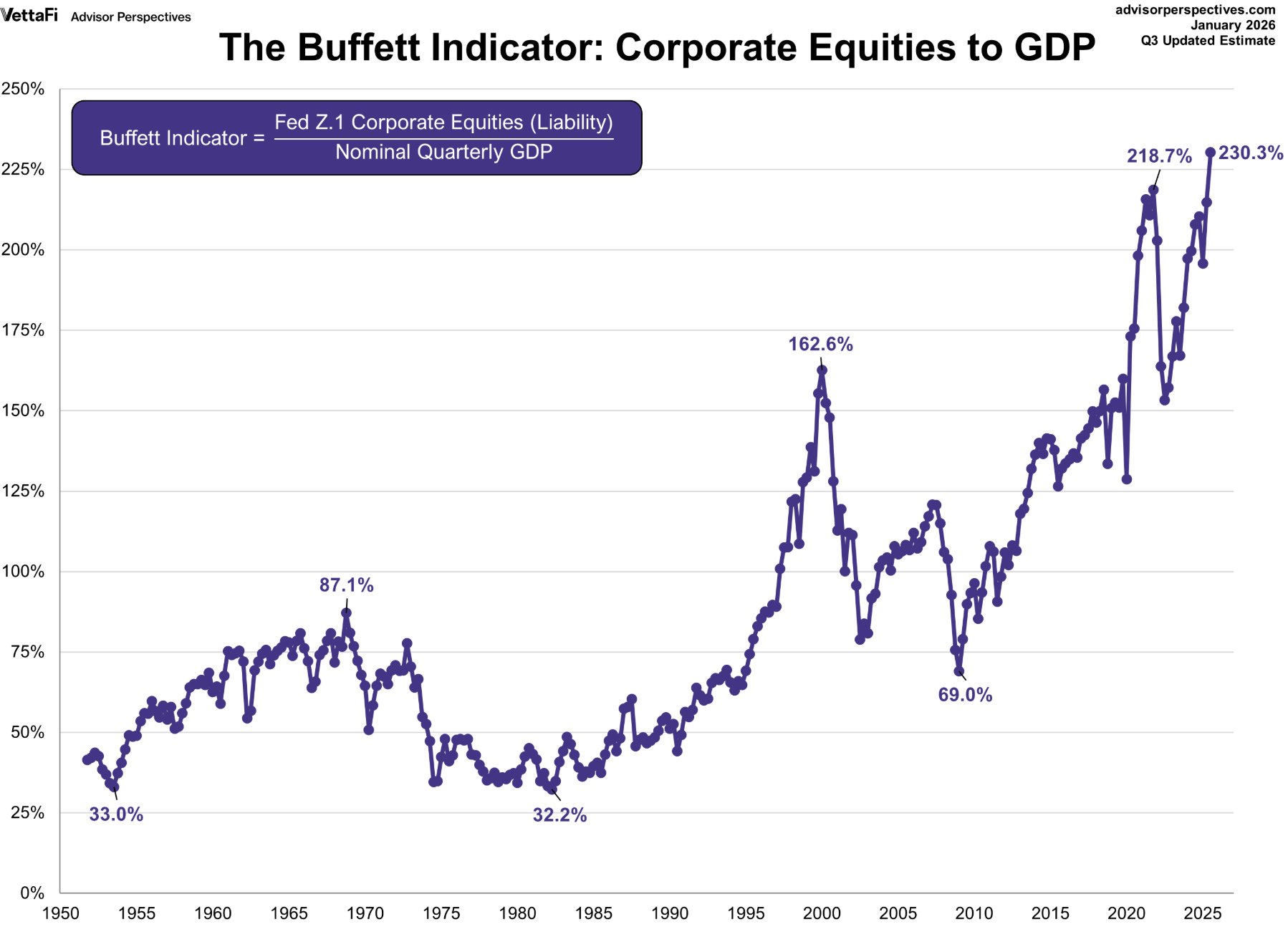
Market Overview - The recent market downturn has seen significant declines in various asset classes, including gold, silver, cryptocurrencies, and major stock indices like the US and Hong Kong markets, with some stocks like Figma and Xpeng dropping over 70% [1][2][3] Market Analysis - Analysts are attributing the market decline to several factors, including the perceived strength of Anthropic's legal AI, Google's higher-than-expected capital expenditure guidance, and the hawkish stance of incoming Federal Reserve Chair Warsh [2][4] - However, these explanations are deemed superficial, as the real drivers of the market volatility are liquidity tightening and high valuations [4][5] Valuation Metrics - The current market valuation, as indicated by the Buffett Indicator (total market capitalization to GDP ratio), stands at 230%, significantly above the 120% threshold that suggests severe overvaluation [5][6] - The S&P 500 Forward P/E ratio is at 22.0x, compared to a 30-year average of 17.1x, indicating a significant premium and suggesting that the market is in a "significantly overvalued" zone [7] Liquidity Concerns - Liquidity tightening is primarily driven by rising Japanese government bond yields, which are reducing global market liquidity due to the unwinding of yen carry trades [10][13] - The U.S. Treasury General Account (TGA) is also a critical factor, with a high balance of approximately $893.2 billion as of early February, and plans for significant debt issuance, further constraining market liquidity [14][15] Market Dynamics - The Chicago Mercantile Exchange (CME) has raised margin requirements for precious metals, which has historically led to forced deleveraging in the market, contributing to the recent volatility [17][19] - Key liquidity indicators to monitor include net liquidity, short-term funding prices (SOFR), interest rate volatility (MOVE), and credit spreads (HY OAS), as these factors will influence market stability and risk asset performance [20][21]