Monetary Stimulus

Search documents
Inflation likely to increase after midterms, says former Kansas City Fed President Thomas Hoenig
CNBC Television· 2026-01-26 17:20
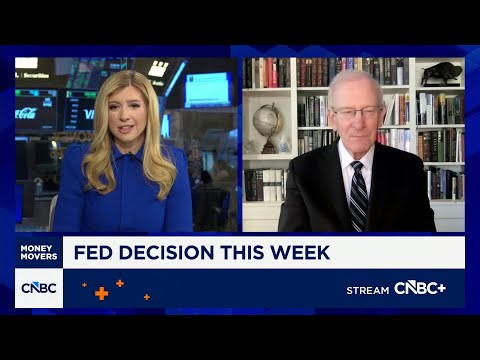
Joining us now is former Kansas City Fed President Thomas Honig. It's great to have you back, Thomas. So, I actually want to start with what what I think is the biggest market story today, which is the strength in the Japanese yen on rumors and speculation of intervention by potentially the US here at the same time where gold is making new highs and up another 2%.Is is this something that you think will get discussed at the Fed meeting this week. I'm almost certain it will be discussed at the Fed meeting bo ...

中国银行 -我们对近期货币刺激的看法:财政刺激在路上,是时候重估了-China Banks Our take on recent monetary stimulus Fiscal stimulus on the way Time to revisit
2026-01-19 02:29
Summary of Conference Call on China Banks Industry Overview - The conference call focused on the Chinese banking sector, particularly the implications of recent monetary and fiscal stimulus measures announced by the People's Bank of China (PBoC) [1][2]. Key Points and Arguments Monetary Policy Changes - PBoC announced new supportive monetary policies on January 15, including: - Expansion of relending facilities with an additional quota of approximately RMB 1.1 trillion, targeting private enterprises and key industries such as agriculture, small businesses, technological innovation, carbon reduction, service consumption, and elderly care [1]. - A 25 basis points (bps) interest rate cut for relending facilities, reducing the rate from 1.5% to 1.25% [7]. - Potential for further cuts in the Reserve Requirement Ratio (RRR) and Loan Prime Rate (LPR) [1][2]. Impact on Banks' Net Interest Margin (NIM) - The relending facilities rate cut is expected to benefit banks' NIM by approximately 0.3 bps, as banks can borrow cheaper funds from PBoC [1]. - The balance of relending facilities reached around RMB 5 trillion by Q3 2025, representing about 1% of banks' total assets [1]. - The anticipated fiscal stimulus, including interest subsidies on consumer and micro loans, is expected to have a limited negative impact on banks' NIM [1]. Credit Growth and Loan Demand - The stimulus measures are designed to incentivize banks to direct credit towards policy-favored sectors, supporting loan growth at the beginning of 2026, coinciding with the start of the 15th five-year plan [1]. - There is an expectation of stronger-than-expected loan growth in early 2026 due to these targeted lending initiatives [1]. Treasury Bond Market Dynamics - Lower treasury bond yields are projected to widen the spread between banks' dividend yields and the 10-year China treasury bond yield, attracting yield-seeking investors [2][5]. - The PBoC may actively participate in treasury bond trading to rebalance supply and demand dynamics, potentially lowering treasury bond yields further [2]. Investment Outlook for China Banks - China banks' H-shares have underperformed the Hang Seng Index by 7 percentage points year-to-date in 2026, but there is optimism for recovery due to: - Expected growth in insurers' premiums, leading to increased inflows into high-yield bank stocks [6]. - The attractiveness of banks' dividend yields due to lower treasury bond yields [6]. - The positive impact of monetary and fiscal stimulus on loan growth with limited negative effects on NIM [6]. - Specific banks highlighted for potential investment include ICBC-H and BOC-H, which offer above-peer dividend yields and favorable valuations [6]. Insurer Investments in Banks - Notable changes in equity stakes by insurers in various banks were discussed, indicating a trend towards increased financial investments in the banking sector [12]. Additional Important Information - The conference call emphasized the importance of monitoring the evolving regulatory environment and market conditions that could impact the banking sector's performance [1][2][6]. - Analysts expressed caution regarding the potential for NIM compression in FY26, estimating a 6 bps decrease, but noted that RRR cuts and potential deposit rate cuts could provide some offset [2]. This summary encapsulates the key insights and projections regarding the Chinese banking sector as discussed in the conference call, highlighting the implications of recent monetary policies and the outlook for investment opportunities.

X @Bloomberg
Bloomberg· 2025-12-16 11:22
The Swedish economy is set to break a three-year spell of near-stagnation as monetary and fiscal stimulus help revive household spending in 2026 https://t.co/g0baOSsOb9 ...
Walser: Divided Fed Shows Growing Instability, ORCL Poses A.I. Questions
Youtube· 2025-12-11 23:30
Federal Reserve Insights - The Federal Reserve is currently exhibiting a divided stance, with some members favoring steady rates while others are more inclined towards rate cuts, indicating instability within the Fed [2][4][5] - The probability of a rate cut has fluctuated significantly, moving from 44% to over 90% within a short period, which is unusual and reflects market uncertainty [5][6] Market Conditions - The current accommodative monetary policy is seen as beneficial for equities, particularly small-cap stocks, with projections suggesting 2026 could be favorable for this segment [2][10] - The Fed has injected billions into the economy recently, transitioning back to quantitative easing, which may lead to currency devaluation [12][13] Investment Opportunities - Companies like L, which has a strong history of dividend growth and is currently 20% off its all-time high, are viewed as potential value plays [14] - Visa is highlighted as a strong investment due to its transition from traditional finance to blockchain technology, supported by significant free cash flow and a long history of dividend growth [16][18] Sector Analysis - The technology sector, particularly companies involved in AI and blockchain, is seen as a key area for growth, with Oracle facing pushback due to its debt financing strategy [7][9][19] - The overall economic stimulus from government spending is expected to positively impact equities, although its effects on the bond market may differ [10][11]


The next 3 phases of the AI cycle for 2026, plus why Trump's Nvidia announcement didn't move markets
Youtube· 2025-12-09 21:59
Economic Outlook and Market Sentiment - The US economy is expected to support stock performance in early 2026 due to monetary and fiscal stimulus, as well as ongoing AI capital expenditures [1][2] - The AI capital expenditure cycle is anticipated to evolve through three phases: expansion, implementation, and realization, with various companies positioned to benefit at each stage [1][2] AI and Technology Sector - Companies like Nvidia are currently leading the AI buildout, but there is a need for broader participation from other firms to drive the next phase of AI development [1] - The H200 AI chips from Nvidia are expected to be more powerful than existing Chinese alternatives, although there are concerns about actual demand from China [2][3][4] Small Cap Stocks - A shift is expected in small cap stocks from low-quality rallies to a focus on companies with high return on invested capital (ROIC) and consistent profitability [1][2] - Companies like Mueller Industries are highlighted as undervalued opportunities within the industrial sector, benefiting from the ongoing economic buildout [1] Consumer Discretionary vs. Staples - A preference for consumer discretionary stocks over staples is noted, driven by anticipated improvements in consumer spending, particularly among lower-end consumers [2] - Home Depot is identified as a particularly attractive investment opportunity within the consumer discretionary space, especially as housing markets recover [2] Oracle's Earnings Expectations - Oracle's AI cloud business is projected to see significant revenue growth, with expectations of a 68% increase in cloud infrastructure revenue [6][7] - Analysts are closely monitoring Oracle's capital expenditures and free cash flow implications as the company invests heavily in AI data center infrastructure [9][10] Regulatory and Political Landscape - The Supreme Court's potential ruling on Trump tariffs could significantly impact various sectors, with implications for companies like Nike and Walmart if tariffs are lifted [11][12] - The likelihood of extending ACA subsidies has decreased, which may affect healthcare companies and the broader market as affordability concerns rise [24][25]

A.I. Bubble "Inflating," "Not Popping:" Tech-Tied Stocks to Watch in CapEx Cycle
Youtube· 2025-12-03 20:00
Market Overview - The Dow is experiencing a positive trend, up 450 points and has risen in six of the last seven trading days [1] - There is speculation about a potential "Santa Claus rally" in the market [2] AI Bubble Discussion - There is a belief that an AI bubble is forming, similar to past technological revolutions [2][3] - Concerns are raised about overindebtedness rather than just overvaluations in the stock market [3][4] Economic Indicators - The bond market is highlighted as a more critical area to watch for signs of overindebtedness [4] - Expectations of monetary stimulus are increasing, with potential rate cuts anticipated [8][9] Sector Performance - Two out of the seven "MAG" stocks have outperformed the S&P 500 this year, indicating selective strength in certain sectors [6] - There is optimism about capital expenditures (capex) and cyclical spending, particularly in energy, industrials, and materials [13][14] Investment Strategies - Dividend-paying technology stocks are recommended as safer investments in a potentially over-leveraged environment [12] - Industrial metals, such as copper and steel, are expected to benefit from a significant capex cycle [14][15] Credit Concerns - Credit default swap (CDS) spreads for major hyperscalers like Amazon and Microsoft are currently tight, indicating market confidence [19][20] - Monitoring CDS spreads may provide insights into the market cycle and potential earnings misses [20]

Bitcoin Signals “COVID-Era” Risk-Reward Setup Again: Bitwise Analyst
Yahoo Finance· 2025-11-29 10:26
Core Insights - Bitcoin's current price action is reminiscent of the extreme risk-reward environment seen during the early COVID-19 pandemic, indicating a potential asymmetric risk-reward scenario [3][4] - The cryptocurrency is perceived to be pricing in a recessionary growth environment, reflecting the most bearish global growth outlook since 2022 [4][5] - Recent price movements show Bitcoin has declined over 17% in the past 30 days, with significant sell-offs and liquidations impacting market sentiment [5][6] Market Dynamics - Bitcoin reached an all-time high of $125,100 on October 5, followed by a significant pullback after a $19 billion liquidation wave on October 10 [6] - The price dipped below $100,000, a key psychological support level, and briefly fell under $90,000 on November 20, but buyers quickly entered the market [6] - The current market setup suggests that Bitcoin is trading as if a deep economic downturn is already underway, influenced by aggressive rate tightening from the US Federal Reserve and the fallout from the FTX failure [4][5] Future Outlook - There is a belief that the current pessimism surrounding Bitcoin may be misplaced, with expectations of a rebound in global growth as previous monetary stimulus takes effect [7][9] - ARK Invest's CEO, Cathie Wood, anticipates a liquidity rebound in crypto markets driven by expected Federal Reserve policy shifts before year-end [8]
X @Bloomberg
Bloomberg· 2025-11-12 03:51
Market Trends & Monetary Policy - Goldman Sachs and other global lenders are revising their expectations for further monetary stimulus in China this year [1] - The shift in outlook follows signals from the People's Bank of China (PBOC) indicating a more patient approach to managing the economy [1] - China's economy remains on track to achieve its growth targets [1]
X @Bloomberg
Bloomberg· 2025-10-27 23:28
South Korea’s economy gained momentum last quarter, bolstering the case for authorities to refrain from adding monetary stimulus as they weigh the need to rein in a sizzling housing market against the expected impact from US trade policies https://t.co/g47qYpot3W ...
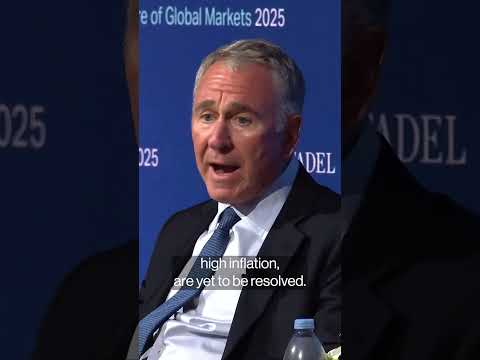
Economy is on bit of a “sugar high,” Griffin says #shorts #tariffs #economy #kengriffin #citadel
Bloomberg Television· 2025-10-06 22:34
US Economic Outlook - The Trump administration's policies aim to improve the lives of average American families, fueling market enthusiasm in the United States [1] - The US economy is experiencing a "sugar high" due to fiscal and monetary stimulus, typically seen during recessions, but occurring amidst near full employment [2] - The market has largely moved past tariff issues, but concerns related to tariffs, particularly high inflation, remain unresolved [3] - Markets are underestimating the potential for a significant increase in inflation, given pro-inflationary immigration, fiscal, and monetary policies [4]