Multi - Agent Collaboration

Search documents
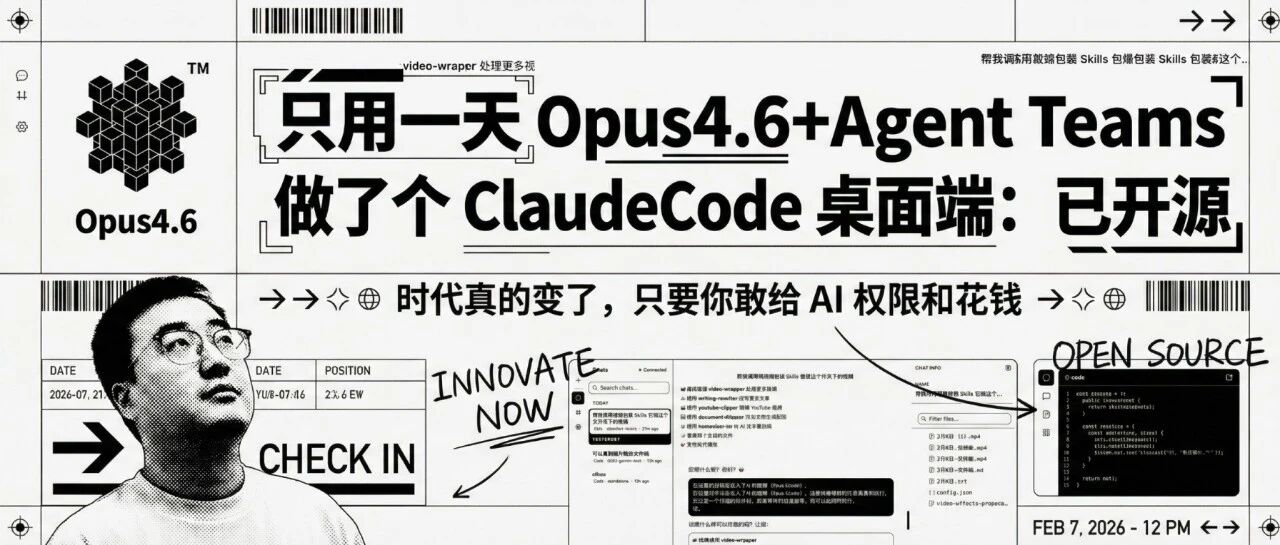
只用一天Opus4.6+Agent Teams做了个ClaudeCode桌面端:已开源
歸藏的AI工具箱· 2026-02-07 05:14
Core Insights - The article discusses the launch of CodePilot, a desktop client for Claude Code, highlighting its comprehensive features and user-friendly design [1][3]. Group 1: Key Features of CodePilot - CodePilot supports all core functionalities of Claude Code, including folder selection, model switching, slash commands, Skills invocation, and MCP server integration, providing a significantly improved user experience [3]. - The client offers enhanced chat history management, allowing users to easily access previous conversations, with each message displaying the associated cost for transparency [5][6]. - A visual configuration management interface has been introduced, enabling users to modify configuration files, Skills, MCP, and plugins without needing command line interaction [8]. - Users can preview the contents of folders directly within the application, making it easier to access text files and other resources [9]. - Third-party API configurations are supported, allowing flexibility for users who may not have direct access to the official API [11]. - The connection status of Claude Code is clearly displayed, providing guidance for users in case of connectivity issues [13][14]. Group 2: Agent Teams Collaboration - The article introduces the Agent Teams mode, which allows a main intelligent agent to delegate tasks to multiple sub-agents, enabling parallel work and real-time communication between agents [19][20]. - Enabling Agent Teams is straightforward, requiring users to update to the latest version of Claude Code and follow simple instructions to configure it [21]. - Tips for utilizing Agent Teams include having Claude assist in writing planning prompts, emphasizing the importance of preliminary research for role definition, and advocating for flexible role design tailored to specific tasks [23][25][27]. - The article emphasizes that the current era allows for rapid development of fully functional applications, with the use of Opus 4.6 proving to be cost-effective due to its efficiency and reduced need for corrections [30][31].

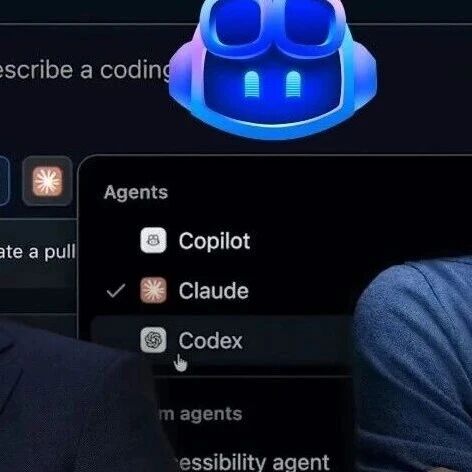
GitHub 深夜引爆,最强Claude + Codex合体!全球 1.8 亿程序员一夜解放?
程序员的那些事· 2026-02-06 10:05
Core Insights - GitHub has announced a significant update by integrating two powerful programming AIs, Claude and Codex, alongside Copilot, marking the beginning of a new era in AI programming collaboration [3][4][5] - This evolution transforms GitHub from a simple code hosting platform into a multi-agent collaborative "AI battlefield" [5][14] - The introduction of Agent HQ allows developers to manage tasks seamlessly without switching tools, significantly reducing friction in the development process [7][8][20] Integration of AI Agents - The three AI agents, Copilot, Claude, and Codex, can now be called upon simultaneously to handle complex tasks such as coding, bug fixing, and pull request submissions [4][9][16] - Developers can assign tasks to multiple AIs asynchronously, allowing for efficient handling of coding challenges [22][41] - The integration aims to make AI agents a native part of developers' workflows, enhancing productivity and collaboration [10][47] User Experience and Functionality - The Agent HQ platform is designed to provide a smooth user experience, enabling developers to interact with AI agents directly within GitHub, VS Code, and mobile applications [9][20][35] - Developers can track the progress of AI tasks in real-time and review detailed logs of AI actions, ensuring transparency and accountability [28][31] - The AI-generated outputs, such as code reviews and suggestions, are integrated into the personal workflow, making them easy to evaluate and incorporate [33][46] Future Implications - This update signifies a shift in the software development landscape, moving from individual AI assistance to a coordinated effort among multiple AI agents [49][50] - The focus is on creating a unified, secure workflow that allows for scalable AI integration across development teams [52] - The future of development will involve specialized AI agents for various tasks, enhancing efficiency and allowing developers to focus on strategic decision-making rather than routine coding tasks [53][54]

华龙证券:Agent商业化加速 应用场景有望多点开花
智通财经网· 2025-10-29 01:48
Core Insights - The report from Huolong Securities suggests that AI Agents may become the next mainstream AI product form, succeeding Chat bots, as they evolve towards more complex decision-making capabilities [1] - The transition from "process delivery" to "result delivery" is expected to enhance enterprises' willingness to pay for AI solutions, as AI applications can significantly improve productivity and reduce costs [1] - The rapid development of AI infrastructure is creating favorable conditions for the flourishing of the Agent ecosystem, with major cloud providers increasing capital expenditures on AI and cloud infrastructure [2] - Multi-Agent Collaboration is emerging as a trend, where multiple autonomous agents work together to achieve complex goals, indicating a shift towards decentralized and interactive AI solutions [3] Group 1: Transition in AI Product Forms - The evolution from Chat bots to Agents represents approximately three generations of AI product forms, leading to deeper user interactions and more complete task results [1] - AI products are expected to increasingly emphasize productivity attributes rather than merely serving as tools, with enterprises shifting from capital expenditures (Capex) to operational expenditures (Opex) for AI investments [1] Group 2: AI Infrastructure Development - Major cloud companies like Microsoft, Google, Amazon, and Meta are significantly increasing their capital expenditures on AI and cloud infrastructure, with Alibaba planning to invest more in AI and cloud computing than in the past decade combined [2] - The optimization of domestic large model architectures is enhancing inference efficiency, laying a solid foundation for the development of Agents [2] Group 3: Multi-Agent Collaboration - Multi-Agent Collaboration involves multiple autonomous agents communicating and coordinating to achieve complex objectives, characterized by decentralization, interactivity, and complementarity [3] - Current business models for Agents include subscription models (SaaS), pay-per-use based on API calls, and customized services for specific industries, with a growing trend towards payment based on results achieved (RaaS) [3]
AI Agent产品矩阵全景:从RPA到智能体的进化图谱
Sou Hu Cai Jing· 2025-06-30 13:43
Core Insights - AI Agents have transitioned from laboratory experiments to enterprise-level applications, becoming central to automation solutions, with various products redefining human-machine collaboration in different scenarios [1][3][4] Group 1: RPA and AI Agent Integration - Traditional RPA was rule-driven and relied on predefined processes for repetitive tasks, but with the maturity of AI technology, RPA is evolving into a hybrid automation model known as "RPA+AI" [1][3] - Automation Anywhere's AI Agent Studio allows users to create custom AI Agents through a low-code platform, transforming natural language commands into executable automation processes [1] - TARS-RPA-Agent by 实在智能 enhances this framework with strong intent understanding and the ability to adjust strategies autonomously, marking a shift from execution to decision-making [1][3] Group 2: Vertical Specialization of AI Agents - AI Agents demonstrate differentiated advantages in specialized fields such as finance, government, and design, with banks like 招商银行 and 华夏银行 achieving 100% automation in processes like credit review and anti-money laundering, reducing human error rates to zero [3] - In the design sector, Lovart supports the entire design process from concept to final output, enabling designers to collaborate with AI through natural language [3] Group 3: Open Source and Ecosystem Development - The proliferation of AI Agents is driven by open-source ecosystems, with OpenManus replicating core functionalities and allowing users to access, modify, and deploy code freely [3] - AutoGLM's deep thinking capabilities simulate human cognitive processes, facilitating a complete workflow from data retrieval to report generation [3] Group 4: Future Trends in AI Agents - AI Agents are evolving from standalone tools to collaborative multi-Agent systems, with 字节跳动's 扣子空间 integrating cross-platform tools through the Model Context Protocol (MCP) [4] - The Eureka platform by 智慧芽 focuses on building an AI Agent ecosystem for technological innovation, allowing users to standardize or customize Agents, leading to an "Agent Store" model [4] Group 5: Conclusion on AI Agent Evolution - The transition from RPA's execution layer to AI Agent's decision layer signifies a profound paradigm shift, with both closed systems and open ecosystems being challenged [6] - Companies like 实在智能, OpenManus, and AutoGLM are addressing the critical question of how to enable AI to understand and execute complex tasks effectively [6]