
OCI账户

Search documents
告别利润过山车: 险资为何纷纷通过OCI账户扫货红利股
Sou Hu Cai Jing· 2025-12-29 10:24
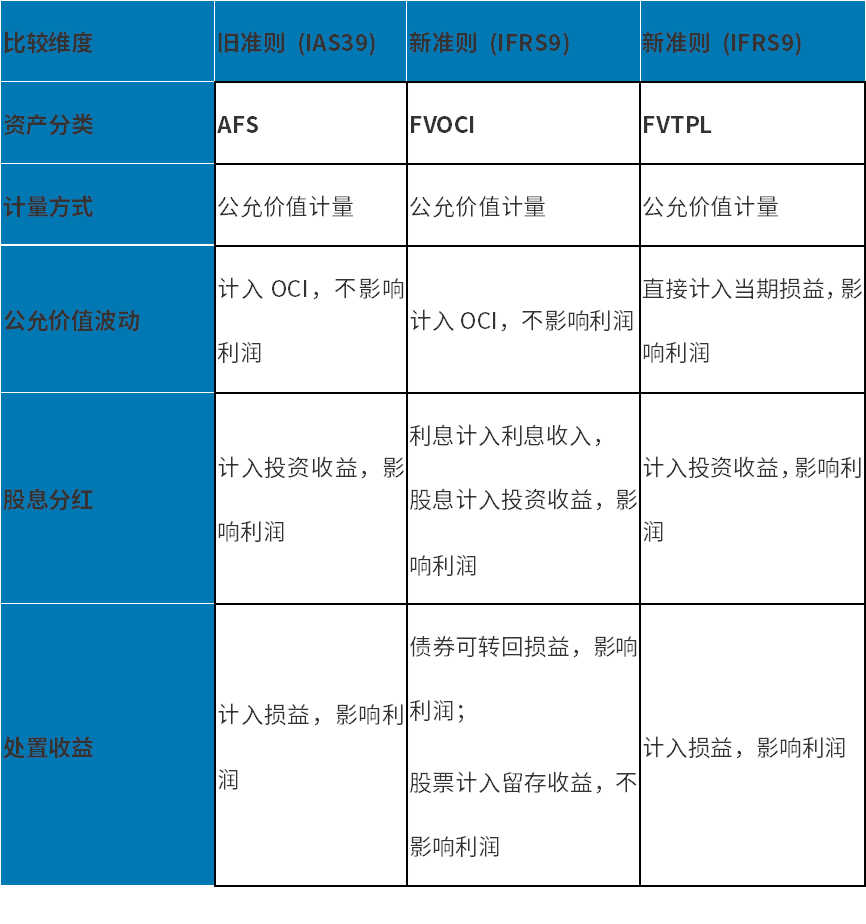
Core Viewpoint - The implementation of the IFRS9 accounting standard significantly impacts insurance companies' investment strategies, particularly in how they classify and manage equity assets, leading to a preference for high-dividend, low-volatility stocks as a means to stabilize profits [1][6]. Group 1: Impact of IFRS9 on Insurance Companies - The transition from IAS39 to IFRS9 has removed the flexible classification of equity assets, forcing insurance companies to choose between FVTPL (Fair Value Through Profit or Loss) and FVOCI (Fair Value Through Other Comprehensive Income) [2][4]. - Under IFRS9, fluctuations in stock prices directly affect the profit and loss statement if classified as FVTPL, which can lead to significant profit volatility, a concern for traditionally conservative insurance firms [2][4]. - The FVOCI classification allows insurance companies to isolate stock price volatility from their profit statements, but it restricts the recognition of capital gains from stock sales, limiting profit contributions to dividend income only [5][6]. Group 2: Investment Strategy Shifts - To mitigate profit volatility, insurance companies are increasingly placing equity assets into FVOCI accounts, which require a focus on stable, high-dividend stocks to enhance reported earnings without selling the assets [5][6]. - The combination of reduced capital requirements for holding low-volatility dividend stocks and the profit stabilization needs under IFRS9 creates a favorable environment for these types of assets, particularly in the context of Hong Kong stock indices [6]. - Data indicates a significant increase in the proportion of equity assets held in OCI accounts by major insurance companies, reflecting a strategic shift towards high-dividend, low-volatility investments [6].

中国平安20251110
2025-11-11 01:01
Summary of China Ping An Conference Call Company Overview - **Company**: China Ping An - **Industry**: Insurance and Financial Services Key Points and Arguments Investment Strategy - China Ping An has adopted a "Fixed Income Plus" strategy, increasing allocations to high-dividend stocks such as bank shares (HSBC, China Merchants Bank, Agricultural Bank of China) to enhance investment returns and cover liability costs in response to low government bond yields [2][3][4] - The company has dynamically adjusted the proportion of high-yield stocks in its Other Comprehensive Income (OCI) account, achieving better-than-expected returns on equity assets [2][6] - The allocation to Total Portfolio Level (TPL) stocks has improved net assets and profits, with equity proportion rising from approximately 13% disclosed in the interim report [2][6] Financial Performance - In the third quarter, the core solvency ratio of life insurance decreased by 33 basis points due to increased minimum capital requirements from the distribution of rights, but the company maintains a stable solvency outlook [2][9] - New Business Value (NBV) growth approached 60% in the first three quarters, driven by strong demand and excellent performance across channels, particularly a 170% increase in the bancassurance channel [2][9] Market Outlook - The company views the current market as a low-interest-rate environment, favoring high-dividend stocks to enhance overall returns while planning to adjust bond allocations based on market conditions [3][4] - The company has entered the top ten shareholders of Agricultural Bank of China, citing its stability and predictable high dividend characteristics as key factors for investment [5] Channel Development - The bancassurance channel has expanded significantly, with the number of cooperative bank outlets increasing from 12,000 to 19,000, enhancing single-point productivity [3][10] - The individual insurance channel has seen a positive growth trend in new single premiums, with a focus on optimizing team structure and improving agent income levels [11][12] Product Strategy - The company plans to promote dividend insurance products, which currently account for about 40% of new individual insurance policies, and aims to increase this proportion in the future [14][15] - A new dividend insurance product, "Jin Yue," launched in April, achieved sales exceeding 8 billion yuan within a month, indicating strong market demand [15] Regulatory Environment - The implementation of the new mortality table in 2026 is expected to impact insurance product pricing, but adjustments will be made based on company-specific experience [18] - There is a discussion among regulators about unifying the discount rate curve for liabilities across listed insurance companies, but this process is complex and may not be achieved by 2026 [21] Long-term Outlook - The company is optimistic about the long-term trend of Contractual Service Margin (CSM), expecting growth in the annual perspective despite a year-on-year decline [22] Additional Important Information - The company emphasizes risk diversification in its stock selections, particularly in banking stocks, to mitigate concentration risks [3][5] - The focus on enhancing agent productivity and income is part of a broader strategy to ensure sustainable growth in the individual insurance channel [11][13]
