
OPC生态

Search documents
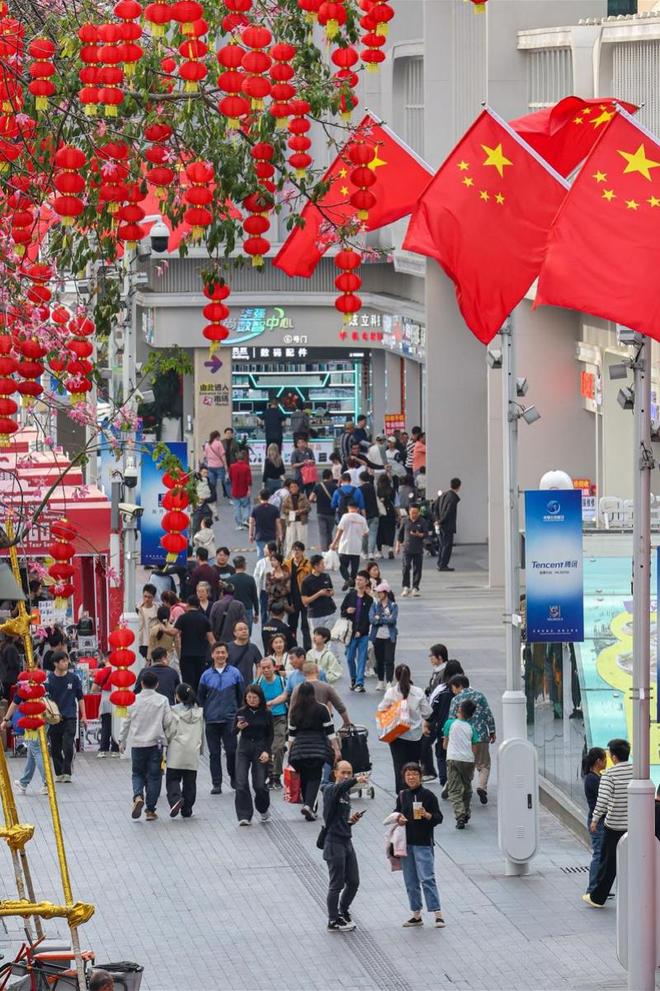
不止反向团圆!华强北春节酒店爆满,背后藏着创业热、全球热
Nan Fang Du Shi Bao· 2026-02-20 14:41
Core Insights - In 2026, hotel bookings in Shenzhen during the Spring Festival ranked among the top three in the country, with a year-on-year increase of 48% [1] - The Huaqiangbei commercial area emerged as the highest region for hotel bookings in Shenzhen, with a 35% increase in hotel occupancy and a 100% rise in foreign guest stays during the holiday [1][3] Group 1: Consumption Boom - The "reverse reunion" trend significantly boosted hotel occupancy rates in Huaqiangbei, with a 56% year-on-year increase in hotel stays for guests aged 60 and above, who often brought local specialties to visit their children [4] - The average hotel occupancy rate in the Huaqiangbei area reached 80% during the Spring Festival, a 28 percentage point increase compared to the previous year [4] - Huaqiangbei experienced a surge in sales of technology products, with overall sales increasing by over 30% in the two months leading up to the festival, and AI glasses sales skyrocketing by 70% to 80% [5] Group 2: Entrepreneurial Activity - Many entrepreneurs chose to stay in Shenzhen during the Spring Festival, utilizing hotels as temporary offices to maintain innovation and production schedules [6] - The proportion of AI products in Huaqiangbei increased from 12% in 2023 to 41% in 2026, reflecting the growth of the local OPC innovation ecosystem [6] - The flexible combination of accommodation and office space in hotels has injected continuous vitality into the hotel industry in Huaqiangbei [6] Group 3: Global Engagement - Huaqiangbei attracted a daily average of 750,000 visitors, including over 7,000 foreign merchants from 183 countries, thanks to policies like the 240-hour visa-free transit [7] - During the Spring Festival, Huaqiangbei's logistics capabilities were highlighted, with over 3 million packages shipped daily, 40% of which were sent globally, surpassing a total value of 100 billion yuan [8] - The area hosted cultural exchange activities that combined traditional Chinese New Year celebrations with technology consumption, enhancing the experience for foreign guests [8]


城记 | AI时代的创业新范式:解码OPC生态的生长密码
Xin Hua Cai Jing· 2025-12-31 14:13
Core Insights - The rise of One Person Companies (OPC) is transforming the entrepreneurial landscape, driven by advancements in AI and digital tools that enhance individual productivity and creativity [1][2] - The concept of OPC is gaining traction across various regions in China, with a focus on building an ecosystem that supports micro-innovation and entrepreneurship [1][3] Group 1: OPC Revolution - The OPC model represents a shift towards highly streamlined and agile organizational forms, often consisting of one or a few individuals leveraging AI and automation tools [2][5] - The emergence of OPCs is likened to the early days of Silicon Valley, where small teams sparked significant innovations [1][3] - The "super individual" concept is being recognized as a new paradigm for entrepreneurship, capable of driving innovation in the AI era [1][4] Group 2: Innovation and Ecosystem Development - Cities are increasingly focusing on nurturing OPC ecosystems as a strategic priority, viewing it as a low-cost investment to foster numerous innovative individuals [3][5] - The integration of digital technologies is reshaping the entrepreneurial landscape, allowing individuals to focus on creativity while machines handle execution [2][5] - The success of OPCs is linked to their ability to collaborate within an ecosystem, enhancing their capabilities through shared resources and expertise [6][7] Group 3: Regional and Industry Synergy - The relationship between "super individuals" and "super enterprises" is characterized by a symbiotic cycle, where large companies provide market demand while OPCs offer innovative solutions [9][10] - The OPC model is becoming increasingly rooted in local industries, with a significant percentage of OPCs aligning with existing industrial strengths [10] - The development of OPC ecosystems is evolving from attracting talent through incentives to providing targeted services that retain and nurture these individuals [10]